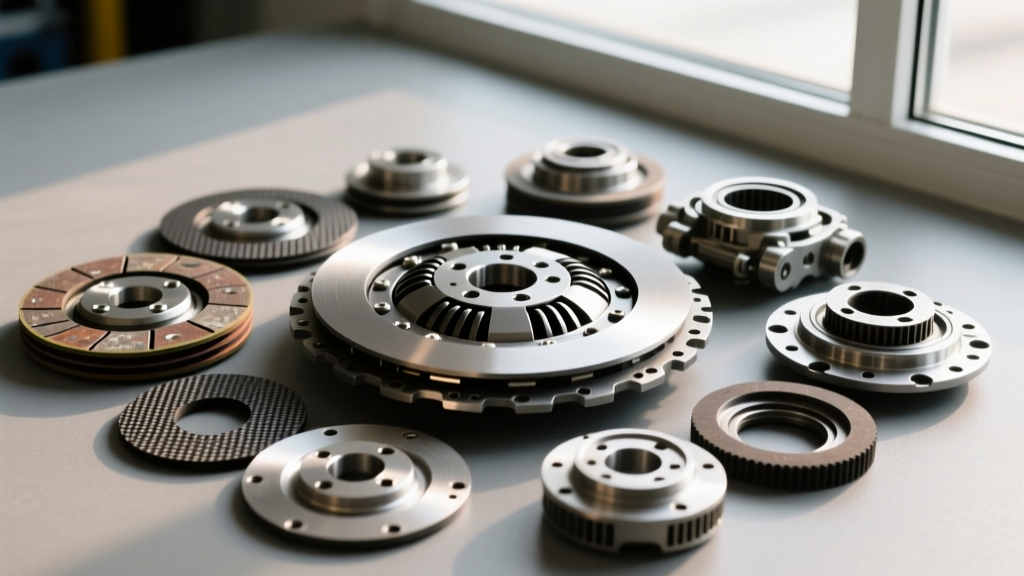
The Hidden Engineering of Manual Drivetrain NVH
When enthusiasts plan a manual transmission swap or upgrade their clutch for increased torque capacity, the conversation almost exclusively revolves around friction materials—ceramic, Kevlar, or sintered iron. However, the friction material only dictates the coefficient of friction and heat tolerance. The actual drivability, noise, vibration, and harshness (NVH) characteristics of the vehicle are dictated by the hub design. In 2026, as high-torque, low-RPM engine tuning becomes even more prevalent in the street and track-day community, understanding why a daily-driven vehicle uses a torsional clutch disc instead of a rigid, unsprung alternative is critical for preserving transmission health and sanity.
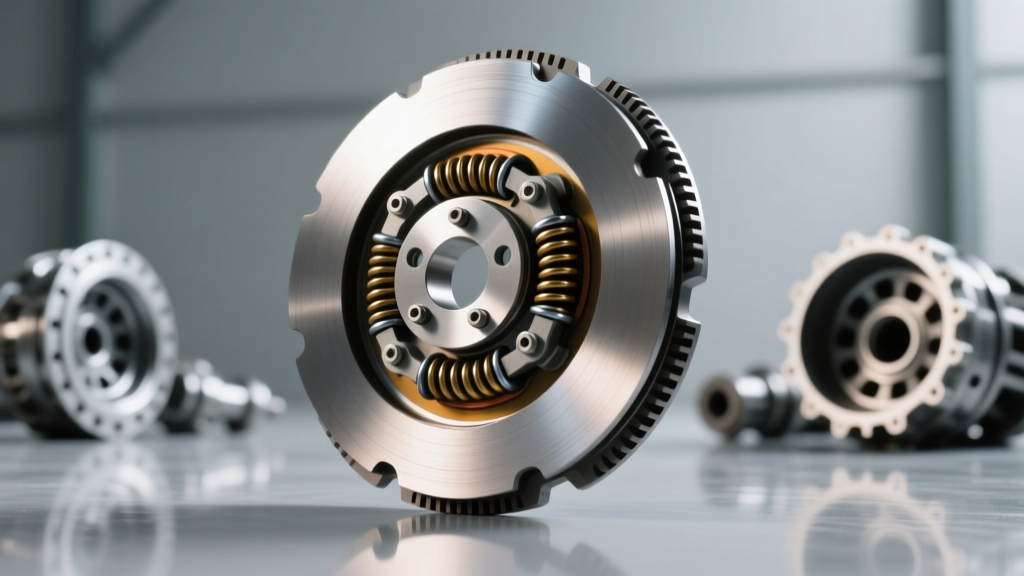
A torsional (sprung) clutch disc incorporates a complex network of dampening springs and wave washers designed to isolate the transmission from the violent, pulsating rotational harmonics generated by an internal combustion engine. An unsprung (rigid) disc, conversely, creates a solid mechanical link between the engine and the transmission input shaft. Choosing the wrong configuration for your specific flywheel and application will result in catastrophic NVH, accelerated gear wear, and premature input shaft bearing failure.
The Anatomy of Torsional Dampening
To understand the functional differences, we must dissect the two primary dampening mechanisms found on a sprung clutch disc: the Marcel spring and the torsional hub springs.
The Marcel (Wave) Spring
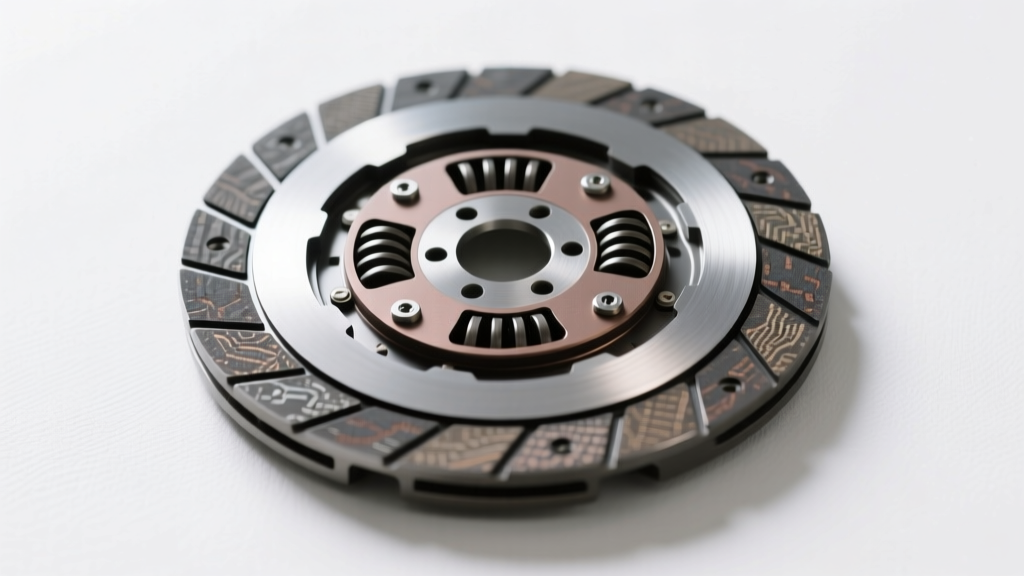
Sandwiched between the two friction pucks on a full-faced street disc is a corrugated steel washer known as a Marcel spring or wave spring. Typically ranging from 0.5mm to 1.2mm in thickness, this spring serves a vital purpose during clutch engagement. When the pressure plate begins to clamp the disc against the flywheel, the Marcel spring compresses progressively. This creates a micro-second 'ramp' of engagement, smoothing out the transition from slip to lock-up. High-performance street clutches often utilize a thinner 0.6mm Marcel spring for a more aggressive but still manageable bite, while heavy-duty towing setups use a thicker 1.0mm spring for ultra-smooth, progressive engagement.
Multi-Stage Torsional Hub Springs
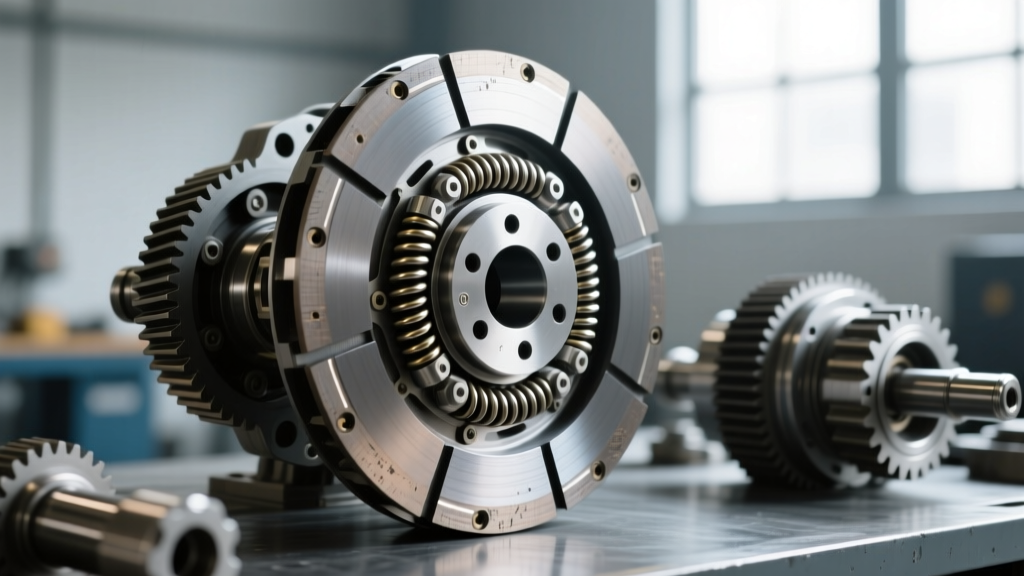
The hub of a torsional clutch disc contains a series of coil springs and polyurethane bump stops encased within the center spline assembly. Modern high-end clutches (such as those from McLeod or Centerforce) utilize multi-stage, progressive-rate spring setups.
- Stage 1 (Soft Springs): Designed to absorb low-frequency harmonics at idle and during low-RPM, high-load lugging (e.g., cruising at 1,500 RPM in 6th gear).
- Stage 2 (Stiff Springs): Engage under heavy throttle to absorb the massive torque spikes generated during hard acceleration and aggressive upshifts.
- Polyurethane Bump Stops: Prevent the metal springs from coil-binding and taking a permanent set under extreme shock loads, such as a high-RPM drag launch or a severe drivetrain misfire.
Why a Street Drivetrain Uses a Torsional Clutch Disc
Internal combustion engines do not produce smooth, continuous rotational power. They produce power in discrete, violent pulses. A 90-degree cross-plane V8 engine, like the GM LS or LT series, generates massive torsional vibrations that travel down the crankshaft and into the flywheel.
If you pair a Single Mass Flywheel (SMF) with an unsprung, rigid clutch disc, every single combustion pulse is transmitted directly into the transmission's input shaft. At idle, this causes the helical-cut gears inside the transmission to clash against one another, producing a deafening metallic clatter known as 'gear rattle.' Over time, this shock-loading will brinnell the needle bearings on the input shaft and accelerate synchro wear. According to engineering guidelines from McLeod Racing, eliminating torsional dampening on a single-mass flywheel street setup is one of the fastest ways to destroy a manual transmission's internal clearances.
Sprung vs. Unsprung: Technical Data Comparison
The decision between a sprung and unsprung hub hinges on your flywheel type, power output, and tolerance for NVH. Below is a technical comparison matrix for 2026 aftermarket clutch selection.
| Engineering Metric | Sprung (Torsional) Hub | Unsprung (Rigid) Hub |
|---|---|---|
| Rotating Mass | Higher (Adds 1.5 - 3.5 lbs to assembly) | Lower (Reduces rotational inertia) |
| Engagement Profile | Progressive (Dependent on Marcel spring) | Binary / Instant (On-Off switch feel) |
| NVH & Gear Rattle | Excellent absorption on SMF setups | Severe gear rattle on SMF setups |
| Input Shaft Shock Loading | Minimal (Springs absorb torque spikes) | High (Direct mechanical transfer) |
| DMF Compatibility | Poor (Causes resonance/chatter) | Mandatory (DMF handles dampening) |
| Ideal Application | Street, Track Day, Autocross, Restomods | Drag Racing, Dedicated Track, OEM DMF |
| Avg. Price Range (Single Disc) | $180 - $380 | $140 - $290 |
The Unsprung Exception: When Rigid Hubs Make Sense
If torsional dampening is so crucial for street manners, why do unsprung discs exist? There are two primary scenarios where a rigid hub is not just acceptable, but mandatory.
1. Dual Mass Flywheel (DMF) Applications
Many modern performance vehicles, such as the C7 Corvette, Porsche 991 GT3, and various BMW M-cars, utilize a Dual Mass Flywheel from the factory. A DMF splits the flywheel's mass into two halves, separated by a massive internal torsional spring and damping mechanism. Because the flywheel itself is handling 100% of the engine's harmonic dampening, the clutch disc must be unsprung. If you install a sprung clutch disc on a DMF, you create a 'double-dampening' effect. The two spring rates will clash, creating a harmonic resonance that results in severe clutch chatter, unpredictable engagement, and potential failure of the DMF internal stops. As noted in drivetrain NVH studies referenced by Centerforce, matching the dampening locus to a single point in the drivetrain is critical for rotational stability.
2. Dedicated Drag Racing and High-RPM Engagement
In competitive drag racing (e.g., NHRA Sportsman classes or Pro Mod), drivetrain weight and rotational inertia are the enemy. Racers use unsprung, solid-hub discs—often with aggressive sintered iron or metallic pucks and zero Marcel springs—to achieve instantaneous, violent lock-up. Because these vehicles are launched at high RPMs (where engine harmonics are less destructive) and feature stripped interiors with heavy aftermarket engine mounts and transmission brakes, gear rattle and NVH are entirely irrelevant. The rigid hub ensures zero power is lost to hub compression during a 6,000+ RPM launch.
Critical Installation Specs & Input Shaft Preservation
Whether you are installing a sprung street disc or an unsprung race disc, adhering to precise torque specifications and measuring input shaft spline wear is non-negotiable to prevent catastrophic failure.
Flywheel and Pressure Plate Torque Specs
When mating a Single Mass Flywheel to a crankshaft (e.g., a standard GM LS/LT pattern), the clamping force must be exact to prevent flywheel walk, which will instantly destroy a torsional hub's polyurethane stops.
- OEM TTY (Torque-to-Yield) Bolts: Typically torqued to 25 lb-ft, followed by an additional 90 degrees of rotation. These must be replaced after a single use.
- Aftermarket ARP 2000 Bolts: Torqued to 74 lb-ft using ARP Ultra-Torque fastener assembly lubricant. Never use standard motor oil on ARP fasteners, as the friction coefficient will result in severe over-torquing and bolt stretch.
- Pressure Plate to Flywheel: Standard M8 bolts should be torqued to 25-30 lb-ft in a star pattern, utilizing blue Loctite 243 to prevent backing out under high-frequency vibration.
Input Shaft Spline Backlash Limits
Unsprung hubs transmit significantly more shock to the transmission input shaft splines. Before installing any clutch disc, slide it onto the transmission input shaft and measure the radial backlash. A new disc should have virtually zero play. If the radial backlash exceeds 0.003 inches, the disc hub is worn and will cause a 'clunk' upon engagement, eventually stripping the splines entirely. For heavy-duty applications utilizing rigid hubs, upgrading to a transmission with a larger diameter input shaft (such as moving from a Tremec T-56's 26-spline 1.125-inch shaft to a Magnum XL's 31-spline 1.315-inch shaft) is highly recommended to handle the unsprung shock loads.
Final Verdict for 2026 Builds
The choice between a sprung and unsprung clutch disc is not a matter of which is universally 'better,' but rather which is mathematically correct for your specific drivetrain architecture. If your build utilizes a lightweight single-mass aluminum or steel flywheel and sees any street-driven, low-RPM mileage, your vehicle absolutely requires the harmonic isolation that a torsional clutch disc provides. Reserve unsprung, rigid hubs strictly for dedicated race cars with high-stall/high-RPM engagement profiles, or for vehicles retaining an OEM-style Dual Mass Flywheel where the dampening duties have already been outsourced to the flywheel assembly.