The Engineering Divide: Fluid Coupling vs. Mechanical Friction
When diagnosing drivetrain slip, shudder, or power loss, technicians and enthusiasts must navigate two fundamentally different power-transfer philosophies. The manual friction clutch and the automatic torque converter both serve to disconnect the engine from the transmission during gear changes and idle, but their internal architectures dictate entirely different failure vectors. Understanding the tribology of a dry friction disc versus the hydrodynamics of an enclosed fluid coupling is the first step in answering the critical question: what causes a torque converter to fail compared to its manual counterpart?
"A manual clutch relies on mechanical clamping force and abrasive friction, while a torque converter relies on fluid shear, hydrodynamic torque multiplication, and internal hydraulic lockup mechanisms." — Powertrain Engineering Principles
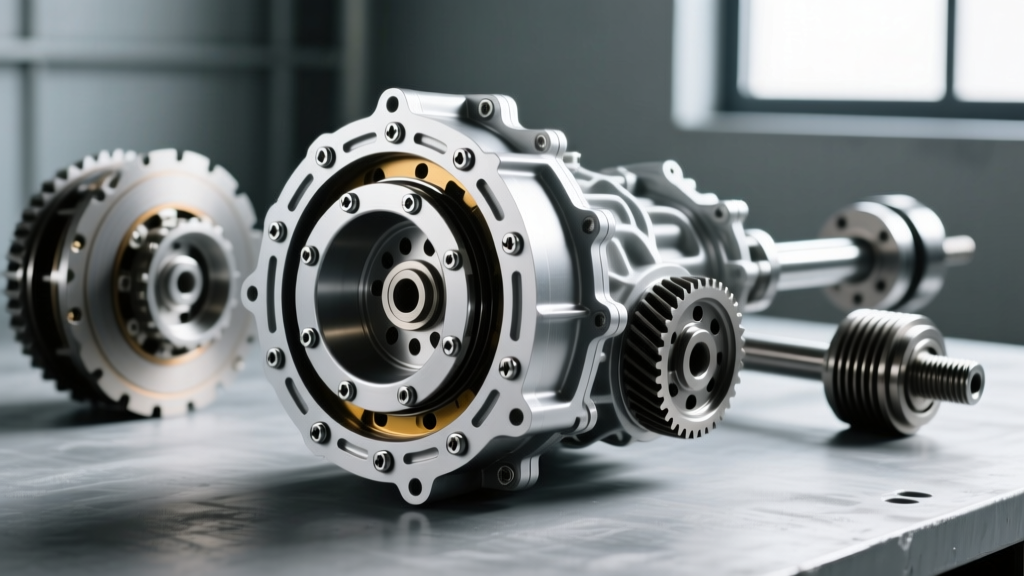
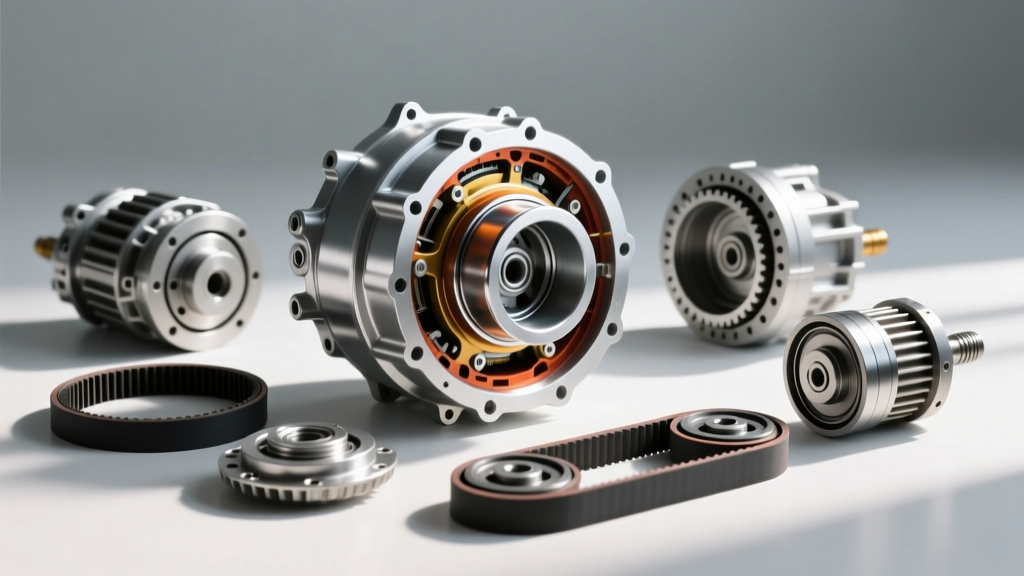
In modern platforms, such as the GM 6L80E or the ZF 8HP70, the torque converter is a marvel of sealed hydrodynamics. It utilizes an impeller, turbine, and stator to multiply torque, supplemented by a Torque Converter Clutch (TCC) for 1:1 lockup. Conversely, a manual setup like the Tremec T-56 Magnum relies on a pressure plate, friction disc, and flywheel. Because their operating environments are entirely different, their failure modes, diagnostic symptoms, and repair economics diverge sharply.
Deep Dive: What Causes a Torque Converter to Fail?
Unlike a manual clutch that wears predictably from friction, a torque converter is a sealed, welded unit filled with Automatic Transmission Fluid (ATF). When investigating what causes a torque converter to fail, we must look at hydraulic, mechanical, and thermal breakdowns within the converter housing.
1. TCC Friction Material Degradation and Shudder
Modern torque converters utilize a woven carbon or cellulose friction lining on the TCC piston to eliminate slip at highway speeds. When ATF degrades, or when the Pulse Width Modulation (PWM) solenoid fails to regulate apply pressure (typically between 110-130 PSI), the lining glazes or sheds. This results in the infamous 'TCC shudder'—a rhythmic vibration felt at 45-65 MPH under light throttle. According to Sonnax Technical Resources, microscopic debris from degraded ATF is the primary culprit for TCC lining destruction, which subsequently clogs the transmission's valve body.
2. Stator One-Way Clutch (Sprag) Failure
The stator sits between the impeller and turbine, redirecting fluid flow to multiply torque (up to a 2.2:1 ratio in heavy-duty applications). It relies on a one-way sprag or roller clutch. If this clutch seizes due to metal fatigue or debris, the stator cannot freewheel at higher speeds, creating massive fluid drag and rapid ATF overheating. Conversely, if the sprag fails to lock up during acceleration, the vehicle will exhibit severe sluggishness off the line, as torque multiplication is entirely lost.
3. Needle Bearing Disintegration
Hardened steel needle bearings separate the rotating impeller, turbine, and stator. If the converter experiences oil starvation—often due to a failing front pump or low fluid levels—these bearings score and disintegrate. The resulting metallic contamination circulates through the transmission cooler, destroying the main transmission unit. This is a catastrophic failure mode unique to fluid couplings.
4. Cover Ballooning and Fin Cavitation
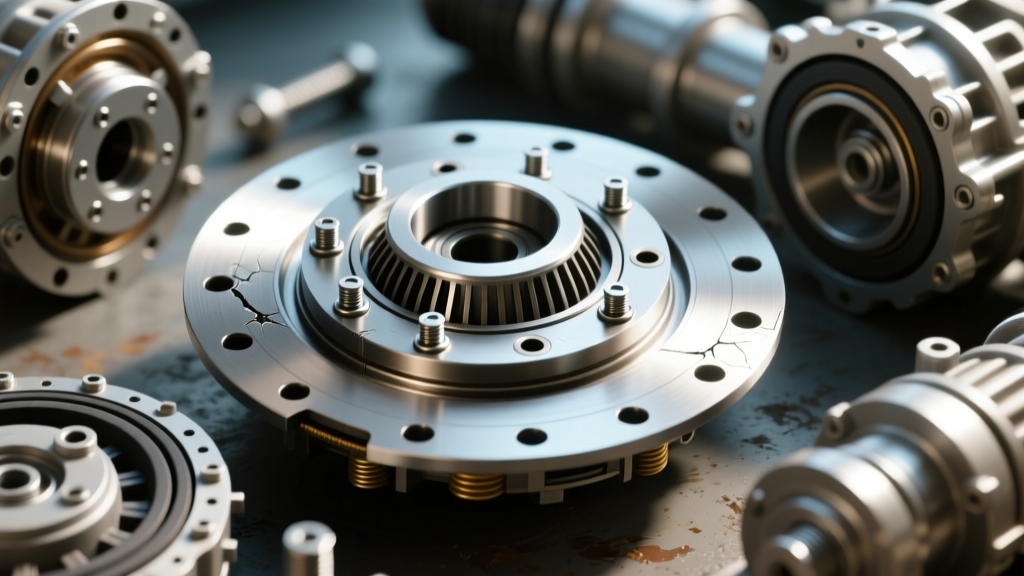
In high-horsepower or modified applications, extreme line pressure and centrifugal force can cause the welded steel cover of the torque converter to 'balloon' outward. This pushes the TCC piston out of alignment and can shatter the flexplate. Furthermore, extreme heat can cause localized boiling of the ATF inside the converter, leading to cavitation that physically pits and erodes the aluminum fins on the impeller.
Manual Clutch Failure Vectors: The Mechanical Counterpart
To contextualize torque converter failures, we must examine the manual clutch. Manual failures are almost exclusively tied to mechanical wear, thermal abuse, and hydraulic release system fatigue.
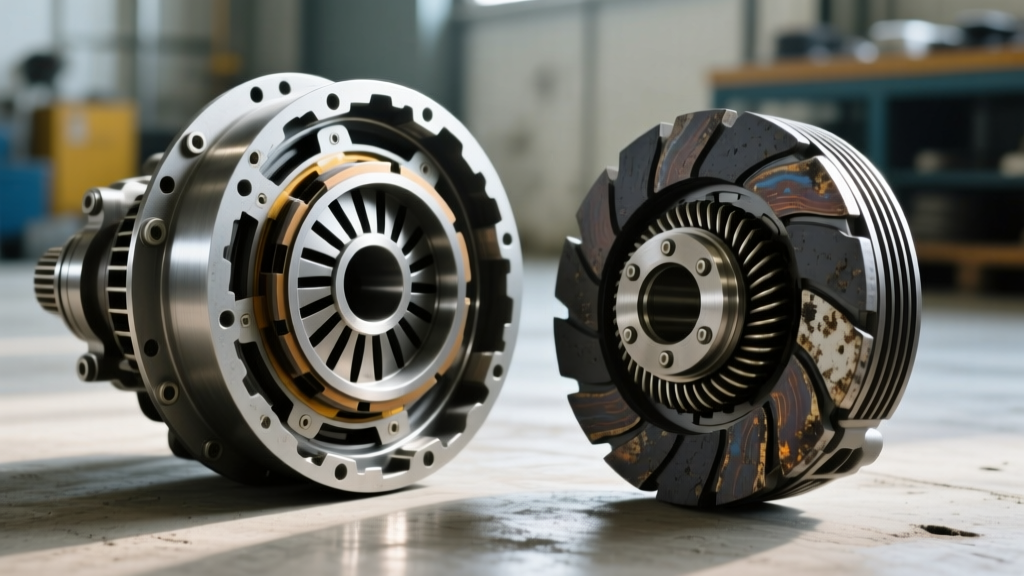
- Friction Disc Wear: The organic, ceramic, or sintered iron material simply wears down over time. Slipping under heavy load is the primary symptom, accompanied by a burning odor.
- Throwout Bearing (Release Bearing) Failure: In modern hydraulic setups, the release bearing is in constant light contact with the pressure plate diaphragm. Bearing fatigue results in a high-pitched whine that changes pitch when the clutch pedal is depressed.
- Flywheel Hot-Spotting and Warping: Aggressive engagement or riding the clutch causes localized thermal spikes on the flywheel surface. This hardens the cast iron (creating 'hot spots') and leads to severe engagement chatter. Dual-Mass Flywheels (DMF) are also prone to internal spring cage failure, causing a metallic clunk at idle.
- Pressure Plate Diaphragm Fatigue: Over tens of thousands of actuations, the spring steel fingers of the pressure plate lose their clamping tension, leading to premature slip even with a fresh friction disc.
Comparative Failure Matrix: TC vs. Manual Clutch
| Component | Primary Failure Mode | Key Symptom | Diagnostic Method | Typical Lifespan |
|---|---|---|---|---|
| Torque Converter TCC | Friction lining glazing/shedding | Highway speed shudder (45-65 MPH) | Scan tool TCC slip data (RPM variance) | 100k - 150k miles |
| TC Stator Sprag | Mechanical seizure or freewheel | Overheating or zero torque multiplication | Stall speed test & temp monitoring | 150k+ miles |
| Manual Friction Disc | Abrasive material wear | Slipping under load, high engagement | Clutch slip test in high gear | 60k - 100k miles |
| Manual Flywheel | Thermal cracking / DMF spring failure | Engagement chatter, metallic idle rattle | Visual inspection, dial indicator runout | 100k - 150k miles |
| TC Needle Bearings | Lubrication starvation | Whining noise, metal in ATF pan | Fluid analysis, magnetic plug inspection | 150k+ miles |
Diagnostic Realities and Replacement Economics
Because the torque converter is sealed, it is generally treated as a non-serviceable, replace-as-an-assembly component. The manual clutch, however, allows for selective part replacement, though labor intensity is high for both.
Real-World Cost Scenarios (2026 Market Rates)
Scenario A: GM 6L80E Torque Converter Replacement
Replacing a failed torque converter on a GM 6L80E (found in Silverados and Camaros) requires removing the transmission, unbolting the flexplate (torque spec: 74 lb-ft for the crank bolts), and draining approximately 11.2 quarts of Dexron VI fluid. A high-quality remanufactured converter from suppliers like Precision Industries or a GM OEM replacement costs between $450 and $850. With labor, the total bill typically ranges from $1,200 to $1,800. As noted by the Automatic Transmission Rebuilders Association (ATRA), it is mandatory to flush the transmission cooler lines and replace the TEHCM (Transmission Electro-Hydraulic Control Module) filter screen to prevent TCC solenoid re-failure from leftover debris.
Scenario B: Tremec T-56 Magnum Manual Clutch Replacement
For a manual application like the Tremec T-56 Magnum, a complete clutch kit (Exedy or McLeod pressure plate, organic/ceramic disc, and release bearing) costs between $600 and $1,200. If the flywheel requires resurfacing or replacement (especially if upgrading to a lightweight aluminum unit), add $300 to $800. Labor for dropping the driveline, exhaust, and transmission usually brings the total to $1,000 to $1,600.
Expert Verdict
Ultimately, what causes a torque converter to fail is rooted in fluid dynamics, thermal management, and internal hydraulic wear, whereas manual clutch failures are dictated by mechanical friction and driver habit. While a manual clutch offers easier visual diagnostics and modular part replacement, the modern torque converter provides vastly superior longevity and torque-multiplication capabilities, provided the ATF is maintained and the TCC solenoids are kept free of microscopic debris. For fleet managers and daily drivers, adhering to severe-service ATF drain intervals (every 45,000 miles) remains the single most effective way to prevent internal torque converter degradation.
For further reading on manual transmission torque limits and drivetrain architectures, consult the engineering specifications available at Tremec's official portal.