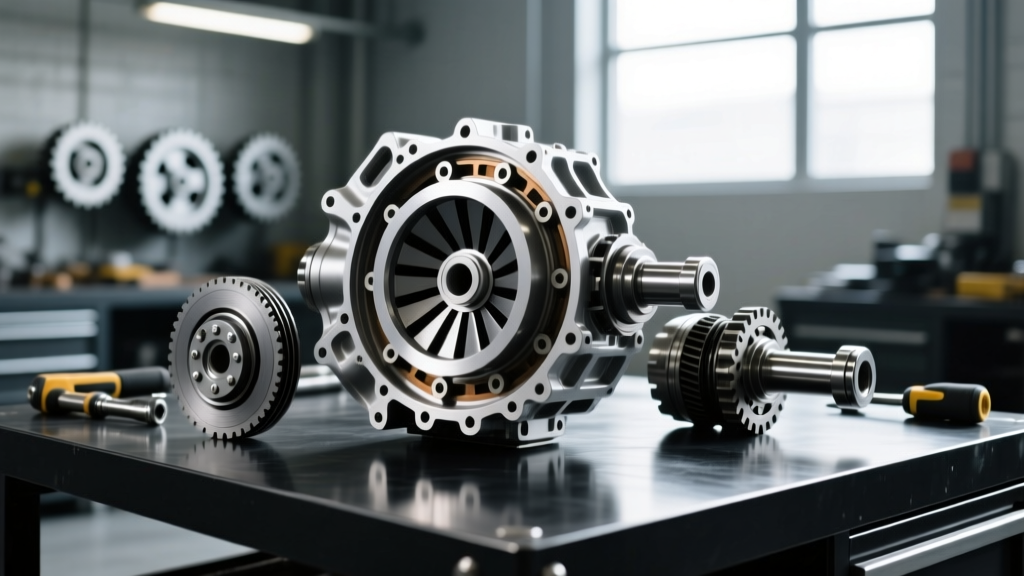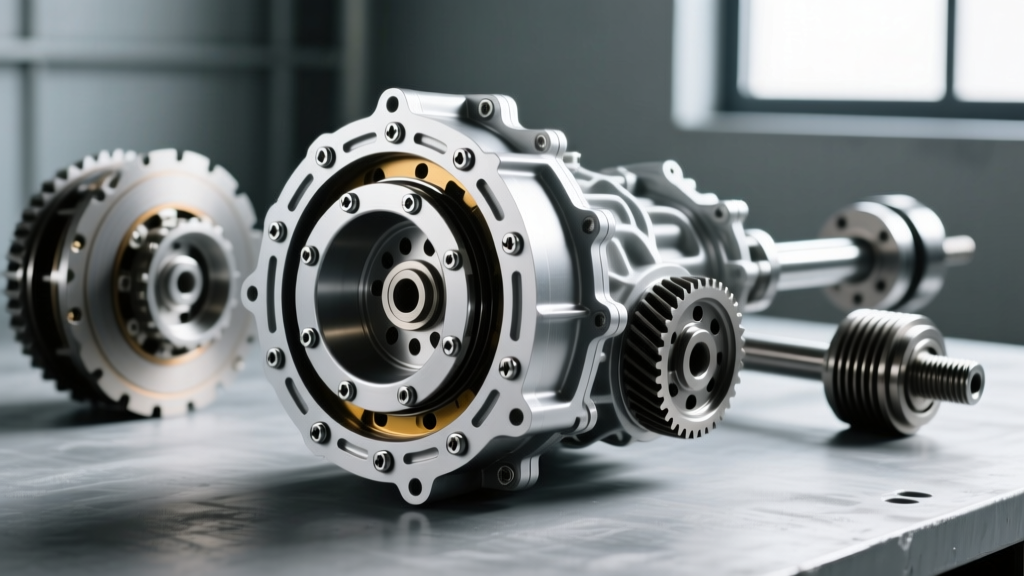
The Core Purpose of a Torque Converter and the Fitment Imperative
While automotive enthusiasts and engineers frequently debate the internal fluid dynamics that define the purpose of a torque converter, the reality is that this complex hydrodynamic coupling is entirely dependent on its physical interface with the engine and transmission. The primary purpose of a torque converter is to act as a fluid coupling that multiplies torque, dampens engine torsional vibrations, and allow the engine to idle while the vehicle is stationary. However, if the mechanical bridge between the engine’s crankshaft and the transmission’s input shaft is flawed, the converter cannot fulfill its purpose.
Improper torque converter bolt pattern alignment, incorrect pilot diameters, or mismatched pad heights will instantly compromise the transmission oil pump, induce severe harmonic shudder, or catastrophically fracture the flexplate. In this technical deep-dive, we move beyond basic theory to examine the exact measurements, bolt patterns, and fitment protocols required for modern automatic transmissions, including the GM 6L80, Ford 6R80, and ZF 8HP series.
Decoding the Flexplate-to-Converter Bolt Pattern
The bolt pattern is the most visible aspect of torque converter fitment, yet it remains a frequent source of installation errors in both professional rebuild shops and home garages. The converter’s welded studs or bolt pads must perfectly mate with the flexplate’s drilled holes. Forcing a misaligned pattern or using the wrong flexplate will induce immediate runout, leading to severe vibration.
Common Bolt Circle Configurations
Manufacturers utilize specific bolt patterns based on the torque capacity and physical dimensions of the transmission bellhousing. According to data compiled by Sonnax Tech Resources, mismatching these patterns is a leading cause of early-stage warranty returns on remanufactured units.
| Transmission Model | Standard Bolt Pattern | Typical Bolt Circle Diameter | Fastener Type |
|---|---|---|---|
| GM 4L60E / 4L65E | 3-Bolt or 4-Bolt | 10.75' or 11.5' | 3/8'-24 UNF or M10x1.5 |
| GM 6L80 / 6L90 | 4-Bolt | 11.5' (Standard) | M10x1.5 Metric Flange |
| Ford 6R80 / 10R80 | 4-Bolt or 6-Bolt | 11.5' or 12.25' | M10x1.25 or 3/8'-24 |
| ZF 8HP45 / 8HP70 | 6-Bolt | 11.8' (Varies by OEM) | M10x1.25 Torx / Hex |
Note: When swapping engines or transmissions, such as adapting a GM LS engine to a ZF 8HP via an aftermarket adapter plate, the flexplate must be custom-drilled to match the ZF 6-bolt pattern while maintaining the exact OEM bolt circle diameter to prevent eccentric loading.
Pilot Hub Diameter: The Centering Crucible
The pilot hub is the machined snout on the front of the torque converter that slides into the rear bore of the engine’s crankshaft. Its purpose is to ensure absolute concentricity between the engine’s rotating mass and the transmission’s input shaft. Tolerances here are measured in thousandths of an inch.
GM LS/LT vs. Ford Modular Pilot Specs
For General Motors Gen III and Gen IV LS engines, the crankshaft pilot bore is precisely 1.703 inches. A replacement torque converter must have a pilot diameter of 1.700' to 1.702' to allow for thermal expansion and a thin film of lubricant. If a converter with a 1.705' pilot is forced into the crank, it will bind. As the engine heats up and the metal expands, this bind will transfer immense lateral stress to the transmission oil pump gears, often shearing the pump tabs or cracking the pump housing upon initial startup.
Conversely, Ford Modular V8 engines (4.6L, 5.0L Coyote) typically utilize a 1.375-inch or 1.875-inch pilot diameter depending on the model year and specific block casting. Installing a torque converter with excessive pilot clearance (e.g., a 1.370' hub in a 1.375' crank bore) will result in a condition known as 'pump whine.' The converter orbits off-center at high RPM, causing the transmission pump gerotors to score against the housing, leading to cavitation and eventual hydraulic failure.
Pad Height and the Flexplate Bending Moment
One of the most misunderstood aspects of the purpose of a torque converter in relation to drivetrain longevity is the concept of 'pad height' or 'standout distance.' Torque converters feature either flat mounting pads or raised (offset) mounting pads. The flexplate is stamped or machined to match this specific offset.
- Raised Pad Converters: Typically feature a 0.375' to 0.500' offset. Common in heavy-duty applications and modern passenger vehicles like the GM 6L80 to allow for deeper pump engagement and better clearance for the stator support tube.
- Flat Pad Converters: Sit flush against the flexplate. Common in older 3-speed and 4-speed automatics, as well as many aftermarket high-stall racing converters.
If you bolt a flat-pad torque converter to a flexplate designed for a raised-pad converter, the flexplate is pulled backward toward the transmission when the bolts are tightened. This creates a massive bending moment. Over time, the cyclical loading of engine combustion and torque converter lockup will cause the flexplate to develop micro-fractures around the bolt holes, eventually leading to a catastrophic flexplate failure where the converter tears free from the engine.
Diagnosing Symptoms of Improper Fitment
Because the physical interface dictates the hydraulic and mechanical stability of the unit, poor fitment manifests as distinct drivability symptoms. According to diagnostic bulletins from the Automatic Transmission Rebuilders Association (ATRA), technicians often misdiagnose these fitment issues as internal valve body or clutch pack failures.
1. High-Frequency TCC Shudder (40-55 MPH)
While torque converter clutch (TCC) shudder is often blamed on degraded friction material or contaminated fluid, a shudder that occurs immediately after a rebuild or swap is frequently caused by incorrect pilot fitment or wrong pad height. The resulting runout causes the turbine and impeller to wobble, creating hydraulic pulses that mimic a slipping lockup clutch. If the shudder is accompanied by a faint metallic ringing under load, inspect the flexplate for stress cracks caused by pad-height mismatch.
2. Transmission Pump Whine and Cavitation
A high-pitched whining noise that increases proportionally with engine RPM is a classic symptom of pump cavitation. If the pilot hub is too tight, or if the converter was not fully seated into the pump gears during installation, the pump gears are subjected to lateral binding. This prevents the pump from drawing adequate fluid volume from the pan, leading to aerated fluid, delayed shifts, and severe overheating.
3. Metallic Clunk on Startup or Shutdown
If the torque converter-to-flexplate bolts were not torqued to specification, or if the wrong bolt length was used (bottoming out in the converter pad before clamping the flexplate), the fasteners will back out. This creates a localized gap, resulting in a sharp metallic clunk as the engine’s torsional vibrations slam the flexplate against the loose converter studs during engine cranking or deceleration.
Mastering Installation: The Three-Click Rule and Torque Specs
Fulfilling the purpose of a torque converter requires meticulous installation procedures. The most critical step is ensuring full engagement with the transmission oil pump before mating the engine to the bellhousing.
Pro-Tip: The Three-Click Rule
When sliding the torque converter onto the transmission input shaft, you must feel three distinct 'clicks' or drops. The first is the input shaft splines engaging the turbine hub. The second is the stator support tube sliding into the stator assembly. The third, and most critical, is the converter’s internal pump drive hub engaging the transmission’s oil pump gears. If you only feel two clicks, the converter is not fully seated. Forcing the bellhousing bolts tight in this state will instantly snap the oil pump housing.
Fastener Selection and Torque Specifications
Never reuse stretched torque converter bolts. The fasteners endure immense shear stress during torque multiplication phases. Always use Grade 8 (imperial) or Class 10.9/12.9 (metric) flange bolts.
- GM 4L60E / 6L80 (M10x1.5): Torque to 25-30 lb-ft (34-41 Nm).
- Ford 6R80 (M10x1.25): Torque to 26-32 lb-ft (35-43 Nm).
- ZF 8HP Series (M10x1.25): Torque to 30-35 lb-ft (40-47 Nm).
Furthermore, always apply a medium-strength, oil-tolerant threadlocker (such as Loctite 243) to the threads. The constant immersion in transmission fluid and the high operating temperatures (often exceeding 200°F near the bellhousing) will cause untreated hardware to back out over time. Ensure the bolt length provides at least 1.5 times the bolt diameter in thread engagement inside the converter pad, but verify it does not bottom out, which would falsely indicate proper clamping force while leaving the flexplate loose.
Conclusion: Precision is the True Purpose
Understanding the purpose of a torque converter extends far beyond fluid coupling and torque multiplication; it is about seamlessly bridging two massive rotating assemblies. By respecting the exact bolt patterns, verifying pilot diameters to the thousandth of an inch, matching pad heights, and adhering to strict torque specifications, you ensure the longevity of the transmission pump, the integrity of the flexplate, and the smooth, shudder-free operation of the entire drivetrain.