The Financial Reality of Torque Converter Bolt Service
When a driveline vibration, metallic rattle, or severe torque converter clutch (TCC) shudder emerges from your vehicle, the root cause often traces back to the connection point between the engine and the transmission. Specifically, the fasteners securing the torque converter to the flexplate (flywheel) are under immense rotational and harmonic stress. Understanding the true cost of this repair requires looking beyond the price of the bolts themselves; it demands a comprehensive analysis of labor, specialty tooling, and model-specific transmission architecture.
For automotive technicians and advanced DIYers, calculating the expense of this job hinges on a critical mechanical reality: on the vast majority of modern automatic transmissions, there is no inspection cover. To access these fasteners, the entire transmission must be separated from the engine block. This guide provides a deep-dive cost analysis and model-specific breakdown for popular platforms like the GM 4L60E and 6L80, helping you decide whether to tackle the job in your home garage or hand it over to a professional drivetrain shop.
Diagnosing the Need: Symptoms That Require Bolt Removal
Before analyzing the financial breakdown, it is vital to confirm that the torque converter-to-flexplate bolts are actually the culprit. Misdiagnosing this issue can lead to unnecessary transmission removal, wasting hundreds of dollars in labor. Look for these hallmark symptoms:
- Idle Rattle in Gear (The 'Flexplate Crack' Signature): A distinct metallic rattling or clunking noise that occurs when the vehicle is idling in Drive or Reverse, but completely disappears in Park or Neutral. This indicates the flexplate is cracking around the bolt holes due to harmonic fatigue.
- TCC Shudder and Driveline Vibration: If the torque converter is not seated flush against the flexplate due to a missing, backed-out, or unevenly torqued bolt, the converter will wobble. This causes severe vibrations at highway speeds and mimics a failing torque converter clutch.
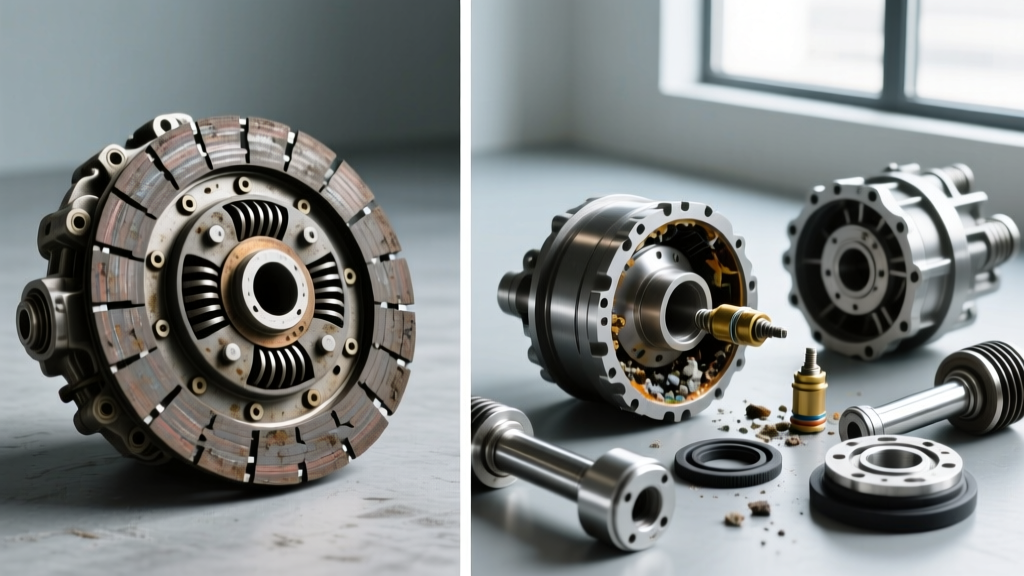
- Metallic Debris on the Pan Magnet: During a routine transmission fluid drain, finding shiny, curled metal shavings or black metallic paste (often mixed with red Loctite residue) on the transmission pan magnet is a primary indicator that the bolt heads are wearing against the bellhousing or dust cover.
- Starter Engagement Grinding: A cracked flexplate near the bolt circle can cause the ring gear to warp slightly, leading to intermittent starter grinding noises during engine cranking.
How to Remove Torque Converter Bolts From Flywheel: The Procedural Cost
When researching how to remove torque converter bolts from flywheel assemblies, most DIYers underestimate the physical labor involved. Because the bellhousing encapsulates the torque converter, you must support the engine from above, drop the transmission crossmember, disconnect the driveshaft, and slide the transmission backward to expose the flexplate.
This procedural reality is the primary cost driver. You are not just paying for bolt removal; you are paying for a transmission R&R (Remove and Replace) labor operation. Furthermore, factory bolts are almost always secured with high-strength threadlocker (typically red or permanent Loctite). Breaking the initial torque requires significant mechanical leverage, often necessitating a specialized flexplate holding tool to prevent the engine crankshaft from rotating while you apply breaking force.
Cost Breakdown: DIY vs. Professional Drivetrain Shop
The following table illustrates the estimated costs associated with this repair, contrasting a DIY approach against professional shop rates for common GM platforms. Pricing reflects average 2026 market rates for parts and a standard independent shop labor rate of $140/hour.
| Expense Category | DIY (GM 4L60E / 6L80) | Professional Shop (Average) |
|---|---|---|
| Transmission R&R Labor | $0 (6-10 Hours Sweat Equity) | $840 - $1,400 |
| Flexplate / Flywheel (If Cracked) | $75 - $160 (ATP / Pioneer) | $150 - $280 (OEM / Markup) |
| Replacement Fasteners & Loctite | $15 - $25 | $30 - $50 |
| Transmission Fluid (Dexron VI, ~12 qts) | $90 - $120 | $180 - $250 |
| Specialty Tools (Flexplate Holder, Jacks) | $45 - $120 (If not owned) | N/A (Included in shop overhead) |
| Total Estimated Cost | $225 - $445 | $1,200 - $2,130 |
Note: If the vehicle is an AWD model or requires subframe removal (such as certain Cadillac or Corvette applications), professional labor costs can easily exceed $2,800 due to the extreme complexity of the extraction process.
Model-Specific Guides and Fastener Realities
The architecture of your specific transmission dictates the difficulty of the job, the number of fasteners, and the clearance required to slide the transmission back far enough to access the bolts.
GM 4L60E (3-Bolt Pattern)
The legendary 4L60E, found in millions of Silverados, Tahoes, and Camaros, utilizes a relatively simple 3-bolt torque converter pattern. While three bolts mean less time spent wrenching, the 120-degree spacing means the engine must be rotated significantly to access each bolt.
The Cost Factor: The 4L60E bellhousing is compact. You generally only need to slide the transmission back about 4 to 6 inches to access the bolts with a swivel socket and long extension. However, the 4L60E flexplate is notorious for cracking between the crankshaft bolt circle and the torque converter bolt circle. If you drop the trans and find a cracked flexplate, you must replace it. Sourcing a replacement from a reliable catalog like RockAuto will cost around $85 for a standard replacement, but you will need to factor in the cost of a new rear main seal ($15) while the flexplate is off.
GM 6L80 (6-Bolt Pattern)
The 6-speed 6L80 transmission, common in 2006-2014 GM trucks and performance cars, uses a 6-bolt pattern. This distributes the load more evenly but doubles the number of fasteners you must remove and torque.
The Cost Factor: The 6L80 torque converter is physically larger and sits deeper into the bellhousing. Accessing the top bolts often requires removing the starter motor and working blindly with a long extension and a magnetic swivel socket. If a bolt drops into the bottom of the bellhousing, retrieving it can add an hour of frustrating labor. Furthermore, the 6L80 requires a precise alignment of the converter hub tabs into the transmission oil pump gear. If forced during reinstallation, the oil pump will shatter upon first startup—a catastrophic mistake that turns a $300 DIY job into a $3,500 transmission replacement.
The Hidden Cost: Snapped Bolts and Extraction
The most feared scenario when learning how to remove torque converter bolts from flywheel assemblies is the 'snap'. Because these bolts are subjected to extreme heat cycles, moisture ingress, and high-strength threadlocker, they frequently seize in the flexplate threads. If the head snaps off flush with the flexplate, your costs will immediately escalate.
Drilling out a hardened Grade 10.9 or Grade 8 bolt from a flexplate without damaging the crankshaft flange is incredibly difficult. Professional shops will often use an induction heater, such as the Mini-Ductor, to heat the bolt cherry-red, breaking the Loctite bond and expanding the metal. A professional-grade induction heater costs upwards of $400, making it an unviable purchase for a one-time DIYer. If extraction fails, the flexplate must be scrapped, and the crankshaft flange may need to be re-tapped or helicoiled by a machine shop, adding $150 to $300 to the final bill. Always use high-quality impact sockets and apply penetrating oil to the bolt heads 24 hours before attempting removal.
Reassembly: Torque Specifications and Fluid Data
Reinstalling the torque converter requires strict adherence to manufacturer torque specifications. Under-torquing leads to bolt back-out and bellhousing destruction; over-torquing stretches the bolt, reducing its clamping force and leading to eventual shear failure. Always apply a fresh drop of medium-strength threadlocker (Blue Loctite 243) unless the OEM fasteners come with a pre-applied patch.
| Transmission Model | Bolt Pattern | Fastener Size | Torque Specification | Fluid Type & Approx. Capacity |
|---|---|---|---|---|
| GM 4L60E | 3-Bolt | M10 x 1.5 | 46 lb-ft (62 Nm) | Dexron VI (~11.2 Quarts Dry) |
| GM 6L80 | 6-Bolt | M10 x 1.5 | 46 lb-ft (62 Nm) | Dexron VI (~12.8 Quarts Dry) |
| Ford 6R80 (ZF 6HP26) | 6-Bolt | M10 x 1.25 | 59 lb-ft (80 Nm) | Mercon LV (~13.1 Quarts Dry) |
| ZF 8HP (Chrysler/BMW) | 6-Bolt | M10 x 1.25 | 66 lb-ft (90 Nm) | ZF 8-Speed Fluid (~10.5 Quarts) |
Crucial Step: Before bolting the transmission to the engine block, measure the distance from the engine block mating surface to the torque converter mounting pads. The converter must be fully seated into the transmission oil pump and stator support. If there is a gap between the flexplate and the converter pads when the trans is flush against the block, do not use the bolts to pull the converter forward. This will destroy the oil pump. Verify the converter is fully seated by rotating it until you feel it drop into the pump gears.
Final Verdict: Sourcing Parts and Tools
If you choose the DIY route to save on the massive labor markup, invest in the correct tooling. A dedicated flexplate holding tool, such as those manufactured by Lisle Corporation, bolts to the engine block or bellhousing and locks the flexplate in place, allowing you to safely use a 1/2-inch drive torque wrench or a high-torque impact gun to break the bolts free. Attempting to hold the engine via the harmonic balancer with a prybar is a recipe for damaged starter ring gears and personal injury.
Ultimately, removing torque converter bolts from the flywheel is a high-stakes, labor-intensive repair. While the parts cost is negligible—often under $30 for a set of OEM GM bolts and threadlocker—the physical execution demands patience, precise torque management, and a willingness to address underlying flexplate fatigue. By understanding the model-specific nuances of the 4L60E and 6L80, you can accurately budget for the repair and avoid the catastrophic costs associated with improper reassembly.
For those sourcing heavy-duty aftermarket flexplates or upgraded billet torque converters for high-horsepower applications, retailers like Summit Racing offer comprehensive drivetrain kits that include upgraded ARP fasteners, eliminating the factory bolt stretch issues entirely and providing long-term peace of mind for modified vehicles.