The Hydrokinetic vs. Friction Paradigm
At the core of every manual and automatic drivetrain lies a mechanism designed to disconnect and reconnect engine power to the transmission input shaft. While a manual clutch relies on raw mechanical friction and spring pressure, an automatic transmission utilizes a hydrokinetic torque converter. Understanding the fundamental engineering differences between these two systems is critical for accurate diagnosis, especially when evaluating driveline shudder, slip, and the need for complex procedures like torque converter solenoid replacement.
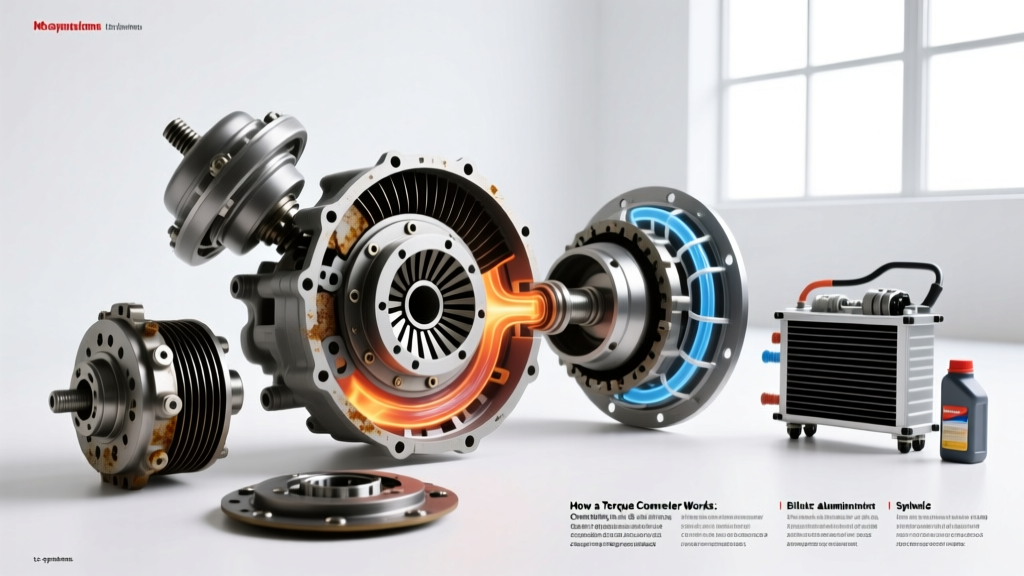
A traditional manual clutch assembly consists of a flywheel, a friction disc, a diaphragm spring pressure plate, and a release bearing. When the pedal is depressed, hydraulic pressure actuates the slave cylinder, pivoting the release fork to disengage the clamping force. In contrast, a torque converter transfers power via transmission fluid (ATF) being thrown from an impeller to a turbine, multiplied by a stator. Modern automatics, however, bridge this gap using a Torque Converter Clutch (TCC)—a friction-lined piston inside the converter that locks the impeller and turbine together at cruising speeds to eliminate parasitic fluid slip and improve fuel economy.
Symptom Cross-Reference: Slipping, Shuddering, and Dragging
Because both systems ultimately serve to manage power transfer, their failure symptoms often mimic one another, leading to misdiagnosis by inexperienced technicians. However, the underlying mechanical causes require vastly different repair strategies.
1. RPM Flare and Slipping
In a manual transmission, a worn friction disc or a fatigued diaphragm spring will result in clutch slip under heavy load (e.g., accelerating in 4th gear). The engine RPM will surge without a corresponding increase in vehicle speed. In an automatic, a similar symptom occurs if the TCC friction material is degraded or if the hydraulic apply pressure is insufficient. However, automatic slip can also stem from worn internal transmission clutch packs (like the 3-5-R clutch in a GM 6L80) rather than the torque converter itself.
2. Driveline Shudder
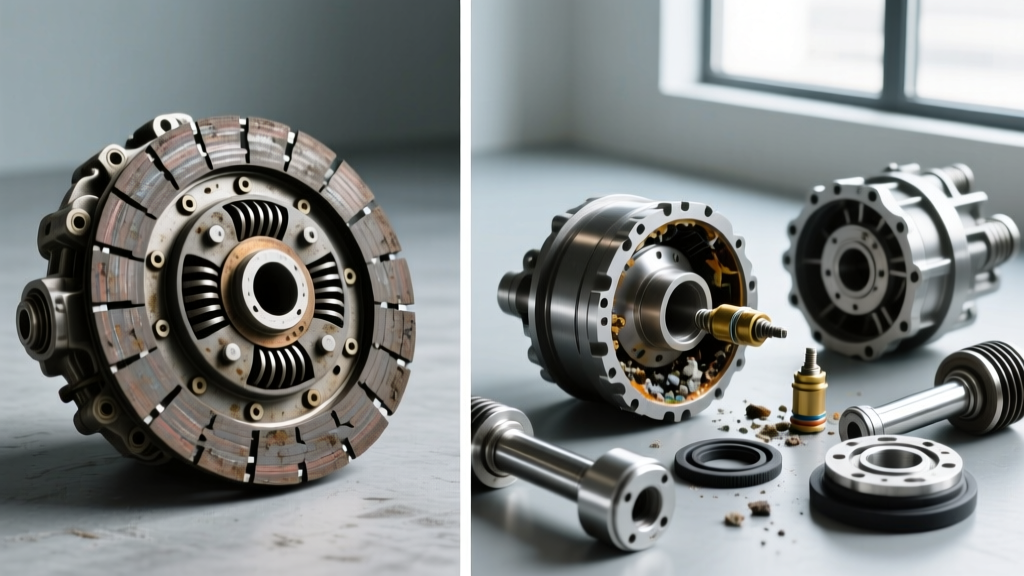
TCC shudder is a hallmark of automatic transmission friction failure or fluid degradation. It feels like driving over highway rumble strips, typically occurring between 35 and 55 mph when the TCC is in its Pulse Width Modulated (PWM) apply phase. Manual clutches rarely exhibit this specific high-frequency shudder; instead, a failing manual clutch might cause aggressive chatter upon initial takeoff from a dead stop due to oil contamination on the flywheel or broken torsional dampener springs.
Identifying the Need for Torque Converter Solenoid Replacement
When TCC shudder or slip is isolated to the converter, the root cause is frequently not the friction material itself, but the electro-hydraulic control valve. In transmissions like the Ford 6R80 or GM 8L90, the TCC apply pressure is regulated by a PWM solenoid. Over time, the microscopic filter screen inside the solenoid body clogs with clutch debris, or the internal spool valve wears the aluminum bore. This results in erratic hydraulic pressure, causing the TCC piston to rapidly engage and disengage (shudder). When scan tool data confirms TCC slip fluctuating wildly despite steady throttle input, torque converter solenoid replacement becomes the primary corrective action, saving the cost of a full converter replacement.
Technical Data Matrix: Manual Clutch vs. Automatic TCC
The following table contrasts the operational parameters and failure thresholds of manual friction discs versus automatic TCC systems.
| Parameter | Manual Clutch Assembly | Automatic Torque Converter Clutch (TCC) |
|---|---|---|
| Engagement Mechanism | Mechanical diaphragm spring | Hydraulic fluid pressure (PWM controlled) |
| Friction Material | Ceramic, Kevlar, or Organic composite | Woven carbon or cellulose-based paper |
| Acceptable Slip (Locked) | 0 RPM (Any slip indicates failure) | < 20 RPM (via Scan Tool PID monitoring) |
| Primary Failure Cause | Driver abuse, normal wear, oil ingress | ATF degradation, solenoid bore wear, debris |
| Common Repair Action | Full kit replacement & flywheel resurfacing | Fluid flush, torque converter solenoid replacement, or TC rebuild |
Precision Diagnostic Protocols
Diagnosing manual vs. automatic coupling failures requires distinct tooling and methodologies. Relying on 'seat-of-the-pants' feel is insufficient for modern 8-speed and 10-speed automatic transmissions.
Manual Drivetrain Diagnostics
Diagnosing a manual clutch involves checking hydraulic freeplay and mechanical wear. A technician will measure the clutch pedal travel and inspect the slave cylinder for external leaks. If the clutch is slipping, a stall test (in a safe, controlled environment) can confirm the holding capacity of the pressure plate. If the engine over-revs easily in high gear under load, the friction disc is compromised.
Automatic TCC and Solenoid Diagnostics
Automatic diagnosis requires a bi-directional OBD-II scan tool and a transmission line pressure gauge. According to the Automatic Transmission Rebuilders Association (ATRA), verifying TCC health involves monitoring the 'TCC Slip Speed' PID while driving at a steady 50 mph. If the slip speed bounces between -50 and +100 RPM, the hydraulic circuit is unstable.
Expert Insight: Before condemning the torque converter friction material, always test the PWM solenoid circuit. Using an oscilloscope to view the solenoid's duty cycle waveform can reveal if the Transmission Control Module (TCM) is commanding erratic pressure, or if the solenoid coil is suffering from thermal breakdown. This step is vital to determine if a simple torque converter solenoid replacement will resolve the shudder.
OEM Component References and Torque Specifications
When executing repairs, adhering to OEM engineering specifications is non-negotiable. Below are critical reference points for common platforms encountered in repair bays today.
- GM 6L80 / 6L90 TCC Solenoid: The TCC PWM solenoid (GM Part # 24230298 / ACDelco 214-2336) is located within the valve body. Replacing it requires dropping the transmission pan and removing the valve body assembly. Torque spec for the valve body-to-case bolts is strictly 89 lb-in (10 Nm). Over-torquing will warp the aluminum valve body, causing cross-leaks.
- Ford 6R80 TCC Control Valve: Rather than just the solenoid, the 6R80 suffers from wear in the TCC control valve bore within the mechatronic unit. Upgrading to an anodized steel aftermarket valve kit (such as those engineered by Sonnax) is often required alongside solenoid replacement to restore proper hydraulic sealing.
- Manual Clutch Flywheel Torque (GM LS V8): When replacing a manual clutch on an LS-platform vehicle, the flywheel-to-crankshaft bolts must be torqued to 74 lb-ft (100 Nm) using a star pattern, followed by a final torque angle of 90 degrees if using new TTY (Torque-to-Yield) hardware.
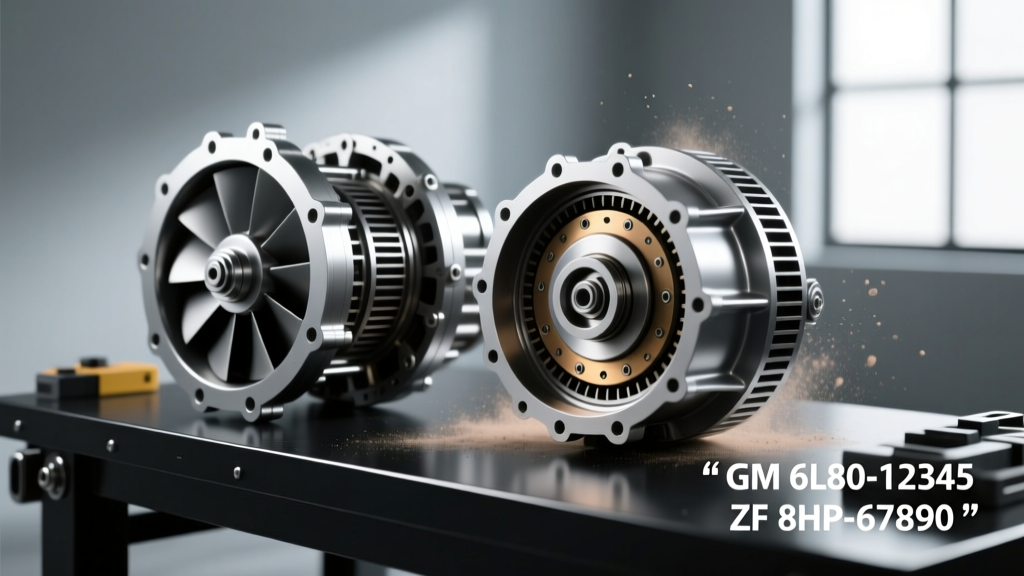
- ZF 8HP Mechatronic Sleeve: In vehicles utilizing the ZF 8-speed (e.g., BMW, Dodge Ram, Jaguar), a leaking mechatronic adapter sleeve (ZF Part # 68525267AB) can cause low line pressure that mimics a failing TCC solenoid. Always replace this $40 plastic sleeve when performing valve body service.
Cost and Labor Realities
The financial impact of these repairs varies wildly based on the architecture of the vehicle. A standard manual clutch replacement (kit, resurfaced flywheel, rear main seal, and slave cylinder) typically ranges from $900 to $1,600 in labor and parts, as the transmission must be physically unbolted and lowered from the vehicle.
Conversely, a torque converter solenoid replacement on a longitudinal rear-wheel-drive automatic (like the GM 6L80) can often be performed by simply dropping the transmission fluid pan and removing the valve body, keeping the transmission in the car. This reduces labor time significantly, resulting in an average cost of $350 to $650. However, on transverse front-wheel-drive applications or specific all-wheel-drive systems where the valve body is inaccessible without transmission removal, the labor cost for solenoid replacement will mirror that of a full manual clutch job, easily exceeding $1,200.
Ultimately, whether you are dealing with the raw mechanical friction of a manual clutch or the complex electro-hydraulics of an automatic TCC, precise diagnosis using OEM data PIDs and pressure gauges is the only way to avoid unnecessary parts replacement and ensure long-term driveline reliability.