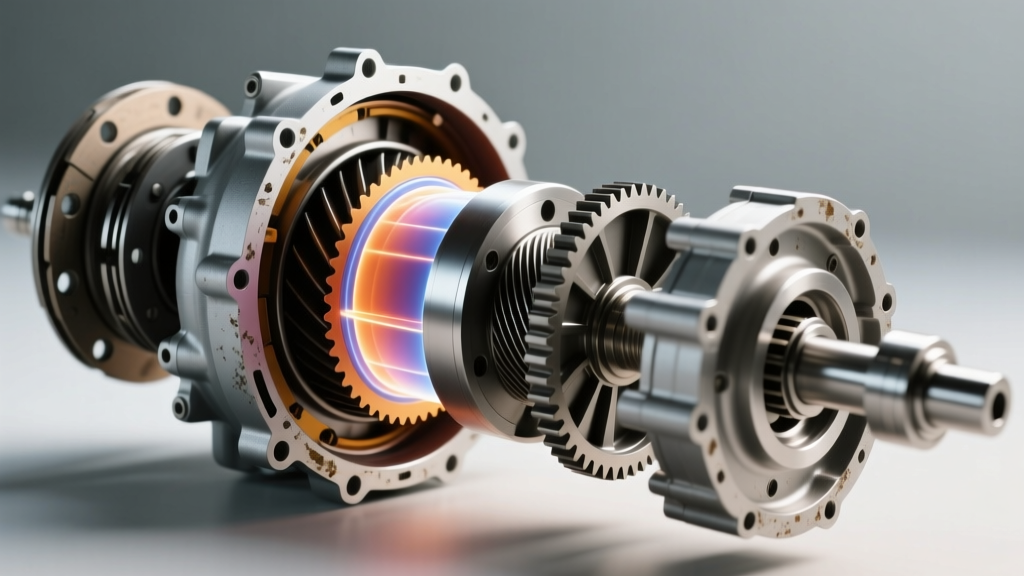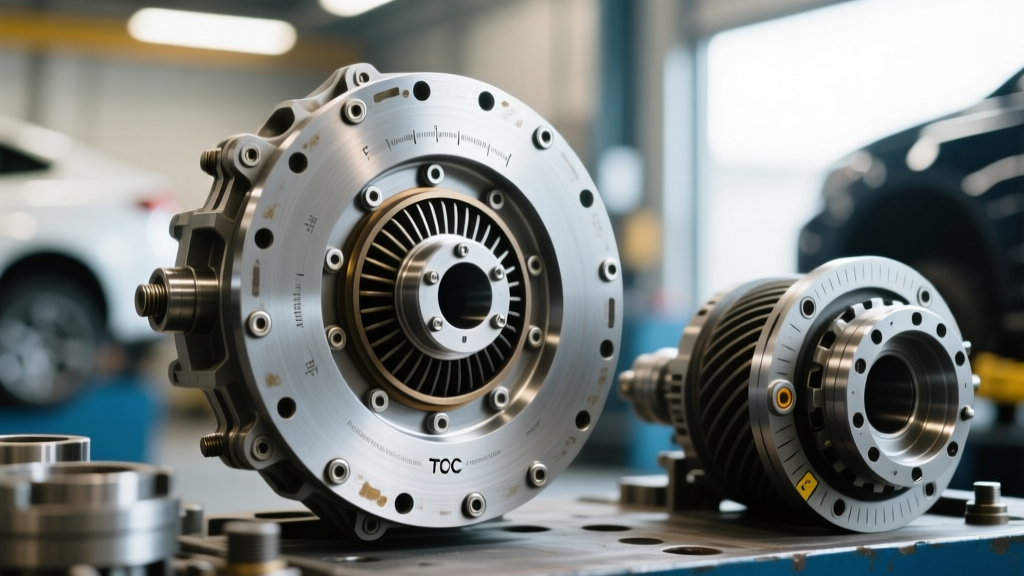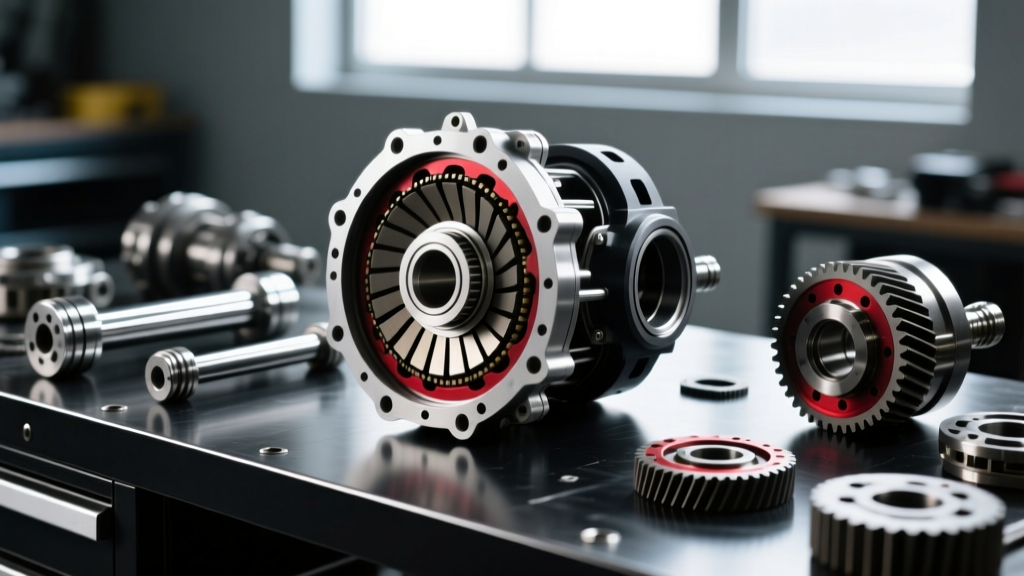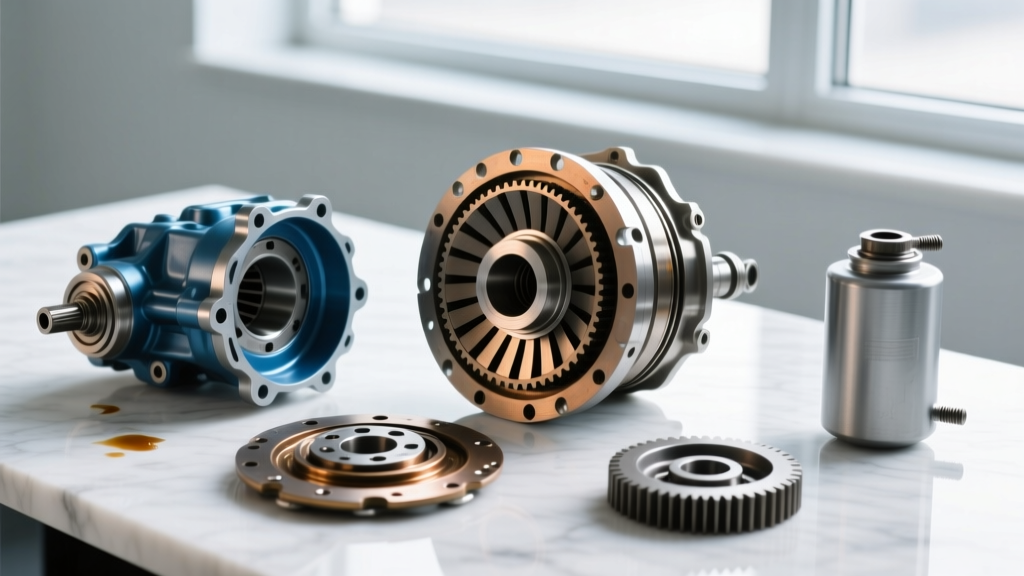
Expert Insight: The torque converter is not merely a fluid coupling; it is a hydrodynamic reactor. When torque converter fluid degrades, it doesn't just lose lubricity—it fundamentally alters the stall speed, lockup efficiency, and thermal dynamics of the entire drivetrain.
The Physics of Torque Converter Fluid Shear
Unlike manual transmissions where gear oil primarily serves as a lubricant and heat sink, automatic transmission fluid (ATF) inside a torque converter acts as the primary medium for power transfer. The fluid is subjected to extreme hydrodynamic shear forces as the impeller throws it against the turbine and stator. Over time, this continuous shearing mechanically breaks down the fluid's long-chain polymers (viscosity index improvers). When the fluid's kinematic viscosity drops below OEM specifications, the torque converter clutch (TCC) can no longer maintain a stable friction boundary, leading to micro-slip, shudder, and eventual lining delamination.
Furthermore, the torque converter is the primary heat generator in an automatic transmission. During the coupling phase (before TCC lockup), slip creates immense thermal energy. If the fluid's thermal oxidation stability is compromised, varnish forms on the stator one-way clutch and the TCC apply piston, severely restricting hydraulic flow and lockup modulation.
Primary Torque Converter Fluid Issues and Symptoms
1. Friction Modifier Depletion (TCC Shudder)
The most common torque converter fluid issue is the depletion of specialized friction modifiers. Modern TCC systems utilize a 'controlled slip' strategy to smooth out engine harmonics, especially in vehicles with Active Fuel Management (AFM) or stop-start systems. When friction modifiers oxidize, the static coefficient of friction exceeds the kinetic coefficient. The result is a violent stick-slip phenomenon felt as a rhythmic shudder, typically occurring between 35-50 mph in overdrive gears. According to Sonnax engineering diagnostics, distinguishing between mechanical TCC failure and fluid-induced shudder requires analyzing the fluid for a burnt odor and dark, opaque coloration indicative of carbonized clutch material.
2. Thermal Oxidation and Varnishing
When transmission cooler lines become restricted or the TCC fails to lock up, fluid temperatures inside the converter can exceed 250°F (121°C). At these temperatures, ATF undergoes rapid thermal oxidation, creating a hard, glossy varnish. This varnish coats the inside of the converter hub and the stator support shaft. The immediate symptom is a delayed or harsh engagement when shifting from Park to Drive, as the varnish restricts the movement of the TCC apply valve in the valve body and the piston inside the converter itself.
3. Particulate Suspension and Stator Scoring
As the TCC friction lining wears, microscopic cellulose and carbon particulates become suspended in the fluid. Because the torque converter acts as a centrifuge, heavier metallic particles are often trapped against the outer cover, but lighter friction material is pushed through the stator splines. This causes severe scoring on the stator support shaft and the transmission oil pump gears. If you drop the transmission pan and find a fine, glitter-like gray paste rather than distinct metallic flakes, the torque converter lining is actively disintegrating.
OEM Fluid Specifications and Diagnostic Matrix
Diagnosing fluid issues requires strict adherence to OEM fluid specifications. Using an incompatible 'universal' fluid will immediately alter the TCC apply characteristics, triggering shudder and diagnostic trouble codes (DTCs) like P0741 (TCC Stuck Off) or P0742 (TCC Stuck On).
| Transmission Model | OEM Fluid Spec | Total Capacity | Pan Drop Yield | Common Fluid Issue | Service Interval |
|---|---|---|---|---|---|
| GM 4L60E | Dexron VI | 11.2 - 12.0 qts | 4.5 - 5.0 qts | Rapid friction modifier shear causing 3-4 shift flare and TCC shudder. | 45,000 miles |
| GM 6L80 / 6L90 | Dexron ULV / HP | 12.8 qts | 6.0 qts | Thermal breakdown from AFM V4-mode harmonics; requires specific ULV fluid. | 50,000 miles |
| ZF 8HP45/70 | ZF LifeguardFluid 8 | 9.5 - 10.5 L | 5.5 - 6.0 L | Plastic pan filter clogging from TCC material; 'lifetime' fluid myth leads to bridge seal leaks. | 60,000 miles |
| Ford 6R80 | Mercon LV | 13.1 qts | 5.5 qts | Valve body wear due to particulate suspension; strict adherence to LV spec required. | 60,000 miles |
The ZF 8HP 'Lifetime Fluid' Myth
Many European automakers label the ZF 8HP transmission fluid as 'lifetime.' However, ZF Aftermarket explicitly states that under 'severe operating conditions'—which includes towing, aggressive driving, and frequent stop-and-go traffic—the fluid and the integrated plastic filter pan (Part #0736.307.327) must be replaced every 60,000 to 75,000 miles. Ignoring this leads to torque converter fluid starvation during high-G cornering, as the plastic baffling inside the degraded pan cracks and allows air ingestion into the pickup tube.
Expert Service Procedures: Pan Drop vs. Power Flush
When addressing torque converter fluid issues, the method of exchange is critical to the survival of the transmission.
- The Pan Drop and Filter Change: This is the gold standard for high-mileage vehicles exhibiting early TCC shudder. By dropping the pan, you replace the filter (which is often integrated into the pan on modern units like the ZF 8HP and GM 9-speed) and remove the heaviest particulates. However, this only exchanges about 40-50% of the total fluid volume, leaving degraded fluid trapped inside the torque converter and cooler lines.
- Machine Power Flushing: A pressurized flush exchanges 95%+ of the fluid, including what is trapped in the torque converter. Warning: Never perform a power flush on a transmission that already exhibits severe TCC slip or heavy particulate contamination. The pressurized flow can dislodge large clumps of varnish or friction material from the converter, pushing them backward into the valve body and governor, causing immediate catastrophic hydraulic failure.
- The 'Dilution' Method: For compromised systems, experts recommend dropping the pan, replacing the filter, refilling, and then performing a drain-and-fill every 3,000 miles for three cycles. This safely dilutes the degraded torque converter fluid without the risks of pressurized flushing.
Critical Fastener Torque Specifications
A frequent DIY and novice-shop error is over-torquing transmission pan bolts, which strips the aluminum case threads and introduces air leaks that cause torque converter drain-back and delayed engagements.
- GM 6L80 Aluminum Pan: M6 bolts must be torqued to exactly 8 Nm (71 lb-in). Do not exceed this, or the case threads will strip.
- ZF 8HP Plastic Pan: M6 bolts require 10 Nm (89 lb-in). The plastic pan relies on a precise crush-profile on the rubber gasket; over-torquing will warp the plastic and cause a slow weep.
- GM 4L60E Stamped Steel Pan: M6 bolts torque to 11 Nm (97 lb-in). Always use a new cork/rubber composite gasket and avoid silicone RTV, which can break off and clog the TCC feed orifice.
Cost vs. Benefit Analysis: Fluid Exchange vs. Converter Replacement
Addressing torque converter fluid issues early yields massive financial dividends. A comprehensive OEM fluid and filter service (using genuine fluids like ACDelco Dexron ULV or ZF Lifeguard) typically costs between $250 and $450 at an independent specialist. This can resolve mild TCC shudder and extend the life of the drivetrain by 50,000+ miles.
Conversely, if degraded fluid is ignored and the TCC lining completely delaminates, the friction material will score the transmission pump and contaminate the valve body. At this stage, a simple fluid exchange will not fix the mechanical damage. You are now facing a torque converter replacement, valve body rebuild, and complete system flush. The parts and labor for a remanufactured torque converter and pump rebuild on a 6L80 or ZF 8HP ranges from $1,800 to $3,200. For heavy-duty applications like the Ford 6R140 or Aisin AS69RC, complete teardowns due to fluid contamination routinely exceed $4,500.
Final Diagnostic Tip: Always use a bi-directional scan tool to monitor TCC slip RPM while driving. If the commanded TCC slip is 20 RPM, but actual slip fluctuates wildly between -40 and +80 RPM, and the fluid is dark with a burnt smell, the fluid's friction modifiers are exhausted. If the fluid is clean and red, suspect a failing TCC PWM solenoid or a scored converter hub.