The High-Stall Reality: Differentiating Tune from Hardware
When building a high-horsepower street or strip car, upgrading to a high-stall unit like the Freakshow Performance torque converter is a mandatory step for optimizing your powerband. Whether you are running a 245mm billet stator "Silverback" or a custom 3000-3500 RPM stall converter behind a built GM 4L60E or 4L80E, the hydraulic dynamics of your drivetrain change drastically. However, when drivability issues arise in 2026's advanced LS and LT swap platforms, enthusiasts are often too quick to blame the converter. In reality, diagnosing bad Freakshow torque converters requires a methodical approach to separate poor PCM tuning from genuine mechanical failure.
High-stall converters operate on a razor-thin margin of hydraulic pressure and thermal management. A symptom that feels like a "slipping converter" might actually be a transmission line pressure deficiency, a degraded TCC apply valve, or a poorly calibrated lockup schedule in HP Tuners. This guide provides a transmission-level diagnostic framework to identify true torque converter failure versus peripheral drivetrain faults.
Core Mechanical Failure Symptoms in Aftermarket Converters
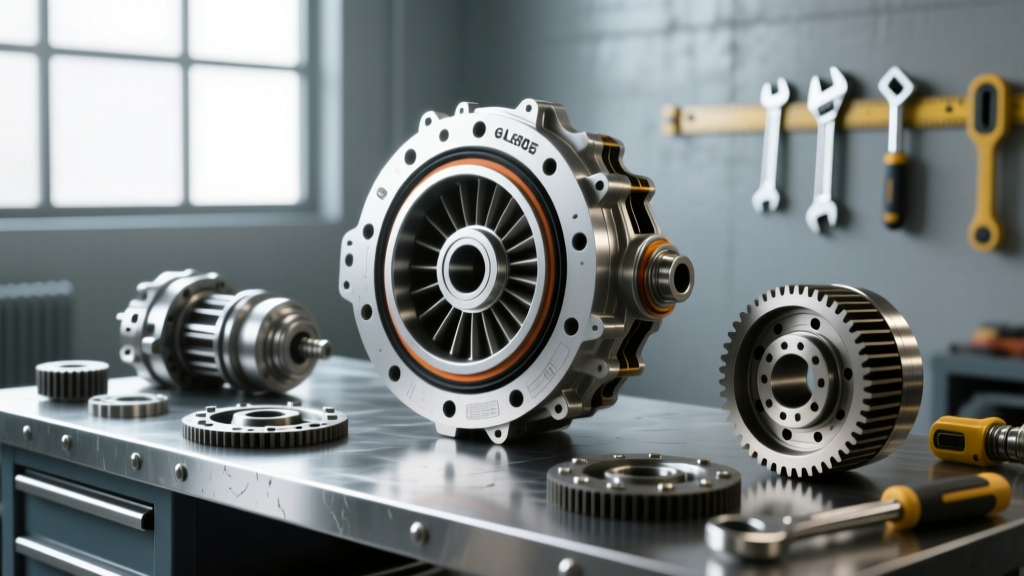
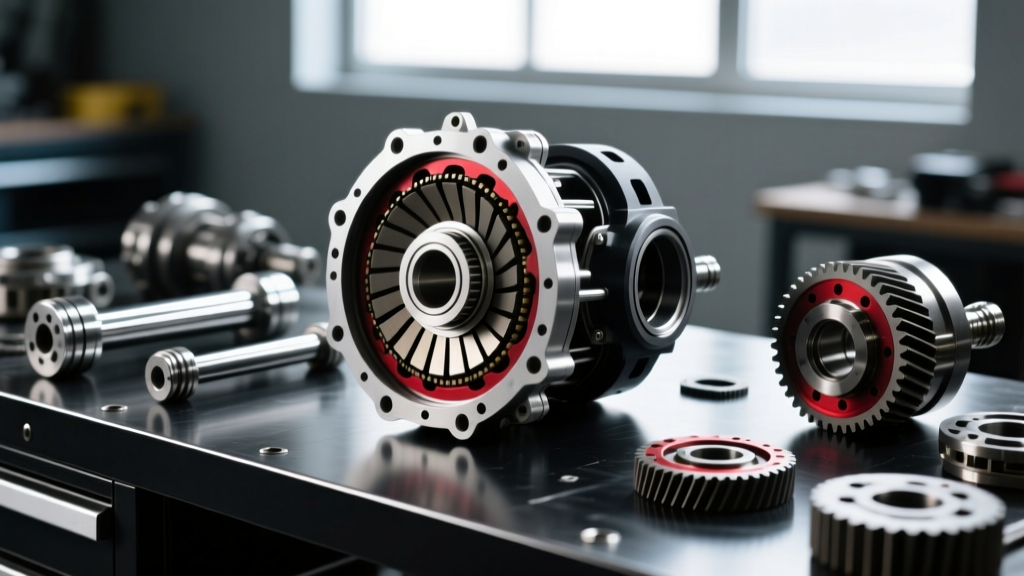
Freakshow converters are renowned for their furnace-brazed fins and billet steel covers, which virtually eliminate the catastrophic "ballooning" seen in factory stamped-steel units. However, the internal components—specifically the stator clutch and the TCC lockup piston—are still subject to extreme wear if supporting modifications are ignored.
1. Stator One-Way Clutch (Sprag) Failure
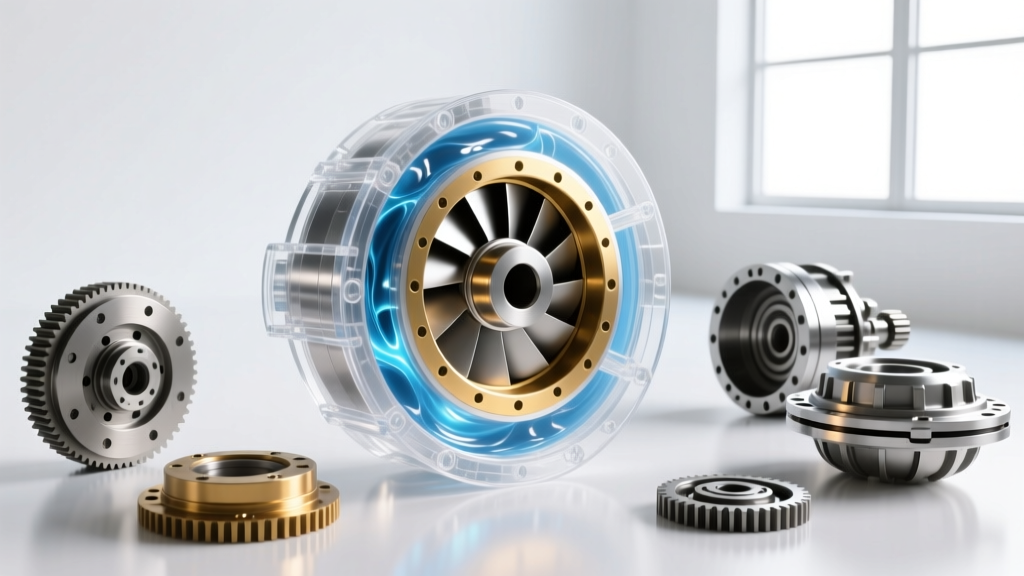
The stator's primary job is to redirect fluid flow back into the impeller, providing torque multiplication (usually a 1.8:1 to 2.2:1 ratio). If the internal sprag or roller clutch fails, the stator will freewheel in both directions.
- The Symptom: The vehicle feels incredibly sluggish off the line (0-30 mph) and lacks its usual snap. However, highway cruising and top-end RPM pulls feel completely normal because the converter is operating in its fluid-coupling phase where the stator is supposed to freewheel anyway.
- The Verification: Perform a safe stall test. If your 3200 RPM stall converter only flashes at 2100 RPM against the foot brake, the stator clutch has failed and the unit must be replaced or rebuilt.
2. TCC Lockup Friction Material Degradation
Street/strip models from Freakshow utilize aggressive carbon or Kevlar-lined lockup clutches to handle high torque without slipping. If your transmission's line pressure is inadequate, this material will glaze or burn rapidly.
- The Symptom: RPM surge or hunting between 45-75 mph when the PCM commands lockup. You may also see a delayed engagement when shifting into overdrive.
- The Codes: P0741 (TCC Performance/Stuck Off) or the infamous GM P1870 (Component Slipping), which indicates the PCM sees a discrepancy between engine RPM and transmission output speed during lockup.
3. Thrust Bearing and Pump Bushing Wear
Even with a billet cover, improper installation, lack of a reinforced front pump, or extreme harmonic imbalance from a poorly balanced flexplate can cause the converter to wobble at high RPM.
- The Symptom: A distinct whining or grinding noise that correlates directly with engine RPM, accompanied by metallic glitter in the transmission pan. This is often misdiagnosed as a failing front pump gear, but the root cause is converter hub runout destroying the pump bushing.
Diagnostic Matrix: Symptom vs. Root Cause
| Observed Symptom | Probable Root Cause | Verification / Fix |
|---|---|---|
| Sluggish launch, normal highway cruise | Stator sprag failure | Stall test (RPM will be significantly below rated flash speed) |
| RPM surge at 55 MPH, P0741 code | TCC friction burn / Low line pressure | Check WOT line pressure; upgrade to Sonnax 77754-01K TCC valve |
| Severe shudder during 3rd gear lockup | PCM tuning error (Lockup RPM too low) | Disable TCC lockup below stall speed + 500 RPM in tune |
| Transmission fluid smells burnt, dark | Cooler circuit restriction / High slip | Verify cooler return line flow; upgrade to dual-pass cooler |
| Whining noise scaling with engine RPM | Pump bushing wear / Flexplate imbalance | Drop pan to check for brass flakes; check converter hub runout |
Hydraulic Pressure & Thermal Realities for High-Stall Setups
You cannot run a 3000+ RPM stall torque converter on stock 4L60E or 4L80E hydraulic pressure. Factory base line pressure maxes out around 160-185 PSI. Under the immense hydraulic load and centrifugal force generated by a high-stall converter, stock pressure will allow the converter clutches to slip and the transmission bands to fail.
Expert Insight: For any Freakshow converter rated above 2800 RPM stall, your transmission must achieve a minimum of 190-210 PSI at Wide Open Throttle (WOT). If your line pressure is low, the converter isn't failing—the transmission is failing to support it.
To achieve this, you must install a heavy-duty pressure regulator spring and a hardened boost valve. The Sonnax 77733-01K Pressure Regulator Valve and 77733-02K Boost Valve kit are industry standards for the 4L60E. Furthermore, thermal management is non-negotiable. A high-stall converter generates massive parasitic heat during street driving. You must run a high-capacity dual-pass transmission cooler and ensure your cooler return line fluid temperature stays below 185°F (85°C) to prevent the synthetic friction modifiers in modern fluids like Amsoil Signature Series or Red Line D4 from shearing and degrading.
Step-by-Step Diagnostic Protocol
Before pulling the transmission or blaming the torque converter, execute this diagnostic sequence to isolate the fault:
- Scan Tool Data Logging: Use a bi-directional scanner or HP Tuners VCM Editor to log TCC Slip Speed, TCC Duty Cycle, and Commanded Line Pressure. If the PCM commands 100% TCC duty cycle but slip speed remains above 100 RPM, you have a hydraulic leak in the TCC apply circuit or burnt friction material.
- Line Pressure Test: Hook up a 300 PSI mechanical gauge to the transmission case port. Verify base pressure in Park (should be ~75-90 PSI) and WOT pressure in Drive (must exceed 190 PSI). If WOT pressure drops, the fault is in the pump or boost circuit, not the converter.
- Cooler Flow Test: Disconnect the cooler return line at the transmission, start the engine, and idle in Park. You should see a steady, aggressive stream of fluid. A weak stream indicates a blocked cooler or a failing converter hub seal.
- Stall Speed Verification: With the vehicle secured, brakes applied firmly, and a transmission temperature gauge monitored, briefly apply WOT. Compare the flash RPM against the manufacturer's spec. A deviation of more than 300 RPM indicates internal converter or transmission clutch failure.
Replacement Economics and Upgrade Paths
If your diagnostic protocol confirms internal torque converter failure, you must decide between rebuilding and replacing. Because Freakshow converters utilize specialized billet stators and custom furnace-brazed impellers, local rebuild shops often lack the tooling to restore them to factory specifications.
Expect to pay between $650 and $950 for a direct replacement custom-built unit from Freakshow Performance, depending on your specific spline count, pilot size, and lockup configuration. When reinstalling, always replace the front pump seal, pump bushing, and flexplate. Torque the flexplate bolts to the manufacturer's exact specification (typically 35-45 lb-ft with red Loctite on GM LS applications) and use a dial indicator to verify converter hub runout is less than 0.010 inches before seating the transmission. For deeper diagnostics on valve body wear that mimics converter failure, consulting resources like Transmission Digest can provide advanced hydraulic schematics for your specific valve body casting.
Ultimately, a high-stall torque converter is only as reliable as the hydraulic system and PCM tuning supporting it. By addressing line pressure, thermal management, and lockup scheduling, you can ensure your drivetrain handles the torque multiplication reliably for years to come.