Defining the Machine: What Is Transmission in Cars?
When apprentices and automotive students first ask, 'what is transmission in cars,' the textbook answer is simple: a torque-multiplying gear reduction system designed to keep an internal combustion engine within its optimal power band while varying vehicle speed. However, to a master transmission builder, a transmission is a living historical document. Every valve body casting, clutch pack arrangement, and solenoid placement is the result of decades of engineering compromises, fuel crises, and manufacturing realities.
To truly understand automotive transmission fundamentals, we must examine the most prolific automatic transmission in North American history: the GM Turbo Hydra-Matic 700R4, later evolved into the 4L60E. By studying the invention of this specific model and its historical design flaws, modern technicians can diagnose failures and execute precision rebuilds that far exceed original factory durability. As of 2026, the 4L60E remains a staple in repair bays, powering everything from classic C10 restomods to late-model Silverados, making its historical repair data invaluable.
The Invention of the Modern Overdrive: The 1982 THM700R4
In the late 1970s, the Corporate Average Fuel Economy (CAFE) standards forced Detroit automakers to radically rethink drivetrain efficiency. General Motors needed a transmission that offered the ruggedness of the legendary THM350 but with a fuel-saving overdrive gear. According to archives at the GM Heritage Center, the engineering team in Ypsilanti, Michigan, developed the Turbo Hydra-Matic 700R4, introduced for the 1982 model year.
The invention of the 700R4 introduced several 'firsts' for GM's rear-wheel-drive lineup:
- The 0.70:1 Overdrive Gear: Allowed highway cruising at significantly lower RPMs, reducing fuel consumption and engine wear.
- Lock-Up Torque Converter: Mechanically coupled the engine to the transmission input shaft in higher gears, eliminating parasitic hydraulic slip.
- Throttle Valve (TV) Cable System: A mechanical linkage that dictated line pressure and shift points based on throttle position, a brilliant but highly maintenance-sensitive invention.
The Evolutionary Leap: From Mechanical to Electronic
While the 700R4 was a masterpiece of hydraulic engineering, the 1990s demanded tighter emissions controls and precise shift mapping. In 1993, GM introduced the 4L60E. The 'E' denoted electronic control. The historical TV cable was deleted, replaced by a Transmission Control Module (TCM) utilizing Pulse Width Modulation (PWM) solenoids to command shift timing and torque converter clutch (TCC) apply rates. This historical pivot fundamentally changed how technicians diagnose transmission issues, shifting the focus from mechanical linkages to oscilloscope readings and solenoid resistance testing.
Historical Flaws That Dictate Modern Repair Strategies
Understanding the historical constraints of the 1980s explains why certain components fail today. When rebuilding a 4L60E in 2026, a technician is not just replacing worn parts; they are correcting 40-year-old engineering compromises.
The Infamous 3-4 Clutch Pack Failure
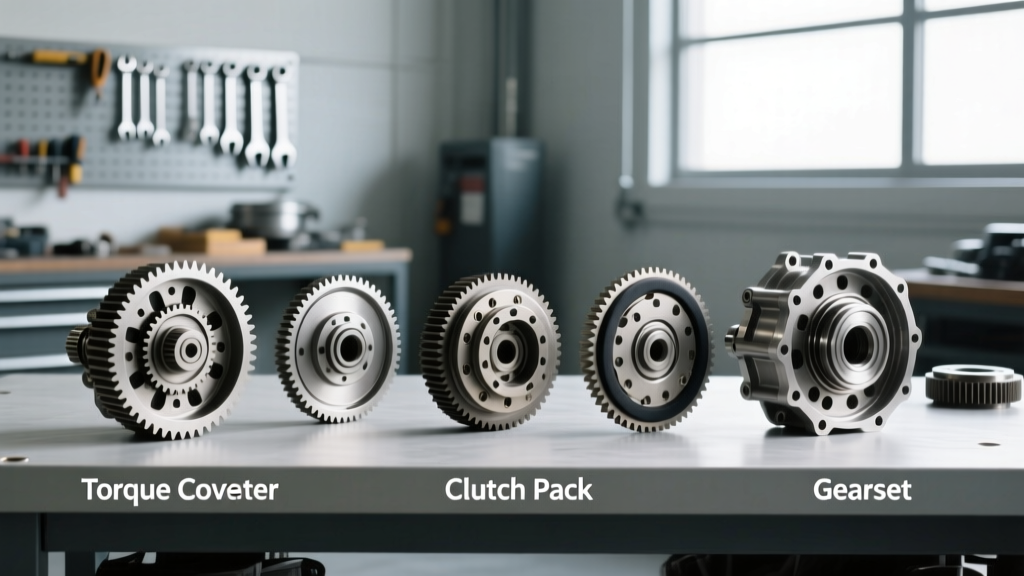
If you research SAE technical papers from the late 1980s, you will find extensive discussions on automatic transmission thermal management. The 700R4/4L60E routes the 3rd and 4th gear apply fluid through the input shaft and into the input drum. Because the 3-4 clutch pack is physically located deep inside the rotating input drum, heat dissipation is historically poor. When the transmission shifts into 4th (overdrive), the 3-4 clutches must remain applied. Under heavy load or towing, this pack generates immense heat, leading to rapid friction material degradation and burnt steels.
The Modern Repair Fix: Do not simply replace the clutches with OEM paper-based materials. Modern rebuilds require high-energy synthetic materials like the Alto Red Eagle friction set (Part # 047700). Furthermore, you must increase the clutch capacity. By utilizing a thinner .067' selective snap ring and machining the input drum backing plate, you can fit 6 friction plates and 5 steels (up from the factory 5 and 4). Target a precise clearance of 0.070' to 0.090' using a feeler gauge to ensure adequate apply fluid volume without causing delayed shifts.
The Sun Shell Stripping Issue
The factory sun shell in the 4L60E mates the sun gear to the reaction carrier. Historically, GM used a stamped steel shell with splines that were too thin for the torque loads generated by heavy V8 engines (like the 5.3L and 6.0L LS variants). When these splines strip, the vehicle loses Reverse, 2nd, and 4th gears instantly, leaving only 1st and 3rd.
The Modern Repair Fix: Discard the OEM shell. Install the Sonnax 'The Beast' heavy-duty sun shell (Part # 77729-01K). This historically significant aftermarket invention features induction-hardened splines and a reinforced collar, permanently eliminating this failure point for roughly $45 in parts.
Evolution of the GM 4-Speed Automatic Platform
To provide context for diagnostics, here is a structured breakdown of how the platform evolved from its invention to its final iterations. Recognizing these generations is critical for ordering the correct valve body castings and wiring harnesses.
| Generation | Production Years | Control Type | Peak Torque Rating | Primary Historical Failure Point |
|---|---|---|---|---|
| THM700R4 / 4L60 | 1982–1992 | Mechanical TV Cable | 350 lb-ft | TV Cable Geometry Misadjustment, Sun Shell |
| 4L60E (Early) | 1993–1997 | Electronic (Non-PWM TCC) | 380 lb-ft | 3-4 Clutch Burnup, Servo Pin Wear |
| 4L60E (Late) | 1998–2013 | Electronic (PWM TCC) | 400 lb-ft | PWM Solenoid Screen Clogging, Input Drum Cracking |
| 4L65E / 4L70E | 2001–2009 | Electronic (Heavy Duty) | 420+ lb-ft | Output Shaft Speed Sensor Failure, Pump Rotor Scoring |
Model-Specific Rebuild Specifications and Torque Data
Executing a proper rebuild on a 4L60E requires strict adherence to torque specifications. The aluminum case is highly susceptible to thread stripping if pneumatic tools are used without torque sticks. Based on current Sonnax technical resources and OEM service manuals, adhere to the following critical specs:
Crucial Torque Specifications
- Oil Pump to Case Bolts (M8): 13 Nm (96 lb-in). Warning: Over-torquing will warp the pump halves, causing immediate low-line pressure and pump gear scoring.
- Valve Body to Case Bolts (M6): 11 Nm (97 lb-in). Use a calibrated inch-pound torque wrench. Stripped valve body bolts cause internal cross-leaks that mimic solenoid failures.
- Extension Housing to Case Bolts: 33 Nm (24 lb-ft).
- Torque Converter to Flexplate Bolts: 46 Nm (34 lb-ft). Always use new Loctite-coated bolts and ensure the converter is fully seated (three distinct 'clicks' when sliding it into the pump).
Fluid Capacity and Modern Lubricants
Historically, the 700R4 ran on Dexron-II and later Dexron-III. In 2026, those fluids are obsolete. You must use ACDelco Dexron VI (Part # 10-9244). Dexron VI features a lower viscosity for improved hydraulic efficiency and superior shear stability.
Capacity: A completely dry rebuild (including the torque converter and cooler lines) requires approximately 11.2 quarts (10.6 liters). A standard pan-drop service requires 5.0 to 6.0 quarts, depending on the pan depth.
2026 Cost Analysis: Rebuild vs. Remanufactured
When advising customers, it is vital to understand the current economics of the 4L60E. A master rebuild kit (e.g., Transtar # 77008B) costs between $350 and $450. Adding hard parts like the Beast Sun Shell ($45), a heavy-duty 2-4 band ($35), and a high-performance pump slide ($60) brings the internal parts cost to roughly $600. Factoring in a new torque converter ($180) and shop labor at an average of $110/hour for 8 hours, a custom, historically corrected local rebuild costs between $1,600 and $2,200.
Conversely, a mass-produced remanufactured unit from a big-box auto parts store costs around $1,400 but often retains the historical OEM flaws (like the thin sun shell and standard 3-4 clutches). For any vehicle used for towing or performance, the model-specific, historically informed local rebuild remains the superior choice.
Conclusion
So, what is transmission in cars? It is not merely a collection of gears and hydraulics; it is an evolving mechanical puzzle. The GM 4L60E and its 700R4 predecessor perfectly illustrate how historical engineering constraints create specific failure modes that persist for decades. By understanding the invention of the overdrive automatic and the transition from mechanical TV cables to PWM electronics, modern technicians can apply targeted, model-specific upgrades that transform a historically fragile unit into a virtually indestructible drivetrain component.