Defining the Core: What Is the Transmission of a Car?
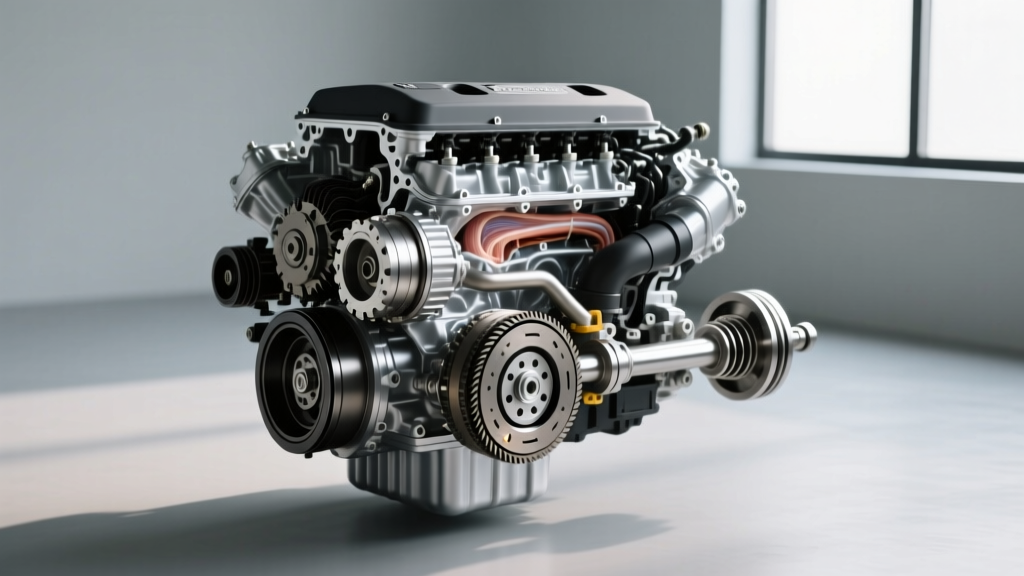
When enthusiasts and daily drivers alike ask, 'what is transmission of a car,' the simplest answer is that it is a mechanical torque-multiplication device. Internal combustion engines operate efficiently within a narrow RPM band (typically 1,500 to 6,500 RPM), yet a vehicle must travel at speeds ranging from 0 to over 100 mph. The transmission bridges this gap, utilizing varying gear ratios to multiply engine torque for acceleration while reducing RPMs for high-speed cruising and fuel efficiency.
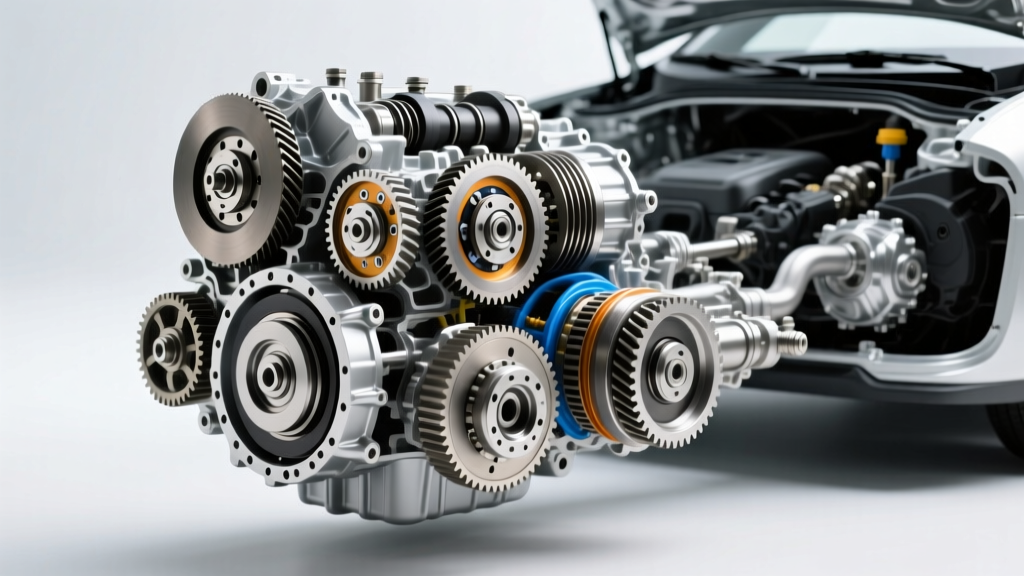
In modern automotive engineering, the automatic transmission has evolved from a rudimentary 2-speed hydraulic system into a highly complex, computer-managed mechatronic marvel. Today, we dissect exactly how automatic transmissions work, examining the hydraulic, mechanical, and electronic systems that govern modern powertrains like the ubiquitous ZF 8HP and GM 10L90.
The Anatomy of an Automatic Transmission
To understand how automatic gearboxes operate, you must first understand the three primary sub-assemblies that dictate power flow.
1. The Torque Converter (Fluid Coupling)
The torque converter replaces the mechanical clutch found in manual transmissions. It consists of four main components: the impeller (driven by the engine), the turbine (connected to the transmission input shaft), the stator (which redirects fluid flow to multiply torque), and the Torque Converter Clutch (TCC). During initial acceleration, the hydraulic coupling allows for torque multiplication (often up to 2.2:1). Once cruising speed is reached, the TCC locks the impeller and turbine together, eliminating parasitic fluid slip and improving efficiency by up to 5%.
2. Planetary Gearsets (The Mechanical Core)
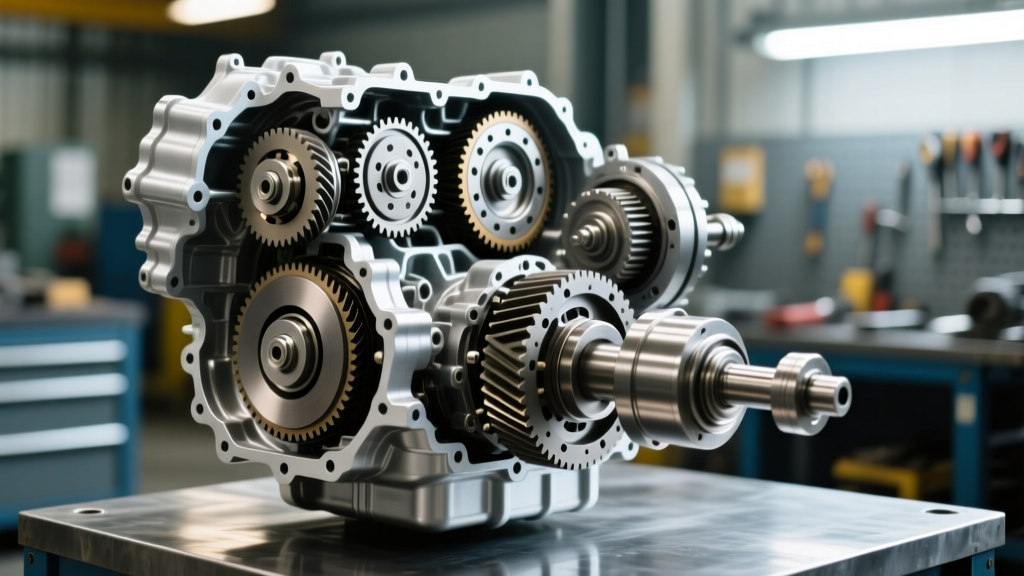
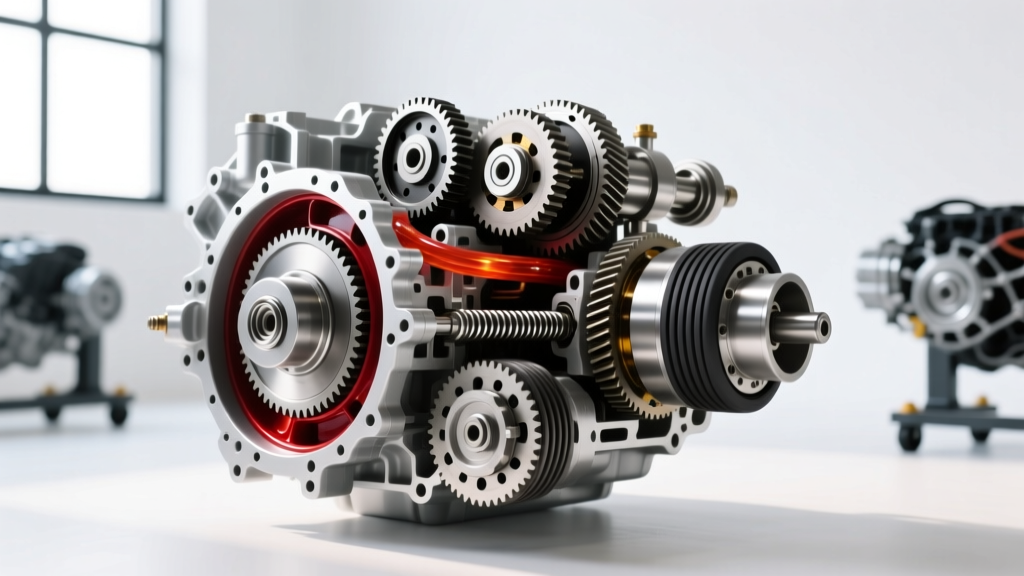
Unlike manual transmissions that use sliding helical gears on parallel shafts, automatics rely on planetary gearsets. A standard planetary set includes a sun gear (center), planet gears (mounted on a carrier), and a ring gear (outer). By selectively holding one component stationary, driving another, and using the third as the output, the transmission achieves different gear ratios and reverse without physically moving gears in and out of mesh.
Modern 8-speed and 10-speed transmissions utilize compound arrangements. For instance, the industry-standard ZF 8HP transmission uses a Lepelletier gearset arrangement, combining a simple planetary gearset with a Ravigneaux gearset to achieve eight forward speeds using only four planetary sets and five shift elements (clutches/brakes).
3. The Valve Body and Mechatronic Unit
The valve body is the hydraulic control center. In modern units, this is integrated into a 'mechatronic' module that houses the Transmission Control Module (TCM), solenoids, and hydraulic valves. Pulse-Width Modulated (PWM) solenoids precisely regulate hydraulic line pressure (often between 120 to 250 PSI) to apply clutch packs in milliseconds, ensuring imperceptible shifts.
Shift Logic: How Automatic Transmissions Execute Gear Changes
Shifting is not about moving gears; it is about applying and releasing friction elements. Below is a simplified engagement chart demonstrating how the ZF 8HP 8-speed automatic achieves its gear ratios by manipulating just five shift elements (Clutches A, B, C, D, and Brake E).
| Gear | Element A | Element B | Element C | Element D | Brake E | Approx. Ratio |
|---|---|---|---|---|---|---|
| 1st | Engaged | - | - | - | Engaged | 4.71:1 |
| 2nd | Engaged | Engaged | - | - | - | 3.14:1 |
| 3rd | Engaged | Engaged | Engaged | - | - | 2.10:1 |
| 4th | Engaged | - | Engaged | Engaged | - | 1.67:1 |
| 5th | - | Engaged | Engaged | Engaged | - | 1.29:1 |
| 8th | - | Engaged | - | Engaged | Engaged | 0.67:1 |
Expert Insight: Notice that in the ZF 8HP, only two or three elements are engaged at any given time. This minimizes internal drag and parasitic loss, which is why the 8HP is renowned for its efficiency, rivaling dual-clutch transmissions (DCTs) in power transfer.
Expert Maintenance Best Practices for Longevity
Understanding how automatic transmissions work is only half the battle; maintaining them requires ignoring marketing myths and adhering to engineering realities.
The 'Lifetime Fluid' Fallacy
Many European manufacturers label their automatic transmission fluid (ATF) as 'lifetime.' From a tribology perspective, no fluid lasts forever. Heat, shear forces, and clutch material degradation inevitably alter the fluid's viscosity and friction modifiers. For units like the ZF 8HP or GM 8L90, industry experts and Sonnax engineers recommend a drain-and-fill (or fluid exchange) every 60,000 to 80,000 miles under normal driving conditions, and every 40,000 miles for severe/towing use.
Precision Torque Specs and Filtration
When servicing modern transmissions, precision is mandatory. Many modern units utilize plastic or stamped aluminum pans with integrated filters and rubber gaskets.
- ZF 8HP Plastic Pan: The pan bolts are torque-to-yield and must be replaced. The final torque spec is exactly 10 Nm (88 lb-in). Overtorquing will crack the plastic boss, leading to catastrophic fluid loss.
- GM 6L80/8L90: Pan bolts require a much lighter touch, typically 8 to 10 Nm (71 to 89 lb-in). Always use a calibrated inch-pound torque wrench, never a standard foot-pound clicker.
Thermal Management
ATF degradation accelerates exponentially past 220°F (104°C). Normal operating temperatures should hover between 180°F and 200°F. If you tow or track your vehicle, installing an auxiliary transmission cooler or deleting the factory thermal bypass valve (a common upgrade for GM 6L80/6L90 units) ensures fluid routes to the cooler immediately upon startup, rather than waiting for the thermostat to open at 190°F.
Common Failure Modes and Diagnostic Baselines
Even the best-engineered automatic transmissions have known vulnerabilities. Recognizing these early can save thousands in rebuild costs.
1. Valve Body Bore Wear (GM 4L60E / 6L80)
In older and high-mileage GM units, the cast aluminum valve body suffers from bore wear where the steel solenoid regulator valves oscillate. This causes hydraulic cross-leaks, resulting in delayed engagements or slipping. The fix is not a full replacement, but installing a Sonnax ZIP Kit, which uses hardened steel sleeves and O-rings to restore hydraulic integrity for under $150 in parts.
2. Mechatronic Sleeve Leaks (ZF 8HP / 6HP)
The ZF 6HP and 8HP transmissions utilize a plastic adapter sleeve to pass electrical connections from the exterior TCM to the internal mechatronic unit. Over time, heat cycles cause the plastic to warp and the O-rings to flatten, resulting in fluid weeping from the side of the transmission case. The updated replacement sleeve (ZF Part # 24.340.309.055) costs roughly $40 and requires only the removal of the valve body to install.
3. Torque Converter Clutch (TCC) Shudder
If you feel a rhythmic vibration (like driving over rumble strips) at 40-50 mph under light throttle, the TCC is failing to maintain full lockup. While often blamed on the torque converter itself, the root cause is frequently degraded ATF friction modifiers or a worn TCC regulator valve in the valve body. A fluid exchange with a high-quality synthetic ATF (meeting exact OEM specs, such as ZF LifeguardFluid 8 or GM Dexron VI) resolves 60% of early-stage shudder complaints.
Final Thoughts from the Bench
Ultimately, understanding what the transmission of a car is requires looking past the gear shifter and into the hydraulic and mechanical ballet occurring beneath the vehicle. Modern automatic transmissions are masterpieces of packaging and thermodynamics. By respecting their thermal limits, adhering to strict torque specifications during service, and ignoring 'lifetime' fluid marketing, you can easily push these complex assemblies past the 250,000-mile mark with minimal intervention.