Diagnosing TH350 Thermal Breakdown Symptoms
The Turbo Hydra-Matic 350 (TH350) remains one of the most robust three-speed automatics ever built. However, because it lacks a lockup torque converter, the stator constantly slips fluid during cruising, generating massive thermal loads. A stock TH350 with a 1,600-RPM stall converter generates manageable heat, but upgrading to a 2,800-RPM or 3,500-RPM stall converter for a cammed engine exponentially increases stator slip and thermal output. If you are diagnosing a slipping 2-3 shift, a burnt-smelling dipstick, or varnish buildup on the valve body, your cooling system is likely the culprit. Modern synthetic fluids like Dexron VI can withstand higher temperatures, but the TH350's internal clearances and clutch materials still degrade rapidly once pan temperatures exceed 220°F.
Before blindly throwing parts at the rig, use an infrared thermometer on the cooler lines. The top line exiting the TH350 case is the pressure out line. At highway speeds, it should read between 180°F and 200°F. If you are seeing 240°F+ at the radiator return, the factory in-radiator cooler is clogged or entirely insufficient for your vehicle's gross weight, necessitating an external upgrade.
The 1/4" NPS Fitting Trap: Pre-Install Troubleshooting
One of the most catastrophic mistakes made during a TH350 transmission cooler installation is destroying the case threads. The TH350 utilizes 1/4" NPS (National Pipe Straight) threads for the cooler lines, not the tapered NPT threads found on many later overdrive transmissions like the 4L60E. Forcing a tapered NPT fitting into the TH350's aluminum case will wedge the metal and crack the housing, leading to immediate fluid loss and case replacement. Always use 1/4" NPS adapters with a proper crush washer or O-ring to seal the connection. Torque these fittings to exactly 12-15 ft-lbs.
Brand Teardown: Derale vs. Hayden vs. Mishimoto
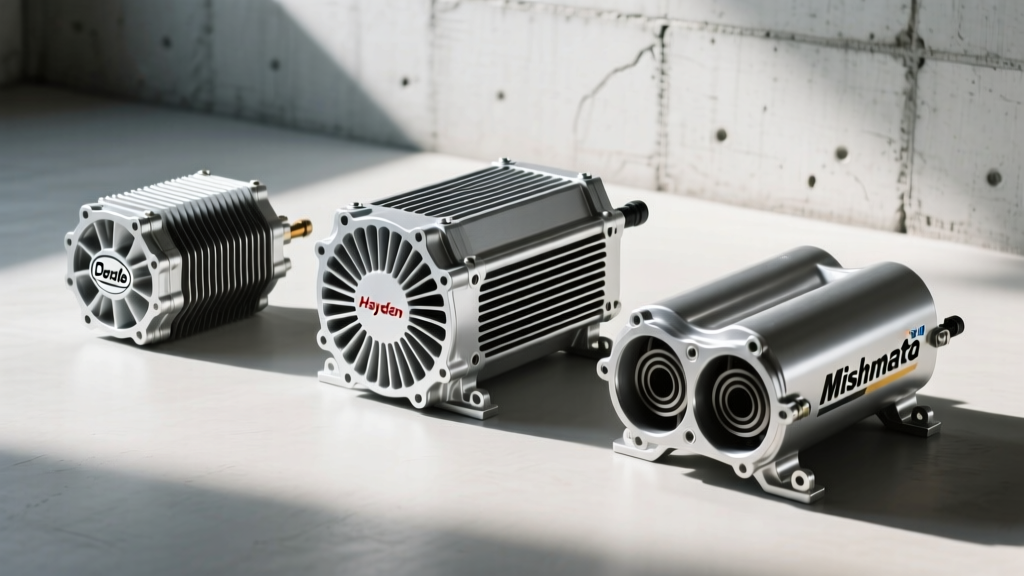
When sourcing an external cooler for a classic Chevy or a custom hot rod, three brands dominate the 2026 market: Derale, Hayden, and Mishimoto. Each approaches thermal dissipation differently, and choosing the wrong core type can lead to pressure drops that starve the TH350's rear lube circuit.
| Brand / Model | Core Type | GVW Rating | Pressure Drop | Avg. Price (2026) |
|---|---|---|---|---|
| Derale Series 8000 (13800) | Tube-and-Fin | 15,000 lbs | Low (1-2 PSI) | $55 - $70 |
| Hayden Rapid-Cool (678) | Stacked-Plate | 24,000 lbs | Moderate (3-4 PSI) | $85 - $110 |
| Mishimoto MMTC-U | Tube-and-Fin (CNC) | 20,000 lbs | Ultra-Low (<1 PSI) | $140 - $175 |
Derale Series 8000 (Tube-and-Fin)
Derale's Series 8000 (Part #13800) is the budget-friendly workhorse of the street rod community. The tube-and-fin design offers minimal flow restriction, which is excellent for the TH350's relatively low-volume pump (roughly 1.5 to 2.5 GPM at cruising RPM). However, the thin aluminum fins are highly susceptible to road debris damage. If you are mounting this behind the grille of a daily-driven C10 truck, expect the fins to flatten and lose efficiency within a few years. It is best suited for weekend cruisers or drag cars with adequate airflow.
Hayden Rapid-Cool (Stacked-Plate)
Hayden Automotive's Rapid-Cool series (Part #678) utilizes a stacked-plate architecture. According to Hayden Automotive's cooling specs, stacked plates provide up to 30% more surface area contact than tube-and-fin designs. For a TH350 bolted behind a high-torque 383 stroker pulling a heavy trailer, this is the superior choice. The trade-off is a slightly higher pressure drop. To prevent rear lube starvation, ensure you are using 3/8" or 1/2" ID cooler hoses rather than the restrictive 5/16" lines often included in universal kits.
Mishimoto X-Mission (Heavy-Duty)
Mishimoto targets the premium and high-performance segment. Their universal coolers feature CNC-machined end tanks and robust TIG-welded cores. While the Mishimoto engineering resources highlight exceptional burst-pressure limits, the real benefit for a TH350 build is the internal turbulator design, which minimizes pressure loss while maximizing fluid agitation for better heat transfer. It is overkill for a stock 350ci small block, but if you are running a 4,000-RPM stall converter, the Mishimoto cooler's flow efficiency will prevent pump cavitation.
Post-Installation Symptom Diagnosis
Even after selecting the right brand, improper installation can mimic internal transmission failures. Use this diagnostic checklist if symptoms persist post-install:
- Symptom: Transmission whines on cold startup.
Diagnosis: Cooler mounted too high. If the external cooler is mounted above the transmission pan, fluid drains back into the pan overnight. The TH350 pump cavitates on startup before prime is achieved. Always mount the cooler below the transmission's centerline or install an anti-drainback valve. - Symptom: Overheating persists despite new cooler.
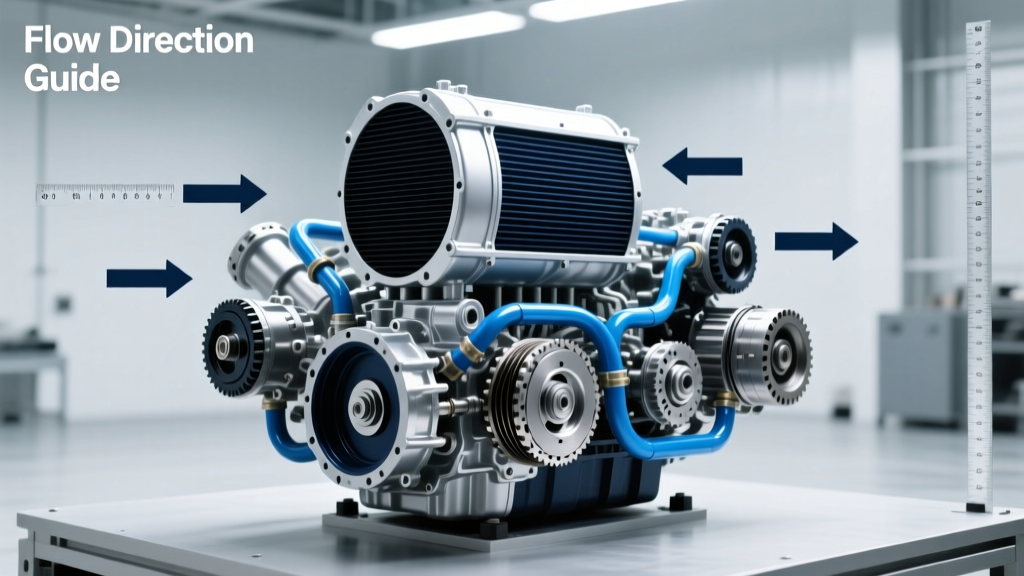
Diagnosis: Reversed flow direction. The TH350 routes fluid OUT of the top case fitting and RETURNS via the bottom fitting. If you plumb the return line into the top fitting, you create a turbulent bottleneck inside the case, severely limiting flow to the lube circuit. - Symptom: 2-3 Shift flare after cooler install.
Diagnosis: Airlock in the system. The TH350 requires roughly 11-13 quarts of fluid (depending on torque converter size). Failing to cycle the shifter through all gears with the engine idling on jack stands leaves air trapped in the cooler lines, causing erratic line pressure. Check fluid level with the transmission at operating temperature (160°F-180°F) and the engine idling in Park.
Final Verdict & Routing Specifications
For 90% of street-driven TH350 applications, the Hayden Rapid-Cool 678 offers the best balance of thermal capacity, durability, and price. If you are building a dedicated track car where every PSI of line pressure matters, the Mishimoto MMTC-U is worth the premium. Avoid routing cooler lines near the exhaust headers; radiant heat can easily add 20°F to your fluid temperatures before it even reaches the core. Use aluminum heat-shield sleeving on any hose segment within 6 inches of the exhaust, and secure all AN or push-lock fittings with stainless steel clamps rated for at least 150 PSI. For deeper insights into component matching, referencing Summit Racing's transmission cooler catalog can help verify exact fitting thread pitches for your specific adapter needs.