The Economics of Ditching the Z-Bar: 2026 Conversion Pricing
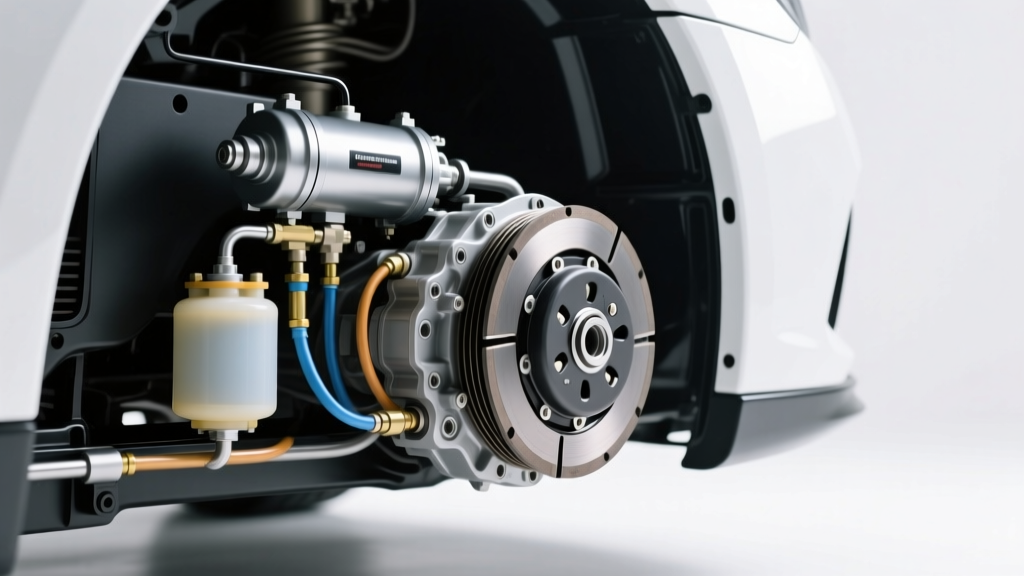
Swapping from a mechanical Z-bar linkage or a stretched steel cable to a modern hydraulic clutch system remains the single most transformative drivability upgrade for classic muscle cars, restomods, and commercial fleet retrofits. As of 2026, the proliferation of Tremec T56 Magnum, TKX 5-speed, and ZF-based crate transmissions has made hydraulic conversions a necessity rather than a luxury. Mechanical linkages routinely require 55 to 70 lbs of pedal effort and suffer from binding under high-RPM shifts, whereas a properly spec'd hydraulic system reduces pedal effort to a manageable 25-35 lbs while delivering razor-sharp engagement.
However, the financial commitment is significant. A complete, high-quality hydraulic conversion kit from manufacturers like Modern Driveline or McLeod typically ranges from $650 to $1,100 depending on whether you require an internal hydraulic release bearing (HRB) or an external pushrod-style slave cylinder. Piece-parting your own system using premium Wilwood and Tilton components can save money, but it introduces compatibility risks. Below is a comprehensive cost analysis and a critical pre-installation protocol to ensure your investment isn't wasted on defective hardware.
Component Price Breakdown & Sourcing Matrix
Building a custom hydraulic system requires matching the master cylinder bore to the slave cylinder bore to achieve the correct hydraulic ratio. A common, highly effective pairing for heavy-duty clutches (like a twin-disc Cerametallic setup) is a 0.75-inch bore master cylinder pushing a 7/8-inch or 1-inch slave cylinder.
| Component Category | Brand / Part Number Example | 2026 Est. Cost (USD) | Application Notes |
|---|---|---|---|
| Master Cylinder (0.75" Bore) | Wilwood 260-1304 | $135 - $155 | Features integral reservoir; requires firewall mounting bracket. |
| External Slave Cylinder | McLeod 1400-Series (7/8" Bore) | $95 - $125 | Ideal for external bellhousing setups; includes pushrod and clevis. |
| Internal Release Bearing (HRB) | Tilton 78000-Series (6000-Type) | $385 - $450 | Required for tight bellhousing clearances (e.g., LS/T56 swaps). |
| Hydraulic Line Kit (AN3) | Earl's Stainless Braided (24") | $65 - $95 | PTFE inner liner with stainless braid; resists high under-hood heat. |
| Firewall Reinforcement Plate | Custom CNC Stainless Steel | $35 - $55 | Mandatory for classic GM A-Body and Ford Fox-Body applications. |
| Premium DOT 4 Fluid | Castrol SRF or Motul RBF 600 | $25 - $40 | High dry boiling point (590°F+); resists vapor lock. |
Total DIY Hardware Cost: $355 (External) to $795 (Internal HRB). Professional installation labor typically adds $500 to $850, assuming 4 to 6 hours at a standard $125-$145 hourly shop rate.
The Pre-Flight Check: Bench-Testing Your Hardware
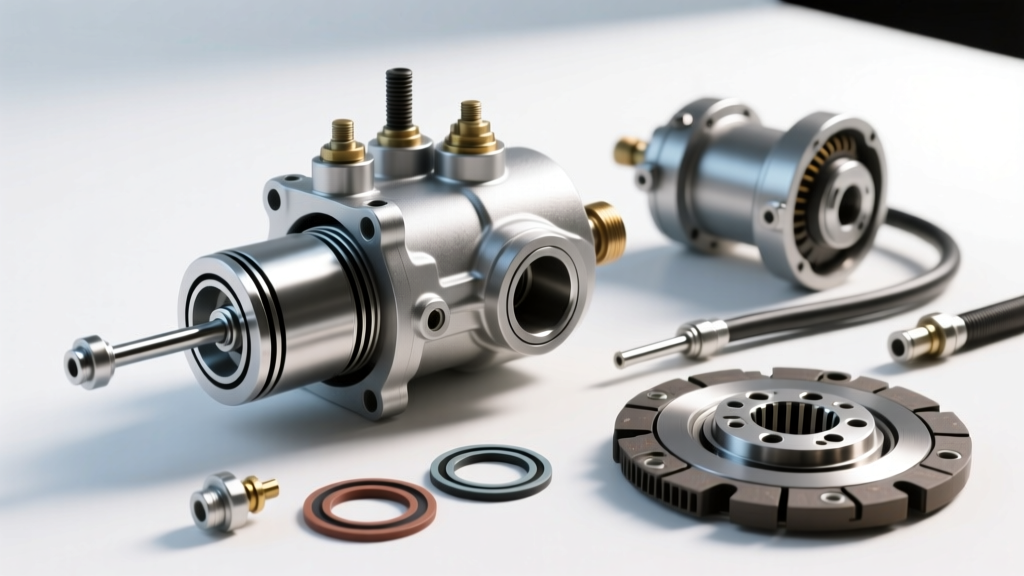
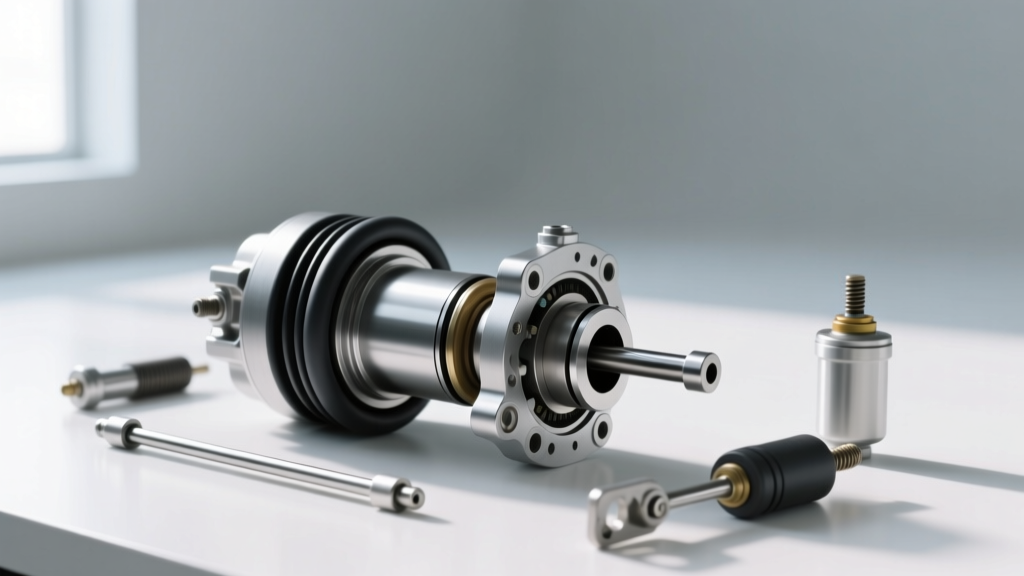
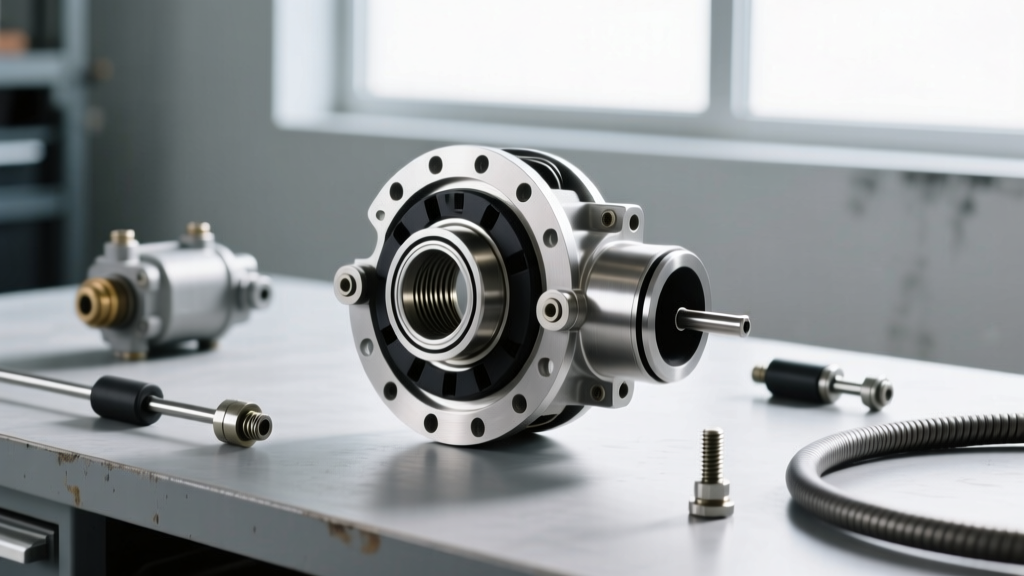
The most expensive mistake in a driveline swap is burying an untested slave cylinder inside a bellhousing, only to discover it has a blown internal seal or insufficient stroke once the transmission is bolted in. Understanding how to test clutch slave cylinder assemblies on the bench is the difference between a seamless weekend swap and a stranded vehicle. Whether you are using an external pushrod slave or an internal HRB, you must perform the following three-step bench validation before installation.
Step 1: The Vacuum Bleed and Seal Integrity Test
Internal seals on slave cylinders can dry out or deform during warehouse storage. To verify seal integrity and pre-bleed the unit:
- Mount the slave cylinder in a bench vise using soft jaws to avoid scoring the aluminum or steel housing.
- Attach a Mityvac vacuum bleeder to the bleeder screw nipple.
- Submerge the master cylinder pushrod end (or fluid inlet) in a clean beaker of fresh DOT 4 fluid.
- Pull 15 to 20 in-Hg of vacuum on the Mityvac. Watch the fluid draw through the line and into the slave cylinder.
- Hold the vacuum for 60 seconds. If the gauge drops more than 2 in-Hg, the internal cup seal is compromised. Reject the part and initiate a warranty return immediately.
Step 2: Stroke Measurement via Dial Indicator
Hydraulic ratio dictates your clutch engagement. If your slave cylinder doesn't stroke far enough, the clutch will drag and grind during gear changes. According to Tilton Racing engineering guidelines, a standard 5.5-inch to 7.25-inch racing clutch requires approximately 0.450" to 0.550" of release bearing travel, while heavy-duty street twin-discs may require up to 0.650".
- Clamp a magnetic dial indicator to your bench, resting the plunger on the slave cylinder's pushrod or release bearing face.
- Actuate the master cylinder through its full stroke (typically 1.1" to 1.25" for a Wilwood 260-1304).
- Measure the slave output. A 0.75" master pushing a 7/8" slave yields a 0.73:1 ratio. Therefore, a 1.1" master stroke should produce roughly 0.80" of slave travel.
- If travel is short, you have trapped air or a mismatched bore size.
Step 3: The Pressure Decay Test (Internal HRBs)
For internal hydraulic release bearings like the Tilton 6000-series, bench-bleeding is notoriously difficult due to the internal fluid routing. Connect a Motive Products power bleeder to the master cylinder reservoir, pressurize the system to 15 PSI, and crack the bleeder screw on the HRB. Once fluid flows bubble-free, close the screw and leave the system pressurized at 15 PSI for 10 minutes. Any pressure drop indicates a leaking O-ring on the HRB piston or a faulty AN3 fitting crimp.
Hidden Costs & Driveline Edge Cases
When budgeting for a hydraulic conversion, DIYers often overlook the secondary costs associated with vehicle-specific geometry and chassis limitations.
Firewall Flex and the 'Spongy Pedal' Phenomenon
Classic vehicles, particularly 1968-1972 GM A-Bodies (Chevelle, GTO) and early Ford Mustangs, feature relatively thin sheet metal firewalls. When a hydraulic master cylinder generates 800+ PSI of line pressure during a heavy clutch engagement, the firewall can flex inward by 1/8th of an inch. This flex absorbs hydraulic volume, resulting in a spongy pedal and incomplete clutch disengagement. The mandatory fix is a CNC-cut stainless steel firewall reinforcement plate ($35-$55), which distributes the load across a 12-inch span. Skipping this part will ruin the feel of a $600 hydraulic system.
Custom Pushrod Geometry and AN Fittings
Off-the-shelf conversion kits assume stock engine-to-firewall dimensions. If you are performing an LS-swap or a Coyote V8 swap, the engine is often moved forward or backward for weight distribution, altering the distance between the clutch fork and the slave cylinder. You may need to source a custom-length chromoly pushrod ($40-$75). Furthermore, routing AN3 stainless lines around aftermarket exhaust headers often requires buying custom 90-degree or 120-degree AN3 hose ends and crimping your own lines, adding roughly $85 in fittings and tool rental fees to your budget.
"The hydraulic clutch system is only as rigid as its mounting points. A premium Wilwood master cylinder mounted to a flexing, unreinforced firewall will perform worse than a properly adjusted mechanical Z-bar." — Driveline Engineering Best Practices, Modern Driveline
Fluid Selection and Bleeding Economics
Not all brake and clutch fluids are created equal, and choosing the wrong fluid can lead to catastrophic failure under high-heat conditions. Clutch hydraulic systems are uniquely vulnerable to heat because the slave cylinder or HRB is mounted directly to or inside the transmission bellhousing, acting as a heat sink for exhaust and drivetrain temperatures.
- DOT 3: Avoid entirely. Low dry boiling point (401°F) and highly hygroscopic. Prone to vapor lock in performance applications.
- DOT 4 (Standard): Acceptable for daily drivers. Dry boiling point of 446°F. Requires flushing every 2 years.
- DOT 4 (High-Performance/ESTER based): Castrol SRF or Motul RBF 600. Dry boiling point exceeds 590°F. This is the 2026 industry standard for restomods and track cars. Cost is higher ($30+ per liter), but it prevents the fluid from boiling and turning into a compressible gas during stop-and-go track traffic.
- DOT 5 (Silicone): Never use in a performance clutch. Silicone fluid is highly compressible and will result in a permanently spongy, unpredictable pedal feel.
Final Torque Specs and Assembly Protocol
When finalizing your installation, precision torque is non-negotiable to prevent fluid leaks and catastrophic hardware failure. Use a calibrated 1/4-inch drive torque wrench for all hydraulic fittings and mounting hardware.
- Master Cylinder Firewall Nuts (Typically 5/16" or M8): 15-18 lb-ft. Do not overtighten, as this will warp the master cylinder mounting flange and bind the internal piston.
- AN3 Inverted Flare / Bubble Flare Fittings: 12-15 lb-ft. Always use two wrenches (one to back up the adapter, one to turn the nut) to prevent twisting and tearing the stainless braided line.
- External Slave Cylinder Mounting Bolts (M8x1.25): 18-22 lb-ft. Apply medium-strength Loctite 243 to the threads, as bellhousing vibration will back these out over time.
- Bellhousing to Engine Block Bolts: 35-50 lb-ft (depending on OEM spec), ensuring the transmission is perfectly aligned to the engine dowel pins to prevent binding the HRB on the transmission input shaft retainer.
Is the Investment Worth the ROI?
When you factor in the $400-$800 hardware cost, the $50 in hidden fabrication supplies, and the 6 hours of meticulous bench-bleeding and installation labor, a hydraulic clutch conversion is a premium modification. However, the return on investment is immediate. You eliminate the periodic adjustment of mechanical linkages, you erase the risk of a snapped cable leaving you stranded in traffic, and you gain the feather-light pedal modulation required to safely manage 500+ lb-ft of torque in modern restomods. By taking the time to properly test your slave cylinder on the bench and reinforcing your firewall, you ensure your hydraulic system delivers decade-long, leak-free performance.