The Critical Link Between Clutch Reservoir Fluid and Slave Cylinders
In the 2026 automotive landscape, manual transmissions are increasingly relegated to high-performance sports cars, dedicated off-road rigs, and heavy-duty towing platforms. Because these vehicles operate under extreme thermal and mechanical stress, the hydraulic systems that actuate their clutches must be meticulously maintained. The most common—and often most misunderstood—symptom of hydraulic degradation is an unexplained drop in clutch reservoir fluid. While a leaky master cylinder or a cracked hard line can cause fluid loss, the vast majority of catastrophic hydraulic failures originate at the slave cylinder.
Understanding exactly where your slave cylinder is located, how it interacts with the clutch reservoir fluid, and what specific failure modes look like is the cornerstone of manual transmission preventive maintenance. This guide provides a deep-dive diagnostic matrix, platform-specific location data, and exact maintenance protocols to keep your drivetrain shifting flawlessly.
External vs. Concentric Slave Cylinder (CSC) Architectures
Before tracing a leak, you must identify which of the two primary slave cylinder architectures your vehicle employs. The design dictates not only the location of the component but also the labor intensity of the repair and the specific diagnostic steps required.
Visual Diagnosis: External Slave Locations
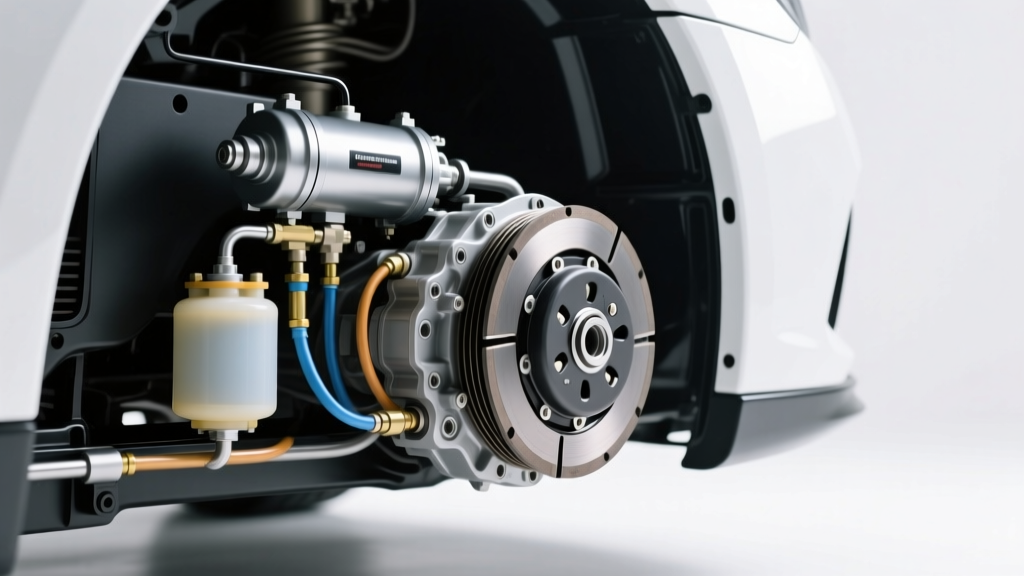
External slave cylinders are mounted directly to the exterior of the transmission bellhousing. They feature a visible pushrod that actuates a mechanical release fork, which in turn presses the throw-out bearing against the pressure plate fingers.
- Common Applications: Jeep AX15/NV3550, older Honda K-Series, Subaru 6MT, and many light-duty commercial trucks.
- Leak Tell-Tales: Fluid pooling on the exterior bellhousing face, wetness on the release fork pivot ball, or fluid dripping directly onto the steering rack or exhaust cross-member.
- Maintenance Advantage: External slaves can often be replaced without removing the transmission from the vehicle, making them highly serviceable.
The Hidden Leak: Concentric Slave Cylinders (CSC)
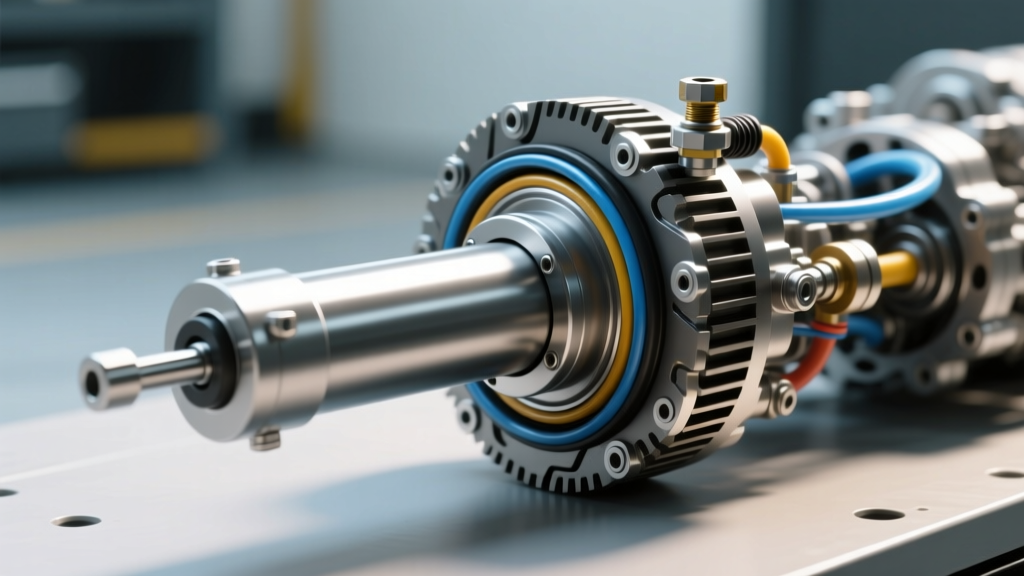
Also known as a Hydraulic Release Bearing (HRB), the Concentric Slave Cylinder is a marvel of packaging efficiency but a nightmare for casual diagnostics. The CSC wraps entirely around the transmission input shaft and sits inside the bellhousing. When clutch reservoir fluid is pressurized, the entire CSC assembly slides forward to press directly against the pressure plate diaphragm springs.
- Common Applications: Tremec T56 Magnum (GM LS/Camaro), Ford MT-82 (Mustang), Porsche GT3 (991/992), and modern BMW ZF GS6 platforms.
- Leak Tell-Tales: Because the CSC is enclosed, clutch reservoir fluid loss will manifest as fluid weeping from the lower bellhousing inspection cover, rubber access plugs, or being slung outward by the flywheel onto the lower engine block and exhaust.
- Maintenance Reality: A leaking CSC requires complete transmission removal. Preventive replacement is highly recommended during any clutch friction disc swap.
Platform-Specific Slave Cylinder Location Matrix
To aid in your preventive maintenance inspections, refer to the matrix below for exact slave cylinder types, OEM part references, and leak indicators for popular manual platforms.
| Transmission Model | Primary Application | Slave Architecture | OEM / Premium Part Ref | Primary Leak Tell-Tale Sign |
|---|---|---|---|---|
| Tremec T56 Magnum | GM Camaro SS / Corvette C6/C7 | Internal CSC | FTE KN25035 / Sachs ZA34003 | Fluid weeping from lower bellhousing rubber dust plug |
| Ford MT-82 / MT-82 D4 | 2011-2023 Mustang GT / Shelby | Internal CSC | Ford OEM PMCC-7A564-A | Fluid slung onto exhaust H-pipe; spongy pedal feel |
| Mazda Skyactiv-MT | Mazda3 Turbo / ND Miata | External Pushrod | LuK LSC Series / OEM N244-41-920 | Wetness on exterior bellhousing face near starter motor |
| Subaru 6MT (TY85) | WRX / STI (2006-2021) | External Pushrod | Subaru OEM 30620AA111 | Fluid dripping directly onto the steering rack boots |
| ZF S6-45 (GS6-45BZ) | BMW M2 / M3 / M4 (F8X/G8X) | Internal CSC | FTE KN28048.1.4 | Burning fluid smell from exhaust heat; low reservoir |
Preventive Maintenance: Tracking Clutch Reservoir Fluid Levels
Monitoring your clutch reservoir fluid is not a 'check it when it breaks' task; it requires a scheduled preventive approach. Many modern vehicles integrate the clutch master cylinder feed into the main brake master cylinder reservoir (e.g., Honda, Volkswagen MQB platforms), while others utilize a dedicated, smaller reservoir mounted on the firewall (e.g., GM full-size trucks, Ford Performance vehicles).
Step 1: Baseline Measurement and Fluid Identification
Always verify the fluid specification stamped on the reservoir cap. Using the incorrect fluid will destroy the internal EPDM rubber seals of both the master and slave cylinders.
- DOT 3 / DOT 4: Glycol-ether based. Highly hygroscopic (absorbs moisture). DOT 4 is standard for 90% of modern manual cars. Boiling point degrades as water content rises.
- DOT 5.1: Glycol-based but with a higher dry boiling point (approx. 518°F / 270°C). Ideal for track-driven vehicles where bellhousing heat transfers into the CSC.
- Mineral Oil (LHM): Used in specific European applications (e.g., older Citroëns, some Rolls-Royce manual conversions). Never mix with DOT fluids; immediate seal failure will occur.
Step 2: Moisture Testing and Flush Intervals
According to SAE FMVSS 116 fluid standards, DOT 4 fluid can absorb up to 3% water by volume over two years of normal driving. This moisture not only lowers the boiling point—causing vapor lock and a spongy clutch pedal under heavy towing or track use—but also accelerates internal corrosion within the slave cylinder bore. Use a digital DOT fluid tester pen annually. If the moisture content exceeds 2%, perform a complete hydraulic flush.
Torque Specifications and CSC Replacement Protocols
If your diagnostic inspection confirms that the clutch reservoir fluid loss is originating from an internal Concentric Slave Cylinder, the transmission must be dropped. Proper installation is critical to prevent immediate secondary failures.
Expert Technician Warning: Never bolt up a transmission with a dry CSC. You must 'bench bleed' the Concentric Slave Cylinder before installation. Hold the CSC vertically, slowly compress the inner bearing race by hand (or using a specialized arbor press tool—never use a vise directly on the plastic bearing face), and pump fluid through the line until zero air bubbles emerge. Failing to do this will trap air inside the hydraulic bearing, resulting in a permanently spongy pedal and incomplete clutch disengagement.
Critical Fastener Torque Specs
When reinstalling the transmission and slave assembly, adhere strictly to OEM torque specifications to prevent bellhousing misalignment, which can cause the CSC to wear unevenly and leak prematurely.
- GM LS / LT Bellhousing Bolts (M12x1.75): 37 lb-ft (50 Nm)
- Ford Modular / Coyote Bellhousing Bolts (M12): 35 lb-ft (47 Nm)
- Subaru 6MT Bellhousing to Block (M12): 48 lb-ft (65 Nm)
- CSC Hydraulic Line Banjo Bolt / Quick Connect: Hand-thread to prevent cross-threading, then tighten to 11 lb-ft (15 Nm).
- Slave Cylinder Bleeder Screw: 62 lb-in (7 Nm). Caution: Over-torquing the bleeder screw will strip the soft aluminum threads on the CSC body, ruining a $250+ component.
Bleeding the System Post-Repair
Once the slave cylinder is located, repaired, or replaced, the hydraulic system must be bled to restore firm pedal feel. While gravity bleeding works for simple external setups, internal CSC systems often require reverse pressure bleeding. By pushing fluid from the slave cylinder bleeder screw up into the clutch reservoir fluid tank, you force trapped air bubbles upward against their natural buoyancy, ensuring a rock-solid pedal. Always top off the reservoir with fresh, sealed DOT fluid, as open bottles absorb ambient humidity within 24 hours.
For further technical documentation on hydraulic release bearing pre-fill procedures and material tolerances, consult the engineering resources provided by FTE Automotive Hydraulic Systems or reference the specific driveline service manuals available via Tremec Driveline Solutions.
Conclusion
A dropping clutch reservoir fluid level is your vehicle's earliest warning system against catastrophic drivetrain failure. By understanding the location and architecture of your specific slave cylinder—whether it is an easily accessible external pushrod unit or a hidden internal CSC—you can accurately diagnose leaks, select the correct replacement components, and execute precise maintenance protocols. Stay ahead of hydraulic degradation, and your manual transmission will deliver seamless, reliable shifts for hundreds of thousands of miles.