The Core Question: Does a Bad Torque Converter Make Noise During Lockup?
When a driver or technician asks, does a bad torque converter make noise, the answer is a resounding yes—but the type of noise and the exact moment it occurs are the true diagnostic keys. The most critical phase of torque converter operation is the Torque Converter Clutch (TCC) lockup. This is the moment the transmission transitions from fluid coupling to a direct mechanical link between the engine and the transmission input shaft. If the lockup mechanism is failing, it will absolutely generate distinct auditory and tactile symptoms.
As we navigate the 2026 automotive landscape, modern 8-speed, 9-speed, and 10-speed automatic transmissions utilize continuous or near-continuous TCC slip to meet stringent fuel economy standards. This means the lockup clutch is rarely fully 'locked' or fully 'open'; it is constantly modulating. When the friction materials degrade or the hydraulic control circuits fail, this modulation turns into audible chatter, solenoid buzz, or mechanical groaning. Understanding these specific lockup noises is the first step in accurate symptom diagnosis.
Anatomy of TCC Lockup Noise: What Are You Actually Hearing?
To diagnose the issue, we must isolate the noise profile. A failing lockup system typically presents one of three distinct acoustic signatures:
1. TCC Shudder and Clutch Chatter (Friction Material Failure)
This is the most common complaint. While often described as a 'feeling' (like driving over highway rumble strips at 45–55 MPH), severe TCC shudder generates a low-frequency droning or chatter noise that resonates through the vehicle floorboards. This occurs when the carbon, Kevlar, or cellulose-based friction lining on the TCC piston loses its coefficient of friction. Instead of applying smoothly, the clutch 'sticks and slips' at a frequency of 30 to 50 Hz. According to Sonnax technical resources, this stick-slip oscillation is heavily exacerbated by degraded transmission fluid that has lost its friction modifiers.
2. Solenoid Click and PWM Buzz (Electro-Hydraulic Noise)
Modern transmissions use Pulse Width Modulated (PWM) solenoids to control TCC apply and release rates. A healthy PWM solenoid operates silently. However, if the internal pintle is worn, or if metallic debris from a failing pump bushing enters the solenoid screen, the valve can vibrate audibly. Technicians often describe this as a 'buzzing' or 'angry bee' sound emanating from the transmission pan, occurring precisely when the scan tool commands TCC apply. In severe cases, a failing TCC regulator valve in the valve body will cause a rhythmic hydraulic knocking sound as line pressure rapidly fluctuates.
3. Turbine Hub Groan (Mechanical Interference)
A deep, mechanical groan or howl that occurs only during hard TCC lockup (usually in higher gears under heavy throttle) points to physical interference. When the TCC piston applies, it pushes the turbine forward against the stator support or pump stator. If the converter's internal clearances are compromised, or if the front pump bushing is severely worn, the turbine hub will physically rub against the stator support tube. This metal-on-metal friction creates a distinct groaning noise that ceases the millisecond the TCC releases.
Transmission-Specific Lockup Noise Profiles
Different transmission architectures exhibit unique lockup failure modes. Below is a breakdown of common TCC noise profiles across widely used platforms, alongside diagnostic focal points and estimated repair costs.
| Transmission Model | Common TCC Noise / Symptom | Typical Failure Point | Estimated Repair Cost (2026) |
|---|---|---|---|
| GM 6L80 / 6L90 | Low-frequency shudder & groan at 40-60 MPH | Worn TCC friction lining; TCC PWM Solenoid (P/N 24230298) screen restriction | $350 (Solenoid/Valve Body) to $1,600 (New Converter) |
| Ford 6R80 / 10R80 | High-pitch whine or chatter during light-throttle lockup | TCC clutch drag; Valve body separator plate wear causing apply pressure leaks | $450 (Valve Body Kit) to $2,200 (Converter & Fluid) |
| ZF 8HP (BMW/FCA) | Harsh 'clunk' on lockup apply; buzzing from mechatronic unit | Mechatronic sleeve leaks (O-rings harden); Low line pressure during TCC modulate | $400 (Sleeve Kit) to $3,800 (Full Mechatronic Replacement) |
Step-by-Step Diagnostic Protocol for TCC Noise
The Automatic Transmission Rebuilders Association (ATRA) emphasizes that guessing based on noise alone leads to misdiagnosis. Follow this strict protocol to confirm if the torque converter lockup is the culprit:
- Step 1: Scan Tool Data (Slip RPM Monitoring). Connect a bi-directional scan tool and monitor 'TCC Slip RPM' while driving at a steady 55 MPH in top gear. A healthy continuous-slip TCC will show a steady 20 to 40 RPM of slip. If the slip RPM bounces wildly (e.g., dropping to -50 and spiking to +150) in time with the shudder noise, the clutch friction material is failing.
- Step 2: The 'Brake Tap' Test. When the noise/shudder is occurring, lightly tap the brake pedal. This signals the TCM to instantly release the TCC. If the noise immediately vanishes and the engine RPM flares slightly, you have 100% confirmed the noise is isolated to the TCC lockup circuit.
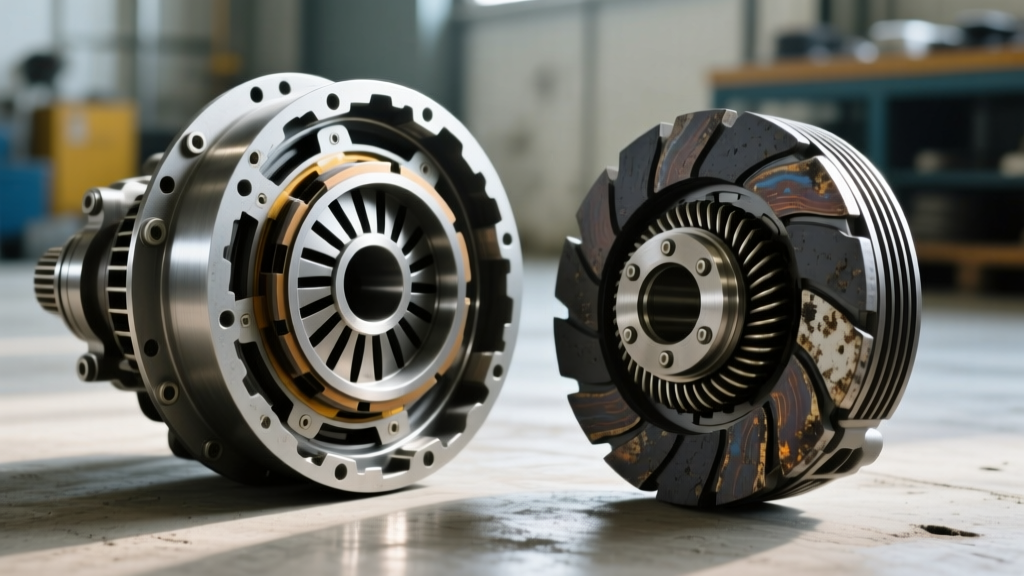
- Step 3: Fluid Pan Inspection. Drop the transmission pan. Do not just look for metal shavings. TCC friction wear presents as a fine, dark, muddy sludge or 'black snow' coating the pan and magnets. If the fluid smells burnt and contains excessive cellulose/carbon debris, the converter lockup clutch is physically disintegrating.
- Step 4: Line Pressure Test. Install a mechanical pressure gauge. Command TCC apply via the scan tool. If line pressure drops significantly during lockup apply, the hydraulic circuit is bleeding off (often due to worn TCC regulator valves or leaking turbine hub seals), preventing the clutch from applying with enough force to stop the chatter.
Repair Realities: Solenoid vs. Full Converter Replacement
Once you have isolated the noise to the lockup system, the repair path diverges based on the root cause. You cannot simply 'replace the clutch' inside a sealed torque converter without specialized cut-and-weld equipment.
Scenario A: Hydraulic or Electrical Noise (Solenoids and Valves)
If the noise is a solenoid buzz or a hydraulic knock, and the TCC slip RPM on the scan tool is relatively stable despite the noise, the converter itself may be fine. The issue lies in the valve body or solenoid pack. For example, replacing a failing GM 6L80 TCC PWM solenoid (AC Delco P/N 24230298) requires dropping the pan and valve body, costing roughly $350 in parts and labor. Upgrading the TCC regulator valve with a Sonnax 95000-04K kit can permanently resolve hydraulic knocking caused by bore wear.
Scenario B: Friction Chatter and Mechanical Groan
If the fluid is contaminated with friction material, or if the turbine hub is groaning against the stator, the torque converter must be replaced. A new OEM or high-quality aftermarket remanufactured converter for a standard passenger vehicle ranges from $600 to $1,200 for the part. Labor involves removing the transmission (or at least dropping the crossmember and sliding it back), which adds $800 to $1,500 in labor.
Critical Installation Note: When installing a new converter, always verify the flexplate-to-crankshaft torque specs (e.g., 74 lb-ft for most GM LS/LT applications) and ensure the converter is fully seated into the transmission oil pump gears before tightening the bellhousing bolts (typically 37 lb-ft). Failure to seat the converter fully will result in immediate pump gear destruction and severe whining noises upon first startup.
Expert Takeaway
So, does a bad torque converter make noise? Yes, and the lockup phase is where it screams the loudest. By understanding the difference between friction chatter, PWM solenoid buzz, and mechanical turbine groan, technicians can avoid the costly mistake of replacing a perfectly good torque converter when a $50 solenoid or a worn valve body bore is the actual culprit. Always rely on TCC slip RPM data and fluid analysis to guide your repair strategy, ensuring a definitive fix the first time.