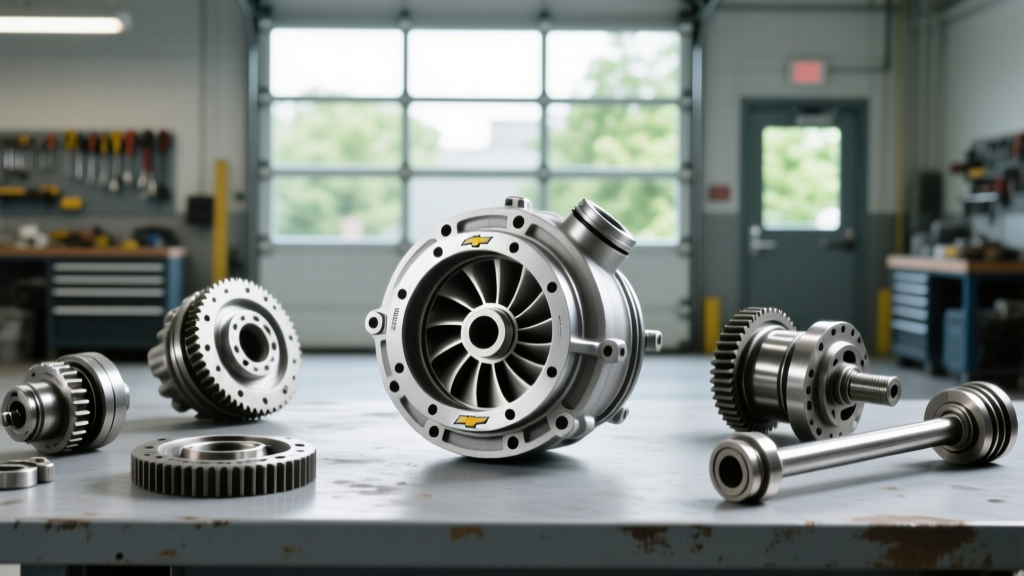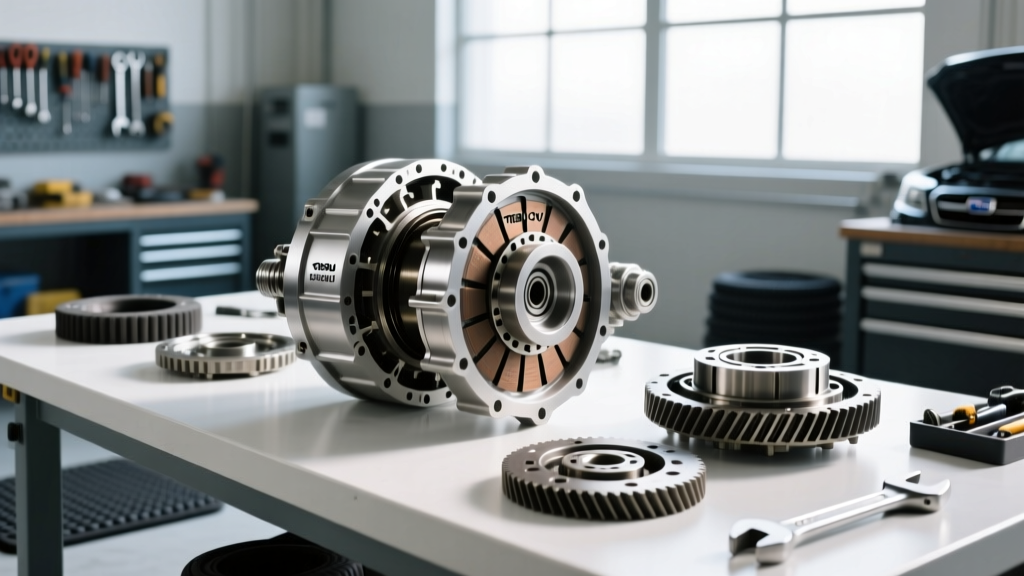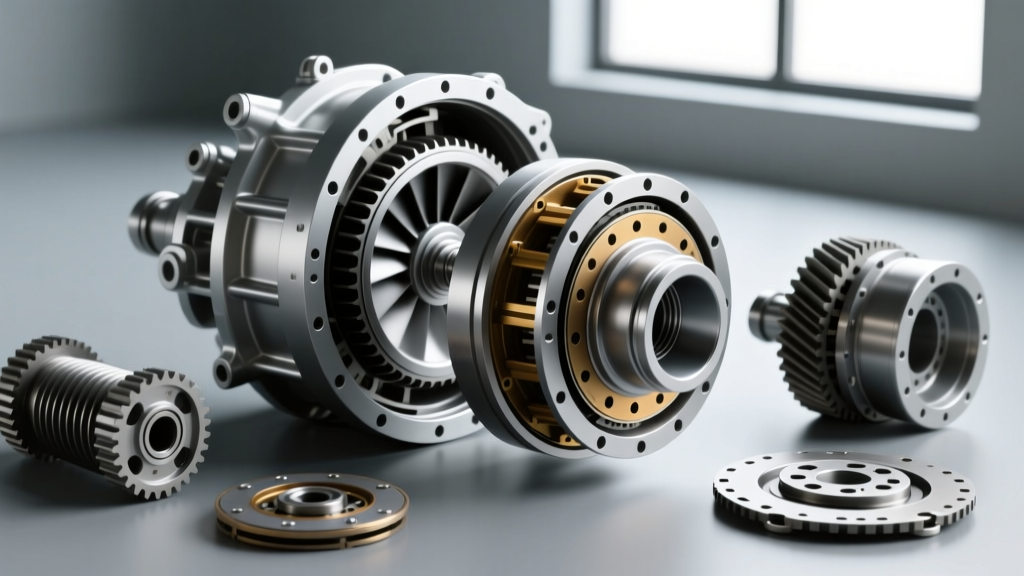
The Ford 5R110W TorqShift five-speed automatic transmission is legendary for its heavy-duty towing capability, particularly when paired with the 6.0L and 6.4L Power Stroke diesels in the Super Duty lineup. However, as these trucks push well past the 15-year mark in 2026, owners and fleet managers are increasingly battling a notorious drivability issue: torque converter shudder. Often described as feeling like the truck is driving over highway rumble strips at speeds between 40 and 60 mph, this shudder can rapidly destroy internal transmission components if left unaddressed.
As a preventive maintenance guide, this article dives deep into the root causes of the 5R110W torque converter shudder, outlining precise diagnostic protocols, fluid chemistry updates, and hard-part replacement specifications to keep your TorqShift operating flawlessly.
Anatomy of the 5R110W Torque Converter Shudder
To effectively diagnose the shudder, you must understand the mechanical and hydraulic forces at play. The 5R110W utilizes a Pulse Width Modulated (PWM) Torque Converter Clutch (TCC) solenoid. Unlike older on/off lockup clutches, the PWM solenoid allows the Powertrain Control Module (PCM) to modulate TCC apply pressure, creating a controlled 'slip' zone. This slip zone smooths out the transition from fluid coupling to mechanical lockup, reducing NVH (Noise, Vibration, and Harshness).
Shudder occurs when the friction coefficient of the transmission fluid degrades, or when hydraulic cross-leaks occur in the solenoid body bore. Instead of a smooth, controlled slip of 20 to 40 RPM, the clutch enters a rapid slip-grab-slip-grab cycle. This oscillation transfers directly through the driveline, manifesting as a violent chassis shudder. Additionally, fatigue or failure of the multi-stage torsional damper springs inside the torque converter itself can mimic TCC shudder, requiring careful isolation.
Diagnostic Protocol: Isolating the Shudder
Before dropping the transmission pan or ordering replacement parts, perform these field-tested diagnostic steps to confirm the shudder originates from the TCC apply circuit.
Step 1: The 'Brake Tap' Test
Drive the vehicle at the speed where the shudder typically occurs (usually 45–55 mph in 4th or 5th gear under light throttle). When the shudder begins, lightly tap the brake pedal just enough to activate the brake light switch, but not enough to slow the vehicle significantly.
Pro-Tip: Tapping the brake signals the PCM to instantly command the TCC solenoid to release. If the shudder immediately stops the moment you tap the brake, you have confirmed the issue is isolated to the torque converter clutch apply circuit or fluid friction.
Step 2: Scan Tool PID Monitoring
Connect a bidirectional OBD2 scan tool capable of reading Ford-specific PCM PIDs. Monitor the TCC Slip RPM parameter while driving. Under normal, healthy operation, commanded TCC slip should remain steady between 10 and 30 RPM. If you observe the TCC Slip RPM oscillating wildly (e.g., jumping from -50 to +150 RPM multiple times per second) during the shudder event, the hydraulic apply pressure is failing, or the friction material is compromised.
Preventive Maintenance: Fluid Chemistry & Additives
The most common culprit of 5R110W shudder is fluid shear and the depletion of friction modifiers. Ford originally specified MERCON SP for the 5R110W. However, MERCON SP was notorious for shearing down under high-heat diesel towing conditions, leading to premature TCC shudder.
Ford subsequently issued Technical Service Bulletins (TSBs) superseding MERCON SP with MERCON LV (Low Viscosity). MERCON LV features a vastly superior friction modifier package and shear-stability profile. As of 2026, flushing the system with genuine Motorcraft MERCON LV remains the first and most critical preventive maintenance step for any shuddering 5R110W.
| Specification | Details / Part Number | Notes |
|---|---|---|
| Factory Fluid (Original) | MERCON SP | Obsolete; superseded by LV |
| Current Approved Fluid | Motorcraft MERCON LV (XT-10-QLVC) | Mandatory for TCC shudder prevention |
| Total System Capacity | ~18.0 Quarts | Requires flush machine for full exchange |
| Pan Drop Capacity | ~8.5 Quarts | Deep pan; replace filter (5C3Z-7A191-A) |
| Friction Modifier Additive | Lubegard Instant Shudder Fixx (LX-1) | Use 1 tube for immediate TCC slip stabilization |
If a full fluid exchange does not eliminate the shudder, adding a specialized polyamine-based friction modifier like Lubegard Instant Shudder Fixx can temporarily restore the friction coefficient of the clutch lining, buying you time to diagnose deeper mechanical faults.
Hard Parts Replacement: When Maintenance Fails
If fresh MERCON LV fluid and friction modifiers fail to cure the shudder, the issue has crossed from a chemical failure to a mechanical one. At this stage, you must evaluate the solenoid body, the torque converter clutch lining, and the internal damper assembly.
Solenoid Body Bore Wear
The 5R110W solenoid body (mounted on top of the main valve body) houses the TCC PWM solenoid. Over thousands of thermal cycles, the steel solenoid spool wears out the soft aluminum bore. This wear creates a path for hydraulic cross-leakage, meaning the line pressure required to fully lock the TCC bleeds off into the sump. Companies like Sonnax offer specialized reaming tools and oversized TCC solenoid sleeves to permanently restore hydraulic integrity to the worn bore.
Torque Converter Replacement
If the TCC slip RPM remains erratic despite a rebuilt solenoid body and fresh fluid, the friction material inside the torque converter is likely glazed, or the torsional damper springs have collapsed. For heavy-duty diesel applications, upgrading to a billet-faced, multi-clutch torque converter from manufacturers like Precision Industries or BD Diesel is highly recommended over stock OEM replacements. These units utilize forged steel covers and high-friction carbon linings that completely eliminate the slip-grab shudder cycle, even under extreme towing loads.
Crucial Torque Specifications & Part Numbers
When performing a pan drop, solenoid body service, or full transmission removal on the 5R110W, adhering to exact factory torque specifications is non-negotiable to prevent casing warpage and fluid leaks.
| Component | Torque Specification | OEM Part Number |
|---|---|---|
| Transmission Pan Bolts | 89 lb-in (10 Nm) | N/A (Reuse if undamaged) |
| Solenoid Body to Case | 89 lb-in (10 Nm) | 5C3Z-7G101-A (Solenoid Body Assy) |
| TCC PWM Solenoid | Snap-fit / 35 lb-in base | 5C3Z-7G101-A (Included in Assy) |
| TC to Flexplate Nuts (6.0L/6.4L) | 33 lb-ft (45 Nm) | W714318-S439 |
| Bellhousing to Engine Block | 59 lb-ft (80 Nm) | N/A |
Warning: Never use foot-pounds (lb-ft) on the transmission pan or solenoid body bolts. Using 89 lb-ft instead of 89 lb-in will instantly snap the bolts and crack the aluminum casing.
PCM TCC Strategy Recalibration
Finally, do not overlook the software side of the 5R110W torque converter. Ford released multiple PCM recalibrations for the 6.0L and 6.4L Power Stroke engines specifically designed to alter the TCC apply schedule. These flashes reduce the amount of time the transmission spends in the partial-slip zone, prioritizing full lockup or full release to minimize the heat and wear that causes shudder. Always check for the latest PCM calibration via an OEM Ford IDS (Integrated Diagnostic Software) system or a high-end aftermarket tuner before condemning the mechanical hard parts.
Summary
The 5R110W torque converter shudder is a progressive condition that starts as a fluid chemistry issue and ends as a catastrophic mechanical failure. By utilizing the brake-tap test, monitoring TCC slip PIDs, and aggressively maintaining the system with MERCON LV fluid and targeted friction modifiers, you can extend the life of your TorqShift transmission. When hard parts fail, precision machining of the solenoid body bore and upgrading to a billet torque converter will ensure your Super Duty remains shudder-free for the next 200,000 miles.