The Thermal Reality of the Tacoma Rear Axle
When owners search for a Tacoma differential fluid change, they are often driven by a specific need: mitigating heat. Whether you are towing a 5,500-pound trailer through the Rockies or crawling low-speed technical trails in 4-Low, the rear axle of a Toyota Tacoma operates under immense thermal stress. Gear oil temperatures can easily exceed 220°F under sustained load, pushing conventional lubricants to their absolute limits.
However, a pervasive misconception in the off-road community involves the search for a 'bolt-on cooling differential cover.' To properly address differential cooling and fluid maintenance for the Tacoma (spanning the 8-inch, 8.4-inch, and the heavier 9.5-inch axles found on newer and TRD Pro models), we must first dismantle a major mechanical myth and look at the actual engineering of the Toyota solid axle.
The 'Differential Cover' Myth on Toyota Axles
If you are coming from the Jeep, Ford, or Chevy ecosystems, you are likely accustomed to the Dana 44, Ford 8.8, or GM 10-bolt axles. These axles feature a stamped steel or cast housing with a removable, bolt-on rear differential cover. Owners of those vehicles simply unbolt the cover, clean the gasket surface, and bolt on an aftermarket finned aluminum cover to increase fluid capacity and surface area for cooling.
The Toyota Tacoma does not have a rear differential cover.
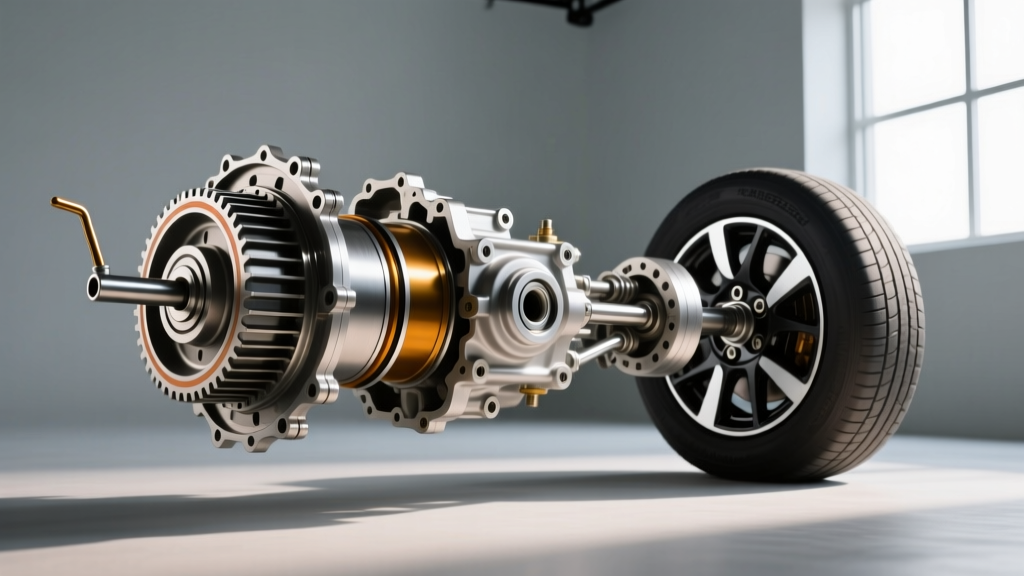
Toyota utilizes a 'third-member' dropout design. The rear axle housing is a single, continuous, welded assembly consisting of the center pumpkin and the axle tubes. The ring, pinion, and carrier bearings are housed in a separate front-loading third member that bolts into the front of the housing. Because the rear of the axle is a solid, welded steel wall, there is no cover to remove, and therefore, no aftermarket finned cover to bolt on. Attempting to cut into the rear housing to weld in a cover compromises the structural integrity and bearing alignment of the axle.
Real-World Cooling Solutions for the Tacoma Axle
Since a traditional cover swap is off the table, Tacoma owners must rely on advanced thermal management strategies to keep gear oil temperatures below the 250°F degradation threshold. Here are the three most effective, engineering-backed methods for cooling a Tacoma rear differential.
1. External Pump and Heat Exchanger Systems
For extreme towing or desert racing, an active cooling system is the gold standard. This involves tapping into the differential housing (often by modifying the fill plug or drilling and tapping the third member) to circulate fluid via a 12V marine-grade pump (such as a Rule bilge pump or a dedicated Amsoil transfer pump). The fluid is routed through high-temp silicone hoses to a finned aluminum heat exchanger mounted in the frame rail where it catches ambient airflow, before returning to the axle. This setup can drop peak differential temperatures by 40°F to 60°F under load.
2. Aftermarket Finned Housings
If you are experiencing catastrophic axle failure or upgrading to larger 35-inch tires, you will likely replace the entire axle assembly. High-end aftermarket manufacturers like Currie Enterprises and Dynatrac offer complete Toyota-pattern axle housings featuring cast, finned aluminum center sections. These centers act as massive passive heat sinks, replacing the smooth steel Toyota pumpkin with a heavily ribbed aluminum design that drastically improves convective heat transfer to the air.
3. Axle Tube Heat Sinks and Diff Wraps
For a budget-friendly passive approach, off-road fabricators offer bolt-on or weld-on finned heat sinks that clamp directly onto the axle tubes. While the gears generate the heat in the center, the gear oil circulates into the tubes via splash lubrication. Increasing the surface area of the tubes helps dissipate heat. Additionally, some owners use thermal barrier wraps on the axle tubes to prevent external heat soak from high-clearance exhaust routing, though this does not cool the internal fluid.
Gear Oil Selection: The First Line of Thermal Defense
Because the Tacoma's sealed housing limits passive cooling, the chemical stability of your gear oil is paramount. The OEM Toyota 75W-85 GL-5 fluid is engineered primarily for fuel economy and light-duty commuting. When subjected to the sheer forces of towing or crawling, its viscosity drops rapidly.
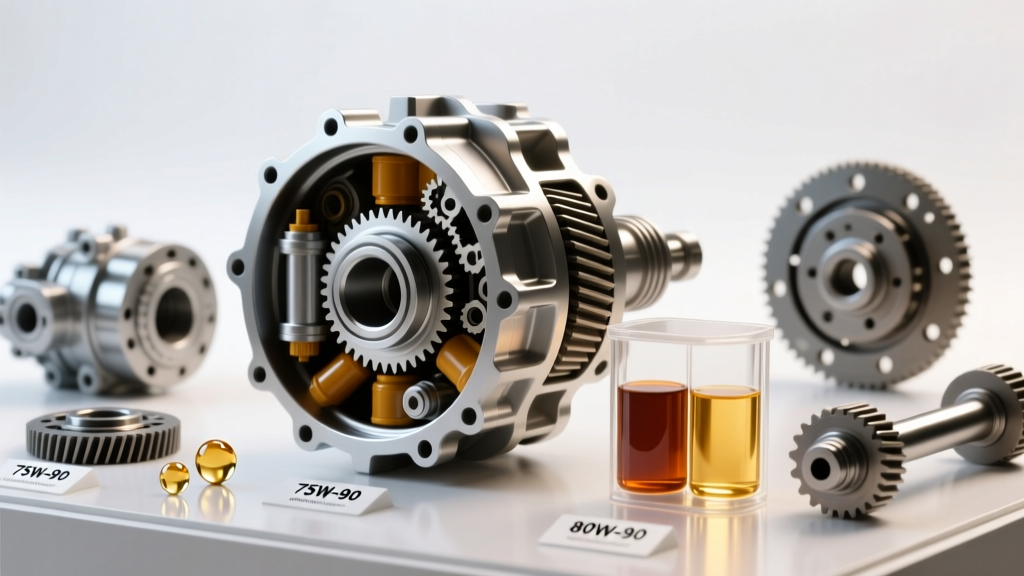
Upgrading to a high-quality full synthetic 75W-90 or 75W-140 is the most cost-effective 'cooling mod' you can perform during a Tacoma differential fluid change. Synthetics utilize uniform molecular structures that resist shear thinning and oxidation at high temperatures.
| Fluid Type | Viscosity | Thermal Breakdown Point | Best Use Case |
|---|---|---|---|
| OEM Toyota Genuine | 75W-85 GL-5 | ~230°F (110°C) | Daily driving, light loads, fuel economy |
| Full Synthetic (e.g., Amsoil Severe Gear) | 75W-90 GL-5 | ~300°F (149°C) | Overlanding, moderate towing, trail riding |
| Heavy-Duty Synthetic | 75W-140 GL-5 | ~320°F+ (160°C) | Max towing, slow-speed rock crawling, desert racing |
Note: Always consult Toyota Tech Info or your specific owner's manual to verify GL-5 compatibility and limited-slip friction modifier requirements for your specific TRD locking differential.
Step-by-Step: Tacoma Differential Fluid Change (Sealed Housing)
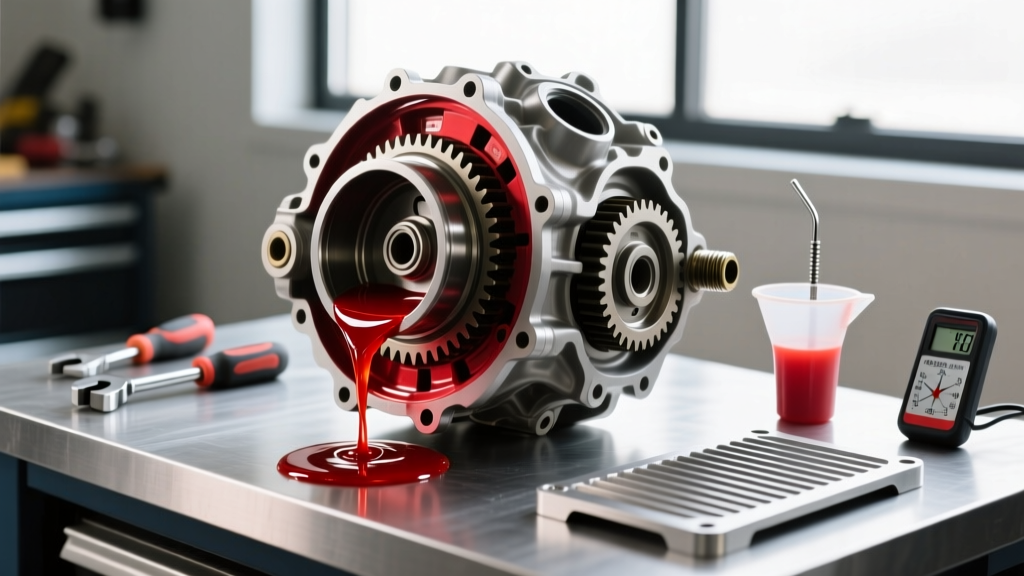
Because there is no cover to drop, the fluid change process relies entirely on the drain and fill plugs located on the front-facing or top-facing side of the axle housing. This requires a fluid transfer pump, as gravity draining is slow and messy.
- Preparation and Safety: Park the Tacoma on a level surface. Engage the parking brake and chock the front wheels. The axle should be at operating temperature (warm, not scalding hot) to ensure contaminants are suspended in the oil and drain efficiently.
- The Golden Rule - Remove the FILL Plug First: Using a 24mm socket or a dedicated square-drive plug tool, break loose the fill plug (located higher up on the housing). Never drain the axle before confirming the fill plug can be removed. If the fill plug is seized and you drain the fluid, the truck is immobilized until the plug is extracted.
- Drain the Fluid: Place a catch pan rated for at least 5 quarts beneath the axle. Remove the lower drain plug (also typically 24mm). Allow the fluid to drain completely. Inspect the magnetic tip of the drain plug. A fine, metallic paste is normal wear; large shards or chunks indicate ring/pinion or bearing failure requiring a teardown.
- Clean and Replace Crush Washers: Clean both plugs with brake cleaner. You must replace the aluminum/copper crush washers to prevent leaks. The standard OEM Toyota part number for the 24mm drain plug gasket is typically 90430-24003 (verify against your VIN). Cost is roughly $1.50 each at the dealer.
- Refill and Torque: Using a manual or pneumatic fluid transfer pump, inject the new synthetic gear oil into the fill hole.
- Capacity: Most 3rd-Gen 8-inch and 8.4-inch axles require 3.2 to 3.5 quarts. The larger 9.5-inch axles (found on Tundras and some heavy-duty Tacoma packages) require up to 3.8 to 4.0 quarts.
- Fill Level: The axle is full when fluid begins to weep out of the bottom edge of the fill plug hole.
- Torque Specifications: Reinstall both plugs with new crush washers. The factory torque specification for both the drain and fill plugs on Toyota solid axles is 27 to 29 ft-lbs (37 to 39 Nm). Do not over-torque, as the threads are cut directly into the cast steel housing and can strip easily.
Front IFS Differential & Transfer Case Considerations
While the rear axle takes the brunt of the towing load, the front Independent Front Suspension (IFS) differential on 4x4 Tacomas also operates as a sealed, drain-and-fill unit. It is highly susceptible to heat soak from the nearby exhaust catalytic converters and the engine oil pan. When performing a complete drivetrain service, apply the same 75W-90 synthetic upgrade to the front diff (capacity is usually around 1.5 to 1.7 quarts). Ensure you use the correct friction modifier if your front axle is equipped with an automatic disconnecting differential (ADD) or a locking mechanism.
Conclusion
A standard Tacoma differential fluid change is a simple maintenance task, but transforming it into a comprehensive thermal management strategy requires understanding the unique engineering of the Toyota solid axle. By abandoning the myth of the bolt-on rear cover and focusing on high-shear synthetic fluids, external cooling loops, or aftermarket finned housings, you can drastically extend the life of your ring and pinion gears. Whether you are pushing the limits of the i-FORCE MAX towing capacity or navigating deep sand, keeping your gear oil below 250°F is the ultimate key to drivetrain longevity.