The AWD Drivetrain: Understanding the Transfer Case and Differential Relationship
For millions of daily commuters and weekend adventurers, the Toyota RAV4 is the gold standard of compact crossover utility. However, beneath the floorboards of every All-Wheel Drive (AWD) RAV4 lies a complex mechanical relationship that most drivers never think about until a maintenance interval arrives. If you own an AWD model, you do not just have a transmission and a rear axle; you have a multi-component drivetrain where the transfer case and the rear differential must work in perfect harmony.
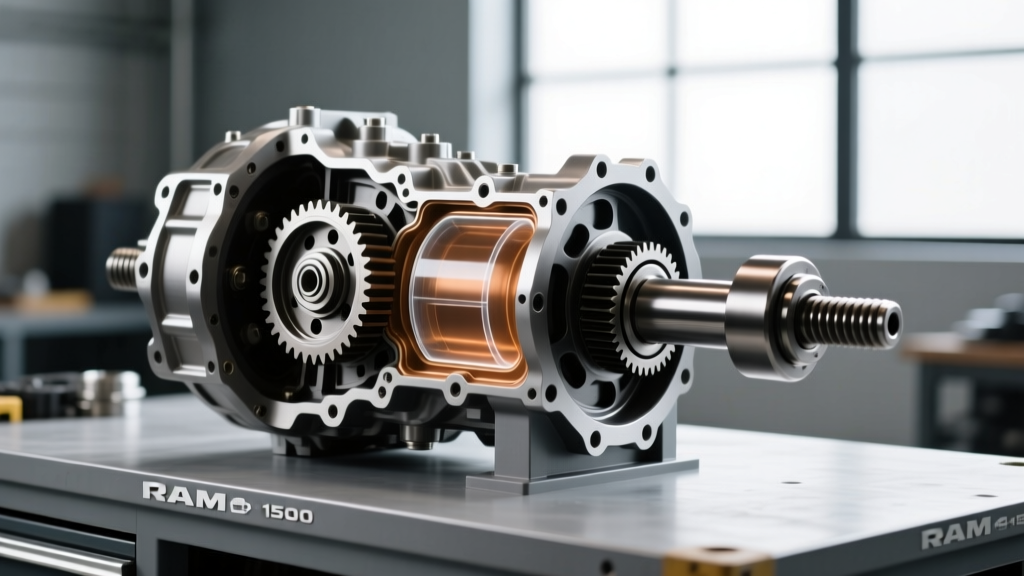
As a beginner-friendly explainer, it is vital to understand how power travels from your engine to the pavement. In a Front-Wheel Drive (FWD) vehicle, the transmission and the differential are combined into a single unit called a transaxle. But in an AWD RAV4, the engineering is distinctly different. Bolted directly to the side of the transaxle is a Power Take-Off (PTO) unit, commonly referred to as the transfer case. This transfer case acts as the 'shipping department' of your drivetrain. It takes rotational power from the transaxle, redirects it 90 degrees, and sends it spinning down a long carbon-fiber or steel propeller shaft toward the rear of the vehicle.
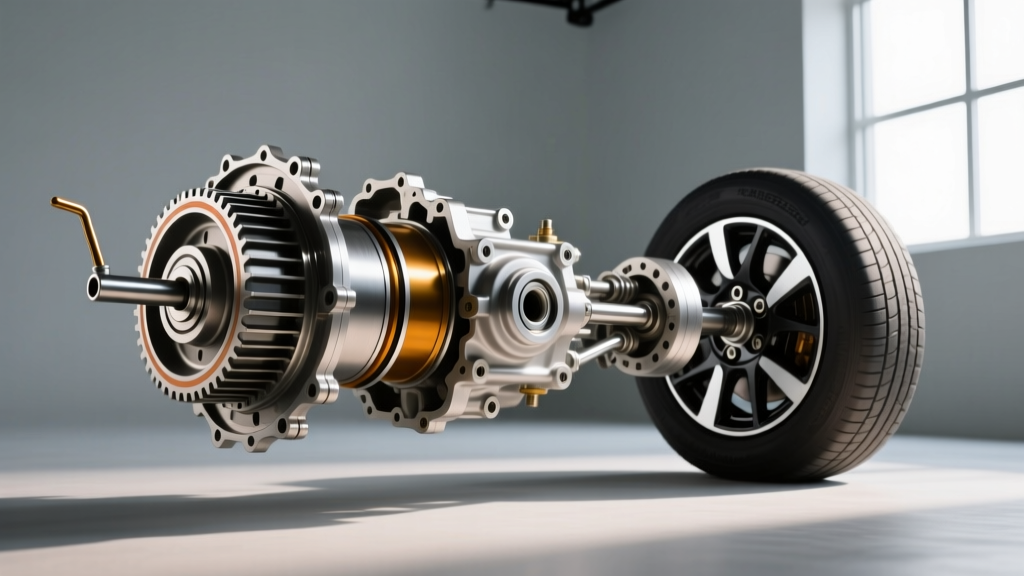
At the end of that propeller shaft sits the rear differential. If the transfer case is the shipping department, the rear differential is the 'local delivery hub.' It receives the longitudinal spinning force from the driveshaft, uses a ring and pinion gear set to redirect that power another 90 degrees, and splits it evenly (or dynamically, depending on your trim) between the left and right rear wheels. Understanding this mechanical relationship is the first step in mastering your vehicle's maintenance schedule and making sense of the dealership service menu.
Why the Mechanical Link Matters for Maintenance
Because the transfer case and the rear differential are physically separated by the propeller shaft and sealed by heavy-duty rubber lip seals, they do not share the same fluid reservoir. A failure or leak in the transfer case will not physically drain the rear differential, and vice versa. However, they share a symbiotic relationship regarding wear and tear. If the transfer case fluid degrades and the internal hypoid gears begin to wear, the resulting vibration and harmonic imbalance will travel down the propeller shaft, accelerating wear on the rear differential's pinion bearing. Servicing them as a paired system is the only way to ensure the longevity of your RAV4's AWD system.
Breaking Down the Toyota RAV4 Differential Fluid Change Cost
When researching the Toyota RAV4 differential fluid change cost, many owners are surprised to find conflicting numbers online. This confusion almost always stems from the fact that shops and dealerships often bundle the transfer case service and the rear differential service together under a vague 'AWD Drivetrain Service' package. To be an informed consumer, you need to know the exact pricing breakdown for each individual component.
Below is a realistic cost comparison for servicing the rear differential and the front transfer case on recent generation (XA50) RAV4 models. Prices reflect national averages for 2026, accounting for regional labor rate variations and OEM fluid pricing.
| Service Location | Rear Differential Cost | Transfer Case Cost | Total AWD Service |
|---|---|---|---|
| Toyota Dealership | $160 - $240 | $150 - $220 | $310 - $460 |
| Independent Mechanic | $110 - $150 | $100 - $140 | $210 - $290 |
| DIY (Parts & Fluid Only) | $25 - $35 | $25 - $35 | $50 - $70 |
Note: If your RAV4 is equipped with the advanced Dynamic Torque Vectoring (DTV) AWD system found on Adventure and TRD Off-Road trims, expect dealership costs to be 15-20% higher due to the added complexity of checking the rear driveline disconnect and twin coupling assemblies.
Fluid Specifications: What Goes Where?
One of the most common beginner mistakes is assuming that any 'gear oil' will work in the RAV4's AWD components. The ring and pinion gears inside both the transfer case and the rear differential are hypoid gears. These gears feature a sliding, wiping action rather than a simple rolling action, which generates immense localized heat and pressure.
To protect these gears, Toyota specifies 75W-85 GL-5 Hypoid Gear Oil (specifically, Toyota Genuine Hypoid Gear Oil SX). The 'GL-5' designation is non-negotiable. GL-5 fluids contain high levels of extreme pressure (EP) additives, typically zinc and phosphorus compounds, which create a sacrificial chemical film over the gear teeth to prevent metal-on-metal scoring under heavy loads. Using a GL-4 fluid, which lacks these extreme pressure additives, will lead to catastrophic gear wear in as little as 20,000 miles.
Exact Capacities for the XA50 Generation (2019–2026)
Unlike engine oil, which requires 5 to 6 quarts, differentials and transfer cases hold remarkably little fluid. This small volume means that even minor leaks or fluid degradation drastically impacts the component's lifespan. According to the Toyota Technical Information System (TIS), the standard capacities are:
- Front Transfer Case (PTO): Approx. 0.50 Liters (0.53 US Quarts)
- Standard Rear Differential: Approx. 0.53 Liters (0.56 US Quarts)
- DTV Rear Differential Assembly: Varies slightly by sub-assembly, but generally requires 0.60 to 0.80 Liters across the coupling and disconnect chambers.
DIY vs. Dealership: The Step-by-Step Reality
Because the Toyota RAV4 differential fluid change cost at a dealership can exceed $400 when both the front and rear units are serviced, many owners opt for the DIY route. The process is highly accessible for beginners, provided you have the correct tools and a safe lifting setup. The Toyota Owners Portal maintenance schedule generally recommends inspecting these fluids every 15,000 miles and replacing them every 30,000 to 60,000 miles, depending on towing and off-road usage.
Essential Tools and Torque Specifications
Before crawling under your RAV4, gather a fluid pump (essential for filling the differentials, as there is no top pour cap), a 10mm hex socket or 24mm socket (depending on your exact model year's plug style), and new aluminum crush washers. Reusing old crush washers is the number one cause of post-service differential leaks.
Master Technician Tip: 'Always remove the FILL plug before you remove the DRAIN plug. If your drain plug is rounded off or seized, and you drain the fluid before realizing you cannot open the fill hole, your vehicle is stranded on the lift until you can drill out or extract the fill plug.'
When reinstalling the drain and fill plugs with new crush washers, the factory torque specification is typically 29 ft-lbs (39 Nm). Over-torquing these plugs can crack the aluminum or cast-iron housing, turning a $60 DIY job into a $2,500 component replacement.
Advanced AWD: The Dynamic Torque Vectoring (DTV) Factor
If you drive a RAV4 Adventure or TRD Off-Road, the relationship between your transfer case and rear differential is vastly more complex than standard AWD models. These trims utilize Toyota's Dynamic Torque Vectoring (DTV) AWD system. Instead of a simple open rear differential, the DTV system features a rear driveline disconnect and two independent electromagnetic rear couplings.
This system can physically disconnect the propeller shaft from the rear differential when AWD is not needed, eliminating parasitic drag and improving highway fuel economy. Furthermore, it can send up to 50% of the rear power to a single wheel to crawl over obstacles. Because of the electronic couplings and the driveline disconnect mechanism, the fluid inside a DTV rear assembly is subjected to different thermal cycles and clutch-pack friction requirements. While the baseline 75W-85 GL-5 is often used, it is critical to consult your specific owner's manual or a trusted automotive lubrication forum to verify if a specific friction modifier is required for the DTV clutch packs in your exact model year.
Final Thoughts on Drivetrain Longevity
The transfer case and the rear differential are the unsung heroes of your RAV4's all-weather capability. They work in tandem to translate the transaxle's output into forward momentum, whether you are navigating a snowy driveway or a muddy trailhead. By understanding the mechanical relationship between these two components, you can see exactly why the Toyota RAV4 differential fluid change cost is a worthwhile investment. Whether you choose to pay a professional or pump the 75W-85 GL-5 fluid yourself in your garage, staying ahead of the maintenance schedule will ensure your AWD system remains reliable for hundreds of thousands of miles.