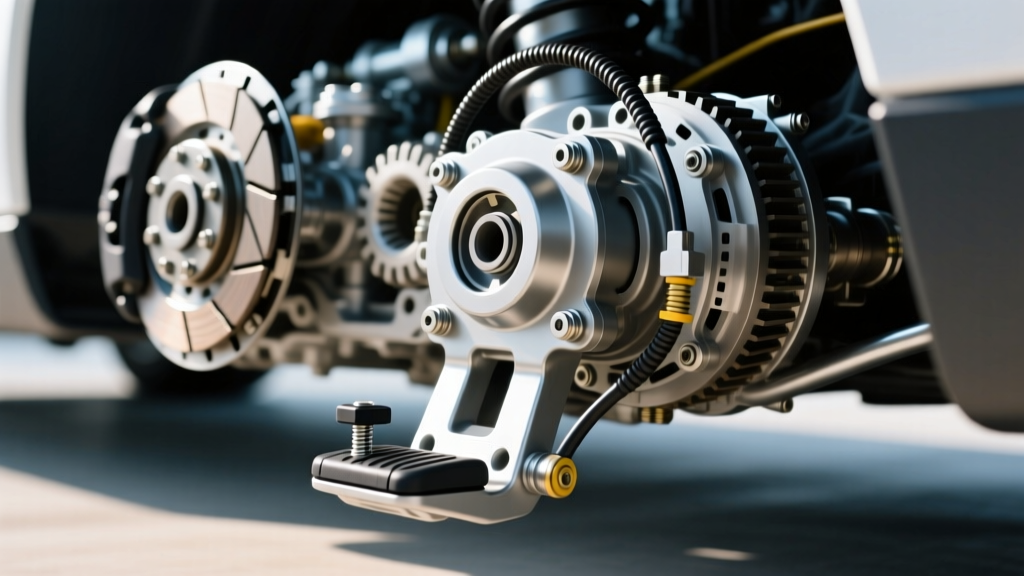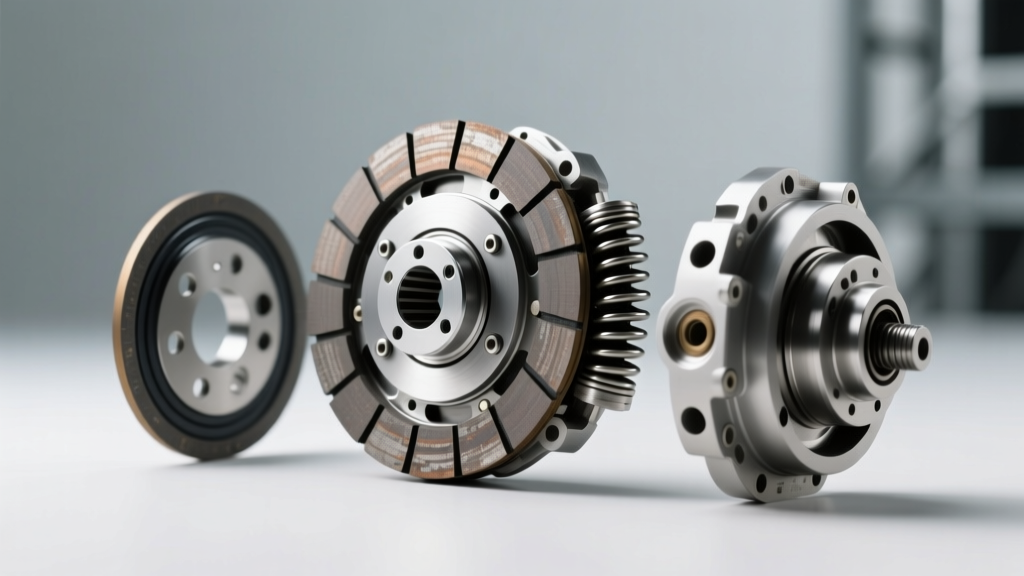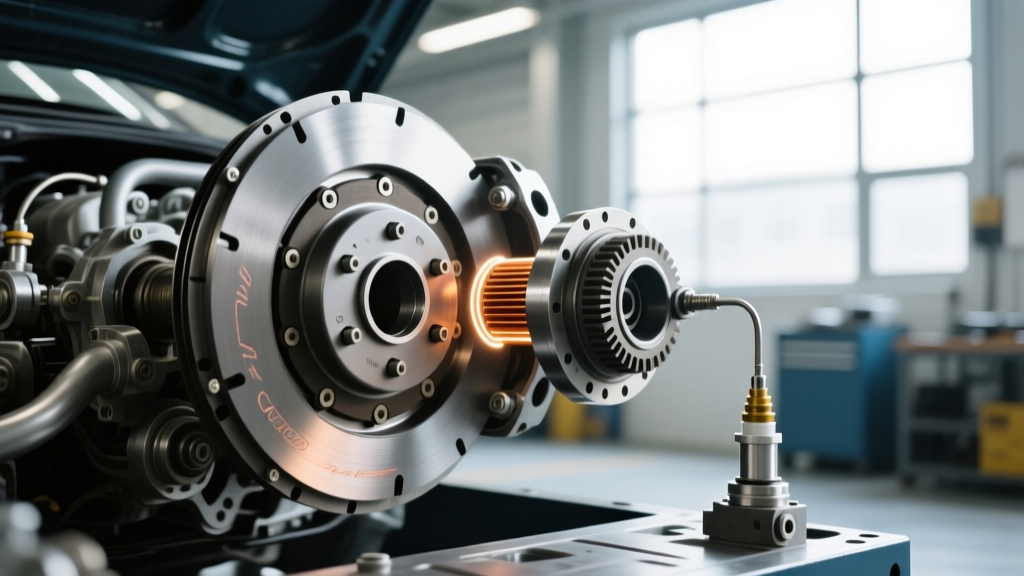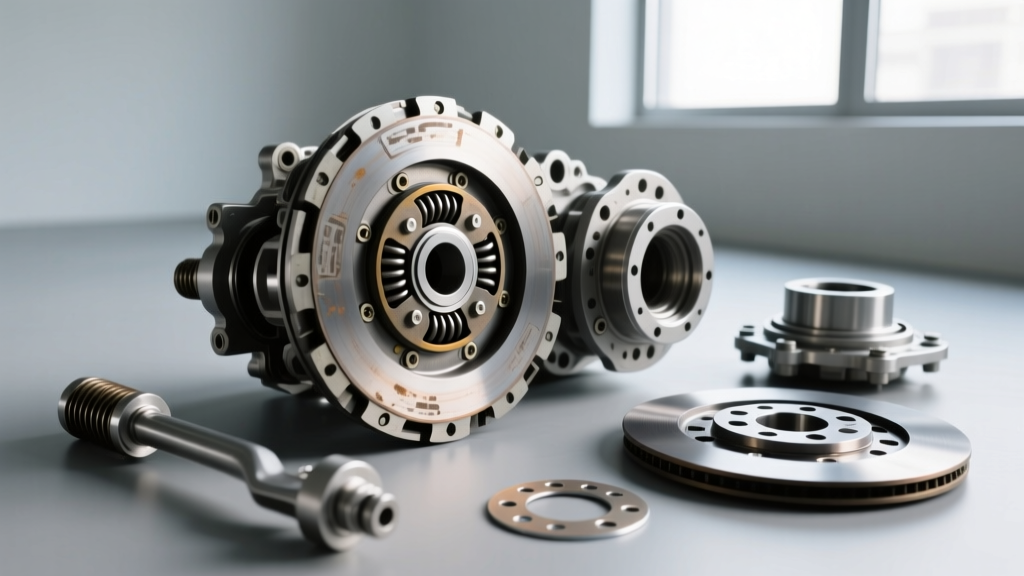
The Anatomy of a Swap: Why the TOB Fails Post-Conversion
Swapping from a factory automatic to a manual transmission is one of the most rewarding drivetrain modifications an enthusiast can undertake. However, the transition is fraught with precision-engineering pitfalls, the most common being premature throw-out bearing (TOB) failure. When extracting the original 6L80 or 6R80 automatic, you are removing a torque converter, not an auto transmission clutch in the traditional friction-disc sense. However, the residual ATF fluid left on the engine block mating surface or the rear main seal area must be meticulously cleaned. If ATF contaminates the new manual clutch disc, it will cause severe chatter that transfers harmonic vibrations directly into the hydraulic concentric slave cylinder (CSC), accelerating internal TOB seal failure.
As of 2026, the vast majority of modern manual swap kits utilize a hydraulic CSC rather than a traditional mechanical fork and external slave cylinder. While a CSC provides superior pedal feel and self-adjustment, it is highly sensitive to installation errors. A whining, squealing, or grinding noise emanating from the bellhousing immediately after a swap is rarely a defective bearing out of the box; it is almost always a symptom of improper air gap measurement, bellhousing misalignment, or hydraulic aeration.
Acoustic Diagnostics: Isolating the Release Bearing
Before tearing the transmission back out, you must accurately diagnose the acoustic profile of the noise. The throw-out bearing interacts with the pressure plate diaphragm fingers under specific load conditions, and the type of noise dictates the exact failure mode.
High-Pitch Squeal on Pedal Depression
If you hear a sharp squeal the moment the clutch pedal is depressed (taking up the slack), the bearing is making initial contact with the pressure plate fingers without adequate lubrication or preload. In a hydraulic CSC setup, this often indicates that the air gap is too large, meaning the piston is extending to its maximum stroke before engaging the fingers, causing a high-velocity impact rather than a smooth engagement.
Constant Grinding or Growling
A continuous metallic growl that changes pitch with engine RPM—regardless of pedal position—points to catastrophic cage failure or a shattered internal race. This is frequently caused by bellhousing runout exceeding 0.005 inches, which forces the TOB to operate at an angle, binding the bearing on the transmission input shaft quill.
Neutral Rattle That Disappears on Pedal Depression
Often misdiagnosed as a failing TOB, a rattle at idle that vanishes when the pedal is pressed is typically input shaft rattle or a worn quill sleeve. The TOB takes up the slack of the input shaft when engaged, silencing the vibration. If the noise is truly the bearing, it will get louder under pedal load, not quieter.
Critical Clearance Specifications by Transmission Model
Every transmission family requires a specific air gap—the distance between the TOB contact surface and the pressure plate fingers when the clutch is fully engaged (pedal released). Failing to respect these tolerances will result in either clutch slip or constant bearing drag.
| Transmission Model | TOB Type | Required Air Gap | Bellhousing Runout Limit | Recommended Fluid |
|---|---|---|---|---|
| Tremec T56 Magnum | Hydraulic CSC | 0.100" - 0.150" | 0.005" TIR | Tremec HPF / Pennzoil Synchromesh |
| Ford MT-82 | Hydraulic CSC | 0.060" - 0.120" | 0.005" TIR | Motorcraft DOT 4 LV |
| Dodge G56 | External Hydraulic | 0.125" - 0.180" | 0.008" TIR | ATF+4 / Synchromesh |
The Air Gap Calculation: Preventing Premature CSC Failure
The most critical step in any auto-to-manual conversion is measuring and setting the air gap. Because hydraulic CSCs (like GM part # 24238694 or the Ford MT-82 OEM unit) do not have an external adjustment mechanism, you must use precision shims behind the CSC mounting bracket or the master cylinder pushrod.
- Measure the Bellhousing Depth: Using a digital depth micrometer, measure from the transmission bellhousing mating face to the fully compressed TOB contact surface. Record this value (e.g., 2.850").
- Measure the Pressure Plate Finger Height: Place a straight edge across the flywheel friction surface and measure down to the tip of the diaphragm fingers. Record this value (e.g., 2.650").
- Calculate the Gap: Subtract the finger height from the bellhousing depth (2.850" - 2.650" = 0.200").
- Determine Shim Thickness: If your target air gap for a T56 Magnum is 0.125", and your calculated gap is 0.200", you must add 0.075" of shims behind the CSC bracket to move the bearing closer to the fingers.
Skipping this mathematical verification guarantees that the CSC piston will either over-extend (blowing the internal seals under high line pressure) or ride constantly against the fingers (causing extreme heat and rapid bearing death).
Bellhousing Runout: The Silent Killer of Throw-Out Bearings
When adapting a manual transmission to an engine block previously mated to an automatic, the factory dowel pin alignment is rarely perfect for the tight tolerances of a manual input shaft. According to Summit Racing's technical archives, bellhousing runout must be checked with a dial indicator mounted to the crankshaft or flywheel, with the probe resting on the inner bore of the bellhousing.
If the total indicator runout (TIR) exceeds 0.005 inches, the transmission input shaft is forced into a bind. This misalignment transfers lateral loads directly to the throw-out bearing, destroying the retainer clips and shattering the bearing cage within a few hundred miles. To correct this, you must install offset dowel pins (such as the Lakewood 15950 series) to re-center the bellhousing bore relative to the crankshaft centerline.
Hydraulic Bleeding Protocols for the CSC
Air trapped in the hydraulic line is a primary culprit for erratic TOB engagement and subsequent noise. The internal volume of a CSC line is small, and micro-bubbles will compress under pedal load, preventing the bearing from fully returning to its rest position. This constant, slight contact with the spinning pressure plate fingers generates a high-frequency whine.
Expert 2026 Diagnostic Tip: Never use standard DOT 3 fluid in a high-heat hydraulic TOB system. Modern CSC seals are designed for low-viscosity, high-boiling-point fluids like DOT 4 LV or specific mineral-based hydraulic fluids depending on the manufacturer. Using the wrong fluid will cause the internal rubber seals to swell, leading to a sticky piston that fails to retract the bearing.
To properly bleed the system, use a pressure bleeder set to exactly 15 PSI. Open the 10mm bleeder screw on the CSC and allow fluid to flow until it is completely free of aerated foam. Tap the hydraulic line with a rubber mallet to dislodge trapped bubbles in the master cylinder reservoir.
Financial Breakdown: OEM vs. Aftermarket Repair Costs
If your throw-out bearing has already failed due to a botched swap, the transmission must be dropped. Below is a realistic cost breakdown for replacing the CSC and correcting the underlying installation errors in a standard rear-wheel-drive V8 application.
| Component / Service | OEM / Premium Aftermarket Cost | Budget / Economy Cost |
|---|---|---|
| Hydraulic CSC Assembly | $180 - $320 (e.g., Sachs, OEM GM/Ford) | $65 - $110 (Unknown Import Brands) |
| Offset Dowel Pins (Set) | $45 - $85 | N/A |
| DOT 4 LV / Specialty Fluid | $15 - $25 | $8 - $12 |
| Labor (Drop Trans & Measure) | $720 - $1,100 (6-8 hrs @ $120-$140/hr) | DIY (Free, but requires transmission jack) |
For authoritative part cross-referencing and OEM CSC pricing, enthusiast databases like RockAuto remain invaluable resources for verifying exact part numbers against your specific engine and transmission casting codes. Always pair a new CSC with a fresh, high-quality clutch kit; reusing a pressure plate that has been glazed by a slipping, misadjusted bearing will only lead to a repeat failure.
Final Torque Specifications and Reassembly
When reinstalling the transmission to correct a TOB noise issue, adhere strictly to factory torque sequences. The bellhousing-to-engine block bolts should be torqued to 35-40 lb-ft (for GM LS/LT and Ford Coyote blocks) in a star pattern. The flywheel-to-crankshaft bolts require 74 lb-ft with a drop of red threadlocker, while the pressure plate bolts should be torqued to 15 lb-ft in a crisscross pattern to ensure even diaphragm finger height. Precision in these final steps is the ultimate safeguard against throw-out bearing noise and premature drivetrain failure.