The Intersection of Locking Differentials and Fluid Dynamics
Subarus are globally celebrated for their symmetrical all-wheel-drive architecture, but the open or viscous limited-slip differentials (LSDs) found in many WRX, STI, Forester, and Outback models often become the primary bottleneck when power levels exceed 300 wheel horsepower or when tackling tight autocross courses. Upgrading to a mechanical locking differential fundamentally transforms your Subaru’s cornering dynamics, traction, and power delivery. However, this performance leap also drastically alters your maintenance requirements.
Performing a meticulous subaru differential fluid change is no longer just a routine factory service interval; it is a critical tuning parameter. The gear oil you select dictates clutch pack longevity, lock engagement smoothness, thermal management, and overall drivetrain survival. In this performance and upgrade guide, we break down the exact engineering requirements for selecting, installing, and maintaining aftermarket locking differentials in your Subaru platform.
Subaru Drivetrain Architecture: Shared vs. Standalone Sumps
Before draining a single drop of fluid, it is vital to understand Subaru's unique drivetrain layout, as it dictates how you approach the service. A common mistake among novice enthusiasts is attempting a standalone front differential fluid change on a manual transmission vehicle, only to realize the front differential is integrated into the transmission case.
- 5MT and 6MT Platforms (WRX/STI): The front differential shares the transmission housing and fluid sump. A 'front diff fluid change' is actually a full transmission drain and fill. You must use a fluid that satisfies both the helical cut gears of the transmission and the hypoid ring and pinion of the front differential (typically a high-quality 75W-90 GL-5 gear oil).
- CVT and Automatic Platforms (Outback, WRX CVT, Ascent): Many newer CVT-equipped Subarus feature a separate front differential housing bolted to the transmission bell housing. This requires its own dedicated hypoid gear oil, separate from the CVT lineartronic fluid.
- The Rear Differential (All Platforms): The rear differential (R160 for standard WRX/Outback, R180 for STI and heavy-duty applications) is always a standalone unit. This is where an aftermarket locking differential upgrade is most common, and where your rear subaru differential fluid change procedure will focus.
Selecting Your Locking Differential: Cusco, Kaaz, and OS Giken
When upgrading your rear (or front, via separate housing/axle setups) differential, you are moving from a reactive slip-limiting system to a proactive mechanical lock. Below is a comparison of the top-tier aftermarket options available for Subaru R160 and R180 housings in 2026.
| Manufacturer | Model | Lock Type | Best Application | Approx. Cost (2026) |
|---|---|---|---|---|
| Cusco Japan | Type RS | 1, 1.5, 2-Way | Track, Drift, Rally | $950 - $1,150 |
| Kaaz | Super Q | 1.5-Way | Grip, Time Attack, Autocross | $850 - $1,050 |
| OS Giken | Super Lock | Progressive (1 to 1.5) | Street/Track Hybrid, High HP | $1,450 - $1,700 |
| Subaru OEM | Torsen (STI) | Torque Sensing | OEM Replacement, Mild Track | $700 - $900 |
Pro Tip: For a dedicated track car, a 2-way Cusco Type RS provides locking under both acceleration and deceleration, stabilizing the chassis on trail-braking entries. For a street-driven weekend warrior, the OS Giken Super Lock offers a progressive ramp that eliminates the low-speed 'chatter' typical of aggressive clutch-type LSDs.
Gear Oil Selection: The Friction Modifier Debate
The fluid you pour into a mechanical clutch-type LSD is vastly different from what an open diff requires. Clutch packs rely on specific friction coefficients to engage smoothly without shuddering or welding together. According to extensive drivetrain testing documented on platforms like NASIOC's Drivetrain Forum, the wrong fluid will destroy a $1,000 LSD in under 5,000 miles.
Top Fluid Recommendations for Subaru LSDs
- Red Line 75W90 NS (Non-Slip): Despite the 'Non-Slip' name, this fluid is engineered specifically for clutch-type LSDs that do not require external friction modifiers. It provides the exact friction coefficient needed for Cusco and Kaaz diffs to engage firmly without chatter. (See Red Line Oil Technical Specs for shear stability data).
- Motul Gear 300 75W-90: A 100% synthetic ester-based fluid that offers incredible thermal stability. It is highly recommended for endurance racing and rally applications where differential temperatures regularly exceed 220°F (104°C).
- Torco SGO 75W-90: Known for its high zinc and phosphorus content, providing extreme pressure (EP) protection for the ring and pinion gears during high-shock launches.
Warning: Never use standard GL-5 fluids with generic 'friction modifiers' added to a Cusco or Kaaz differential unless explicitly stated by the manufacturer. Over-modifying the fluid will cause the clutch packs to slip under load, effectively turning your expensive locking diff back into an open differential.
Step-by-Step Rear Differential Fluid Change Procedure
Whether you are performing routine maintenance on an OEM Torsen unit or executing the critical first flush on a newly installed Cusco Type RS, precision is mandatory. Below is the definitive procedure for the Subaru R160/R180 rear differential.
Required Tools and Materials
- 1/2-inch drive ratchet and breaker bar
- Fluid transfer pump
- 2x Subaru OEM Drain/Fill Plug Gaskets (Part# 803916010)
- 1.5 Liters of selected 75W-90 Gear Oil
- Torque wrench (capable of measuring 25-40 ft-lbs)
The Procedure
- Temperature Prep: Drive the vehicle for 15 minutes to bring the differential fluid up to operating temperature. Warm fluid suspends metallic particulates and drains more completely.
- Level the Chassis: Raise the vehicle on a 4-post lift or four jack stands. The Subaru rear differential must be perfectly level to ensure an accurate fill volume. An uneven stance will result in under-filling, leading to catastrophic pinion bearing failure.
- Open Fill, Then Drain: Always break the upper FILL plug loose before removing the lower DRAIN plug. If you drain the fluid first and the fill plug is seized, your vehicle is stranded.
- Drain and Inspect: Remove the drain plug (1/2-inch square drive). Allow the fluid to drain completely. Inspect the magnetic drain plug for debris. A fine metallic paste is normal for the first 500-mile break-in; chunky metal shards indicate gear failure.
- Reinstall Drain Plug: Clean the magnet, install a new OEM crush washer (803916010), and torque the drain plug to 29 ft-lbs (39 Nm).
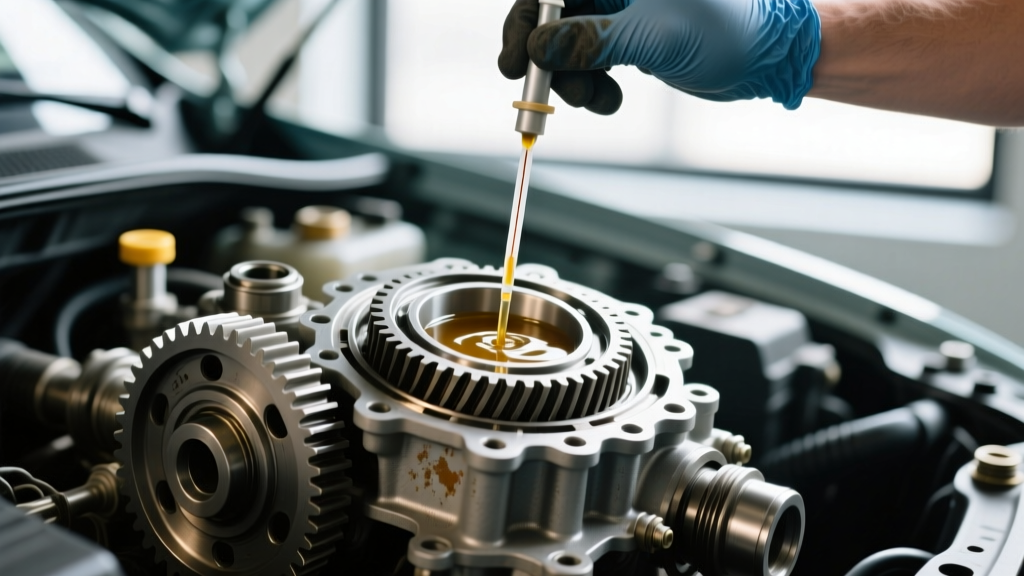
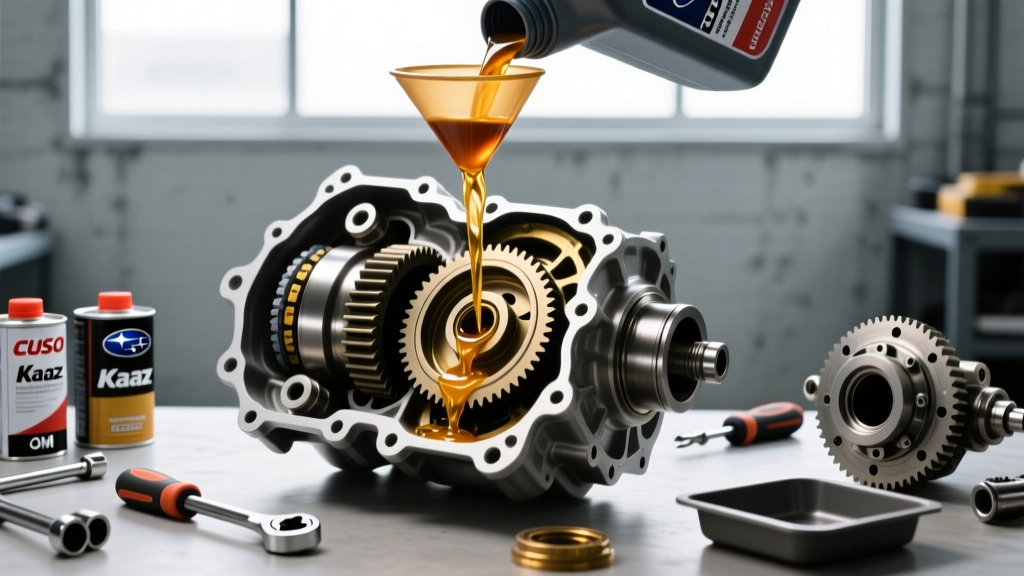
- Fill the Differential: Using your transfer pump, fill the differential through the upper hole until the fluid reaches the exact bottom lip of the fill hole.
- R160 Capacity: ~0.8 Liters
- R180 (STI) Capacity: ~1.0 Liters
- Reinstall Fill Plug: Install a new crush washer and torque the fill plug to 29 ft-lbs (39 Nm).
The 500-Mile Break-In and First Flush Protocol
If you have just installed an aftermarket clutch-type locking differential, your first subaru differential fluid change is not due in 30,000 miles—it is due in 500 miles. During the initial break-in period, the clutch packs and conical springs undergo micro-wearing to seat properly. This process sheds microscopic friction material and metallic dust into the sump.
The Break-In Routine:
- Drive normally for the first 100 miles, avoiding hard launches and sustained highway speeds over 70 MPH.
- Find an empty, safe parking lot. Perform 20 tight 'Figure-8' turns at idle speed. This forces the clutch packs to slip and engage alternately, ensuring the friction surfaces mate evenly across their entire surface area.
- At exactly 500 miles, drain the fluid. Expect it to look dark and slightly gritty—this is the shedding material from the manufacturing and break-in process.
- Refill with your chosen premium synthetic gear oil. Your next service interval is now a standard 15,000 to 30,000 miles, depending on track usage.
Final Thoughts on Drivetrain Longevity
Upgrading to a mechanical locking differential is one of the most transformative modifications you can make to a Subaru chassis. It eliminates the understeer induced by open differentials and puts power directly to the tarmac. However, this performance comes with the responsibility of precise maintenance. By understanding the shared vs. standalone sump architecture, selecting the correct friction-specific gear oil, and adhering to exact torque specifications and break-in protocols, your drivetrain will survive the rigors of both the track and the street for years to come.