The Financial Reality of Axle Maintenance
When it comes to drivetrain longevity, the rear axle is often the most neglected assembly on a vehicle until it starts whining, clunking, or leaking. For fleet managers, off-road enthusiasts, and daily drivers alike, understanding the stark contrast between routine differential fluid service pricing and the catastrophic cost to fix rear differential failures is critical. A proactive fluid change might cost between $80 and $200, while a complete ring-and-pinion rebuild can easily eclipse $2,500. This preventive maintenance guide breaks down the exact economics, metallurgical realities, and torque specifications required to keep your axle out of the scrap bin.
Deconstructing the Cost to Fix Rear Differential Failures
When gear oil degrades, loses its shear stability, or becomes contaminated with water, the extreme pressure (EP) additives fail. This leads to micropitting on the hypoid gear faces, bearing cage disintegration, and ultimately, catastrophic tooth shearing. If you are forced to evaluate the cost to fix rear differential assemblies, you are looking at a multi-tiered expense structure.
Parts Pricing: The Rebuild Kit
A proper rebuild is not just about swapping gears. It requires a master overhaul kit. According to industry suppliers like Summit Racing, a high-quality Motive Gear or Yukon Ring and Pinion set ranges from $220 to $450 depending on the axle spline count and gear ratio. However, the hidden costs lie in the supporting hardware:
- Master Rebuild Kit ($150 - $280): Includes Timken or Koyo pinion bearings, carrier bearings, races, crush sleeves, pinion nuts, and marking compound.
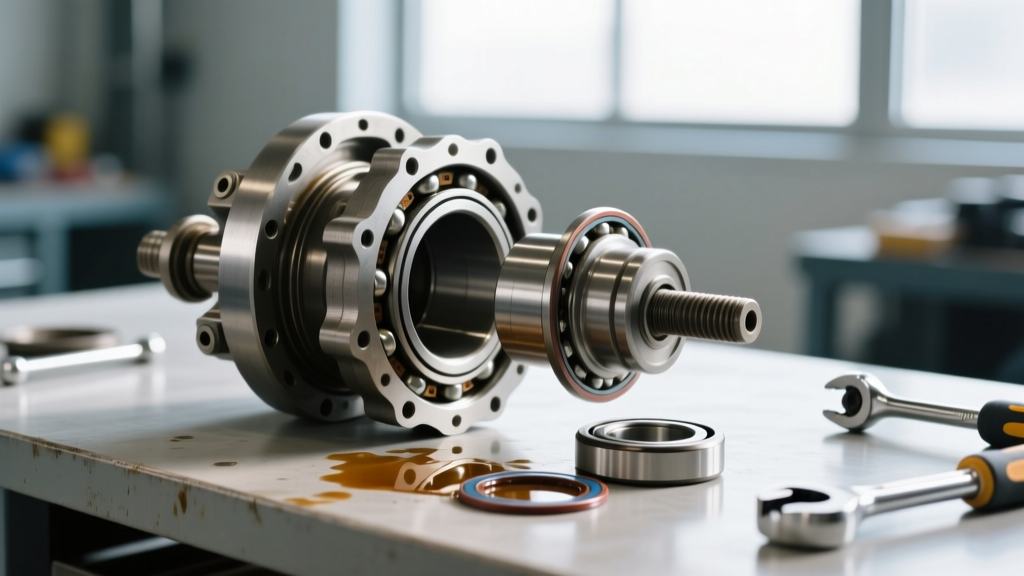
- Axle Seals and Bearings ($80 - $160): Outer wheel bearings and inner axle shaft seals must be replaced if metal debris has circulated through the housing.
- Limited Slip Clutch Packs ($60 - $120): If the friction material has glazed due to neglected fluid changes, the LSD must be disassembled and rebuilt.
Labor and Machining Costs
Setting up a hypoid gear set is an exercise in precision, not brute force. A certified drivetrain technician will spend 4 to 7 hours measuring pinion depth, setting bearing preload (measured in inch-pounds of rotational drag), and adjusting carrier backlash to tolerances as tight as 0.006 to 0.010 inches. At an average shop rate of $140 to $190 per hour in 2026, labor alone accounts for $700 to $1,300 of the total repair bill. If the carrier housing is scored or warped, machine shop fees or a complete replacement axle housing (ranging from $600 to $1,200) will push the final invoice well past $3,000.
Rear Differential Fluid Service Pricing
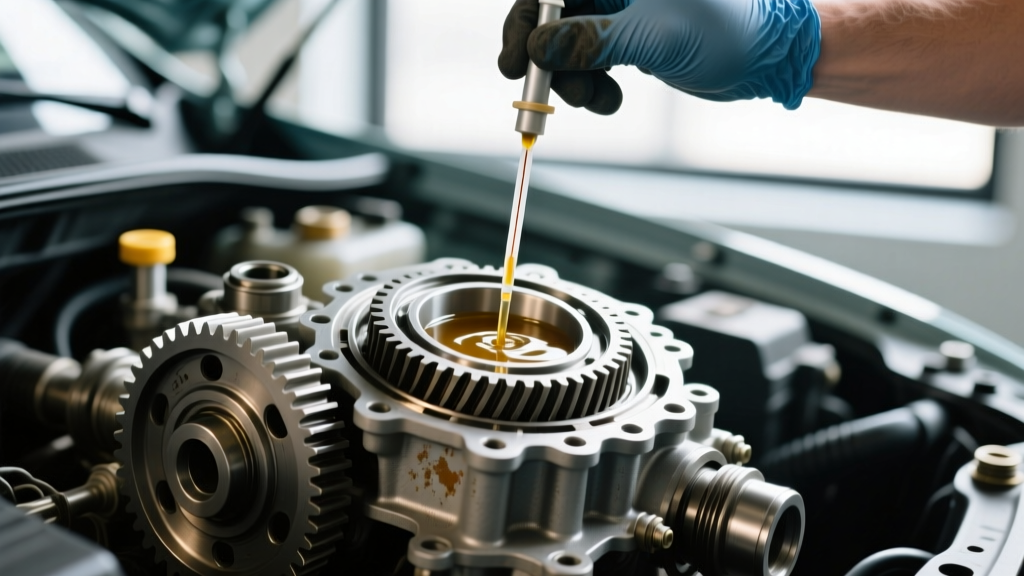
Preventive maintenance is a fraction of the repair cost. Differential fluid service pricing varies wildly based on whether you utilize a dealership, an independent 4x4 shop, or a DIY approach. Modern synthetic gear oils, such as API GL-5 rated 75W-90 or 75W-140, utilize advanced sulfur-phosphorus additive packages designed to withstand the extreme sliding friction inherent in hypoid gear geometry.
Shop vs. DIY Cost Breakdown
| Service Type | Estimated Cost | What is Included |
|---|---|---|
| Dealership Standard Service | $180 - $280 | OEM 75W-90 fluid, basic gasket, visual inspection. |
| Independent 4x4 Shop | $120 - $200 | High-end synthetic (e.g., AMSOIL/Red Line), RTV/Gasket, Friction Modifier. |
| DIY Home Garage | $45 - $95 | Cost of 2-3 quarts of synthetic gear oil, gasket, brake cleaner. |
For those researching premium lubricants, manufacturers like AMSOIL offer Severe Gear synthetics that maintain viscosity stability far beyond conventional petroleum-based oils, justifying the slightly higher upfront fluid cost by extending service intervals.
Axle-Specific Capacities and Torque Specifications
Over-torquing differential cover bolts is a common DIY mistake that warps the stamping or cracks cast aluminum pans, leading to chronic leaks. Always use a calibrated inch-pound or low-range foot-pound torque wrench. Below are the specifications for the most common light-truck and SUV axles.
| Axle Assembly | Fluid Capacity | Cover Bolt Torque | Sealing Method |
|---|---|---|---|
| GM 8.6' 10-Bolt | 2.1 Quarts | 25 lb-ft | RTV Silicone or Pre-cut Gasket |
| Ford 8.8' (Super 8.8) | 2.5 Quarts | 28 - 38 lb-ft | RTV Silicone |
| Dana 60 (Standard) | 3.0 Quarts | 30 - 35 lb-ft | Cork/Rubber Composite Gasket |
| Ram AAM 11.5' | 3.5 Quarts | 45 lb-ft | RTV Silicone (Pan Bolts) |
The Limited Slip Differential (LSD) Factor
If your vehicle is equipped with a clutch-type Limited Slip Differential (such as the Auburn, Eaton Posi, or Ford Traction-Lok), fluid cost and service pricing must include a friction modifier additive. Typically costing around $8 to $12 per bottle (e.g., Motorcraft XL-3 or GM ACDelco Limited Slip Axle Lubricant Additive), this chemical is non-negotiable.
Expert Insight: Omitting the friction modifier causes the clutch packs to bind and chatter during low-speed cornering. Over time, this aggressive chattering glazes the friction discs and scores the steel reaction plates. A $10 bottle of modifier prevents a $400 clutch-pack rebuild.
Note: Gear-driven LSDs, such as the Detroit Truetrac or Torsen-style differentials, do not use clutch packs and therefore do not require friction modifiers. Standard API GL-5 synthetic gear oil is perfectly sufficient for these torque-biasing units.
Preventive Maintenance Framework: When to Service
While many modern owner's manuals claim differential fluid is 'lifetime' or only requires changing at 100,000 miles, drivetrain engineers know that thermal cycling and environmental contamination degrade the fluid much earlier. To avoid the immense cost to fix rear differential components, adhere to the following service intervals:
- Normal Commuter Duty: Replace 75W-90 synthetic gear oil every 50,000 to 60,000 miles.
- Heavy Towing & Hauling: If regularly pulling loads exceeding 5,000 lbs, upgrade to a 75W-140 viscosity and service every 30,000 miles. The thicker fluid resists film-shearing under high hypoid gear pressures.
- Off-Road & Water Crossings: Service immediately (within 500 miles) after submerging the axle housings. As the hot axle cools in cold water, the housing contracts, creating a vacuum that pulls moisture past the axle seals and breather tubes. Water turns gear oil into a milky, acidic emulsion that rapidly corrodes Timken bearing races.
Upgrading the Hardware
During your fluid service, consider upgrading the factory hardware. Installing a magnetic drain plug (if equipped with a drain port) or a deep-cast aluminum differential cover with integrated cooling fins and magnetic pickups will trap ferrous wear metals before they can embed into the soft Babbitt material of the carrier bearings. Checking the differential breather tube is equally vital; ensure it is routed high into the chassis and capped with a one-way check valve to prevent hydro-locking the axle with water or dirt.
By investing $100 and an hour of your weekend into a precise, spec-driven fluid service, you effectively insure your drivetrain against the thousands of dollars in parts, machining, and labor required when preventive maintenance is ignored.