The Core Confusion: Where is the Subaru Front Differential?
For new Subaru owners diving into DIY maintenance, few topics cause as much confusion as the drivetrain layout. When you begin researching a Subaru front differential fluid change, you will quickly encounter conflicting forum advice regarding fluid capacities, drain plugs, and whether the front differential shares fluid with the transfer case. To understand why this happens, we must first look at Subaru’s legendary Symmetrical All-Wheel Drive (AWD) architecture.
Unlike many competitors that adapt a front-wheel-drive platform by simply bolting a power take-off unit (PTU) to the side of the transmission, Subaru builds its AWD system longitudinally. Power flows straight back from the boxer engine into the transmission, where it meets the Subaru Symmetrical AWD system's transfer case and center differential. From there, torque is split to the front and rear axles. However, how the front differential and transfer case share (or don't share) fluid depends entirely on whether your Subaru has a manual or automatic transmission.
Manual vs. Automatic: How the Transfer Case and Front Diff Connect
The relationship between the front differential and the transfer case is the single most important factor in determining how to service your Subaru. Let us break down the two primary layouts you will encounter on the road today.
1. The Manual Transmission Setup (Shared Fluid Sump)
If you drive a Subaru with a manual transmission (such as the 5-speed in older Imprezas or the 6-speed in the WRX STI), the front differential, the main gearset, and the transfer case (center differential) are all housed inside the exact same transmission casing. They share a single, common sump of gear oil. Therefore, performing a 'front differential fluid change' on a manual Subaru is actually a complete transmission and transfer case fluid drain-and-fill. The hypoid gears of the front diff splash gear oil onto the transfer case clutch packs and center diff viscous coupler, lubricating the entire AWD distribution network simultaneously.
2. The CVT and Automatic Setup (Isolated Fluid Chambers)
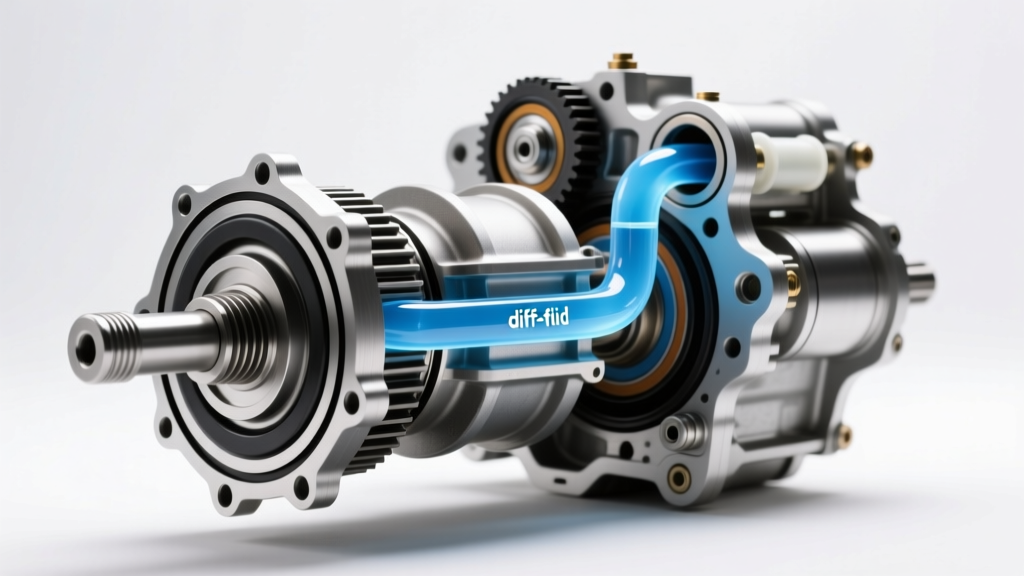
For the vast majority of modern Subarus on the road (Outback, Forester, Crosstrek, and Ascent equipped with the Lineartronic CVT or older 4EAT/5EAT automatics), the architecture is completely different. The front differential is bolted to the front of the transmission case but is sealed off in its own isolated chamber. It requires thick 75W-90 GL-5 gear oil. Meanwhile, the transfer case (which utilizes a Multi-Plate Transfer (MPT) clutch pack to send power rearward) is located in the tail extension of the transmission and shares the automatic transmission fluid (ATF) or Continuously Variable Transmission Fluid (CVTF). In this scenario, your front differential fluid change is entirely separate from your transfer case service.
Drivetrain Configurations and Fluid Relationships
To visualize this relationship, reference the table below before purchasing your maintenance supplies.
| Transmission Type | Front Diff Location | Transfer Case Location | Fluid Relationship | Front Diff Capacity |
|---|---|---|---|---|
| 5MT / 6MT (Manual) | Inside Trans Case | Trans Tail Extension | Shared (Single Sump) | ~3.5 to 4.0 Quarts (Total System) |
| Lineartronic CVT | External Bolt-On Housing | Trans Tail Extension | Isolated (Separate Sumps) | ~1.2 to 1.5 Quarts |
| 4EAT / 5EAT (Auto) | External Bolt-On Housing | Trans Tail Extension | Isolated (Separate Sumps) | ~1.2 to 1.5 Quarts |
Step-by-Step: The Isolated Front Differential Fluid Change
Because the CVT and automatic platforms represent the largest segment of Subaru owners, this beginner-friendly guide will focus on the isolated front differential fluid change. This is a straightforward, 30-minute DIY job that protects the hypoid ring and pinion gears from premature wear.
Tools and OEM Part Numbers Required
- Fluid: 2 Quarts of 75W-90 GL-5 Gear Oil (Subaru OEM Part # SOA868V9270, or high-quality alternatives like Motul Gear 300 75W-90 or Red Line 75W90).
- Crush Washers: 2x OEM Drain/Fill Plug Gaskets (Part # 803926090 for most 2010+ models; verify via Subaru Technical Information System (STIS) for your specific VIN).
- Tools: 10mm Hex socket or T70 Torx socket (depending on model year), 3/8-inch drive torque wrench, fluid transfer pump, and a catch pan.
The Drain and Fill Procedure
Step 1: Level the Vehicle. Unlike engine oil, differential fluid relies on a precise fill level. The vehicle must be perfectly level on jack stands or a lift. If the car is tilted, the fluid will overflow prematurely, leaving the ring gear starved of lubrication.
Step 2: Remove the Fill Plug First. This is the golden rule of differential service. Located on the passenger side of the front diff housing, the fill plug must be removed before the drain plug. If you drain the fluid first and subsequently discover your fill plug is seized or stripped, your vehicle is immobilized.
Step 3: Drain the Fluid. Remove the bottom drain plug. Expect the fluid to be dark and carry a slight metallic sheen. However, if you find large metal chunks or a milky, chocolate-milk consistency, you have catastrophic gear wear or water intrusion requiring an immediate teardown.
Step 4: Replace Crush Washers and Reinstall. Never reuse aluminum crush washers; they will not seal properly and will leak onto your exhaust cross-pipe, creating a terrible burning smell. Install new washers on both plugs. Torque both the drain and fill plugs to 31.3 lb-ft (42.4 Nm).
Step 5: Pump in New Fluid. Use a transfer pump to push the 75W-90 gear oil into the fill hole until it begins to weep out of the threads. Reinstall the fill plug, torque to spec, and wipe the housing clean with brake cleaner.
How Front Differential Failure Destroys the Transfer Case
Beginners often ask: 'If my front differential is isolated from the transfer case, why does its maintenance matter to the AWD system?' The answer lies in mechanical binding and rotational speed deltas.
The transfer case (center differential) in a Subaru is designed to allow slight speed differences between the front and rear axles, accommodating turning radiuses and minor tire wear discrepancies. If you neglect your Subaru front differential fluid change, the hypoid gear oil degrades, losing its extreme-pressure (EP) additives. The ring and pinion gears will begin to micro-pit and generate excessive friction.
This friction creates rotational drag on the front axle. When the front axle begins to turn slower than the rear axle due to mechanical binding, the transfer case's Multi-Plate Transfer (MPT) clutch pack is forced to continuously slip to compensate for the speed delta. This continuous slip generates massive amounts of heat, rapidly burning out the transfer clutch plates and contaminating your CVT or ATF fluid with friction material. In short, a $40 neglected front differential fluid change can easily cascade into a $3,000 transfer case and transmission rebuild.
2026 Maintenance Intervals and Expert Advice
As we navigate the 2026 automotive landscape, Subaru's official 'lifetime' fluid claims for severe-duty components remain a point of contention among master technicians. While the owner's manual might suggest inspecting the front differential fluid every 30,000 miles, independent Subaru specialists universally recommend a proactive drain-and-fill every 30,000 to 50,000 miles.
If you frequently tow, drive on unpaved roads, or live in a region with heavy snow and salt exposure, drop that interval to 30,000 miles. Water intrusion past aging axle seals is a common failure point that silently emulsifies gear oil, stripping away the protective boundary layer required by the hypoid gear teeth. By understanding the intimate relationship between your front differential and the broader AWD transfer case network, you ensure your Subaru remains capable, reliable, and ready for any terrain.