The Preventive Maintenance Divide: Fluid Service vs. Full Replacement
When managing the lifecycle of your vehicle's drivetrain, the differential is often the most neglected component. Unlike engine oil, which is changed every 5,000 to 10,000 miles, gear oil is frequently ignored until catastrophic failure occurs. As an automotive transmission and drivetrain specialist, I frequently see owners weighing the upfront cost of preventive differential fluid service against the staggering labor cost to replace rear differential assemblies once internal components have been destroyed by friction and heat.
In 2026, with the rising cost of remanufactured drivetrain components and dealership shop rates averaging $185 to $225 per hour, understanding the financial and mechanical threshold between a simple fluid swap and a full axle replacement is critical for any vehicle owner. This guide breaks down the exact chemistry of differential wear, the true cost of preventive service, and the extensive labor required when maintenance is ignored.
The Chemistry of Hypoid Gear Wear and Fluid Degradation
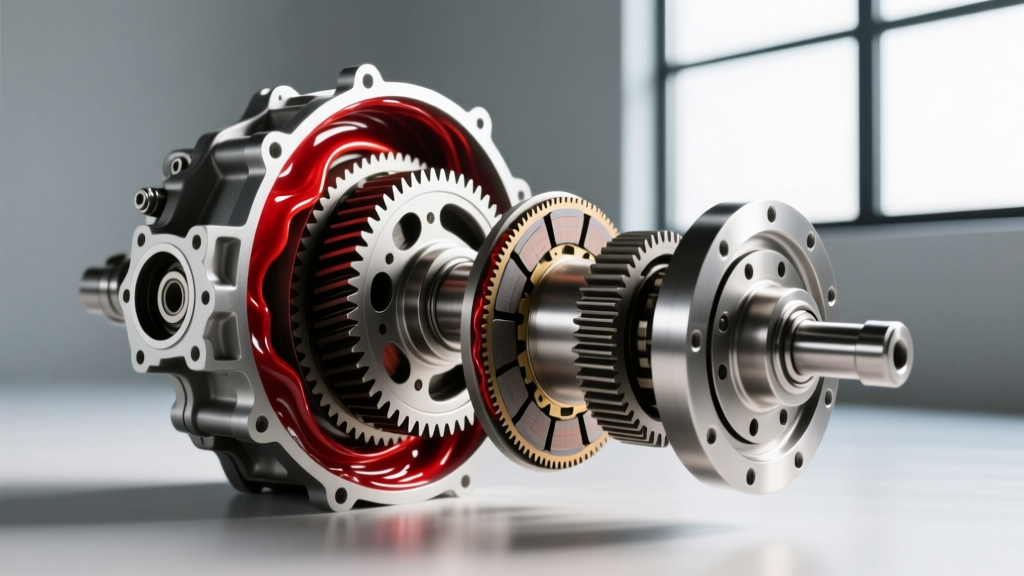
To understand why differential fluid service is non-negotiable, you must understand the operating environment of a hypoid ring and pinion gear set. Unlike engine components that rely on hydrodynamic fluid film separation, the sliding friction between hypoid gears operates under extreme boundary lubrication conditions.
To prevent the gears from welding together under load, API GL-5 gear oils utilize Extreme Pressure (EP) additives, typically sulfur-phosphorus compounds. Under high heat and shear, these additives chemically react with the iron surfaces to form a sacrificial iron sulfide and phosphate layer. However, by 60,000 to 80,000 miles, these EP additives are depleted. The fluid darkens, its viscosity breaks down, and the sacrificial layer fails. Once this happens, microscopic pitting begins on the gear teeth, leading to the characteristic 'gear whine' that signals the beginning of the end for your axle.
2026 Differential Fluid Service Pricing Breakdown
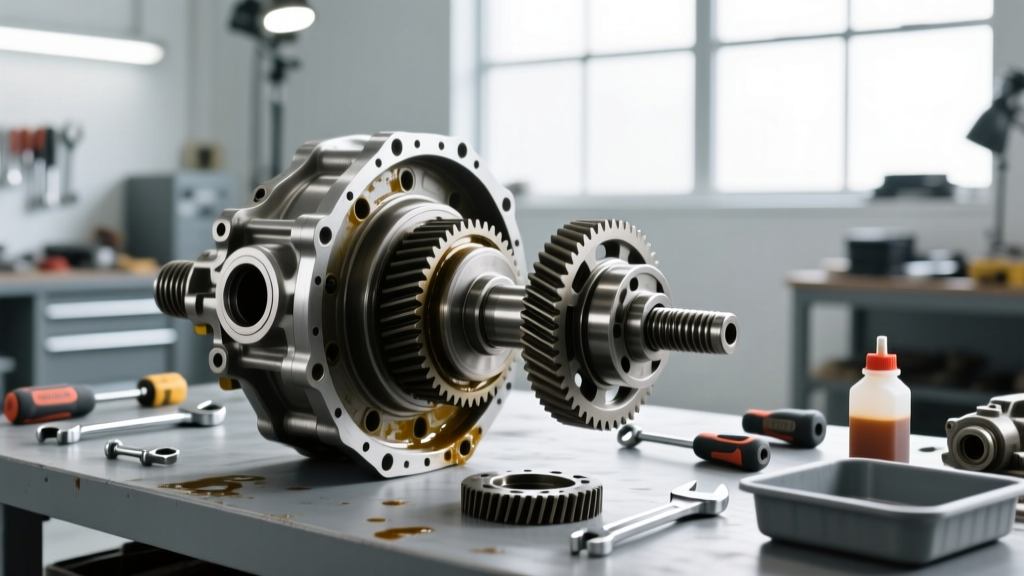
A standard preventive fluid service involves draining the old gear oil, cleaning the housing, replacing the gasket or RTV sealant, and refilling with fresh synthetic fluid. Here is what you can expect to pay at an independent specialist shop in 2026:
- Synthetic Gear Oil (75W-90 or 75W-140): $25 to $45 per quart. Most solid axles (e.g., Dana 44, GM 9.5-inch, Ford 8.8-inch) require 2.5 to 3.5 quarts, totaling $75 to $150 in materials.
- Friction Modifier (If equipped with Clutch-type LSD): $12 to $18 per bottle.
- Sealant and Consumables: Permatex Ultra Black RTV and brake cleaner add roughly $15 to the ticket.
- Shop Labor (0.8 to 1.2 Book Hours): At an average rate of $175/hr, labor ranges from $140 to $210.
Total Preventive Service Cost: $230 to $395. According to Car and Driver's maintenance analysis, spending this amount every 50,000 miles is one of the highest-ROI services you can perform on a truck or SUV.
Diagnosing the Point of No Return
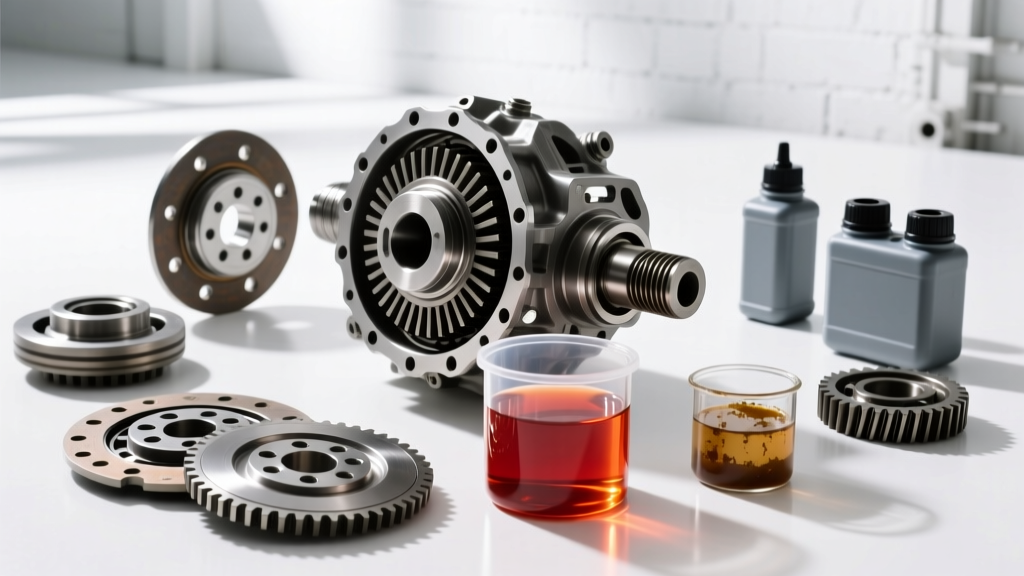
How do you know if you have missed the window for a simple fluid change and are now facing a full replacement? The drain plug tells the story. If you pull the drain plug and the magnet is covered in a fine, glitter-like metallic paste, your bearings are shedding material, but the gears may still be salvageable with a flush and heavier weight oil (e.g., stepping from 75W-90 to 75W-140).
However, if you find jagged metal chunks, or if the differential exhibits the following acoustic symptoms, the assembly is fatally compromised:
- Deceleration Howl: Indicates a failing pinion bearing. The pinion gear is losing its precise depth setting, causing improper tooth contact.
- Acceleration Whine: Points to a failing carrier bearing or worn ring gear teeth.
- Constant Clunking on Load Reversal: Excessive backlash due to worn thrust washers or spider gears inside the differential case.
Breaking Down the Labor Cost to Replace Rear Differential
When internal components are destroyed, a fluid change will not reverse the damage. You must replace the entire rear axle assembly or perform a complete teardown and rebuild. Because setting up a ring and pinion requires specialized dial indicators, inch-pound rotational torque wrenches, and a bearing press, most shops opt to install a remanufactured drop-in assembly.
The labor cost to replace rear differential assemblies is substantial because it involves far more than just unbolting a pumpkin. The technician must:
- Drain the fluid and disconnect the driveshaft (marking it for balance alignment).
- Disconnect the ABS wheel speed sensors and parking brake cables.
- Remove the rear brake calipers, rotors, and backing plates.
- Unbolt the axle shafts and slide them out of the housing.
- Support the axle housing and disconnect the shock absorbers, leaf springs (or coilover links), and the panhard bar/track bar.
- Lower the old housing, transfer necessary brackets to the new remanufactured unit, and reverse the installation.
- Bleed the rear brake lines and recalibrate the ABS module.
This process typically books between 4.5 and 6.5 hours. At a 2026 average dealership rate of $195 per hour, the labor cost alone ranges from $877 to $1,267. When you combine this with the cost of a remanufactured axle assembly, the financial penalty for ignoring preventive maintenance becomes glaringly obvious.
2026 Drivetrain Cost Matrix: Service vs. Replacement
| Vehicle Class | Preventive Fluid Service | Labor Cost to Replace Rear Differential | Remanufactured Assembly Cost | Total Replacement Cost |
|---|---|---|---|---|
| Half-Ton Truck (e.g., F-150, Silverado 1500) | $230 - $310 | $850 - $1,150 | $1,600 - $2,400 | $2,450 - $3,550 |
| Heavy Duty Truck (e.g., Ram 2500, F-250 w/ Dana 60) | $280 - $395 | $1,100 - $1,450 | $2,500 - $3,800 | $3,600 - $5,250 |
| Midsize SUV (e.g., 4Runner, Wrangler) | $210 - $280 | $700 - $950 | $1,200 - $1,800 | $1,900 - $2,750 |
Note: Data reflects average independent and dealership pricing trends for 2026. For broader context on rising shop rates, refer to the AAA Automotive Repair Cost Index.
Expert Protocol: The Perfect Differential Fluid Service
If you are performing this service at home or auditing your mechanic's work, adherence to factory specifications is mandatory. Here is the professional protocol for a solid rear axle service:
1. Fluid Selection and Friction Modifiers
Always use a full synthetic API GL-5 rated gear oil. For standard towing and daily driving, 75W-90 is ideal. For heavy towing or off-road crawling, step up to 75W-140.
Critical Note on LSDs: Clutch-type limited-slip differentials require a friction modifier to prevent chatter during low-speed cornering. For Ford 8.8-inch Traction-Lok axles, use Motorcraft XL-3 (Part #C6AZ-19546-A). For GM vehicles with the Eaton G80 locker, use ACDelco Friction Modifier (Part #88900338). Helical gear LSDs (like the Eaton Truetrac or Torsen) do not require modifiers.
2. Sealing the Housing
Abandon cheap cork or rubber gaskets; they are prone to shifting and leaking over time. Clean the differential cover and housing mating surfaces thoroughly with brake cleaner. Apply a continuous 3mm bead of Permatex Ultra Black RTV (Part #81878). Allow the RTV to 'skin over' for 10 minutes before mating the cover to the housing.
3. Precision Torque Specifications
Over-torquing differential cover bolts will warp stamped steel covers, guaranteeing a leak. Use a calibrated inch-pound or low-range foot-pound torque wrench. Tighten in a crisscross pattern:
- GM 10-Bolt (8.5-inch) and 12-Bolt: 22 to 25 lb-ft.
- Ford 8.8-inch and Sterling 10.5-inch: 28 to 33 lb-ft.
- Dana 44 / Dana 60: 25 to 30 lb-ft (depending on bolt grade and specific OEM manual).
4. The Fill and Vent Check
Fill the differential until the fluid level is exactly at the bottom of the fill hole (or 1/2 inch below for specific GM applications). Crucially, ensure the differential axle vent tube on the top of the housing is clear of debris. A clogged vent will cause internal pressure buildup as the gear oil heats up, forcing fluid past the pinion seal and axle shaft seals, mimicking a catastrophic failure.
Final Verdict
The math is unforgiving. Spending $250 every 50,000 miles on a meticulous differential fluid service preserves the EP additive chemistry required to protect your ring and pinion. Ignoring it guarantees that you will eventually face the immense labor cost to replace rear differential assemblies, turning a minor maintenance item into a multi-thousand-dollar drivetrain crisis. Treat your axle fluid with the same respect you give your engine oil, and your drivetrain will easily outlast the vehicle's chassis.