The Intersection of Hardware and Chemistry: Upgrading Your Drivetrain in 2026
As trucks and SUVs continue to grow heavier and more powerful in 2026—from the massive towing demands of the latest generation Ford Super Duties to the instant torque delivery of heavy electric pickups like the Rivian R1T and F-150 Lightning—the stock drivetrain components are under more stress than ever. The factory stamped-steel differential cover is often the weakest link in this thermal chain. It flexes under load, compromises the gasket seal, and holds just enough gear oil to barely keep the ring and pinion submerged.
Upgrading to custom differential covers is one of the most effective bolt-on modifications you can make. However, increasing your fluid capacity and altering the thermal dynamics of your axle housing fundamentally changes your differential fluid types and specifications requirements. This comprehensive buyer's guide compares the best custom covers on the market and breaks down exactly which gear oils, viscosities, and additive packages you need to pair them with for ultimate reliability.
Top Custom Differential Covers Compared
When shopping for an aftermarket cover, you are generally looking for three benefits: increased fluid capacity, enhanced heat dissipation (via cooling fins), and superior structural rigidity. Below is a comparison of the top-tier options for the most common heavy-duty and off-road axles.
| Brand / Model | Axle Application | Material | Capacity Increase | Est. Price (2026) |
|---|---|---|---|---|
| Mag-Hytec Deep Sump | GM 11.5" 14-Bolt | Cast Aluminum | +2.5 Quarts | $285 |
| PPE Heavy-Duty Finned | Dana 60 / Dana 70 | Nodular Iron / Aluminum | +1.5 Quarts | $245 |
| ARBDiff Lock Compatible | Dana 44 (JK/TJ) | Nodular Iron | +0.5 Quarts | $185 |
| ATS Diesel Billet | Ford 10.5" 14-Bolt | Billet Aluminum | +2.0 Quarts | $340 |
Key Buyer Considerations for Custom Covers
- Ground Clearance vs. Capacity: Deep sump covers like the Mag-Hytec drop the lowest point of your differential by 2 to 3 inches. If you are building a dedicated rock crawler, a finned but shallow cover (like PPE or ARB) protects your ground clearance while still offering superior heat dissipation compared to stamped steel.
- Dipstick Integration: Premium covers often include a built-in dipstick. This is critical because the traditional "fill until it runs out of the hole" method no longer applies when the fill hole is located higher up on an extended aftermarket cover.
- Magnetic Drain Plugs: Ensure the cover includes a high-strength neodymium magnetic drain plug to capture metallic wear debris from the ring and pinion break-in process.
Differential Fluid Types and Specifications Explained
Installing a custom differential cover means you are now buying 2 to 4 extra quarts of gear oil per service. Because you are investing in premium hardware, filling it with bargain-baseline mineral oil is a false economy. Understanding differential fluid specifications is critical to protecting your investment.
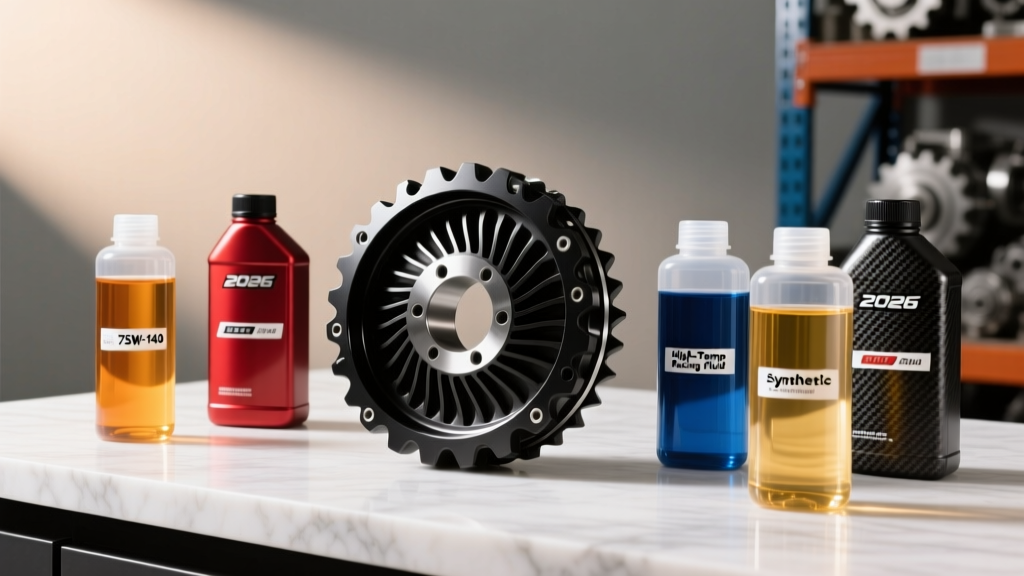
Viscosity Grades: 75W-90 vs. 75W-140
The most common debate in drivetrain maintenance is choosing between 75W-90 and 75W-140 synthetic gear oils. The "W" stands for Winter, indicating the fluid's flow characteristics at cold temperatures, while the second number represents its kinematic viscosity at 100°C (212°F).
- 75W-90 Synthetic: The gold standard for daily driving, light towing, and off-roading. It offers excellent cold-weather flow, reducing parasitic drag and improving fuel economy. According to Dana Spicer Service Manuals, 75W-90 is the recommended factory fill for most modern Dana 44 and Dana 60 axles under normal operating conditions.
- 75W-140 Synthetic: Mandatory for severe-duty towing, heavy commercial use, or sustained high-speed highway driving in desert climates. The thicker fluid film resists shearing under extreme loads, but it increases rolling resistance and takes longer to warm up in freezing temperatures.
API GL-5 Ratings and Extreme Pressure (EP) Additives
When selecting a fluid, you must look for the API GL-5 specification. The American Petroleum Institute (API) classifies gear oils based on their Extreme Pressure (EP) additive packages. As detailed in the API Gear Oil Classifications, GL-5 fluids contain high levels of sulfur-phosphorus compounds.
Under the extreme sliding friction of hypoid gear sets (where the pinion gear sits below the centerline of the ring gear), these sulfur-phosphorus additives react with the heat to form a sacrificial solid film on the gear teeth. This prevents metal-on-metal welding and micropitting. Warning: Never use API GL-5 fluid in older manual transmissions with yellow metal (brass/bronze) synchronizers, as the sulfur will corrode them. However, for modern differentials, GL-5 is an absolute requirement.
Limited-Slip Differential (LSD) Friction Modifiers
If your axle is equipped with a clutch-type Limited Slip Differential (LSD) such as the Eaton Truetrac, Auburn, or factory Ford/GM posi units, the fluid specification requires a friction modifier. Without it, the clutch packs will bind and chatter during low-speed cornering.
Pro Tip: Many premium synthetic gear oils (like Amsoil Severe Gear or Royal Purple Max Gear) already contain friction modifiers. However, if chatter persists after a fluid change, adding a dedicated modifier like Ford XL-3 (Part # E9FZ-19B546-A) or GM EOS (Part # 88900333) in 2 oz. increments is required.
Matching Fluid Specs to Your Custom Cover Setup
How do you pair your new hardware with the right chemistry? Here are the optimal pairings based on your vehicle's use case.
Setup 1: The Heavy Hauler (Towing > 10,000 lbs)
- Cover Choice: Mag-Hytec Deep Sump (Max capacity for thermal mass).
- Fluid Spec: Full Synthetic 75W-140 API GL-5.
- Recommended Product: Mobil 1 Synthetic Gear Lube 75W-140 (Part # 104361) or Red Line 75W140.
- Why: The massive fluid volume of the deep sump cover delays heat soak, while the 140-weight oil maintains a protective hydrodynamic film on the ring gear even when differential temperatures exceed 250°F under heavy trailer loads.
Setup 2: The Overland / Daily Driver
- Cover Choice: PPE Finned Aluminum (Balanced capacity and ground clearance).
- Fluid Spec: Full Synthetic 75W-90 API GL-5.
- Recommended Product: Amsoil Severe Gear 75W-90 (Product Code SVG).
- Why: The cooling fins on the PPE cover actively shed heat via airflow. A 75W-90 fluid ensures quick lubrication on cold morning starts and minimizes drivetrain power loss, which is crucial for overlanders navigating technical, low-speed trails where oil splash is minimal.
Installation Best Practices: Torque Specs and Sealing
The best custom differential covers and premium fluids will fail if the installation is botched. The mating surface on the axle housing must be scraped completely clean of old RTV or gasket material using a plastic gasket scraper (avoid metal scrapers that can gouge the housing or drop debris into the gear set).
Gasket vs. RTV Silicone
While many factory setups use RTV silicone, high-end aftermarket covers often require specific sealing methods:
- LubeLocker Gaskets: These elastomer-coated steel gaskets (e.g., Part # LLD60 for Dana 60) are reusable and eliminate the cure-time wait associated with RTV.
- Permatex Ultra Black (Part # 80050): If your cover requires RTV, use Ultra Black. It is specifically formulated for high-flex, high-oil-resistance environments found in differentials. Apply a continuous 1/8" bead and allow 1 hour of tack time before torquing.
Critical Torque Specifications
Overtorquing cover bolts will strip the threads in the cast-iron or aluminum axle housing, while undertorquing leads to leaks. Always use a calibrated inch-pound or foot-pound torque wrench in a star pattern.
| Axle Type | Bolt Size | Torque Specification |
|---|---|---|
| Dana 44 / Dana 60 | 3/8" - 16 | 25 - 30 lb-ft |
| GM 8.5" 10-Bolt | 5/16" - 18 | 18 - 22 lb-ft |
| GM 10.5" 14-Bolt | 1/2" - 13 | 45 - 50 lb-ft |
| Ford 10.25" / 10.5" | 1/2" - 13 | 40 - 45 lb-ft |
Final Verdict: Building a Bulletproof Drivetrain
Upgrading to custom differential covers in 2026 is no longer just an aesthetic choice; it is a vital thermal management upgrade for modern, heavy vehicles. However, the hardware is only half the equation. By matching your new cover's capacity and cooling profile with the correct differential fluid types and specifications—whether that means stepping up to a shear-stable 75W-140 for towing or utilizing a high-quality 75W-90 with the correct LSD modifiers—you ensure that your ring and pinion gears survive the harshest environments. Consult your specific axle manufacturer's service manual, invest in premium synthetics, and torque your hardware to spec for a drivetrain that will outlast the vehicle itself.