Understanding Subaru Symmetrical AWD Drivetrain Acoustics
Diagnosing drivetrain noise in a Subaru requires a fundamental understanding of the Symmetrical All-Wheel Drive layout. Unlike transverse-engine AWD systems that use a power take-off (PTU) to send power rearward, Subaru’s longitudinally mounted boxer engines feed directly into a center differential, which then splits torque to the front and rear axles. When a driver complains of a whine, howl, or clunk, the culprit is frequently the hypoid gearsets or bearings within the front or rear differentials. However, because the front differential is integrated directly into the transmission case (whether it is a TY85 6-speed manual or a TR690 CVT transaxle), isolating the exact source of the noise demands a systematic, expert-level approach.
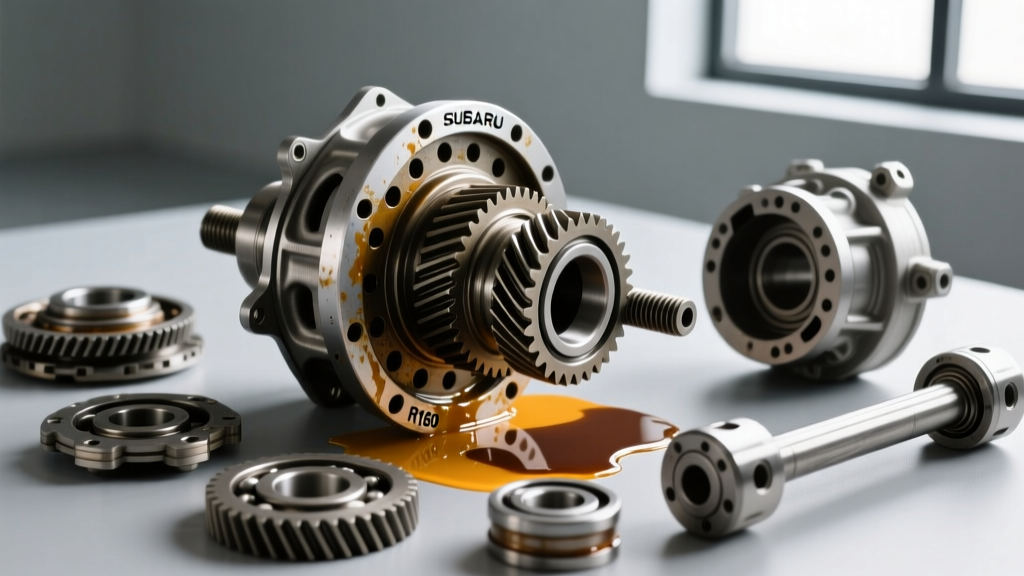
In this comprehensive guide, we will break down the exact diagnostic protocols for identifying Subaru differential noise, focusing on the ubiquitous R160 and heavy-duty R180 rear differentials, while providing actionable troubleshooting matrices, fluid specifications, and mechanical measurement tolerances for 2026.
Categorizing Subaru Differential Noises
The first step in differential noise diagnosis is categorizing the acoustic signature based on vehicle speed, engine load, and steering input. Hypoid gearsets and tapered roller bearings produce distinctly different frequencies when they begin to fail.
Drive vs. Coast Whine (Ring and Pinion Wear)
A high-pitched whine that occurs exclusively under acceleration (drive) and disappears when you lift off the throttle (coast) is the classic hallmark of ring and pinion gear wear. In a Subaru rear differential, this usually indicates that the backlash has increased beyond the factory specification of 0.13mm to 0.18mm, or that the pinion depth shim has compressed over time, altering the gear contact pattern. If the whine occurs only on coast (deceleration), the wear is localized to the non-drive side of the gear teeth, often a result of chronic engine braking or aggressive downshifting without rev-matching.
Bearing Howl and Growl
Unlike gear whine, bearing noise is generally load-independent. A failing pinion bearing will produce a continuous howl that rises and falls strictly in accordance with vehicle speed, regardless of whether you are accelerating or coasting. If the growling or howling noise changes pitch or volume when swerving left or right, you are likely dealing with worn carrier (side) bearings. Swerving transfers the vehicle's lateral weight, unloading one side bearing while heavily loading the other, which isolates the failing component.
Clunks and Backlash Slap
A metallic clunk when shifting from Drive to Reverse, or when abruptly lifting off the throttle, indicates excessive rotational play. In Subarus equipped with a Torsen limited-slip rear differential or an open R160, this is often caused by worn spider gears, excessive ring gear runout, or a deteriorated crush sleeve on the pinion shaft that has allowed the pinion bearing preload to collapse.
The Fluid Drain-and-Inspect Protocol
Before tearing into the differential casing, a fluid analysis is mandatory. Subaru hypoid gears operate under extreme sliding friction and require specific Extreme Pressure (EP) additives found only in API GL-5 rated gear oils. Using a GL-4 fluid will result in catastrophic gear scoring within a few thousand miles.
- OEM Fluid Recommendation: Subaru Extra-HP 75W-90 GL-5 (Part # SOA635040). For clutch-type LSDs, ensure the fluid contains the necessary friction modifiers, though Torsen (gear-based) diffs do not require clutch modifiers.
- Capacity: The standard R160 rear differential holds approximately 0.8 Liters (27 fl oz). The R180 (STI) holds slightly more, around 1.0 Liters.
- Drain/Fill Plug Torque: Both the drain and fill plugs require 33.2 lb-ft (45 Nm) of torque. Always replace the aluminum crush washers (Part # 803926090) to prevent casing leaks.
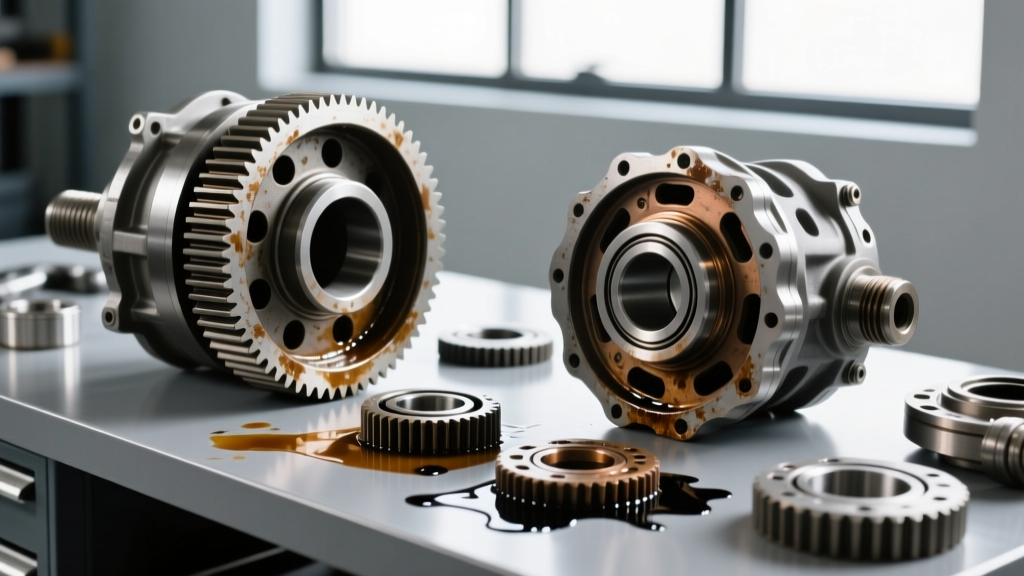
Expert Diagnostic Tip: When draining the rear differential, use a magnetic drain plug or inspect the factory magnetic plug closely. A fine, silvery paste is normal wear for a differential with over 80,000 miles. However, if you find chunky metal flakes or brass-colored shavings, the brass side gear thrust washers or the cage bearings have failed, necessitating a complete teardown.
Subaru Differential Noise Diagnosis Matrix
Use the following matrix to cross-reference the driver’s complaint with the likely mechanical failure point. This framework eliminates guesswork and prevents unnecessary parts replacement.
| Noise Type | Operating Condition | Likely Culprit | Verification Method |
|---|---|---|---|
| High-Pitch Whine | Acceleration (Drive) only | Ring/Pinion wear (Drive side) | Check backlash & drive-side gear pattern |
| High-Pitch Whine | Deceleration (Coast) only | Ring/Pinion wear (Coast side) | Check pinion depth & coast-side pattern |
| Continuous Howl | Both Drive and Coast (Speed dependent) | Pinion Shaft Bearings | Stethoscope on pinion housing; check preload |
| Growling / Rumble | Changes pitch during Left/Right turns | Carrier (Side) Bearings | Load/unload test; check side bearing preload |
| Metallic Clunk | Load reversal (Drive to Reverse) | Excessive Backlash / Worn Spider Gears | Dial indicator on ring gear; visual diff inspection |
Advanced Mechanical Troubleshooting
Once the noise is categorized and the fluid is inspected, physical measurement is required to confirm the diagnosis. According to drivetrain specialists at Ring-Pinion.com, attempting to adjust a worn hypoid gearset without understanding pinion depth and carrier shim adjustments will only accelerate failure.
Measuring Backlash and Gear Patterns
To measure ring gear backlash on a Subaru R160 or R180, mount a magnetic dial indicator to the differential housing and position the stylus perpendicular to a ring gear tooth. Rotate the pinion back and forth while holding the ring gear stationary. The factory specification for most Subaru rear differentials is 0.13mm to 0.18mm (0.0051 - 0.0071 inches). If your reading exceeds 0.20mm, the gearset is worn beyond safe limits, or the side bearings have collapsed, allowing the carrier to shift away from the pinion.
Next, apply yellow gear marking compound to the ring gear teeth (use white compound if the gears are brand new). Apply moderate rotational resistance to the ring gear using a shop towel or a brake caliper drag, and rotate the pinion through several full revolutions. Inspect the contact pattern:
- Ideal Pattern: Centered evenly on the tooth face, spanning from the toe to the heel without touching the top land or root.
- Too High (Top Land Contact): The pinion is too close to the ring gear. Requires a thicker pinion depth shim.
- Too Low (Root Contact): The pinion is too far from the ring gear. Requires a thinner pinion depth shim.
- Toe/Heel Bias: Adjusted via the carrier side shims to move the ring gear left or right, which simultaneously corrects backlash.
Front Differential Nuances: The Integrated Challenge
It is vital to remember that the front differential on a Subaru is not a standalone bolt-in unit like the rear. It is housed inside the transmission bell housing. If your diagnostic matrix points to a front differential failure (whining under load, metallic debris in the front diff drain plug located on the side of the transmission), the entire transmission must be removed and split open. For CVT models (TR690/TR580), this often means a full transmission replacement or a highly specialized transaxle rebuild, which drastically alters the economic viability of the repair compared to a simple rear differential swap.
Repair vs. Replacement: 2026 Cost Realities
When a Subaru rear differential is confirmed to have severe internal damage, owners face a critical decision. A complete rebuild using OEM or high-quality aftermarket bearings (Timken/Koyo) and a new ring and pinion set from suppliers like SubaruParts.com typically costs between $800 and $1,200 in parts, plus 6-8 hours of specialized labor. Setting pinion depth and crush sleeve preload requires a hydraulic press and specialized bearing pullers, making it a job best left to drivetrain machinists.
Alternatively, sourcing a low-mileage JDM replacement R160 or R180 differential from a reputable importer often ranges from $400 to $700. While this is the most cost-effective route, it carries the inherent risk of unknown internal wear. If opting for a used unit, always insist on a video showing the dial indicator backlash test and an internal borescope inspection of the gear teeth before purchasing. By adhering to these strict diagnostic protocols and utilizing precise measurement tolerances, you can accurately isolate Subaru differential noise and execute the most reliable repair strategy for the vehicle's lifecycle.