The Economics of Axle Health: Breaking Down Rear Differential Repair Cost
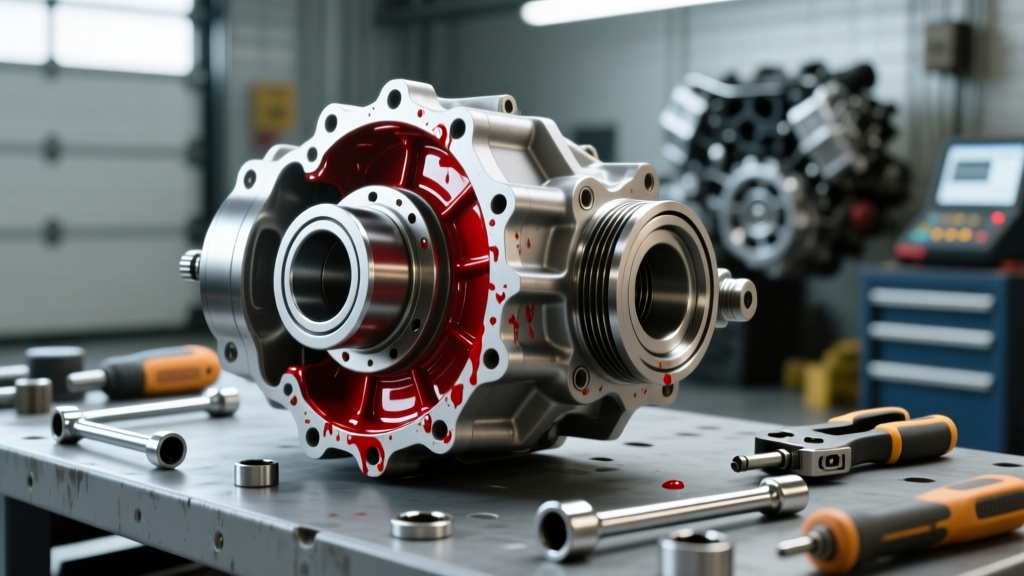
When heavy-duty truck and SUV owners notice a whine from the rear axle or find a puddle of thick, sulfurous gear oil on their driveway, the immediate concern is financial. Understanding the true rear differential repair cost requires comparing proactive maintenance against catastrophic failure. In 2026, with shop labor rates for specialized drivetrain work averaging between $150 and $225 per hour, ignoring basic differential maintenance for trucks and SUVs can quickly escalate a $200 fluid service into a multi-thousand-dollar axle replacement.
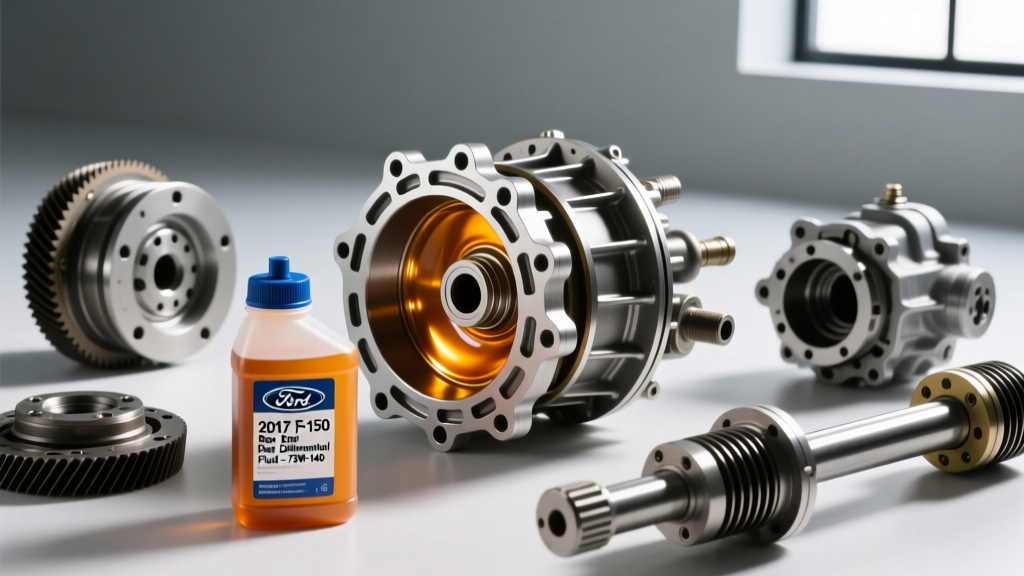
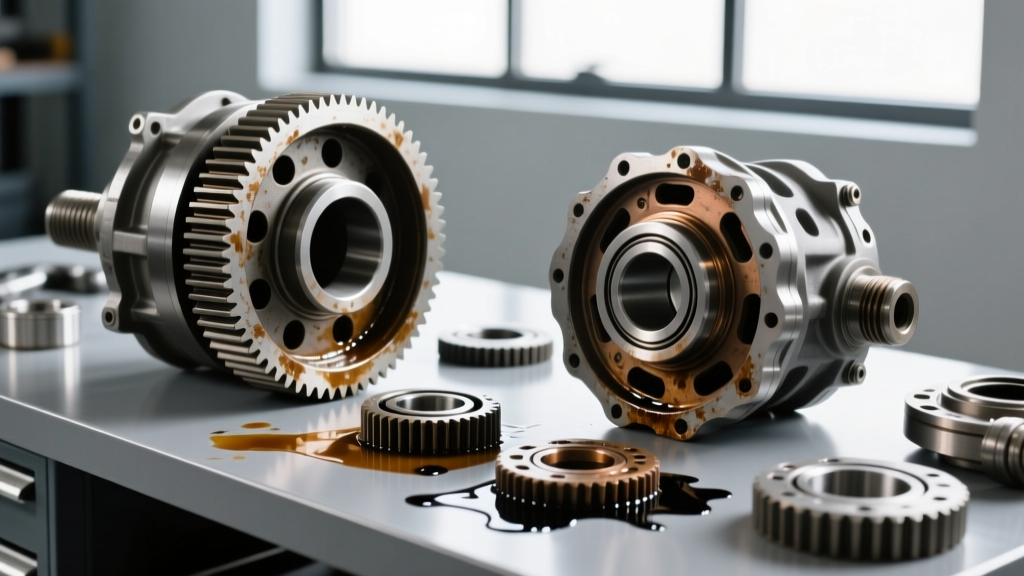
A standard rear differential fluid service costs between $180 and $275 at a reputable 4x4 shop. However, if the fluid is neglected, the pinion bearings will starve, leading to gear misalignment and tooth spalling. At that point, a complete ring and pinion setup—including Timken bearings, seals, a crush sleeve, and precision labor—will push the rear differential repair cost to between $1,800 and $3,200. If the carrier case fractures or the axle shafts twist due to extreme shock loading off-road, you are looking at a complete crate axle replacement exceeding $4,500. Proactive maintenance and strategic performance upgrades are the only ways to protect your driveline investment.
Heavy-Duty Axle Profiles: Dana 60, GM 14-Bolt, and Sterling 10.5
To properly maintain and upgrade your rig, you must understand the specific architecture of your axle. The three most common heavy-duty rear axles found in modern and classic trucks are the Dana 60, the GM 14-Bolt (10.5-inch ring gear), and the Ford Sterling 10.5. Each has unique fluid capacities, torque specifications, and upgrade pathways.
| Axle Model | Fluid Capacity | OEM Viscosity | Upgrade Recommendation | Cover Bolt Torque |
|---|---|---|---|---|
| Dana 60 (HD Rear) | 3.5 - 4.0 Qts | 75W-140 Synthetic | Amsoil SVG 75W-90 + LSD Additive | 30 - 35 lb-ft |
| GM 14-Bolt 10.5" | 4.0 Qts | 75W-90 Synthetic | Amsoil SVO 75W-140 | 25 - 30 lb-ft |
| Ford Sterling 10.5" | 3.7 Qts | 75W-140 Synthetic | Mobil 1 75W-140 + XL-3 Additive | 33 lb-ft |
For deep-dive technical specifications and service manuals on these specific axles, the Dana Spicer official resource center remains the gold standard for tolerances, shim thicknesses, and bearing preload specs.
Performance Upgrades: Gearing, Traction, and Thermal Management
Maintenance keeps the axle alive, but performance upgrades make it capable. When you upsize your truck’s tires from a stock 31-inch to a 35-inch or 37-inch tire, the effective final drive ratio drops drastically. This forces the engine out of its optimal powerband, causes transmission hunting, and generates excessive heat in the differential fluid due to prolonged high-RPM operation.
Ring and Pinion Swaps for Oversized Tires
Regearing is the most impactful upgrade you can perform. For a truck running 35-inch tires, swapping to a 4.56 or 4.88 ring and pinion set restores the factory crawl ratio and towing capability. A proper gear setup requires specialized tools: a dial indicator with 0.001-inch resolution to measure backlash (typically targeting 0.006" to 0.010"), and an inch-pound torque wrench to measure pinion bearing preload. Never rely on a standard torque wrench for pinion bearing preload; the crush sleeve must be deformed precisely to achieve the correct rolling resistance, usually between 15 and 25 inch-pounds for new bearings.
Traction Additives: Lockers vs. LSDs
Factory open differentials are inadequate for off-road or heavy-towing scenarios. Upgrading to a helical limited-slip differential (LSD) like the Eaton Truetrac provides seamless torque biasing without the need for friction modifiers. For hardcore rock crawling or deep mud, a full locking differential like the ARB Air Locker or the Yukon Grizzly Locker ensures 100% torque distribution to both wheels. Note that if you retain a clutch-type LSD (like the Ford Traction-Lok or Eaton Posi), you must add a specific friction modifier (e.g., Ford XL-3 or GM Part #88900333) to your 75W-90 gear oil to prevent chatter during low-speed turns.
Thermal Management and Cooling
Heat is the enemy of gear oil. When towing heavy fifth-wheel trailers up steep grades, differential fluid temperatures can exceed 250°F, causing standard oils to shear and lose film strength. Upgrading to a finned aluminum differential cover from brands like Mag-Hytec or PPE increases fluid capacity by 1 to 1.5 quarts and provides massive surface area for convective cooling. Always pair an upgraded cover with a high-quality synthetic 75W-140 gear oil, which maintains its viscosity index far better than conventional 80W-90 mineral oils under extreme thermal loads.
The 2026 Severe-Duty Differential Service Protocol
Performing a differential service on a heavy-duty truck requires more than just draining and filling. Follow this severe-duty protocol to ensure longevity:
- Pre-Clean the Housing: Before removing the cover, use a pressure washer and a stiff brush to remove caked mud and debris from the axle tubes and differential housing. Introducing dirt into the carrier during service is a primary cause of premature bearing failure.
- Drain and Inspect: Remove the cover bolts, leaving the top two bolts loosely threaded to act as a hinge. Pry the cover loose from the bottom and let the fluid drain into a catch pan. Inspect the fluid for glitter (fine metallic particles) or chunks. Fine brass-colored particles are normal from the thrust washers, but steel chunks indicate catastrophic gear or bearing failure.
- Chemical Cleaning: Do not use shop rags, which leave lint that can clog oil journals. Spray the interior of the housing, the ring gear, and the magnet with aerosol brake cleaner. Use a lint-free towel to wipe the magnet clean.
- Sealing the Cover: Discard the old gasket. Scrape the mating surfaces with a plastic gasket scraper to avoid gouging the steel. Apply a continuous 3mm bead of Permatex Ultra Black RTV (Part #81173) to the cover. Alternatively, use a reusable Lube-Locker elastomer gasket for a mess-free seal. Let the RTV skin for 15 minutes before torquing the cover bolts to the manufacturer's specification in a crisscross pattern.
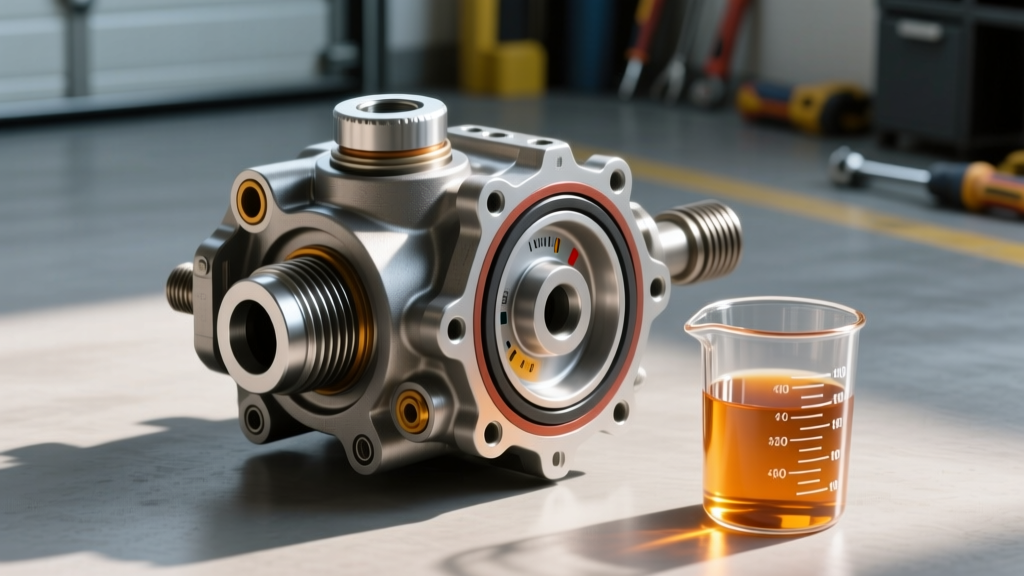
- Fill and Vent: Pump the synthetic gear oil into the fill hole until it reaches the bottom of the threads. Crucially, locate the axle vent tube on the top of the housing and ensure it is not clogged with mud. A clogged vent will cause internal pressure to build as the axle heats up, forcing fluid past the pinion seal and axle shaft seals.
Acoustic Diagnostics: Identifying Failure Before the Repair Bill Spikes
Mastering acoustic diagnostics can save you thousands by catching a failing component before it destroys the entire axle housing. Gear noise is highly specific to the load condition of the drivetrain.
- Drive Noise (Acceleration): If the axle howls or whines only when you are on the throttle, the issue is typically on the drive side of the ring and pinion teeth, or a failing inner pinion bearing. This is often caused by improper pinion depth setup or worn crush sleeves allowing the pinion gear to walk.
- Coast Noise (Deceleration): A whine that appears when you let off the gas pedal points to wear on the coast side of the gear teeth or excessive ring gear runout. This can also indicate a failing outer pinion bearing.
- Clunk on Engagement: A sharp metallic clunk when shifting from Reverse to Drive indicates excessive backlash. While some backlash is required to prevent gear binding, anything over 0.012 inches will cause impact loading. It can also point to worn spider gears inside the carrier or a loose pinion nut, which requires a specialized holding tool and up to 300 lb-ft of torque to properly stake.
For those looking to source replacement components, upgrade kits, or precision setup tools, Ring & Pinion offers an extensive catalog of OEM and aftermarket drivetrain parts tailored for heavy-duty truck applications.
Expert Insight: Never ignore a leaking pinion seal. A slow drip might seem like a minor annoyance, but as the fluid level drops below the pinion bearing centerline, the high-speed bearings will starve, overheat, and shatter the cage. Replacing a $15 pinion seal today prevents a $3,000 rear differential repair cost tomorrow.
Ultimately, differential maintenance for trucks and SUVs is about respecting the physics of torque multiplication. Whether you are towing a 12,000-pound trailer across the Rockies or crawling over boulders in Moab, ensuring your Dana 60 or GM 14-Bolt is filled with the correct synthetic fluid, geared appropriately for your tire size, and sealed against the elements is the only way to guarantee your rig makes it back to the trailhead under its own power.