Decoding F-450 Rear Axle Noises: Fluid vs. Mechanical Failure
When a Ford Super Duty F-450 develops rear axle noise, the immediate suspect is often the ring and pinion gear set or the wheel bearings. However, as any seasoned drivetrain technician knows, incorrect fluid viscosity, degraded additives, or missing friction modifiers frequently mimic catastrophic mechanical failures. Before pulling the differential cover or ordering a $2,500 gear set, a precise diagnosis based on the correct Ford F 450 rear differential fluid type and condition is mandatory.
The F-450 platform is engineered for extreme Gross Combined Weight Ratings (GCWR). Whether equipped with the legendary Dana 80, the robust Dana S110, or the massive Dana S130 rear axle, the hypoid gear sets generate immense shear forces and heat. Using the wrong fluid or ignoring the limited-slip clutch pack requirements will rapidly degrade performance and lead to misdiagnosed mechanical faults.
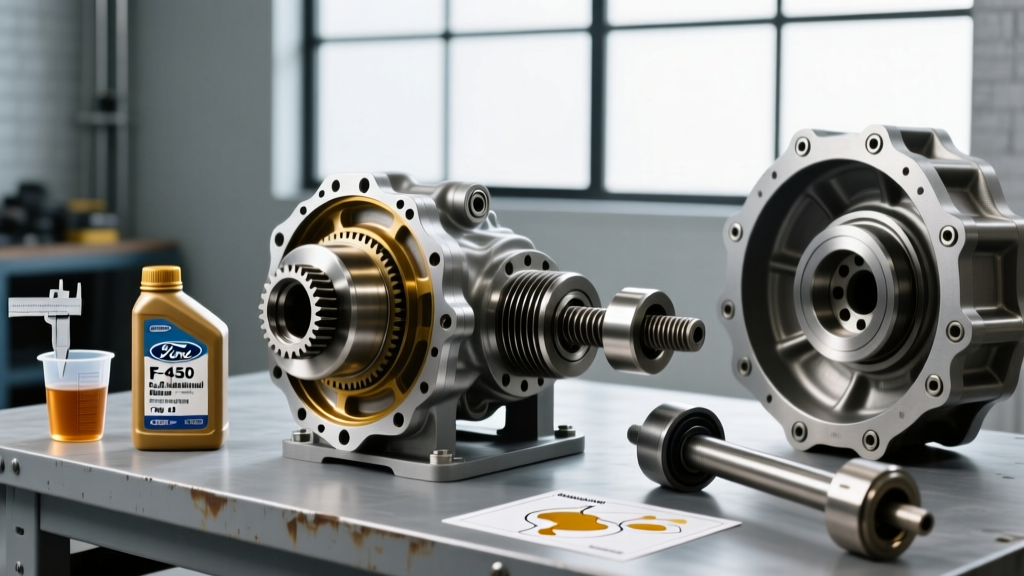
The Correct Ford F 450 Rear Differential Fluid Type by Axle Model
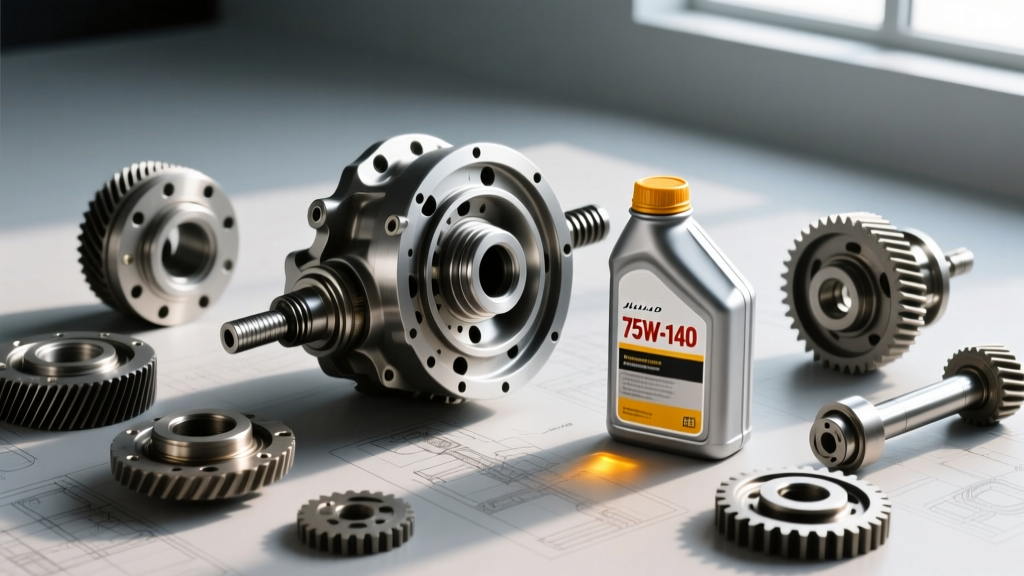
Ford has updated its rear axle lubricant specifications multiple times over the F-450’s production run. The shift from 75W-140 to 75W-85 in newer models was driven by parasitic drag reduction and fuel economy mandates, but it has caused confusion in the aftermarket. Below is the definitive matrix for F-450 rear differential service.
| Axle Model | Model Years | OEM Fluid Specification | Capacity | Cover Bolt Torque | Fill Plug Torque |
|---|---|---|---|---|---|
| Dana 80 (10.5") | 1999 - 2004 | 75W-140 Synthetic API GL-5 | 3.7 Quarts | 33 lb-ft | 25 lb-ft |
| Dana S110 (12.25") | 2005 - 2014 | 75W-140 Synthetic API GL-5 | 4.0 Quarts | 41 lb-ft | 35 lb-ft |
| Dana S130 (13.25") | 2015 - 2026 | 75W-85 Premium API GL-5 | 4.25 Quarts | 45 lb-ft | 40 lb-ft |
Note: If your F-450 is equipped with a factory electronic locking differential (eLocker) or a limited-slip differential (LSD), you must add 4 oz of Motorcraft XL-3 Friction Modifier (or equivalent) unless the specific 75W-85 OEM fluid already states it contains the modifier.
Symptom Diagnosis: Is It the Fluid or the Gears?
Troubleshooting rear differential noise requires isolating the frequency, pitch, and load-dependency of the sound. Here is how fluid-related issues manifest compared to hard-part failures.
1. Low-Speed Chatter on Tight Turns
The Symptom: A rhythmic binding, clunking, or chattering sensation from the rear axle when turning sharply at parking lot speeds.
The Diagnosis: This is almost exclusively a limited-slip clutch pack issue caused by depleted friction modifiers. The OEM Motorcraft XL-3 additive degrades over time and under high heat. Without it, the clutch discs bind and release abruptly instead of slipping smoothly. Fix: Drain the fluid, add 4 oz of fresh friction modifier, and refill with the correct Ford F 450 rear differential fluid type. Perform ten figure-eight turns in an empty lot to work the additive into the clutches.
2. High-Pitched Howling on Deceleration
The Symptom: A distinct howl that peaks between 45-60 mph specifically when you lift off the throttle (coast side of the gear).
The Diagnosis: While this can indicate worn coast-side gear teeth, it is frequently caused by using a fluid that is too thin or has sheared down from thermal breakdown. If a previous owner serviced a Dana S110 with standard 80W-90 mineral oil instead of the required 75W-140 synthetic, the fluid film will collapse under the F-450's heavy curb weight, allowing micro-welding and gear whine. Fix: Perform a fluid swap. If the noise persists after 500 miles on fresh 75W-140 synthetic, the pinion bearing preload or gear backlash requires mechanical adjustment.
3. Constant Whine Under Load (Towing/Hauling)
The Symptom: A steady whine that correlates directly with vehicle speed and gets louder when towing a 5th wheel or heavy gooseneck trailer.
The Diagnosis: Drive-side gear wear or severe fluid oxidation. When towing, differential temperatures can easily exceed 250°F (121°C). Standard mineral gear oils oxidize rapidly at these temperatures, turning into a varnish-like sludge that fails to protect the hypoid sliding action. Inspect the drained fluid for a burnt smell or a sparkling, glitter-like suspension (indicative of brass thrust washer or bearing cage wear).
Advanced Troubleshooting: Thermal and Contamination Analysis
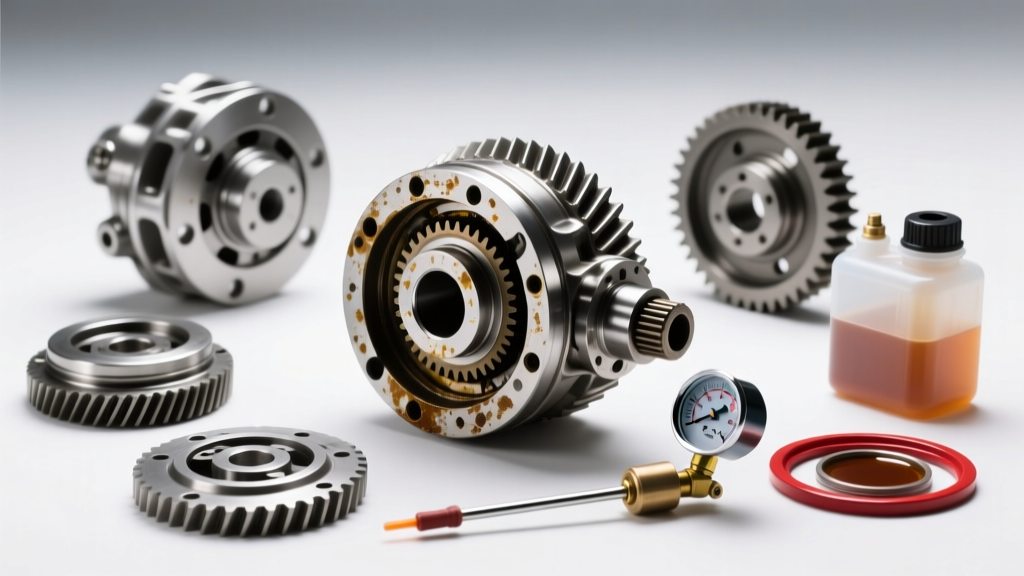
When draining the differential, the condition of the fluid provides a direct window into the axle's health. Do not simply drain and fill; analyze the extraction.
- Glitter/Mica Flecks: Fine metallic shimmer is normal wear from the thrust washers and clutch discs over 100,000 miles. It is not a cause for immediate teardown.
- Chunky Metal Shavings: If you find pieces of metal larger than a grain of rice on the magnetic fill plug or cover, a bearing cage or gear tooth has suffered catastrophic spalling. A fluid change will not save this axle; a full rebuild is required.
- Milky/Chocolate Fluid: Indicates water intrusion. On the F-450, this usually points to a failed axle shaft seal or a compromised differential cover RTV bead allowing water fording ingress. Water destroys the extreme pressure (EP) additives in GL-5 fluids, leading to rapid gear pitting.
- Black, Sludgy Residue: Caused by extreme thermal breakdown, common in F-450s used for heavy towing without an aftermarket differential cover equipped with cooling fins.
The E-Locker (Electronic Locking Differential) Caveat
Modern F-450s equipped with the factory electronic locking differential require special attention. According to the Ford Motorcraft Service Manuals, the e-Locker mechanism utilizes a physical locking collar rather than clutch packs. Therefore, friction modifier must NOT be added to e-Locker axles, as the slippery additive can interfere with the mechanical engagement collar and cause slipping or failure to lock. Always verify your axle code on the driver's door jamb sticker (e.g., Axle Code '3H' or 'C2') before adding modifiers.
Step-by-Step F-450 Rear Differential Service Procedure
Executing a proper fluid service on a Dana S110 or S130 requires precision to avoid leaks and ensure proper gear lubrication.
- Preparation: Run the truck for 15 minutes to warm the differential fluid, reducing its viscosity for a complete drain. Safely support the rear axle on jack stands.
- Extraction: Remove the 3/8" or 1/2" fill plug first. (If the fill plug is seized and breaks, you will be unable to refill the axle). Use a fluid evacuator pump inserted through the fill hole to extract 90% of the old oil, or drop the differential cover.
- Cover Removal (If Applicable): Loosen the cover bolts in a crisscross pattern. Pry the cover gently. Clean the mating surfaces with brake cleaner and a razor blade. Never use wire wheels on the axle housing mating surface, as embedded steel bristles will cause immediate leaks.
- Sealing: Apply a 3/16" bead of Permatex Ultra Black RTV silicone. Allow it to skin over for 10 minutes before installing the cover.
- Torque Sequence: Install cover bolts hand-tight, then torque to the specifications listed in the matrix above (e.g., 41 lb-ft for Dana S110) in a star pattern.
- Refill: Pump in the exact Ford F 450 rear differential fluid type until the fluid level is exactly flush with the bottom edge of the fill hole. For severe towing duty, filling to 1/4 inch below the hole is acceptable to allow for thermal expansion.
Upgrading for Severe Duty: Aftermarket Covers and Fluids
If your F-450 is a dedicated tow rig, the factory stamped-steel differential cover is a major thermal bottleneck. Upgrading to a cast-aluminum finned cover (such as those from PPE or Mag-Hytec) increases fluid capacity by 1.5 to 2.0 quarts and drops operating temperatures by up to 40°F. When utilizing an oversized aftermarket cover, you must purchase an additional 2 quarts of 75W-140 synthetic gear oil to reach the elevated fill plug height. Always cross-reference the API GL-5 certification on any aftermarket synthetic fluid to ensure it meets the extreme-pressure requirements of Ford's hypoid gear sets.
Final Torque and Maintenance Intervals
For normal driving, Ford recommends inspecting the rear differential fluid every 150,000 miles. However, for the F-450 operating under the "Severe Duty" schedule (towing over 5,000 lbs, frequent idling, off-road use), the fluid must be replaced every 50,000 miles. Ignoring this interval on a heavily loaded Super Duty guarantees accelerated wear on the $3,000 Dana ring and pinion set. By strictly adhering to the correct Ford F 450 rear differential fluid type and analyzing the drained oil for mechanical telltales, you can accurately troubleshoot axle noises and extend the life of the drivetrain well past 300,000 miles.