The Jeep Wrangler JK (2007-2018) equipped with the 3.8L V6 and the Aisin NSG370 6-speed manual transmission is a legendary off-road platform, but it is equally notorious for clutch pedal problems. Whether you are battling a spongy pedal that sinks to the floorboards, a hard pedal that feels like pressing against a brick wall, or a vibrating clutch pedal that rattles the firewall at idle, the root cause typically lies in the hydraulic actuation system or the dual-mass flywheel (DMF). However, definitively diagnosing and repairing these issues requires bellhousing access. In the tight confines of the JK engine bay, this often mandates removing the front cooling stack. This is where knowing the exact tool to take off fan clutch hardware becomes an unexpected but critical component of your clutch repair workflow.
Decoding NSG370 Clutch Pedal Symptoms
Spongy and Soft Clutch Pedals: The Hydraulic Breakdown
A spongy or soft clutch pedal on the 3.8L JK is almost exclusively tied to the Concentric Slave Cylinder (CSC) or the master cylinder. The NSG370 utilizes an internal CSC (Mopar P/N 68083225AB) that wraps around the transmission input shaft. When the internal PTFE seals degrade—usually around the 80,000-mile mark—brake fluid bypasses the piston. This results in a pedal that offers zero resistance and fails to fully disengage the clutch, causing gear grinding.
Furthermore, the hydraulic line routing on the JK creates a natural trap for air bubbles. Standard pedal-pumping bleeding methods rarely work here. To properly flush the system, you must use a reverse pressure bleeder connected to the master cylinder reservoir, pushing fluid downward to force air out of the bellhousing bleeder screw. If the pedal remains spongy after a reverse pressure bleed, the master cylinder pushrod may require adjustment. The JK master cylinder features a threaded pushrod; adjusting it outward by 2-3 threads can eliminate the 'dead zone' at the top of the pedal stroke, ensuring immediate hydraulic engagement.
Hard and Vibrating Clutch Pedals: Mechanical Wear Points
If your clutch pedal feels unusually hard or exhibits a severe vibrating clutch pedal syndrome, you are likely looking at mechanical wear rather than hydraulic failure.
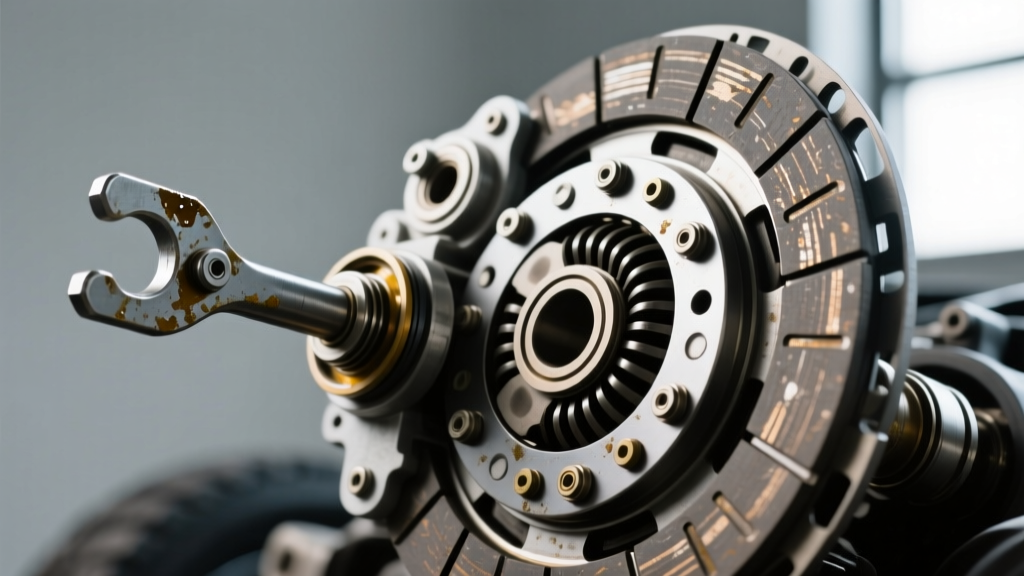
The Clutch Fork Pivot Ball: The factory stamped-steel clutch fork rides on a hardened steel pivot ball. Over time, the fork wears a deep groove into the ball, altering the pedal geometry. This misalignment increases the effort required to depress the pedal and causes a gritty, binding sensation.
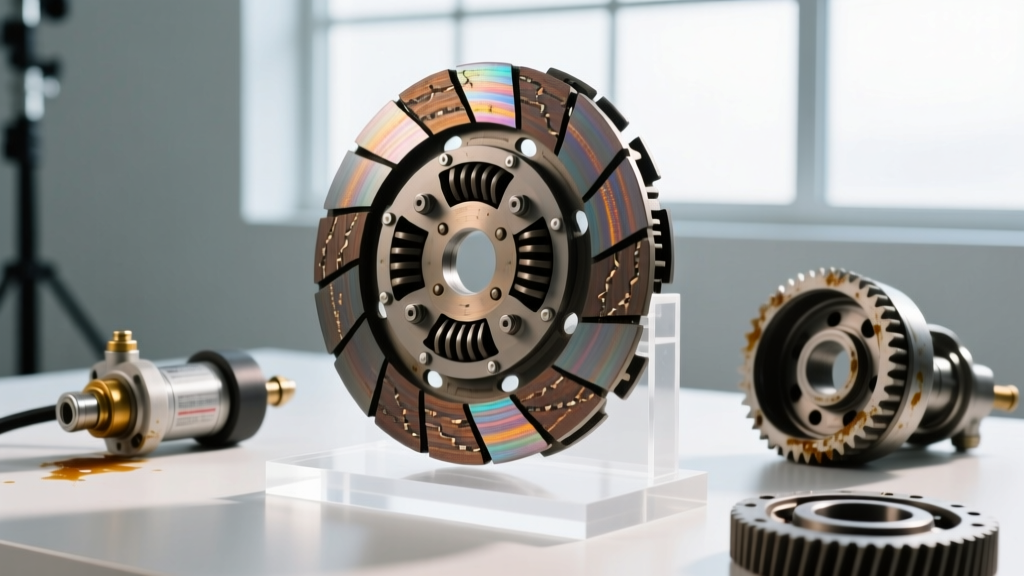
Dual Mass Flywheel (DMF) Failure: The 3.8L V6 produces peak torque low in the RPM band, sending high torsional shock through the NSG370 input shaft. The factory LuK DMF relies on internal planetary gears and a grease pack to dampen these vibrations. When the grease overheats and the springs fatigue, the DMF loses its damping effect. This translates into a violent vibrating clutch pedal at idle and a distinct 'clunk' when shutting off the engine. According to LuK Clutch Systems engineering bulletins, replacing the failing DMF with a heavy-duty RepSet (P/N 623312800) or converting to a Single Mass Flywheel (SMF) is the only permanent fix. When opting for the SMF conversion, be aware that the transmission will exhibit slight gear rattle at idle. This is normal, as the SMF lacks the internal dampening springs of the DMF. To mitigate this, ensure your engine idle is set strictly to the factory 650 RPM.
Bellhousing Access and the Cooling Stack Dilemma
To properly inspect the clutch fork, pivot ball, and CSC without dropping the entire transmission to the floor, mechanics often need to unbolt the transmission crossmember, slide the NSG370 forward, and tilt the engine. In the JK, the mechanical fan and shroud severely limit forward engine movement and block top-down bellhousing access. The fan assembly must come out.
The 3.8L V6 uses a viscous fan clutch attached to the water pump pulley. Because the clearance between the water pump pulley and the fan hub is incredibly tight, a standard adjustable wrench is useless. You need a dedicated offset box-end wrench and a pulley holding tool. Finding the right tool to take off fan clutch components will save you from stripping the water pump shaft or damaging the radiator fins.
Selecting the Right Tool to Take Off Fan Clutch
As of 2026, aftermarket tool manufacturers have refined their fan clutch wrench sets to accommodate the specific 1-7/16" (36mm) nut used on the Chrysler 3.8L V6. Below is a comparison of the most reliable options available for this specific repair.
| Tool Manufacturer & P/N | Application | Wrench Size | Est. Cost (2026) |
|---|---|---|---|
| OTC 45268 Fan Clutch Wrench Set | Chrysler 3.8L V6 | 1-7/16" (36mm) Offset | $55 - $65 |
| Lisle 43300 Fan Clutch Wrench | Universal / Chrysler | 36mm Thin Offset | $35 - $45 |
| Mopar 83512952 Holding Tool | OEM Pulley Holder | Pin-Type Grip | $60 - $75 |
Expert Tip: The 3.8L fan clutch nut features a standard right-hand thread. Always apply a sharp counter-clockwise strike with a rubber mallet against the wrench handle to break the initial torque. Using an impact wrench directly on the water pump snout can fracture the cast-iron pump housing, turning a clutch job into a catastrophic coolant leak.
Step-by-Step Diagnostic & Repair Protocol
1. Front End Disassembly
Drain the radiator. Using the OTC 45268 tool to take off fan clutch hardware, secure the pulley holding tool onto the water pump pulley bolts and apply the 1-7/16" wrench to the fan clutch nut. Remove the fan, shroud, and radiator to create a clear path to the front of the engine block.
2. Hydraulic System Flush
Before separating the transmission, extract all DOT 3 fluid from the master cylinder. Inspect the rubber line connecting the master to the hard line for swelling, which can also cause a spongy pedal. Replace any bulging lines with stainless steel braided alternatives.
3. Bellhousing Inspection & Component Replacement
Slide the NSG370 forward. Inspect the pivot ball for grooving. If worn, replace it with an upgraded adjustable billet aluminum pivot ball. Remove the pressure plate and inspect the DMF for radial play exceeding 2mm. If the DMF is compromised, install the LuK RepSet. Data from the RockAuto Parts Catalog indicates that purchasing the complete LuK kit is roughly 30% more cost-effective than sourcing OEM Mopar components individually.
Critical Torque Specs & Fluid Capacities
Adhering to factory specifications is non-negotiable when reassembling the drivetrain. According to Factory Chrysler Service documentation, utilize the following metrics:
- Flywheel to Crankshaft: 54 lb-ft, followed by a 90-degree torque-to-yield turn.
- Pressure Plate to Flywheel: 21 lb-ft (250 in-lbs) in a crisscross star pattern.
- Bellhousing to Engine Block: 35 lb-ft.
- NSG370 Transmission Fluid Capacity: 1.58 Quarts (1.5 Liters).
- Fluid Specification: Mopar Manual Transmission Fluid (P/N 04874464) or Pennzoil Synchromesh. Never use standard GL-5 gear oil; the sulfur additives will chemically degrade the NSG370's carbon synchronizers.
Final Thoughts on Clutch Pedal Diagnostics
Solving clutch pedal problems on the 3.8L JK requires looking beyond the pedal itself. By understanding the interplay between the CSC, the DMF, and the clutch fork, you can accurately diagnose whether a spongy, hard, or vibrating pedal requires a simple hydraulic bleed or a full bellhousing teardown. And remember, having the correct tool to take off fan clutch hardware in your arsenal ensures that when the time comes to pull the cooling stack for access, you do the job efficiently without causing collateral damage to the engine bay.