The Unique Friction Dynamics of Aramid (Kevlar) Discs
In the modern performance landscape, Kevlar (aramid fiber) clutches remain the gold standard for high-torque street and strip applications. Kits like the ACT HD-G6 or McLeod Street Pro routinely handle 700 to 900 lb-ft of torque in single-disc packages. However, diagnosing intermittent problems—where the clutch slips under heavy load but grabs violently at low RPM, or chatters only when the engine bay is heat-soaked—requires a fundamentally different approach than troubleshooting standard organic discs.
Unlike organic friction materials that degrade linearly, Kevlar exhibits a highly variable coefficient of friction based on thermal thresholds. Its static friction coefficient hovers around 0.48 to 0.55, providing aggressive initial bite. Yet, when the disc surface exceeds 400°F without adequate cooling intervals, the resin matrix temporarily breaks down, resulting in intermittent slip. Once cooled, the aggressive grab returns, often mistaken by novice tuners for a warped flywheel or failing pressure plate.
Intermittent Symptom Diagnostic Matrix
Before dropping the transmission, map the exact environmental and mechanical triggers of the intermittent fault. Use this matrix to isolate the primary suspect.
| Symptom | Trigger Condition | Primary Suspect | Verification Method |
|---|---|---|---|
| Slip in 4th/5th gear | High RPM, heavy boost/load | Thermal glazing or PP fatigue | Slip test at 2000 RPM; inspect for burnt resin odor |
| Violent chatter on takeoff | Cold engine, first 5 minutes | Improper break-in, marbled disc | Check for uneven friction material transfer on flywheel |
| Pedal sink and slip in traffic | Stop-and-go, high under-hood heat | Hydraulic heat-soak or bypassing HTOB | Monitor pedal free-play after 30 mins of idling |
| Intermittent drag/release issues | Random, worsens over time | Flywheel runout or bent PP fingers | Dial indicator test on bellhousing and flywheel face |
Phase 1: Ruling Out Hydraulic Heat-Soak and Bypass
The most common misdiagnosis in Kevlar clutch systems is blaming the friction disc for a hydraulic failure. High-clamp-load pressure plates (often exceeding 3,800 lbs of diaphragm force) require robust hydraulic displacement. If you are running a GM TR-068 hydraulic throwout bearing (HTOB) or a 7/8-inch bore Wilwood master cylinder, heat-soak is a primary culprit for intermittent slip.
The Accumulator and Line Expansion Test
When the exhaust headers heat-soak the transmission tunnel, DOT 4 brake fluid (even high-temp variants like Motul RBF 600 with a 594°F dry boiling point) can micro-boil or expand in standard rubber flex lines. This expansion artificially pushes the HTOB against the pressure plate fingers, partially disengaging the clutch.
- Test: With the engine fully heat-soaked, measure the clutch pedal free-play. If the free-play has vanished compared to a cold start, your hydraulic system is expanding and pre-loading the throwout bearing.
- Fix: Upgrade to a braided stainless steel clutch line, install a remote bleeder kit, and add a heat shield between the exhaust and the bellhousing. According to McLeod Racing technical bulletins, maintaining a minimum of 1/8-inch free-play at the throwout bearing is critical to prevent premature diaphragm spring fatigue and intermittent slip.
Phase 2: Flywheel Runout and Aramid Intolerance
Kevlar friction material is exceptionally rigid and unforgiving of alignment errors. While an organic disc might absorb minor flywheel runout through its dampening springs and compliant friction face, an aramid disc will ride the high spots, leading to intermittent engagement and localized hot-spotting.
The absolute maximum allowable runout for a Kevlar clutch setup is 0.005 inches. If your machinist resurfaced the flywheel but failed to check the crankshaft flange runout, you will experience intermittent chatter that comes and goes depending on the engine's harmonic vibrations.
Pro-Tip: Always measure runout with the flywheel torqued to spec. For a standard LS-series engine using ARP 254-6001 flywheel bolts, torque to 85 lb-ft in a star pattern. Measuring runout with the flywheel hand-tight will yield false data and mask the root cause of your intermittent chatter.
Phase 3: Assessing Break-In Protocol Failures
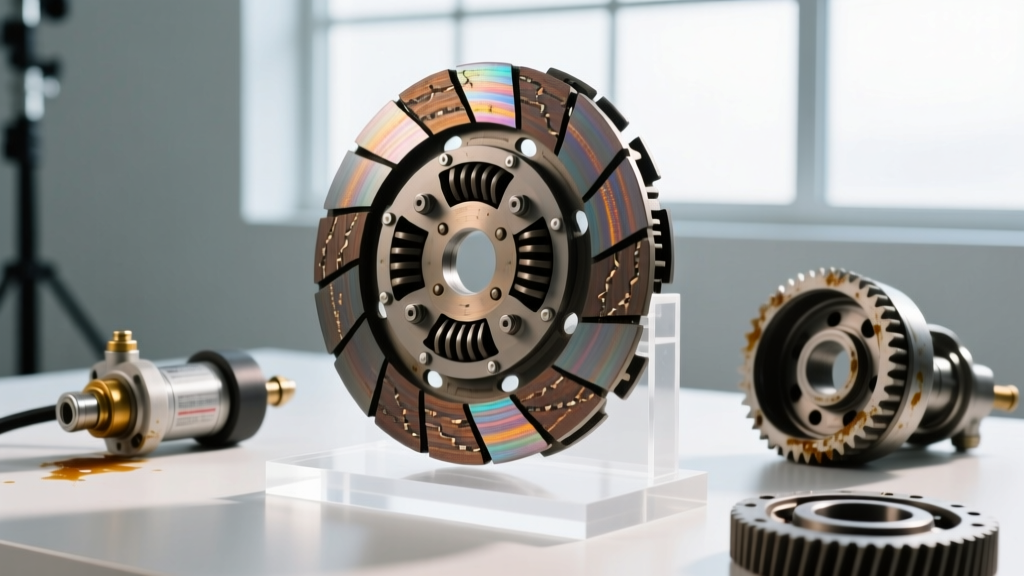
Aramid fibers are woven and impregnated with a high-temperature phenolic resin. This resin must be thermally cycled and physically worn to expose the microscopic Kevlar fibers that provide the actual grip. If a customer or installer performs a "drag strip break-in" (slipping the clutch violently from a dead stop) or a "highway break-in" (zero slip), the resin will either glaze into a glass-like surface or fail to transfer evenly to the flywheel.
Glazing presents as an intermittent slip: the clutch will hold 600 lb-ft in lower gears where the rotational mass helps, but will instantly slip in 5th gear at 2,500 RPM under light boost. You can verify glazing without removing the transmission by performing a controlled stall test in a safe environment. If the RPMs flare erratically rather than climbing smoothly, the Kevlar surface is marbled or glazed. A proper break-in requires 500 to 1,000 miles of mixed driving, utilizing engine braking and moderate slip from 30 mph to a stop, avoiding any dead-stop drag racing.
Phase 4: Mechanical Linkage and Pivot Ball Wear
For manual linkage setups, such as the Tremec T56 Magnum utilizing a standard clutch fork, wear on the pivot ball can cause intermittent release and engagement issues. The TR-026 pivot ball and nylon clutch fork pad are subject to extreme stress from the 4,000+ lb clamp loads of Kevlar pressure plates. As the pad wears, the geometry of the fork changes, leading to a scenario where the clutch disengages fully when cold, but intermittently drags or slips as the transmission case expands under heat.
Real-World Case Study: Tremec T56 Magnum with ACT XTSS
A recent diagnostic case involved a 2024 LS3-swapped S10 equipped with a Tremec T56 Magnum and an ACT Xtreme Kevlar sprung hub kit. The owner reported intermittent slip on the highway, but perfect engagement around town.
Initial suspicion fell on a weak pressure plate. However, pulling the inspection cover revealed the true culprit: the hydraulic slave cylinder line was routed less than two inches from the unshielded 1-7/8-inch primary headers. Under sustained 75 MPH highway loads, the radiant heat caused the hydraulic fluid to expand, subtly riding the 4,200 lb-ft pressure plate fingers. Once the vehicle slowed down and airflow increased, the fluid contracted, and the clutch re-engaged fully. Rerouting the line and wrapping the headers eliminated the intermittent slip entirely, saving the customer from an unnecessary transmission removal.
Essential Torque Specs and Hardware Checks
When diagnosing or reassembling after an inspection, adhere strictly to these drivetrain specifications to prevent recurrence:
- Pressure Plate to Flywheel: 35 to 50 lb-ft (depending on manufacturer; always use the included alignment dowels and tighten in a star pattern to prevent diaphragm distortion).
- Bellhousing to Engine Block: 35 lb-ft. Verify bellhousing concentricity with a dial indicator; max allowable offset is 0.005 inches to prevent input shaft binding and intermittent release issues.
- Throwout Bearing Preload: Zero preload is the goal. For internal hydraulic setups, ensure the pushrod length allows the bearing to rest 1/8-inch to 3/16-inch away from the pressure plate fingers at rest.
For further alignment specifications and break-in procedures, refer to the ACT Clutch Technical Resources and Tremec Transmission Service Data. Diagnosing a Kevlar clutch requires looking beyond the friction disc and evaluating the entire thermal and hydraulic ecosystem of the drivetrain.