The Core Mechanics: Spider Gears in Limited Slip Axles
When examining the internal kinetics of a spider gear differential, the transition from a standard open carrier to a limited slip differential (LSD) introduces complex friction management and torque-biasing mechanics. In a traditional open differential, the spider gears (pinion gears) and side gears freely rotate on their cross-pins, allowing the left and right wheels to spin at different speeds during cornering. However, this open design suffers from a critical flaw: if one wheel loses traction, the spider gears route all available torque to the path of least resistance, leaving the vehicle stranded.
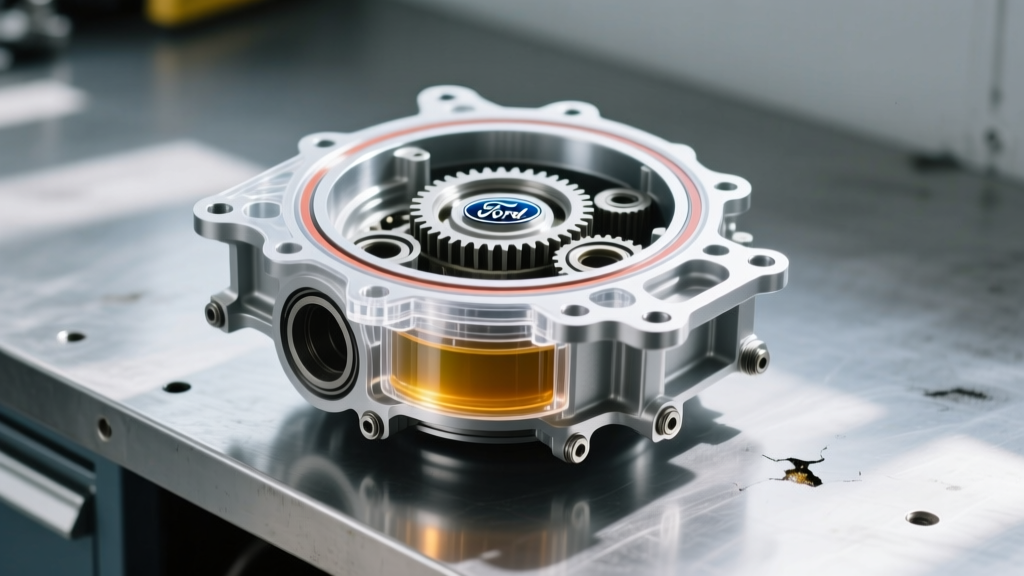
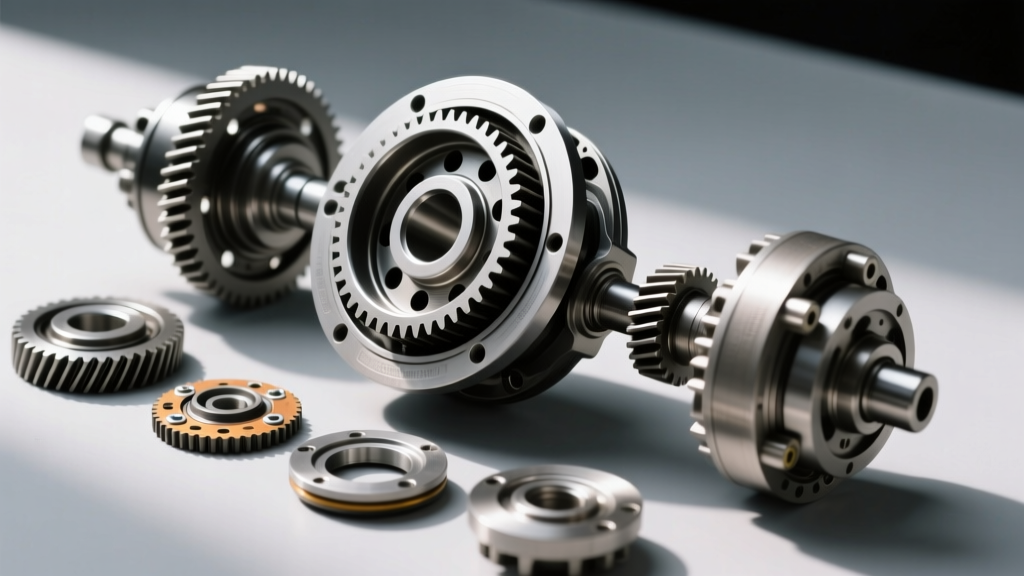
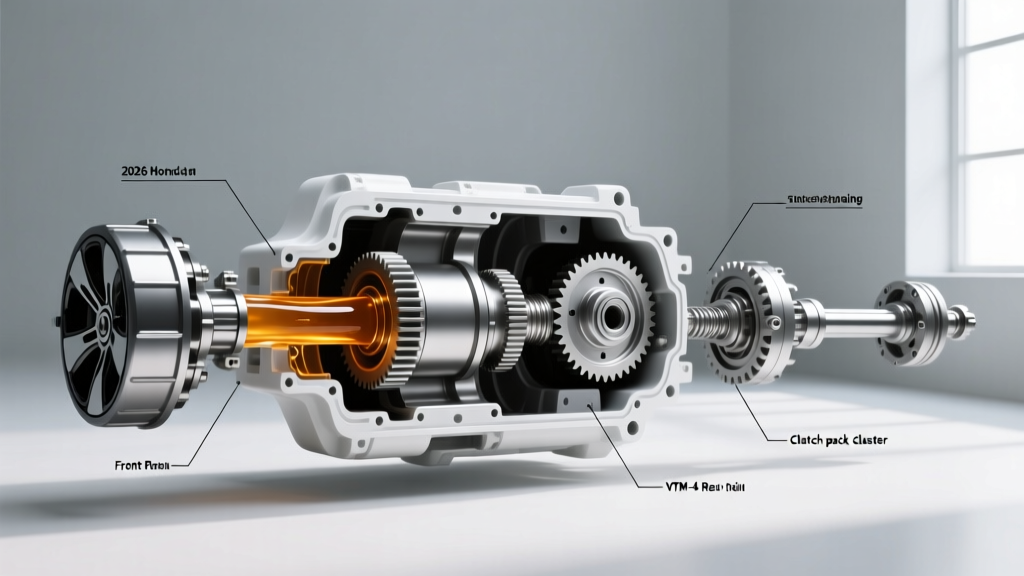
In a clutch-type limited slip differential—such as the iconic Eaton Positraction or Dana Trac-Lok—the fundamental architecture of the spider gear differential is modified to manage slip. The side gears are splined directly to the axle shafts and are positioned against alternating stacks of friction discs (clutch packs). A heavy-duty preload spring, commonly referred to as an S-spring, sits between the spider gears. This S-spring exerts hundreds of pounds of outward lateral force, pushing the side gears into the clutch packs. When both wheels have equal traction, the assembly rotates as a single unit. When one wheel begins to slip, the torque differential overcomes the friction of the clutch packs, allowing the spider gears to walk around the side gears and differentiate, but only after transferring a significant portion of torque to the wheel with grip.
Powdered Metal vs. Forged Steel Spider Gears
OEM manufacturers frequently utilize powdered metal (PM) for spider and side gears to reduce production costs and dampen gear whine. While adequate for stock street applications, PM gears are highly susceptible to catastrophic shearing under shock loads, such as dropping the clutch on drag radials or binding the drivetrain on high-traction surfaces during off-road crawling. For high-performance or heavy-duty applications, upgrading to forged 8620 alloy steel spider gears is mandatory. Forged gears feature a continuous grain structure that yields up to 40% higher tensile strength, preventing the spider gear cross-pin from wallowing out the center of the carrier under extreme torque multiplication.
Fluid Dynamics: GL-5, Friction Modifiers, and Shear Stability
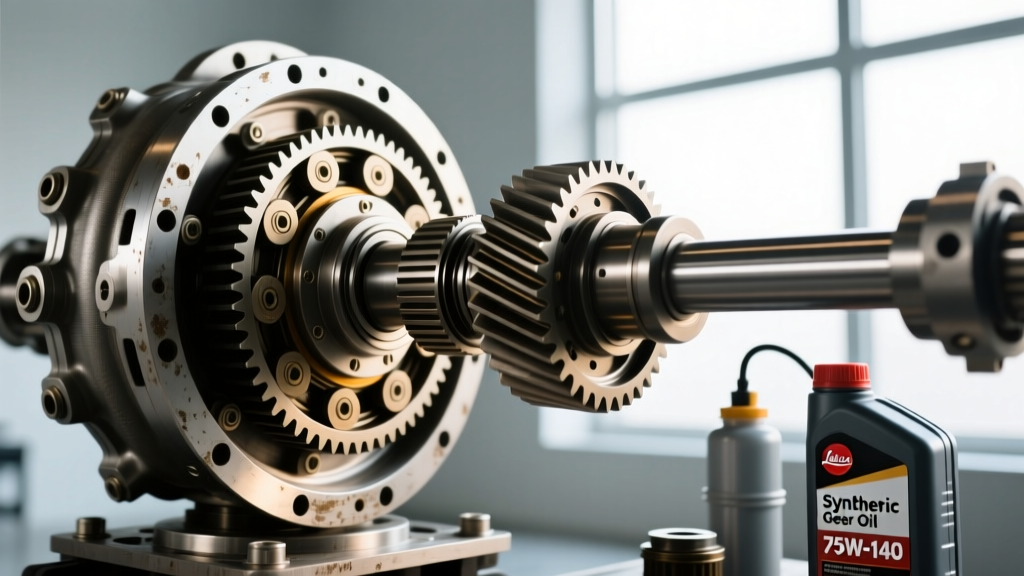
The longevity of a limited slip spider gear differential relies entirely on the chemical properties of the gear oil and the precise application of friction modifiers. Hypoid ring and pinion gears operate under extreme sliding pressures, necessitating an API GL-5 rated lubricant. GL-5 fluids contain high levels of sulfur-phosphorus extreme pressure (EP) additives that form a sacrificial tribofilm on the gear teeth, preventing microwelding and spalling.
However, the clutch packs in an LSD require a specific coefficient of friction to operate smoothly. Without a limited slip friction modifier, the static friction of the clutch discs will exceed the kinetic friction, resulting in a violent stick-slip phenomenon known as 'chatter' or 'judder' during low-speed cornering. Friction modifiers (typically long-chain organic esters) adsorb onto the clutch surfaces, creating a microscopic boundary layer that allows the clutches to slip progressively rather than grabbing abruptly.
The Friction Modifier Debate: Synthetic vs. Conventional
Modern synthetic gear oils, such as AMSOIL Severe Gear 75W-90, feature uniform molecular structures that resist shear breakdown and thermal oxidation far better than conventional petroleum-based oils. While some premium synthetics claim to be 'limited slip compatible' out of the bottle, real-world drivetrain tuning often requires manual supplementation. For a standard clutch-type LSD, adding 2 to 4 ounces of a dedicated friction modifier (like Motorcraft XL-3 or Red Line Limited Slip Additive) per axle is the industry baseline. If chatter persists, incremental additions of 0.5 ounces, followed by a series of figure-eight maneuvers to work the fluid into the clutch pores, will dial in the slip characteristics.
Expert Assembly Note: When installing the S-spring into a clutch-type LSD, compress it using a specialized C-clamp or heavy-duty snap ring pliers. Never attempt to pry the S-spring into place with a screwdriver, as scoring the side gear bores will lead to premature cross-pin wear and catastrophic carrier failure.
Precision Assembly: Torque Specifications and Clearances
Rebuilding a limited slip differential requires meticulous attention to fastener torque and gear clearances. The interaction between the spider gears, side gears, and clutch packs dictates the overall backlash and gear contact pattern. Below is a reference matrix for three of the most common solid axle platforms serviced in professional drivetrain shops.
| Axle Platform | Ring Gear Bolt Torque | Carrier Bearing Cap Torque | Target Backlash | Fluid Capacity |
|---|---|---|---|---|
| Ford 8.8-Inch | 70-85 lb-ft (w/ Loctite 290) | 70-85 lb-ft | 0.008' - 0.012' | 2.5 - 3.0 Pints |
| Dana 44 (Standard) | 55-65 lb-ft (w/ Loctite 242) | 60-75 lb-ft | 0.006' - 0.010' | 3.5 - 4.0 Pints |
| GM 12-Bolt (Car/Truck) | 65-75 lb-ft | 60-70 lb-ft | 0.007' - 0.011' | 3.5 - 4.0 Pints |
When setting the preload on the carrier bearings, the shimming process must account for the lateral thrust generated by the spider gears during differentiation. If the carrier bearings are too loose, the ring gear will deflect under load, causing the spider gears to bind against the cross-pin. If too tight, the bearings will overheat and fail prematurely. Always use a dial indicator mounted to a rigid magnetic base to verify backlash at a minimum of four equidistant points around the ring gear.
Diagnostic Troubleshooting: Spider Gear and Clutch Failure Modes
Diagnosing noise and vibration in a limited slip axle requires isolating the source of the mechanical interference. The symptoms of spider gear wear are distinctly different from clutch pack degradation or ring-and-pinion setup errors.
- Low-Speed Cornering Chatter: Almost exclusively a friction modifier deficiency or glazed clutch discs. If adding modifier fails, the clutch packs must be replaced. Carbon-fiber clutch discs (such as the Eaton ECT series) are highly recommended for 2026 performance builds due to their superior thermal stability.
- Heavy Clunk on Load Reversal: Indicates excessive clearance between the spider gears and side gears, or a worn cross-pin. This is common in high-mileage axles where the powdered metal gears have worn down. Measuring the axial play of the side gears with a feeler gauge will confirm this; play exceeding 0.015' warrants a complete spider gear and thrust washer replacement.
- Whining Under Load: Rarely a spider gear issue. This points to incorrect pinion depth, worn pinion bearings, or inadequate ring gear bolt torque allowing the ring gear to 'bell' or warp under load.
- Metallic Grinding During Slip: S-spring failure. If the S-spring fractures, the side gears lose their outward preload, allowing the spider gears to walk out of time and chew into the cast iron or aluminum carrier walls.
2026 Maintenance and Rebuild Cost Analysis
Proactive maintenance of a limited slip differential is vastly more economical than a full carrier replacement. A standard fluid service using high-quality 75W-90 synthetic GL-5 fluid and OEM friction modifier typically costs between $80 and $140 at an independent drivetrain specialist. For heavy-duty towing applications, stepping up to a 75W-140 viscosity provides a thicker hydrodynamic film, protecting the spider gears from boundary lubrication conditions when axle temperatures exceed 250°F.
When a rebuild is necessary, sourcing premium components from manufacturers like Spicer or Eaton ensures metallurgical integrity. A comprehensive rebuild kit—including forged spider gears, carbon-fiber clutches, thrust washers, cross-pin, S-spring, and carrier bearings—ranges from $180 to $350 depending on the axle model. Labor for a professional teardown, pattern checking, and reassembly averages 4 to 6 hours. Given the current 2026 shop rates of $130 to $190 per hour, a complete limited slip differential rebuild will typically land between $700 and $1,400. Neglecting the initial break-in procedure—which requires draining the break-in fluid after the first 500 miles to remove metallic particulates from the new clutch packs—will void most manufacturer warranties and guarantee premature chatter.