The Appeal and Challenge of Clear Rear Differential Covers
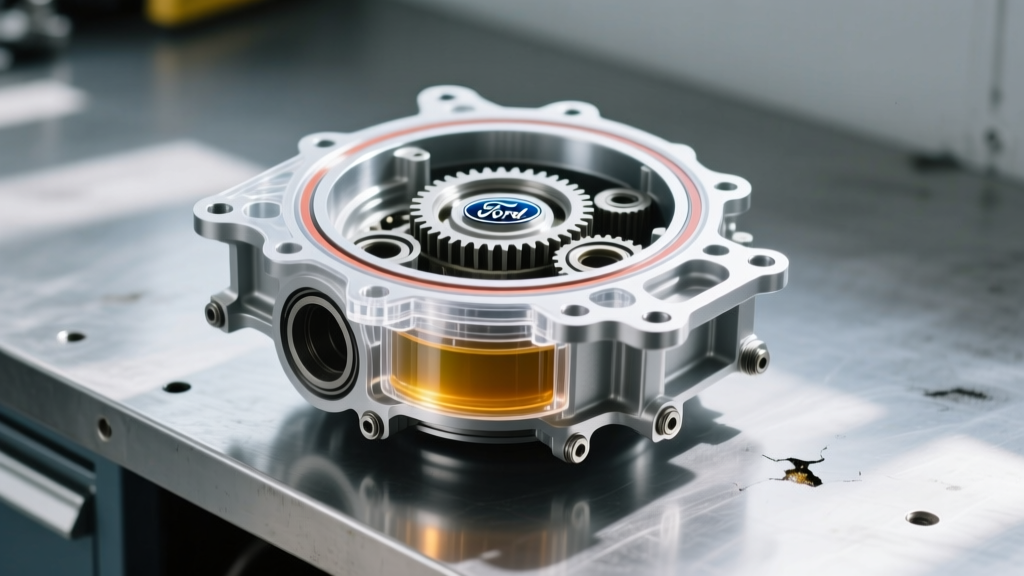
For enthusiasts running the legendary Ford 8.8-inch rear axle—found in decades of Mustangs, Rangers, F-150s, and Explorers—installing a clear rear differential cover serves two distinct purposes. First, it provides an unmatched aesthetic for show cars and trailer queens. Second, it offers real-time visual inspection of gear lash, fluid condition, and splash lubrication dynamics on the track. However, transitioning from a factory stamped steel cover to an acrylic or polycarbonate (Lexan) transparent cover introduces unique engineering challenges, most notably fluid leaks.
As of 2026, the aftermarket has flooded the market with budget-friendly clear covers, but many enthusiasts find themselves dealing with persistent weeping and seepage within the first 500 miles of installation. Gear oil, particularly high-viscosity 75W-140 synthetics, is notoriously adept at finding microscopic gaps. This model-specific repair guide will walk you through the exact physics of why these covers leak, how to properly seal them, and how to diagnose secondary axle leaks that might be masquerading as cover failures.
Why the Ford 8.8 Axle is Prone to Cover Leaks
The standard Ford 8.8 rear axle utilizes a 10-bolt cover pattern with 5/16"-18 flange bolts. The factory stamped steel cover is relatively flexible and conforms to the machined mating surface of the cast-iron differential housing when torqued. Clear covers, machined from thick acrylic or polycarbonate, behave entirely differently under load and heat.
Thermal Expansion and Bolt Distortion
Polycarbonate has a coefficient of thermal expansion roughly eight times greater than cast iron. When the differential reaches operating temperatures of 160°F to 190°F under heavy load, the clear cover expands outward. If the cover is bolted down using standard hardware without load-spreading washers, the localized pressure at the bolt holes causes the plastic to distort, warp, and create micro-gaps between the bolts. Furthermore, over-torquing the 5/16" bolts into the cast-iron housing can easily strip the threads or crack the acrylic, leading to catastrophic fluid loss.
Expert Insight: Never use standard RTV silicone on a clear rear differential cover if you want to maintain visibility. RTV smears during installation and cures into an opaque, messy layer that completely defeats the purpose of a transparent inspection cover. Instead, rely on precision-cut reusable gaskets.
Step-by-Step Leak Detection Using a Clear Cover
Before tearing down the rear end, use the transparency of the cover to your advantage to pinpoint the exact origin of the leak. Differential leaks on the Ford 8.8 are frequently misdiagnosed. Fluid blowing back from the pinion seal or weeping from the axle tube seals will pool at the bottom of the cover, tricking owners into thinking the cover gasket has failed.
- Clean the Assembly: Use a non-chlorinated brake cleaner and a microfiber towel to thoroughly degrease the exterior of the clear cover, the housing mating surface, and the lower axle tubes.
- Apply UV Dye: If the leak is elusive, add a standard automotive UV oil dye to the 75W-140 gear oil via the fill plug.
- Run and Inspect: Drive the vehicle for 15 minutes to bring the fluid to operating temperature and activate the splash lubrication. Safely elevate the rear axle on jack stands.
- Trace the Fluid Path: Using a UV flashlight, trace the highest point of the fluorescent fluid. If the dye is originating from the top bolt holes, your cover is warped or under-torqued. If the dye is tracking down the axle tubes, your issue is the axle seals, not the cover.
Proper Sealing Techniques for Polycarbonate and Acrylic
To achieve a leak-free seal on a Ford 8.8 clear rear differential cover, you must abandon factory sealing methods and adopt hardware and gaskets designed specifically for aftermarket transparent components. You can source high-quality sealing components from reputable vendors like Summit Racing or RockAuto.
The Reusable Silicone O-Ring Method
The most reliable sealing method for clear covers is a precision-machined O-ring groove paired with a thick silicone or polyurethane O-ring. If your cover lacks an O-ring groove, you must use a high-quality reusable silicone gasket (such as the Mr. Gasket or Fel-Pro equivalents).
- Surface Prep: Scrape the cast-iron housing mating surface with a plastic razor blade. Do not use metal scrapers, as gouges in the iron will create permanent leak paths.
- Hardware Upgrade: Replace the factory 5/16"-18 bolts with ARP stainless steel studs or high-grade Grade 8 bolts paired with wide-flange washers (minimum 0.75" outer diameter). The wide washers distribute the clamping load evenly across the polycarbonate, preventing localized dimpling and warping.
- Lubricate the Threads: Apply a drop of blue Loctite 242 to the bolt threads to prevent backing out due to vibration, but keep all thread locker away from the gasket surface.
Ford 8.8 Differential Service Specifications
When performing a leak repair and fluid service, adhering to exact specifications is critical. The table below outlines the baseline specs for the traditional Ford 8.8 axle commonly found in 1986–2014 Mustangs and various Ford trucks.
| Specification | Ford 8.8 (Standard / Traction-Lok) | Notes & 2026 Part References |
|---|---|---|
| Cover Bolt Pattern | 10-Bolt (5/16"-18 Thread) | Verify thread pitch; some early housings vary. |
| Cover Torque Spec | 28 - 38 lb-ft (Target 33 lb-ft) | Use a star-pattern sequence. Do not exceed 38 lb-ft on clear covers. |
| Fluid Capacity | 2.5 to 3.0 Quarts | Fill until fluid level is even with the bottom of the fill hole. |
| Recommended Fluid | 75W-140 Full Synthetic | Motorcraft XZ-75W140-QL or equivalent AMSOIL/Red Line. |
| Friction Modifier | 4 oz (Traction-Lok LSD Only) | Motorcraft XL-3. Mandatory to prevent clutch pack chatter. |
| Fill Plug Torque | 15 - 30 lb-ft | Usually a 3/8" drive square plug. Use Teflon tape on threads. |
Troubleshooting Persistent Pinion and Axle Seal Leaks
If your clear rear differential cover is perfectly sealed but you are still losing fluid, the culprit is likely the pinion seal or the axle shaft seals. The Ford 8.8 utilizes C-clip axles (on standard solid axle housings), meaning the axle shafts must be partially withdrawn to service the seals.
Pinion Seal Replacement and Preload
A leaking pinion seal will coat the front of the differential and blow back onto the clear cover while driving. Replacing the pinion seal (Timken part #710412 is a common fitment) requires removing the pinion nut. Warning: The pinion nut on the Ford 8.8 is a crush-sleeve or solid-spacer preload nut. You must measure the rotational preload using an inch-pound torque wrench before removal. For used bearings, the target preload is typically 8 to 14 inch-pounds. When reinstalling the new seal and nut, tighten incrementally until the exact baseline preload is achieved. Over-tightening will destroy the pinion bearings within 1,000 miles.
Axle Shaft Seal Leaks
Fluid weeping from the brake backing plates indicates failed axle seals. To replace them on a standard 8.8:
- Remove the clear cover and drain the fluid.
- Rotate the differential until the cross-pin retaining bolt is accessible. Remove the bolt and slide out the cross-pin.
- Push the axle shafts inward to access and remove the C-clips from the spider gear side.
- Slide the axle shafts out of the housing tubes.
- Extract the old seals using a seal puller, and tap in new seals (e.g., National #710996) using a proper seal driver to ensure they are seated perfectly square.
Final Torque Sequence and Fluid Fill
Once all seals are verified and the clear rear differential cover is mated to the housing with a reusable gasket and wide-flange washers, the final torque sequence is paramount.
Start by threading all ten 5/16"-18 bolts in by hand to prevent cross-threading the cast iron. Using a calibrated torque wrench, tighten the bolts in a crisscross star pattern. Make three passes: first at 15 lb-ft, second at 25 lb-ft, and the final pass at exactly 33 lb-ft. This graduated sequence ensures the polycarbonate cover compresses the gasket evenly without inducing stress fractures.
For the fluid fill, inject your chosen 75W-140 synthetic gear oil using a pneumatic or manual pump. If your 8.8 is equipped with the Traction-Lok limited-slip differential, mix the 4 oz bottle of Motorcraft XL-3 friction modifier into the first quart of oil before pumping it in. Fill the housing until the fluid begins to weep out of the fill plug opening. Reinstall the fill plug with 3 wraps of PTFE thread seal tape and torque to 20 lb-ft. Wipe down the clear cover one last time, and you are ready for the road with a leak-free, visually stunning rear end.
For further reading on Ford differential maintenance schedules and OEM fluid specifications, consult the official Ford Motorcraft support resources or your vehicle's specific owner's manual supplement.