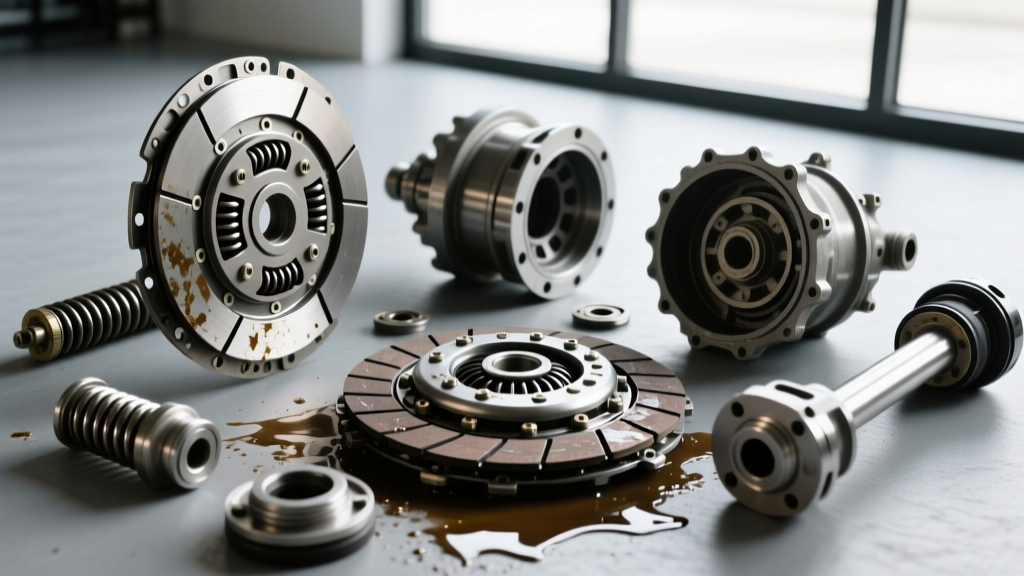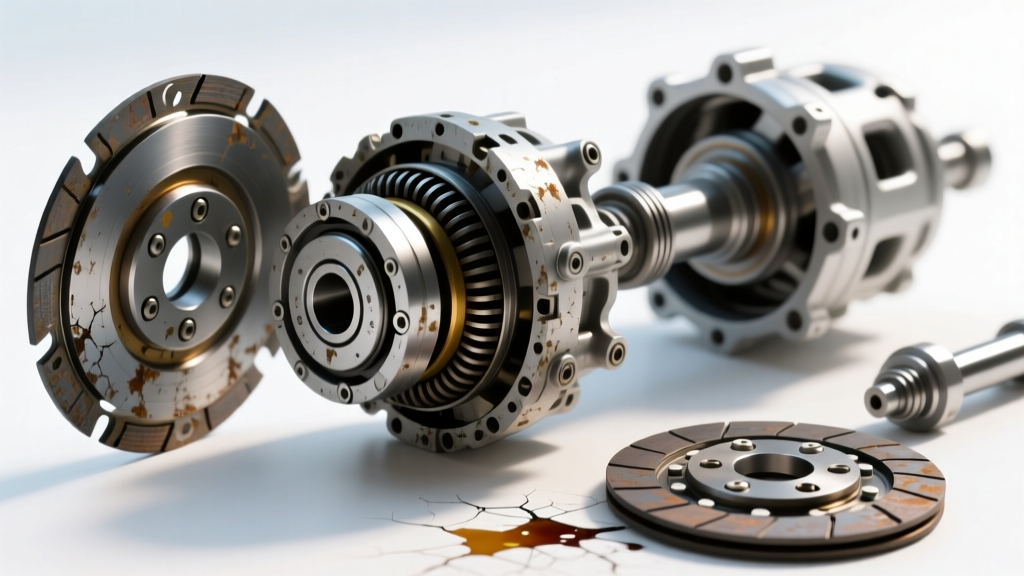
The Acoustic Signature of the ZF S6-650 and S6-750
The ZF S6-650 and S6-750 6-speed manual transmissions are legendary pillars of the Ford Super Duty lineup, backing the 7.3L, 6.0L, and 6.4L Powerstroke diesels. However, when you introduce a heavy-duty aftermarket friction setup, the factory NVH (Noise, Vibration, and Harshness) profile changes dramatically. As of 2026, the South Bend Clutch remains a premier choice for these platforms, but improper installation or misdiagnosis of the ZF6's unique bellhousing geometry frequently leads to frustrating chirping, squealing, and grinding noises.
Diagnosing a noisy South Bend Clutch ZF6 setup requires understanding the distinct differences between the 1999-2003 S6-650 (which utilizes a traditional clutch fork, pivot ball, and external slave cylinder) and the 2003+ S6-750 (which relies on an internal Concentric Slave Cylinder, or CSC). A noise that sounds like a failing release bearing on a 7.3L might actually be a worn pivot ball, while the exact same noise on a 6.0L could indicate a failing CSC or improper hydraulic preload. This guide provides expert-level diagnostic frameworks to isolate and eliminate these acoustic anomalies.
Diagnostic Matrix: Chirping, Squealing, and Grinding
Before dropping the transmission, use this diagnostic matrix to correlate the specific acoustic signature with the most probable mechanical failure points within the ZF6 bellhousing.
| Noise Type | RPM / Pedal Condition | Probable Root Cause (ZF6 Specific) | Expert Fix & Verification |
|---|---|---|---|
| High-Pitched Chirp | Idling, pedal released (engaged) | Dry or worn clutch fork pivot ball (S6-650); CSC bearing wear (S6-750). | Replace pivot ball with hardened steel upgrade; verify CSC hydraulic preload. |
| Squealing / Squeak | Depressing pedal (disengaging) | Input shaft sleeve lacking high-temp moly grease; throwout bearing binding. | Clean sleeve, apply Motorcraft XL-3 or equivalent moly grease sparingly. |
| Metallic Grinding | Neutral, clutch engaged or disengaged | Pilot bearing failure causing input shaft misalignment; dual-disc float plate contact. | Upgrade to sealed SKF pilot bearing; verify flywheel step height and runout. |
| Low-Frequency Rattle | Low RPM (600-800), idle or light load | Solid hub disc gear rattle (lack of torsional dampening); aggressive idle tuning. | Raise idle to 750+ RPM; verify South Bend Marcel spring configuration. |
Expert Fixes for Throwout Bearing Chirp & Squeal
The most common complaint we see in the shop with South Bend ZF6 upgrades is a rhythmic chirping sound that disappears the moment the driver rests their foot on the clutch pedal. On the 7.3L Powerstroke with the S6-650, this is rarely the throwout bearing itself. Instead, it is almost always the clutch fork pivot ball.
The Pivot Ball Wear Groove
The factory Ford pivot ball is made of relatively soft steel. Over 100,000 miles, the hardened steel clutch fork wears a distinct groove into the ball. When you install a new South Bend pressure plate—which often features a heavier diaphragm spring rating (e.g., 3,250 lbs of clamp load)—the increased lateral force causes the fork to bind and chirp against that worn groove. Best Practice: Always replace the pivot ball with an aftermarket hardened steel or bronze-capped upgrade during a South Bend installation. Torque the pivot ball mounting stud to 35 lb-ft using a thread locker to prevent it from backing out under heavy diesel vibration.
Input Shaft Sleeve Lubrication Protocol
If the noise is a distinct squeal that occurs only while the pedal is in motion, the ZF6 input shaft sleeve is likely dry or contaminated. A critical error made by novice technicians is over-greasing the splines and sleeve. Standard wheel bearing grease melts under the bellhousing's ambient heat (which can exceed 250°F under heavy towing), slinging onto the South Bend organic or ceramic friction material. This causes micro-slip, resulting in a high-frequency squeal and eventual glazing.
The 2026 Standard: Use a high-temperature molybdenum disulfide (moly) grease, such as Motorcraft High-Temperature 4x4 Front Axle Grease. Apply a microscopic film to the input shaft sleeve and the release bearing collar. Wipe away any excess with a lint-free shop towel. The goal is boundary lubrication, not hydrodynamic pooling.
Eliminating Dual-Disc Grinding and Input Shaft Issues
Grinding noises emanating from the ZF6 bellhousing are severe and usually indicate hard-part interference or catastrophic misalignment. When upgrading to a South Bend dual-disc setup (such as the popular KDDF3250-6 for the 6.4L Powerstroke), the physical packaging inside the ZF6 bellhousing becomes incredibly tight.
Pilot Bearing Failure and Input Shaft Whip
The ZF6 transmission relies heavily on the pilot bearing to support the heavy input shaft. The factory 7.3L needle-bearing pilot is notorious for failing when subjected to the increased rotational mass and clamp load of a South Bend dual-disc kit. When the pilot bearing disintegrates, the input shaft droops, causing the transmission input gear to grind against the ZF6 mainshaft and the clutch disc hubs to grind against the flywheel step.
Expert Upgrade: Discard the OEM needle bearing. Press in a sealed, heavy-duty radial ball bearing (SKF part number 6003-2RSH or equivalent Timken spec). This sealed bearing handles the axial and radial loads of a 3,250 lb clamp load setup without requiring external lubrication, effectively eliminating input shaft whip and the resulting grinding noise.
Flywheel Machining Tolerances
Grinding can also occur if the dual-disc float plate contacts the ZF6 bellhousing or the starter ring gear. This happens when the flywheel is machined improperly. According to ZF Friedrichshafen AG engineering guidelines, the flywheel friction surface runout must not exceed 0.004 inches. Furthermore, the step height between the friction surface and the pressure plate mounting pad must be meticulously measured. If a machine shop removes 0.020 inches from the friction surface but fails to machine the pressure plate mounting pads down by the exact same amount, the clutch stack height changes, leading to release bearing over-extension and severe grinding upon disengagement.
Solid Hub Gear Rattle vs. True Mechanical Grinding
Owners frequently confuse torsional gear rattle with mechanical grinding. Many high-torque South Bend Clutch ZF6 kits utilize a solid hub design (lacking the traditional torsional damper springs found in OEM discs) to handle the massive shock loads of tuned 6.0L and 6.4L Powerstrokes. Without those dampening springs, engine firing pulses are transmitted directly through the ZF6 input shaft, causing the transmission's internal gears to clash against one another at low RPMs.
This rattle is most pronounced between 600 and 750 RPM. It is not a defect; it is a characteristic of solid-hub racing and heavy-duty towing clutches. The Fix: Have your ECM tuner raise the base idle speed to 750-800 RPM. This moves the engine's harmonic resonance frequency out of the ZF6's audible gear-rattle window. If the rattle persists at 900+ RPM, inspect the South Bend disc's Marcel (wave) springs for fracture, though this is rare on genuine units.
Critical Torque Specifications and Assembly Protocol
To ensure your South Bend Clutch ZF6 installation operates silently and reliably, adhere strictly to these assembly specifications. Deviations here are the primary cause of post-installation warranty claims and noise complaints.
- Flywheel to Crankshaft Bolts (7.3L/6.0L): Torque to 65 lb-ft, followed by an additional 90 degrees of rotation. Always use new OEM Ford torque-to-yield bolts.
- Pressure Plate to Flywheel: Torque to 35 lb-ft in a crisscross star pattern. Do not use impact wrenches, as uneven seating will warp the South Bend pressure plate ring, causing localized hot spots and squealing.
- Dual-Disc Alignment: Use the specific splined alignment tool provided in the South Bend kit. The ZF6 input shaft spline count and diameter (1.125" x 10 spline for most Powerstroke applications) require precise centering. An offset of just 0.015" will cause the release bearing to ride at an angle, generating a constant chirp.
- Bellhousing to Engine Block: Torque the M12 bellhousing bolts to 40 lb-ft. Verify bellhousing concentricity with a dial indicator; total indicator runout (TIR) must be under 0.005" to prevent input shaft bearing wear and subsequent gear whine.
- Hydraulic System Bleeding (S6-750 CSC): If working on a 6.0L/6.4L, the internal CSC must be bled using a pressure bleeder set to 15 PSI. Air trapped in the CSC line causes incomplete disengagement, leading to gear grinding during shifts and premature release bearing squeal due to constant drag.
Final E-E-A-T Verdict: When to Pull the Transmission
Not every noise requires dropping the 250-pound ZF6 transmission. If your South Bend clutch is chirping only when cold and quieting down after 10 minutes of driving, it is likely just the high-metallic content of the organic/ceramic friction material bedding into the flywheel surface—a normal trait of heavy-duty diesel clutches in 2026. However, if you experience metallic grinding in neutral, a squeal that correlates perfectly with pedal travel, or a vibration that shakes the ZF6 shift lever at 2,200 RPM, the bellhousing must come off. By following these precise diagnostic steps, utilizing sealed pilot bearings, and respecting ZF6 torque specifications, you can ensure your South Bend upgrade delivers massive holding power without the acoustic headaches.