The SM465 Legacy and the Hydraulic Actuation Upgrade
The GM SM465 is a legendary heavy-duty, cast-iron 4-speed manual transmission. Known for its ultra-low 6.55:1 first gear and bulletproof helical-cut gearset, it remains a top choice for classic square-body truck restorations, off-road crawlers, and high-torque diesel swaps. However, the factory mechanical Z-bar clutch linkage is prone to binding, flex, and excessive pedal effort. Upgrading to a modern sm465 hydraulic clutch kit—utilizing a firewall-mounted master cylinder and an external or internal slave cylinder—transforms the driving experience, offering linear pedal feel and consistent disengagement.
Yet, upgrading the actuation method introduces a new variable: how the clutch disc interacts with the drivetrain under high hydraulic clamp loads. When builders select a friction assembly to pair with their new hydraulic setup, they face a critical engineering decision: sprung (dampened) versus unsprung (rigid) clutch discs. This choice dictates not only the vehicle's Noise, Vibration, and Harshness (NVH) characteristics but also the long-term survival of the SM465’s 1-1/8-inch 10-spline input shaft.
The Physics of Torsional Vibration in Heavy-Duty Drivetrains
Internal combustion engines do not deliver power in a smooth, continuous stream. Instead, power is delivered in violent, pulsating spikes corresponding to cylinder firing events. In a heavy-duty application—such as an SM465 bolted behind a 5.9L 12V Cummins or a high-compression 454 Big Block—these torsional vibrations are immense.
When the clutch is fully engaged, these harmonic spikes travel directly through the friction disc, into the transmission input shaft, and through the gearset. If left unchecked, torsional vibration causes severe gear rattle, accelerates synchronizer wear, and can ultimately lead to catastrophic input shaft fatigue or spline galling. The clutch disc hub is the only mechanical fuse designed to absorb and isolate these harmonics before they reach the transmission.
Anatomy of a Sprung Clutch Disc (Torsional Dampening)
A sprung clutch disc features a multi-stage dampening system integrated directly into the center hub. This design is mandatory for 90% of street-driven and heavy-towing applications.
Torsional Coil Springs
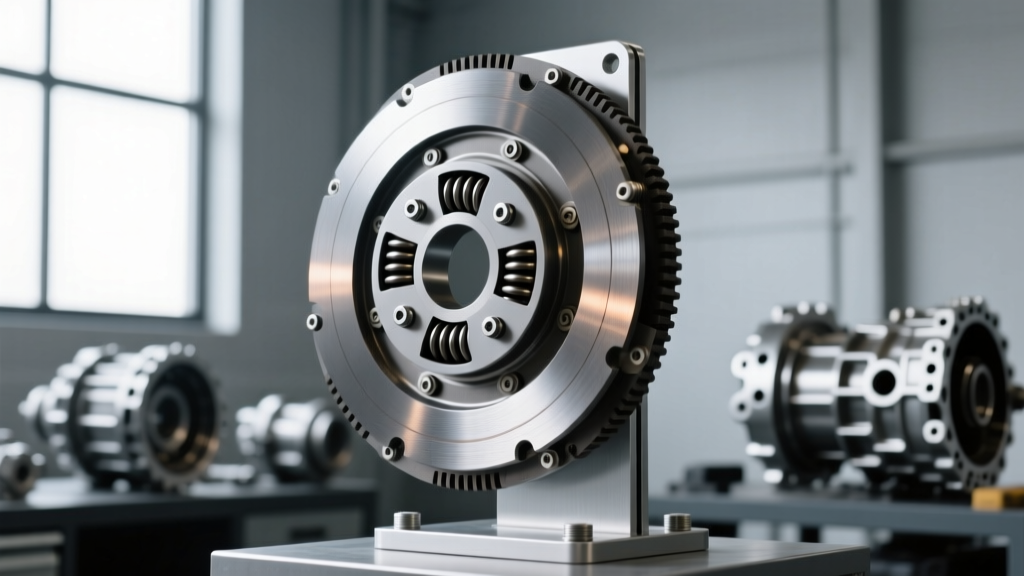
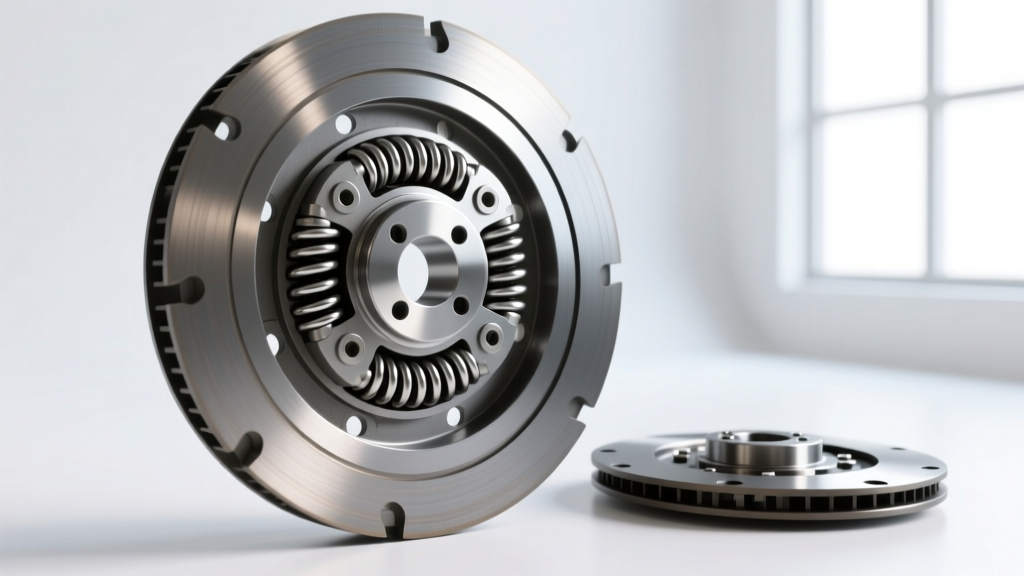
Inside the steel hub of a sprung disc, you will find a series of heavy-duty coil springs. As the engine's firing pulses hit the friction surface, the hub rotates slightly against the resistance of these springs. This micro-rotation absorbs the kinetic shock, smoothing out the torque delivery to the SM465 input shaft. Premium manufacturers like South Bend Clutch utilize progressive-rate spring setups that offer soft initial engagement for low-RPM drivability, stiffening up under heavy throttle to prevent bottoming out.
Marcel (Wave) Springs
In addition to the hub springs, full-faced organic sprung discs feature 'Marcel springs'—a corrugated wave spring sandwiched between the two friction linings. When the hydraulic slave cylinder releases the pressure plate, the Marcel springs compress, providing a progressive, cushioned engagement. This is crucial when using a high-bore (e.g., 7/8-inch) master cylinder in your sm465 hydraulic clutch kit, as the increased hydraulic volume can otherwise result in an abrupt, on-off pedal feel.
Unsprung (Rigid) Discs: When Rigidity is Mandatory
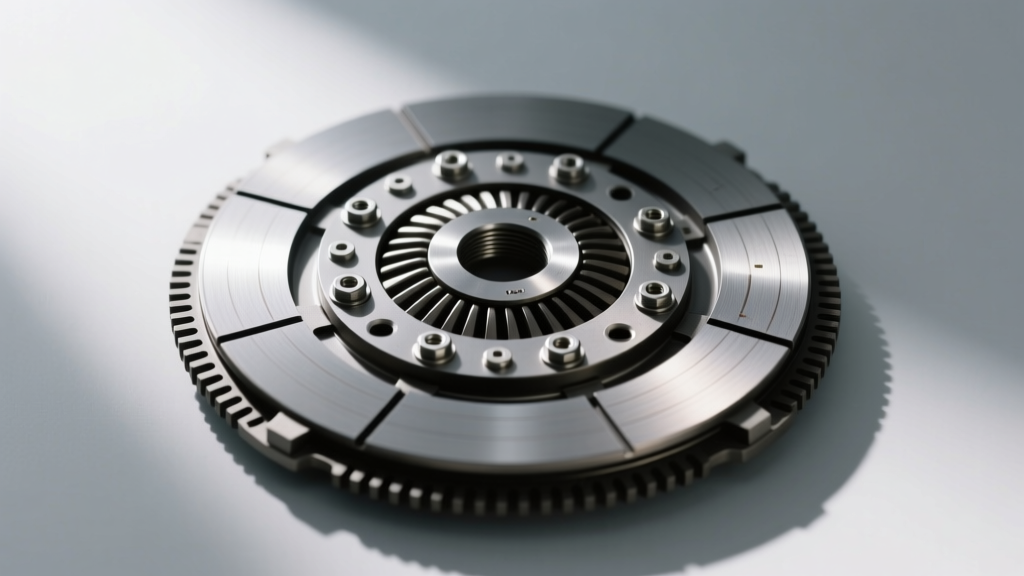
An unsprung, or solid-hub, clutch disc contains no torsional springs and no Marcel wave springs. The friction material (often sintered iron, ceramic, or Kevlar pucks) is riveted or bonded directly to a solid steel hub.
The Advantages of Zero Deflection
In dedicated competition environments—such as rock crawling, sled pulling, or drag racing—drivetrain shock and instant engagement are prioritized over smoothness. A solid hub eliminates the 'wind-up' effect inherent in sprung discs. When you side-step the clutch pedal, 100% of the engine's torque is instantly transferred to the SM465 input shaft. Furthermore, removing the springs frees up physical space on the disc, allowing manufacturers to use thicker, more aggressive friction pucks that can withstand extreme clamping forces (often exceeding 3,200 lbs) and high-slip temperatures without the springs overheating and losing their temper.
The Street-Driving Penalty
Using an unsprung disc on a street-driven truck is generally a severe mistake. Without torsional dampening, the SM465’s helical-cut gears will clash and rattle violently at idle (a phenomenon known as 'gear rollover noise'). Furthermore, the abrupt engagement will cause severe drivetrain shock, frequently resulting in shattered engine mounts, twisted driveshafts, or stripped axle splines. For detailed technical insights on mating rigid discs to heavy-duty manual transmissions, resources like RAM Clutches provide extensive documentation on why solid hubs should be restricted to off-pavement or track use.
How Hydraulic Actuation Alters Engagement Dynamics
Transitioning from a mechanical linkage to an sm465 hydraulic clutch kit fundamentally changes how the driver modulates the clutch. Mechanical linkages suffer from pivot friction and flex, which naturally masks the harsh engagement of a stiff clutch. Hydraulic systems, however, are incredibly precise.
If you pair a highly progressive hydraulic setup (using a 3/4-inch bore master cylinder and a proportioned external slave) with an unsprung ceramic puck disc, the engagement window will be razor-thin, making stop-and-go traffic exhausting. Conversely, pairing a sprung, full-faced organic disc with a high-volume hydraulic kit yields a smooth, predictable friction zone that makes heavy trucks effortless to drive. Builders must match the master cylinder bore size to the pressure plate diaphragm rating and the disc's Marcel spring thickness to achieve the optimal hydraulic pedal ratio.
Comparative Data: Sprung vs. Unsprung for the SM465
| Feature | Sprung (Dampened) Disc | Unsprung (Solid Hub) Disc |
|---|---|---|
| Hub Design | Multi-stage coil springs | Solid forged or billet steel |
| Friction Material | Organic, Kevlar, or Full-Face Ceramic | Sintered Iron, Ceramic Pucks |
| Torsional Dampening | Excellent (Protects input shaft) | None (Transmits all shock) |
| NVH / Gear Rattle | Minimal to None | Severe at idle and low RPM |
| Engagement Feel | Progressive, forgiving | Abrupt, instantaneous |
| Ideal Application | Street, Towing, Overlanding | Competition, Sled Pulling, Rock Bouncing |
| Estimated Cost Range | $250 - $650 | $300 - $800+ |
Installation Torque Specs and Spline Preservation
Regardless of whether you choose a sprung or unsprung disc for your SM465 hydraulic clutch kit, proper installation is paramount to prevent spline wear. The SM465 input shaft is robust, but improper alignment during mating will gall the 10-spline interface.
- Flywheel Torque: For standard GM flywheel bolts, torque to 74 lb-ft in a star pattern. If using aftermarket ARP hardware, follow the manufacturer's spec (typically 95-110 lb-ft with ARP ultra-torque lube).
- Pressure Plate Torque: The SM465 typically mates to an 11-inch or 12-inch clutch cover. Torque the pressure plate bolts to 30-35 lb-ft, tightening in a crisscross pattern one turn at a time to prevent warping the diaphragm spring.
- Spline Lubrication: Apply a microscopic amount of high-melting-point molybdenum disulfide (moly) grease to the input shaft splines. Warning: Over-greasing will cause centrifugal force to sling grease onto the friction material, resulting in immediate clutch slip and contamination.
- Hydraulic Bleeding: After installation, ensure the hydraulic system is gravity bled, followed by manual pedal pumping. Air trapped in the slave cylinder will prevent full disengagement, causing the unsprung disc to grind or the sprung disc to overheat during shifts.
The Verdict: Matching the Disc to Your Drivetrain
When configuring an sm465 hydraulic clutch kit, the clutch disc is the vital bridge between your engine's harmonics and your transmission's gearing. For daily drivers, tow rigs, and trail-riding trucks, a high-quality sprung disc with organic or Kevlar friction material is non-negotiable; it preserves the transmission and keeps the driver comfortable. Reserve unsprung, solid-hub discs strictly for high-horsepower competition vehicles where drivetrain shock is expected and component longevity is secondary to immediate traction. By understanding the physics of torsional vibration and the nuances of hydraulic actuation, you can build an SM465 drivetrain that survives the torque and delivers exceptional performance.