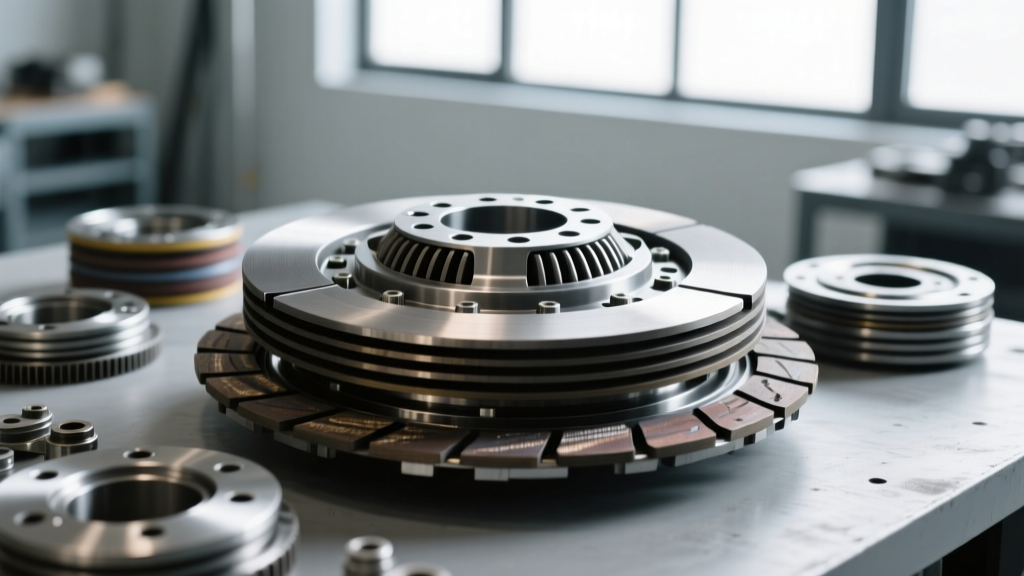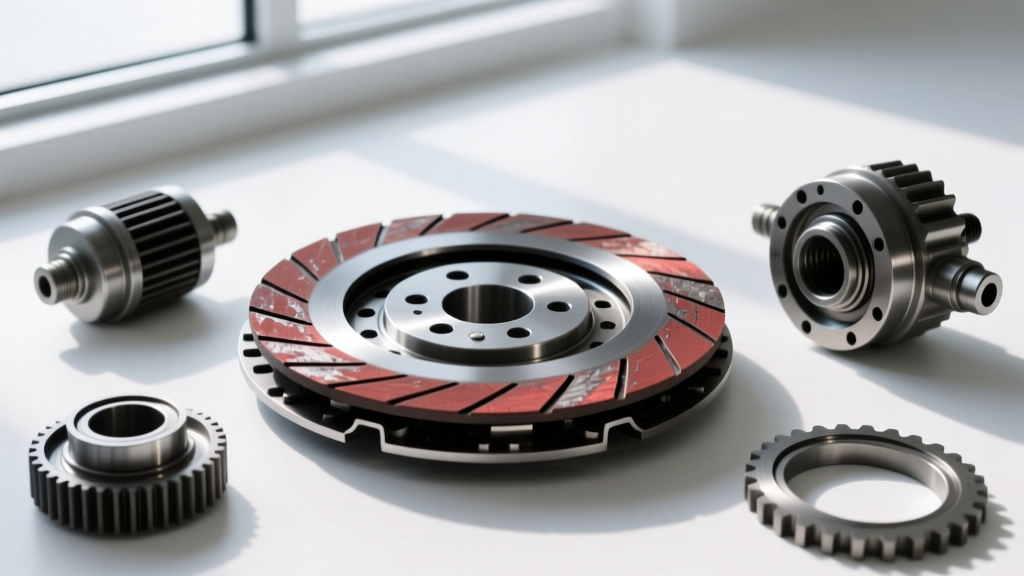
The Physics of Clamping Force: Diaphragm Springs vs. CVT Sheaves
Whether you are building a manual-swapped off-road buggy or dialing in the primary drive on a 2026 Polaris RZR Pro R, understanding clamp load is the difference between a reliable drivetrain and catastrophic belt slip or crankshaft failure. In traditional manual transmissions, the pressure plate clamp load is the physical force (measured in pounds) exerted by the diaphragm or Borg & Beck springs to sandwich the friction disc against the flywheel. In a Continuously Variable Transmission (CVT), the equivalent 'pressure plate' is the moveable sheave face of the primary clutch, which applies clamping force to the drive belt via a combination of primary springs and torsion bars.
The fundamental equation for manual torque capacity is T = μ × F × Rm × N, where T is torque capacity, μ is the coefficient of friction, F is the clamp load, Rm is the mean radius of the friction surface, and N is the number of friction surfaces. While UTV CVTs rely on belt friction rather than a traditional disc, the principle remains identical: insufficient clamping force leads to slip and heat, while excessive force destroys thrust bearings and crankshafts.
Manual Transmission Pressure Plate Selection
When selecting a manual pressure plate, tuners often fall into the trap of assuming 'more clamp load is always better.' This is a critical error. A standard street clutch for a GM LS or Ford Coyote V8 typically operates between 2,200 and 2,600 lbs of clamp load. Pushing beyond 3,500 lbs on a single-plate setup dramatically increases pedal effort and accelerates wear on the release bearing and crankshaft thrust washers.
Diaphragm vs. Multi-Finger: Real-World Specs
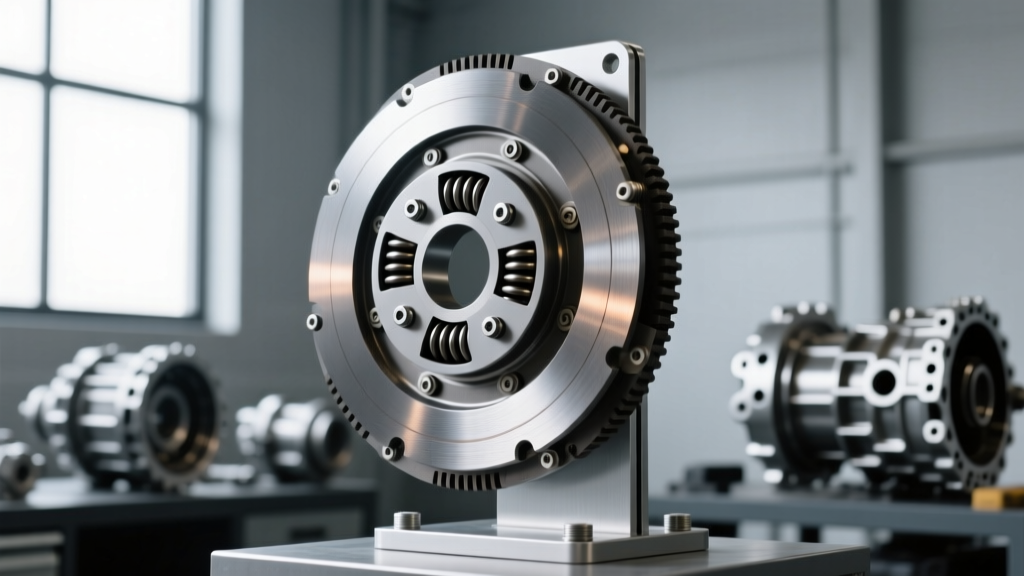
Modern performance clutches utilize a diaphragm spring design, which offers a more linear pedal feel and higher RPM stability compared to older multi-finger (Borg & Beck) designs. However, the metallurgy of the diaphragm spring dictates its lifespan. High-end manufacturers use proprietary chrome-vanadium steel alloys that resist heat-induced sagging, a common failure mode in heavy off-road or drag applications.
| Brand / Model | Part Number | Clamp Load (lbs) | Torque Capacity (ft-lbs) | Pedal Effort | Best Application |
|---|---|---|---|---|---|
| Centerforce DYAD | CFT269203 | 2,450 | 900 | Stock + 10% | Street/Strip, Forced Induction |
| McLeod Street Twin | 7521 | 3,600 | 1,200 | Stock + 15% | High HP Street, T56 Magnum Swaps |
| SPEC Stage 3+ | SU35952F | 3,200 | 850 | Stock + 30% | Track/AutoX, Aggressive Engagement |
| RAM 900 Series | 4-90-1050 | 4,200 | 1,500+ | Heavy | Dedicated Drag/Off-Road Racing |
Adapting Clamp Load Concepts to UTVs: The RZR Clutch Kit
Transitioning from manual cars to side-by-sides, the terminology shifts, but the physics of the RZR clutch kit remain rooted in clamping force. In the primary clutch of a Polaris RZR Turbo S or Pro R, the moveable sheave acts as your pressure plate. The 'clamp load' squeezing the drive belt is generated by the primary compression spring and the torsional spring (torsion bar).
For 2025 and 2026 RZR models pushing 180 to 225 horsepower, the stock primary spring (often a 140/320 rate) and stock torsion bar cannot provide adequate belt clamping force under heavy load, leading to belt slip, glazing, and eventual delamination. Upgrading to a performance RZR clutch kit requires careful selection of these components to increase clamping force without overloading the one-way bearing or the engine's internal thrust surfaces.
Primary Spring and Torsion Bar Dynamics
According to tuning data published by Aftermarket Assassins, increasing the primary spring rate (e.g., moving to a 160/360 or 180/380 spring) increases the initial and shift-out clamping force on the belt. However, the torsion bar is what truly dictates the clamping force under high-torque, low-speed scenarios like rock crawling or dune pulling.
- 1S / Soft Torsion Bar: Lower clamping force, smoother engagement, ideal for lighter 900cc models or trail riding.
- 2S / Medium Torsion Bar: Balanced clamping force, standard for most aftermarket RZR clutch kits targeting 150-180 HP.
- 3S / Heavy Torsion Bar: Maximum clamping force, required for 200+ HP turbo builds, oversized 35-inch tires, and heavy mud applications to prevent belt slip.
Expert Tuning Note: When installing a heavy-duty RZR clutch kit with a 3S torsion bar and a stiff 180/380 primary spring, you are generating massive axial thrust on the crankshaft. Always inspect the engine's crankshaft thrust bearing and one-way clutch bearing during installation. If you hear a distinct 'clunk' upon deceleration or experience rough idling in gear, the excessive CVT clamping force may be binding the drivetrain.
Failure Modes: When Clamp Load Exceeds Limits
Whether dealing with a manual diaphragm pressure plate or a UTV CVT moveable sheave, exceeding the engineered limits of clamp load results in predictable, expensive failures.
Thrust Bearing Overload and Crank Walk
In manual transmissions, a pressure plate clamp load exceeding 4,500 lbs on a standard single-plate setup places immense stress on the release bearing and the crankshaft thrust washers. Over time, this causes 'crank walk'—axial movement of the crankshaft that can exceed 0.015 inches, eventually leading to the crank machining into the engine block. In the RZR CVT ecosystem, excessive primary spring pressure combined with a steep secondary helix angle can overload the primary one-way bearing, causing it to shatter under shock loads and destroy the primary clutch cage.
Flywheel Warpage and Belt Chatter
High clamp load generates high friction, which generates extreme heat. In manual setups, this heat transfers to the flywheel, causing thermal warpage and hot-spotting. The result is aggressive clutch chatter upon engagement. In a UTV, excessive clamping force without proper shift weight calibration causes the belt to ride too high in the primary sheave at idle, resulting in 'belt chatter,' premature belt cord wear, and a jerky takeoff.
Final Calibration and Torque Specs
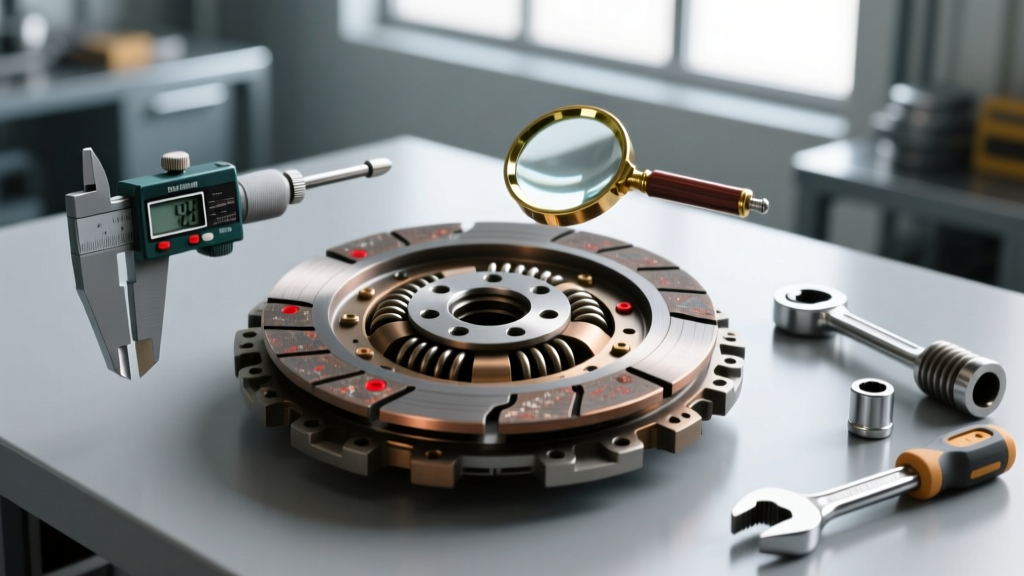
Proper installation is just as critical as component selection. When bolting a manual pressure plate to a flywheel, always use new Grade 10.9 or Grade 8 hardware. For standard M8x1.25 pressure plate bolts (common on GM LS and Honda K-Series applications), the torque specification is typically 35 lb-ft. For larger M10x1.5 bolts (found on Ford Modular V8s and heavy-duty diesel applications), torque specs range from 65 to 74 lb-ft. Always use a star-pattern sequence, incrementing by 10 lb-ft per pass to ensure the diaphragm spring seats evenly without warping the cover.
For UTV applications, when assembling your RZR clutch kit, the primary clutch retaining bolt (which secures the clutch to the crankshaft taper) must be torqued to exact factory specifications—usually 60 lb-ft for Polaris Pro XP and Pro R models, often requiring a specialized primary clutch holding tool (Part # 2870902 or equivalent) to prevent the crankshaft from turning. Applying blue Loctite 243 to the crankshaft threads is mandatory to prevent the clutch from walking off the taper under the extreme axial loads generated by high-performance clutch tuning.
By respecting the physics of clamping force and matching your hardware to your specific horsepower and traction requirements, you can build a drivetrain that hooks hard and survives the long haul. For deeper engineering metrics on manual clutch friction materials, refer to the McLeod Racing Technical Support archives, which provide excellent data on friction coefficient decay under thermal stress.