The Hydraulic Clutch Diagnostic Dilemma: Slave vs. Master
When your manual transmission vehicle begins to exhibit erratic shifting behavior, the immediate suspicion often falls on the clutch assembly or the slave cylinder. However, modern hydraulic clutch systems are closed-loop networks where pressure loss at the firewall perfectly mimics pressure loss at the bellhousing. As we navigate the 2026 automotive repair landscape, with shop labor rates frequently exceeding $160 per hour, accurately diagnosing the root cause before ordering parts is critical. Misdiagnosing clutch slave cylinder symptoms when the actual culprit is a failing master cylinder bore can result in unnecessary transmission removal and thousands in wasted labor.
This comprehensive comparison and buyer’s guide will help you differentiate between true slave cylinder failure and master cylinder bypass, and determine when investing in a high-quality clutch master cylinder repair kit is the most intelligent, cost-effective solution for your vehicle.
Identifying True Clutch Slave Cylinder Symptoms
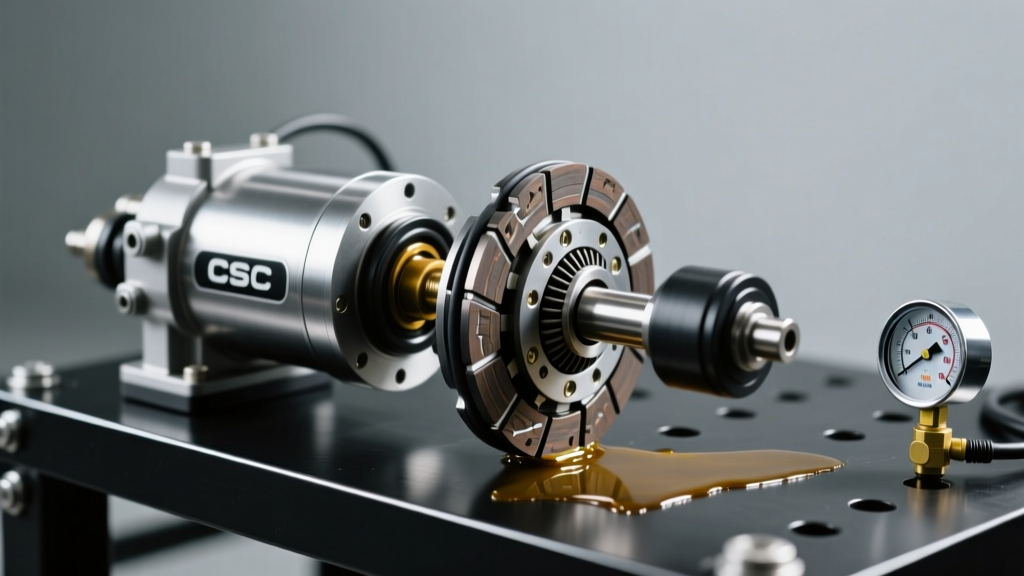
The slave cylinder is the terminal point of your hydraulic system. Whether it is an external lever-actuated unit (common on the Aisin AR5 and older Tremec T56 setups) or an internal Concentric Slave Cylinder (CSC) found in GM LS applications and the Getrag V160, its job is to translate hydraulic pressure into mechanical clutch disengagement.
The Diagnostic Matrix: Slave vs. Master Failure
Because both components rely on the same incompressible DOT fluid, their failure modes often overlap. Use the following matrix to isolate the fault:
| Symptom / Observation | Clutch Slave Cylinder Symptoms | Master Cylinder Failure (Internal Bypass) |
|---|---|---|
| Pedal Feel | Spongy, sinks to the floor slowly under constant pressure. | Pedal feels firm initially, then slowly creeps to the floor while held down. |
| Fluid Loss | Visible wetness at the bellhousing inspection cover or external slave weep hole. | Fluid loss in the reservoir, but no external leaks. Fluid may drip inside the cabin onto the pedal pad. |
| Disengagement | Fails to disengage fully; grinding into 1st or Reverse. | Short stroke; pedal engages very high off the floor due to internal cup seal bypass. |
| Reservoir Bubbles | Rare, unless the system is completely dry and sucking air. | Air bubbles or ‘geysers’ visible in the reservoir when the pedal is rapidly pumped. |
“If the pedal slowly sinks to the floor while you are sitting at a red light in gear, but there is no puddle under the transmission, your master cylinder internal cup seal is bypassing fluid back into the reservoir. The slave cylinder is perfectly fine.” — Senior Drivetrain Diagnostic Framework, AutoGear Nexus.
The Economics of Repair: Full Replacement vs. Rebuild
Once you have isolated the master cylinder as the source of your hydraulic woes, you face a critical purchasing decision. Do you replace the entire master cylinder assembly, or do you utilize a clutch master cylinder repair kit?
Historically, replacing the entire unit was the default advice. However, OEM master cylinders feature superior cast-aluminum or honed-steel bores and high-quality pushrod geometries that cheap aftermarket replacements (often priced between $40 and $60) fail to replicate. A $20 OEM seal kit can restore a $150 factory master cylinder to brand-new specifications, preserving the exact pedal ratio engineered for your chassis.
Cost & Labor Comparison (2026 Estimates)
| Repair Strategy | Part Cost (Avg) | Labor Time | Total Est. Cost | Longevity / Risk |
|---|---|---|---|---|
| Internal Slave Cylinder Replacement | $90 - $180 | 5.0 - 8.0 Hours (Trans Out) | $900 - $1,500+ | High longevity, high labor risk. |
| Full Master Cylinder Assembly | $80 - $160 | 1.0 - 1.5 Hours | $250 - $400 | Aftermarket bore quality varies wildly. |
| OEM Master Cylinder Repair Kit | $15 - $35 | 1.5 - 2.0 Hours | $100 - $250 | Excellent, retains OEM bore geometry. |
2026 Buyer’s Guide: Top Clutch Master Cylinder Repair Kits
Not all rebuild kits are created equal. The EPDM rubber compounds used in the cup seals must withstand the aggressive hygroscopic nature of glycol-based brake fluids. Below are the top-tier repair kits trusted by transmission specialists.
1. Genuine Honda/Acura Master Cylinder Rebuild Kit (P/N 46920-S30-000)
Applications: Honda S2000 (AP1/AP2), Civic Si (K20A3/K20Z3), Acura RSX.
Price Range: $18 - $26
Why it Wins: Honda K-Series and F-Series transmissions are notorious for master cylinder internal bypass. The 46920-S30-000 kit includes the primary cup seal, return spring, and snap ring. It perfectly mates with the factory aluminum bore, which rarely scores unless contaminated with debris. This kit saves S2000 owners from buying the notoriously backordered $120 full assembly.
2. Toyota/Lexus OEM Clutch Master Repair Kit (P/N 04311-30130)
Applications: Toyota Tacoma (V6), FJ Cruiser, 4Runner (Getrag and Aisin manual setups).
Price Range: $22 - $34
Why it Wins: Toyota’s hydraulic clutch systems are over-engineered, but the rubber seals eventually harden after 100,000+ miles of heat cycling. This OEM clutch master cylinder repair kit includes the exact Toyota-specified EPDM seals. Note: If your Toyota pushrod has worn a groove into the bore, this kit will not seal; a full replacement is required.
3. FTE Automotive Universal Seal Kits (European Applications)
Applications: BMW E36/E46 (Getrag ZF 5/6-speed), Porsche 911 (G50/G56).
Price Range: $30 - $55
Why it Wins: FTE is the primary OEM supplier for European hydraulic clutch systems. According to FTE Automotive’s official hydraulic division, their aftermarket seal kits use the exact same vulcanization process as the factory seals, ensuring compatibility with high-temp DOT 4 and DOT 5.1 fluids used in track-driven European vehicles.
Installation: Torque Specs and Fluid Dynamics
Rebuilding a master cylinder requires surgical cleanliness. A single grain of sand trapped behind the primary cup seal will score the bore and cause immediate failure. Use only isopropyl alcohol and lint-free wipes to clean the bore before assembly. Lubricate the new seals exclusively with the DOT fluid you intend to use in the system—never use petroleum-based assembly greases, which will cause EPDM seals to swell and destroy the hydraulic lock.
Critical Torque Specifications
- Master Cylinder to Firewall Nuts (M8x1.25): 12 Nm (89 lb-in). Over-torquing can warp the plastic/aluminum reservoir housing or crack the firewall sheet metal.
- Hydraulic Line Banjo / Flare Fitting: 15 - 18 Nm. Use a crow-foot wrench to avoid rounding the soft brass or aluminum fittings.
- External Slave Cylinder Mounting Bolts (M6x1.0): 8 - 10 Nm. These thread directly into the aluminum transmission bellhousing and strip easily.
Advanced Bleeding: The Reverse-Pressure Method
Whether you replaced a failing slave cylinder or installed a new clutch master cylinder repair kit, traditional gravity bleeding or pedal-pumping is highly inefficient for manual transmissions. The hydraulic lines often feature high-points near the firewall or bellhousing where air pockets become trapped, leading to a spongy pedal.
As documented by drivetrain specialists at Schaeffler (LuK), reverse-bleeding is the OEM-recommended procedure for Concentric Slave Cylinders (CSC). By using a pneumatic or manual reverse-bleeder to push fluid from the slave cylinder bleeder screw UP into the master cylinder reservoir, you force air to travel in the direction it naturally wants to rise.
Step-by-Step Reverse Bleed Protocol:
- Extract all old fluid from the master cylinder reservoir using a turkey baster or fluid evacuator.
- Attach the reverse-bleeder hose to the slave cylinder bleeder screw (torque spec: 8 Nm when closed).
- Slowly push fresh DOT 3 or DOT 4 fluid upward until the master cylinder reservoir reaches the MAX line.
- Tap the hydraulic hard-lines and flexible hoses with a rubber mallet to dislodge micro-bubbles adhering to the inner walls.
- Cycle the clutch pedal 10 times slowly, then perform one final traditional vacuum extraction at the bleeder screw to ensure absolute hydraulic density.
Final Verdict: When to Use the Repair Kit
If you are chasing phantom clutch slave cylinder symptoms, always perform the ‘held-pedal’ bypass test before dropping the transmission. If the master cylinder is bypassing internally, and the bore is free of deep scoring or corrosion, a high-quality clutch master cylinder repair kit is the undisputed champion of cost-effective, long-lasting hydraulic repair. By retaining your factory OEM metalwork and simply refreshing the elastomers, you maintain the precise pedal geometry your vehicle was designed to deliver, saving hundreds in labor and avoiding the pitfalls of low-tier aftermarket replacements.
For more technical data on hydraulic line routing and transmission-specific fluid capacities, consult the RockAuto Parts Catalog and your vehicle’s factory service manual.