Hydrokinetics vs. Tribology: Understanding Drivetrain Coupling
When evaluating the powertrain architecture of modern pickup trucks, the transition from mechanical friction to fluid dynamics represents one of the most significant engineering shifts in automotive history. For truck owners and technicians analyzing the 2019 Chevy Silverado torque converter assembly, understanding how this hydrokinetic device contrasts with a traditional manual friction clutch is critical for accurate diagnostics, maintenance, and performance tuning.
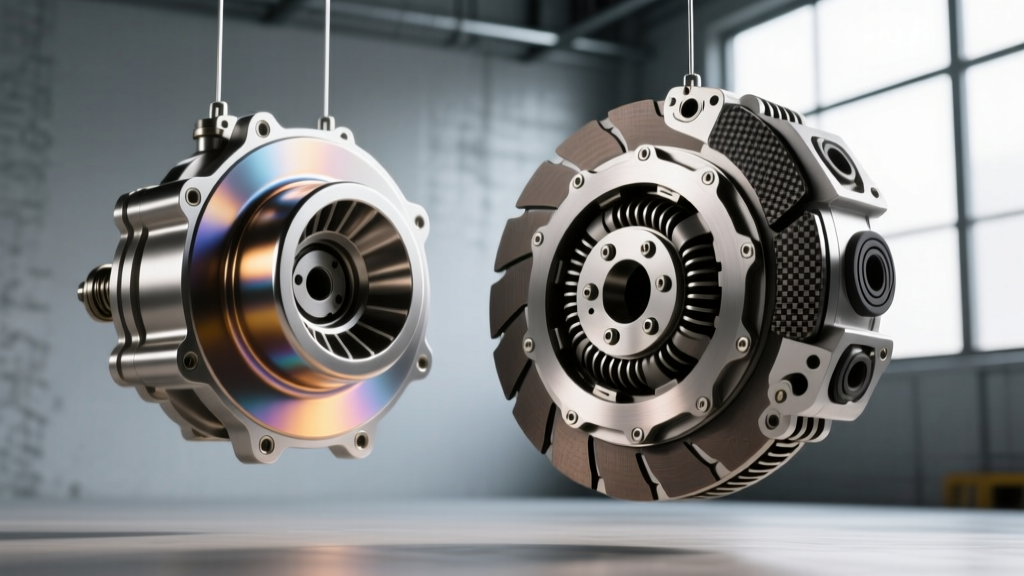
At its core, a manual clutch relies on tribology—the science of friction, wear, and lubrication. It uses a mechanical pressure plate to clamp a friction disc against a flywheel, creating a solid, 1:1 mechanical lock between the engine and transmission. Conversely, the torque converter in your 2019 Silverado (whether paired with the 6L80, 8L90, or the advanced 10L90 transmission) utilizes hydrokinetics. It transfers engine power to the transmission input shaft using the kinetic energy of shearing automatic transmission fluid (ATF), allowing for torque multiplication and seamless idle creep without stalling the engine.
Inside the 2019 Silverado Torque Converter Assembly
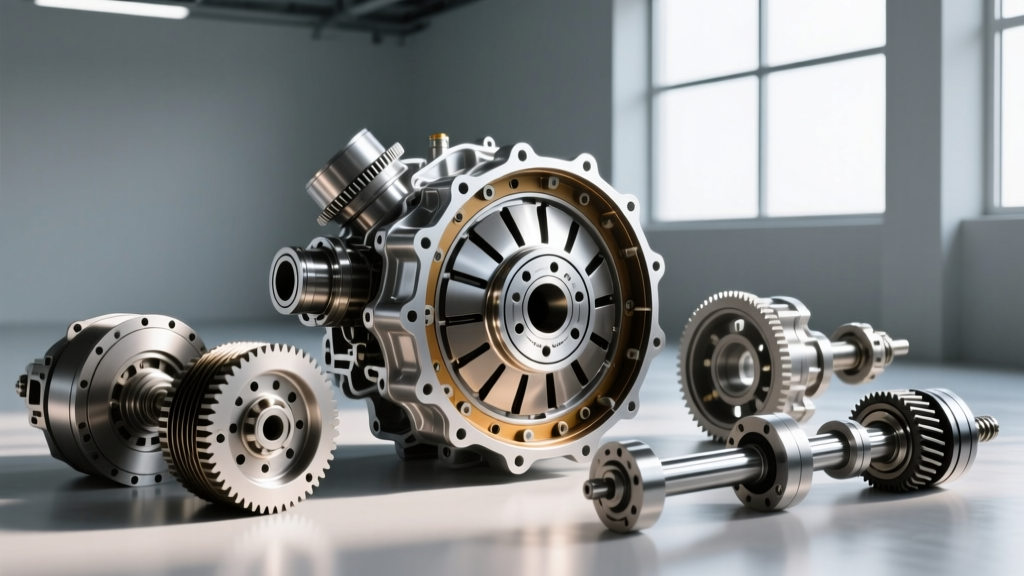
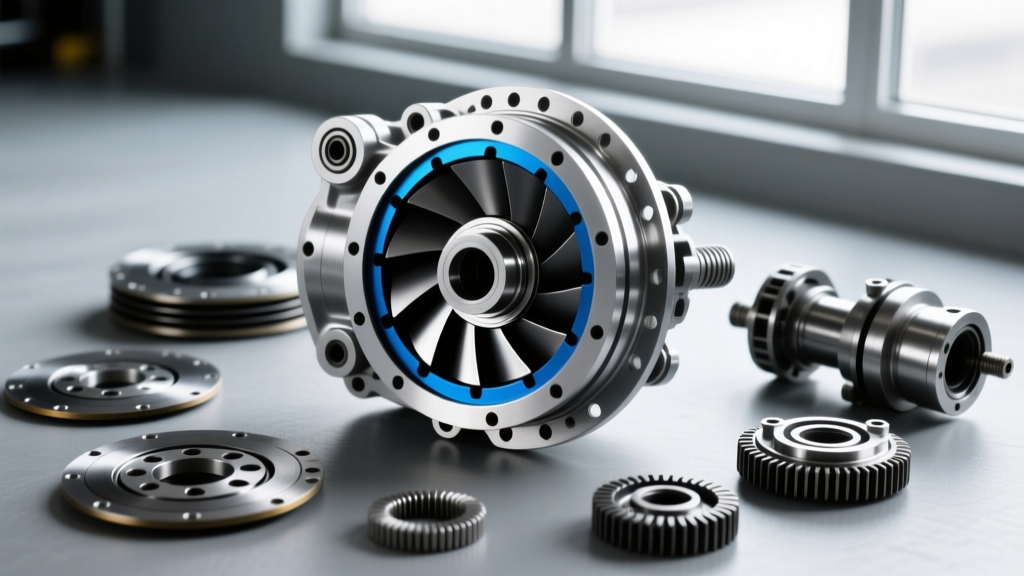
The torque converter is a sealed, welded steel housing containing three primary internal components: the impeller (pump), the turbine, and the stator. The impeller is welded directly to the converter cover, which is bolted to the engine's flexplate. As the engine spins, the impeller drives ATF outward via centrifugal force, directing it into the fins of the turbine, which is splined to the transmission input shaft.
The magic of torque multiplication happens via the stator, a one-way clutch assembly situated between the impeller and turbine. The stator redirects returning fluid to assist the impeller, effectively multiplying engine torque by a ratio of up to 2.2:1 during heavy acceleration or towing. According to technical data from Sonnax transmission engineering, this fluid coupling inherently generates massive amounts of parasitic heat, which is why modern converters incorporate a sophisticated lockup mechanism to bypass the fluid coupling at cruising speeds.
The Electronically Controlled Capacity Clutch (ECCC)
To eliminate the slippage and heat generation of pure fluid coupling, General Motors integrated a Torque Converter Clutch (TCC) inside the Silverado's converter. In the 10L90 transmission found in 2019 Silverado models equipped with the 6.2L V8 or 3.0L Duramax, GM utilizes an ECCC strategy. Rather than simply locking the converter 100% solid, the transmission control module (TCM) uses a Pulse Width Modulated (PWM) solenoid to maintain a microscopic amount of slip (usually 10 to 20 RPM) across the TCC friction lining. This controlled slip absorbs torsional engine vibrations, preventing severe NVH (Noise, Vibration, and Harshness) from entering the truck's cabin.
Direct Comparison: TCC Lockup vs. Manual Friction Disc
While both systems ultimately serve to connect the engine to the drivetrain, their operational parameters, failure modes, and material sciences are vastly different. The table below breaks down the engineering distinctions between the internal TCC of a 2019 Silverado and a heavy-duty manual truck clutch.
| Parameter | Silverado TCC Lockup (Internal) | Traditional Manual Friction Clutch |
|---|---|---|
| Actuation Method | Hydraulic fluid pressure via PWM solenoid | Mechanical linkage or hydraulic throwout bearing |
| Friction Material | Cellulose/Kevlar composite bonded to steel piston | Organic, Cerametallic, or Sintered Iron disc |
| Cooling Mechanism | Continuous flow of Dexron ULV / VI ATF | Air cooling via bellhousing and flywheel fins |
| Torque Multiplication | Yes (up to 2.2:1 via stator before lockup) | No (Strict 1:1 mechanical ratio) |
| Engagement Profile | Computer-modulated micro-slip (ECCC) | Driver-modulated friction bite point |
| Primary Failure Mode | Friction material delamination, PWM solenoid failure | Disc glazing, pressure plate finger fatigue |
Failure Modes: Diagnosing Shudder vs. Chatter
Because the engagement mechanisms differ, the symptoms of failure present uniquely. A failing manual clutch typically exhibits 'chatter'—a violent grabbing sensation caused by oil contamination, hot spots on the flywheel, or broken torsional springs in the disc hub.
In contrast, the most prevalent issue with the 2019 Chevy Silverado torque converter is TCC shudder. Shudder feels like driving over a series of rumble strips at highway speeds (usually between 45-65 MPH under light throttle). This occurs when the specialized friction material on the TCC piston degrades, or when the ATF loses its shear stability and anti-shudder additives deplete. The TCM commands a specific slip RPM, but the degraded friction surface causes the clutch to rapidly grab and release, creating a 20-40 Hz harmonic vibration.
Pro-Tip: Before condemning a shuddering torque converter in a 10L90-equipped Silverado, perform a complete fluid exchange using strictly OEM ACDelco Dexron ULV fluid. In many cases, replenishing the friction modifiers resolves the micro-slip shudder without requiring a transmission drop. Visit ACDelco's official parts catalog to verify the exact fluid specification for your RPO code.
If a fluid flush fails to resolve the shudder, the friction material has likely delaminated and contaminated the transmission cooler and valve body. At this stage, the torque converter must be replaced, and the transmission cooler lines must be aggressively flushed to prevent debris from destroying the new unit.
Replacement Economics and Labor Realities
The financial and labor implications of replacing these two components are starkly different. Replacing a manual clutch in a pickup truck generally requires dropping the transmission, removing the flywheel, and resurfacing or replacing the dual-mass or single-mass flywheel. Parts for a heavy-duty manual clutch kit range from $400 to $900, with labor averaging 6 to 8 hours.
Replacing the torque converter in a 2019 Silverado requires the exact same labor intensity—dropping the transmission, transfer case, and driveshafts. However, the OEM replacement torque converter assembly (such as ACDelco part number 24298888 or equivalent GM OEM part) typically costs between $800 and $1,400 depending on the specific transmission model. When factoring in 7 to 9 hours of shop labor at modern 2026 dealership rates ($160-$210/hr), plus the cost of 11+ quarts of Dexron ULV fluid and new flexplate bolts, a complete Silverado torque converter replacement easily ranges from $2,200 to $3,500.
Critical Installation Torque Specifications
Whether you are installing a new manual clutch or reinstalling a 10L90 transmission with a fresh torque converter, adhering to GM's precise torque specifications is non-negotiable to prevent catastrophic drivetrain failure. Below are the critical torque specs for the 2019 Silverado 5.3L/6.2L V8 applications:
- Flexplate to Crankshaft Bolts (M12): 74 lb-ft (100 Nm) plus an additional 80 degrees of rotation. These are torque-to-yield (TTY) and must never be reused.
- Torque Converter to Flexplate Bolts: 35 lb-ft (47 Nm). Use a high-strength threadlocker and ensure the converter is fully seated against the transmission oil pump gears before tightening to prevent pump destruction upon startup.
- Transmission Bellhousing to Engine Block (M12): 37 lb-ft (50 Nm).
- Transmission Crossmember to Frame: 70 lb-ft (95 Nm).
Summary: Choosing the Right Drivetrain Architecture
The manual friction clutch remains the king of raw, unfiltered mechanical connection, favored in dedicated off-road and heavy-towing applications where absolute heat dissipation and direct control are paramount. However, the 2019 Chevy Silverado torque converter represents a triumph of modern hydraulic and electronic engineering. By seamlessly blending hydrokinetic torque multiplication with computer-modulated ECCC lockup, the Silverado's automatic system delivers superior daily drivability, smoother towing dynamics, and highly optimized fuel economy. Understanding the deep technical differences between these two systems ensures that when drivetrain diagnostics are required, you are applying the correct science to the correct hardware.