The OBD-II Illusion: Why Your Powerglide Torque Converter Doesn't Throw Codes
If you are transitioning from modern daily drivers to classic muscle cars or dedicated drag racing platforms, diagnosing transmission issues requires a massive paradigm shift. When a modern 4L60E or 6L80E transmission experiences torque converter clutch (TCC) failure, the Transmission Control Module (TCM) immediately illuminates the Check Engine Light and stores a Diagnostic Trouble Code (DTC). However, if you are running a classic Chevrolet Powerglide or a modern aftermarket drag-racing Powerglide, you will quickly realize that scanning for OBD-II codes is a dead end.
The Powerglide is a legendary, hydraulically controlled two-speed automatic transmission. Because it lacks an internal electronic solenoid pack, a pulse-width modulated (PWM) lockup solenoid, or a factory TCM, it is physically incapable of generating standard OBD-II torque converter diagnostic trouble codes. To diagnose a failing Powerglide torque converter, you must abandon the scan tool and rely on old-school mechanical testing, fluid analysis, and, in 2026, aftermarket standalone data logging.
How the Powerglide Torque Converter Actually Works
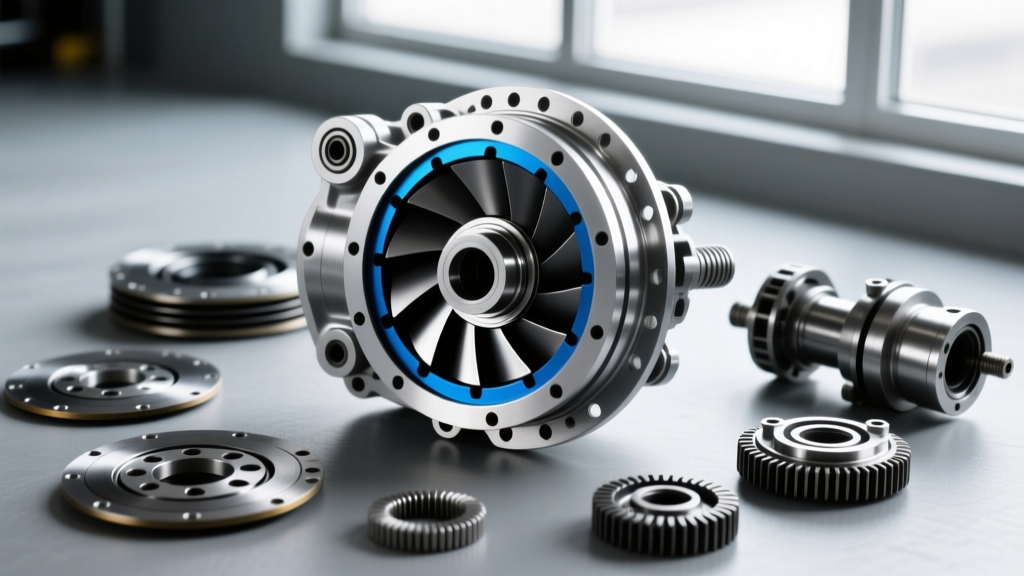
Before diagnosing a failure, beginners must understand the fluid coupling mechanics at play. The torque converter multiplies engine torque using three main internal components: the impeller (driven by the engine), the turbine (driving the transmission input shaft), and the stator (which redirects fluid flow to multiply torque). In a standard Powerglide setup, there is no mechanical lockup clutch. The connection between the engine and the transmission is entirely hydraulic. When the fins inside the converter become damaged, or when the stator one-way sprag clutch fails, the transmission will not throw an electrical code; instead, it will manifest as severe performance degradation, overheating, or physical destruction.
Modern TC Diagnostic Trouble Codes (DTCs) Explained
To understand what you are missing on a Powerglide, it helps to know what modern electronic transmissions monitor. If you were driving a vehicle equipped with a 4L60E or a ZF 8HP, the TCM constantly compares engine RPM, transmission input shaft speed, and output shaft speed. If the slip ratio across the torque converter falls outside the programmed parameters, it triggers a DTC. Common torque converter codes include:
- P0740 (Torque Converter Clutch Circuit Malfunction): Indicates an open or short circuit in the TCC solenoid wiring. The Powerglide has no TCC solenoid, making this code impossible natively.
- P0741 (Torque Converter Clutch System Stuck Off): The TCM commands the lockup clutch to engage, but the input and output RPM sensors show excessive slip. This usually points to a worn friction disc inside a modern lockup converter or low line pressure.
- P0742 (Torque Converter Clutch System Stuck On): The lockup clutch fails to disengage, causing the engine to stall when coming to a stop. A Powerglide will only stall at a stop if the engine idle is too low or the converter is severely damaged and physically binding.
- P0743 (Torque Converter Clutch Solenoid Electrical): A purely electrical fault regarding the PWM solenoid resistance.
For a comprehensive breakdown of how these codes operate on electronically controlled transmissions, resources like OBD-Codes.com provide excellent baseline electrical diagnostics. But for the Powerglide, we must look elsewhere.
How to Diagnose a Powerglide Torque Converter in 2026
Without a TCM to monitor slip ratios, how do you know if your Powerglide torque converter is failing? In the modern era of street-strip builds and drag racing, diagnostics rely on physical stress testing and telemetry.
The Stall Speed Test: Your Best Diagnostic Tool
The stall speed test is the ultimate diagnostic procedure for a non-lockup hydraulic torque converter. It measures the maximum RPM the engine can achieve when the transmission output shaft is held stationary and the throttle is wide open. This test verifies the health of the stator sprag and the overall fluid coupling efficiency.
CRITICAL SAFETY WARNING: Never perform a stall test for more than 3 to 5 seconds. The hydraulic friction generates immense heat, raising transmission fluid temperatures by up to 50°F per second. Ensure your Powerglide is equipped with an adequate cooler and that fluid temperatures are below 160°F before testing. Always keep a fire extinguisher nearby and ensure your brakes are fully functional.
How to perform the test:
- Connect a reliable tachometer and a transmission temperature gauge.
- Hold the vehicle firmly in place using the foot brake (and emergency brake for safety).
- Shift the Powerglide into Drive (or Low, depending on your valve body setup).
- Smoothly but quickly apply wide-open throttle (WOT).
- Observe the peak RPM before the tires break loose or the 5-second limit is reached.
- Immediately release the throttle and shift to Neutral to allow the fluid to cool.
Interpreting the Results: If your converter is rated for a 3,500 RPM stall but the engine only reaches 2,200 RPM, the stator sprag has likely failed and is freewheeling in both directions, destroying torque multiplication. If the engine exceeds the rated stall speed by 500+ RPM, the converter fins may be damaged, or the transmission's internal clutches and bands are slipping severely.
Diagnostic Comparison: Modern Electronic vs. Classic Powerglide
Understanding the contrast between diagnostic methodologies is crucial for beginners working on mixed fleets or performing engine swaps. Below is a comparison of how torque converter health is monitored across different platforms.
| Diagnostic Parameter | Modern Electronic Trans (e.g., 4L60E / 6L80E) | Classic / Drag Powerglide |
|---|---|---|
| Primary Diagnostic Tool | OBD-II Scan Tool (Reading TCM Data PIDs) | Stall Test, Temp Gauge, Data Logger |
| TCC Slip Monitoring | Automated via Input/Output Speed Sensors | Manual calculation via ECU (RPM vs. Driveshaft Speed) |
| Failure Indicators | Check Engine Light, Limp Mode, DTCs (P0740-P0743) | High Fluid Temp, Poor 60-Foot Times, Engine Stalling |
| Lockup Mechanism | Internal PWM Friction Clutch | None (Pure Fluid Coupling) or Aftermarket External Lockup |
| Common Failure Mode | Solenoid failure, Friction material wear | Stator sprag failure, Fin fatigue, Ballooning |
Modern Aftermarket Electronics and Data Logging
While the Powerglide itself doesn't generate codes, the 2026 drag racing landscape heavily utilizes standalone engine management systems like the Holley Terminator X or Davis Technologies profilers. These systems can monitor CAN-bus data from transmission brake controllers and aftermarket electronic lockup torque converters. If you have retrofitted a lockup Powerglide torque converter using a micro-switch or a PWM controller, a failure in the lockup circuit might trigger a generic user-defined fault code in your ECU, but it will not be a standardized OBD-II P-code. You must review your ECU's custom data logs to check for lockup solenoid duty cycle anomalies.
Common Powerglide Torque Converter Symptoms and Physical Failures
When physical symptoms arise, they usually point to specific internal converter failures:
- Converter Ballooning: Common in drag racing when using a trans-brake or excessive line pressure in reverse. The outer shell of the converter expands like a balloon, pushing against the flexplate and potentially destroying the crankshaft thrust bearing. Upgrading to a billet steel cover prevents this.
- Fin Fatigue and Shearing: High-horsepower applications can cause the aluminum impeller or turbine fins to bend or break off. This results in metallic debris circulating through the Powerglide pan, destroying the clutch packs and the front pump.
- Sprag Clutch Failure: The one-way stator sprag is the heart of torque multiplication. If it seizes, the converter will overheat rapidly at highway speeds. If it breaks and freewheels, the car will feel incredibly sluggish off the starting line.
Aftermarket Powerglide Torque Converter Costs and Part Numbers
Replacing a failed Powerglide torque converter requires selecting the correct stall speed and diameter for your engine's torque curve. Prices vary wildly based on the intended use case, from mild street cruising to Pro Mod drag racing.
- TCI 10-inch Breakaway Converter (Part #221000): Priced around $450 to $500. Ideal for mild 350ci Small Block Chevy builds with a target stall speed of 2,400-2,800 RPM. Features a furnace-brazed impeller for basic durability.
- ATI Treemaster Powerglide Converter (Part #950200): Priced around $850 to $950. A staple in Sportsman drag racing. Features anti-ballooning plates, a heavy-duty stator sprag, and is designed to handle upwards of 600 horsepower without shell deformation.
- Pro Mod / Billet Converters (Custom Builders like PTC or Circle D): Pricing starts at $1,800 and easily exceeds $3,500. These feature fully billet steel stators, CNC-machined covers, and custom stator blade angles tailored to your specific engine dyno sheet.
When performing a Powerglide rebuild or converter swap, always remember to pre-fill the converter with approximately 2 to 3 quarts of high-quality ATF (such as Dexron VI or specialized synthetic drag race fluid) before installation. Failing to pre-fill will result in a dry start, instantly burning up the front pump and scoring the stator support tube. By mastering the stall test and understanding the physical limitations of hydraulic fluid coupling, you can accurately diagnose Powerglide torque converter issues without ever needing to plug in an OBD-II scanner.