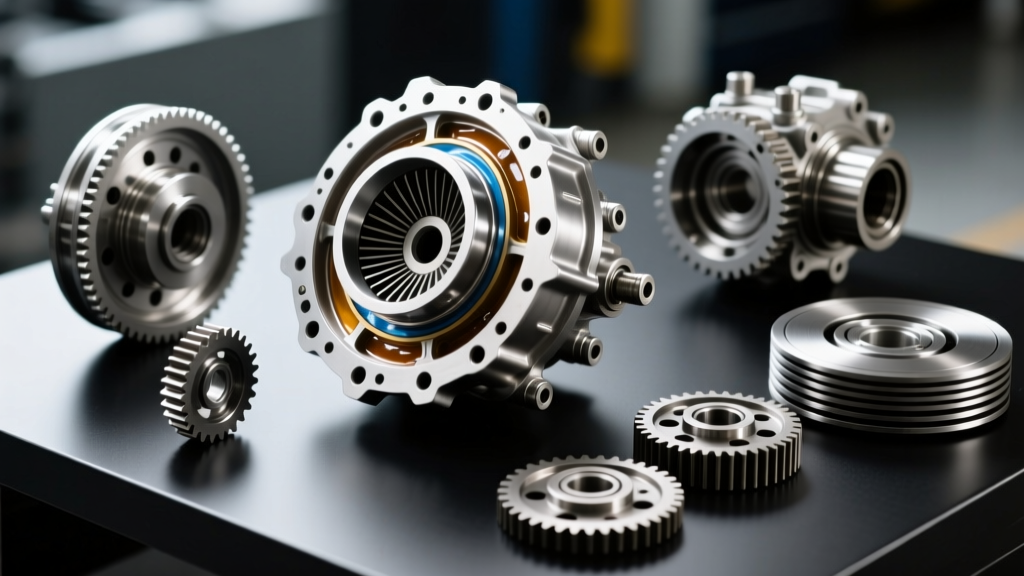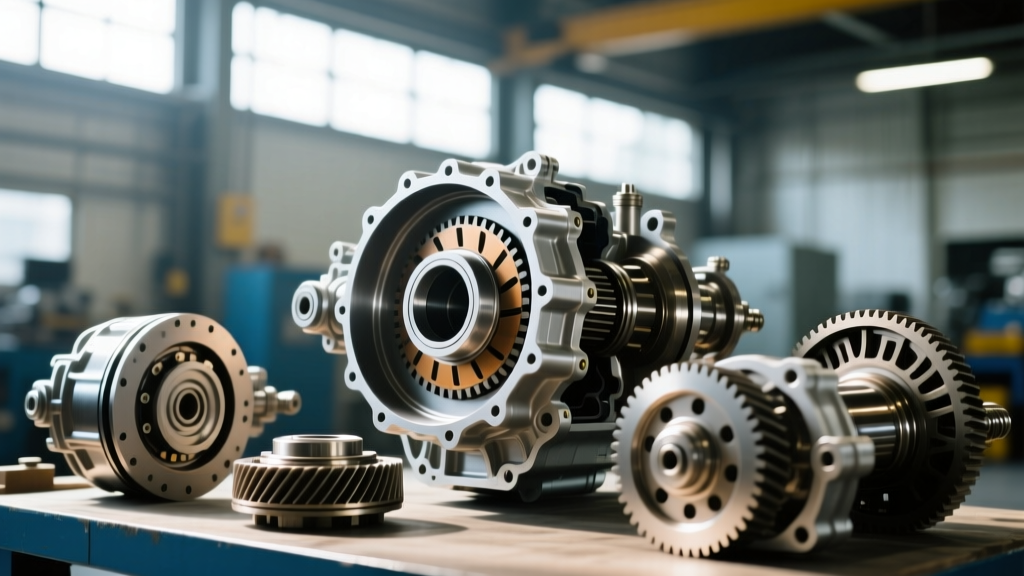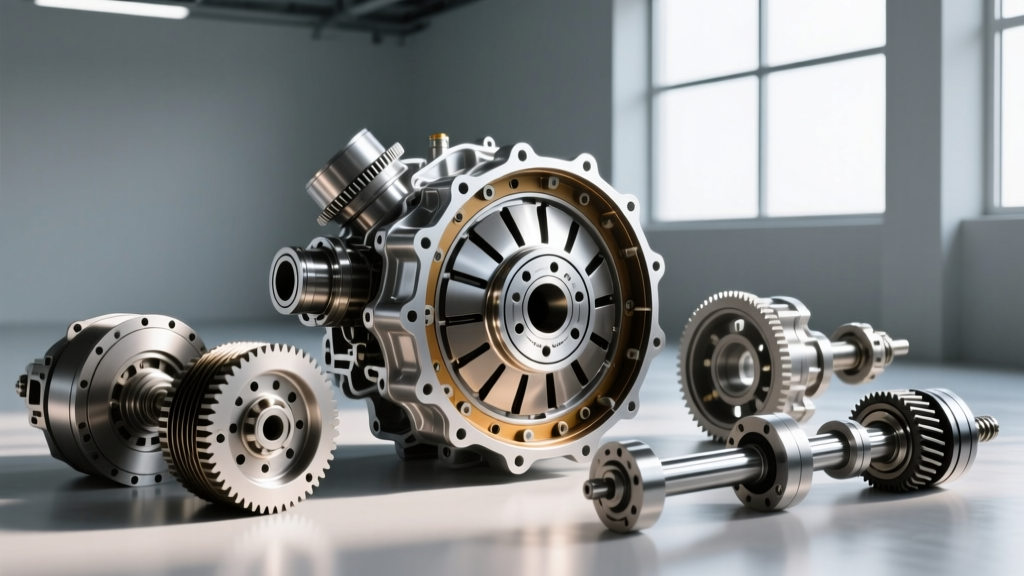
The GM 6L80 and 6L90 transmissions are undeniably robust platforms, capable of handling the immense torque output of modern LS and LT V8 engines. However, as these units age and are pushed beyond their factory towing or performance limits, a pervasive symptom begins to emerge: severe torque converter overheating. When transmission fluid temperatures consistently breach the 250°F threshold, Dexron VI fluid rapidly oxidizes, the torque converter clutch (TCC) lining glazes, and catastrophic transmission failure is imminent. For enthusiasts, fleet operators, and heavy-duty towers in 2026, addressing this thermal bottleneck is non-negotiable. This is where evaluating a Circle D torque converter 6L80 upgrade transitions from a luxury modification to a critical reliability investment.
The Anatomy of 6L80 Overheating: Why Stock Converters Fail
To understand why an aftermarket upgrade is necessary, we must first diagnose the thermal inefficiencies inherent in the OEM 6L80 torque converter design. The factory unit utilizes a stamped steel cover and a single-disc TCC friction surface. Under heavy load, the transmission's Powertrain Control Module (PCM) commands a 'controlled slip' strategy to smooth out NVH (Noise, Vibration, and Harshness). While this slip makes for a comfortable ride, it generates massive amounts of friction heat directly inside the converter.
Furthermore, the stamped steel cover of the OEM converter is prone to micro-flexing under high torque loads. This flexing prevents the single TCC disc from maintaining uniform clamping pressure, exacerbating slip and heat generation. According to transmission valve body experts at Sonnax, wear in the TCC PWM solenoid and the TCC regulator valve bore further compromises apply pressure, forcing the converter to slip even when a full lockup is commanded. The result is a localized hot spot that quickly overwhelms the factory radiator-integrated transmission cooler.
Enter the Circle D Torque Converter 6L80: A Buyer’s Comparison
When shopping for a replacement, the Circle D torque converter 6L80 lineup stands out due to its focus on thermal mass and clamping surface area. Circle D Specialties engineers their 6L80/6L90 units around a billet steel front cover and a multi-disc TCC setup. By increasing the friction surface area from one disc to three or four, the clamping load required to achieve zero-slip lockup is drastically reduced, which in turn slashes heat generation.
Below is a technical comparison of the OEM unit against Circle D's premier 280mm Billet Multi-Disc offering and a comparable competitor unit, highlighting why Circle D remains a top-tier choice for thermal management.
| Feature | GM OEM 258mm Converter | Circle D 280mm Billet Multi-Disc | Competitor 'Street' Billet |
|---|---|---|---|
| Cover Material | Stamped Steel (Flex-Prone) | Billet Steel (Zero Flex) | Billet Aluminum / Steel Hybrid |
| TCC Friction Design | Single Disc (High Slip Heat) | 3-Disc or 4-Disc (Distributed Load) | 2-Disc (Moderate Load) |
| Max Torque Capacity | ~450 lb-ft (at crank) | 850+ lb-ft (at crank) | 650 lb-ft (at crank) |
| TCC Lockup Strategy | Controlled Slip (High Heat) | Full Lockup Capable (Low Heat) | Full Lockup Capable |
| Est. Retail Price (2026) | $350 - $500 | $950 - $1,250 | $850 - $1,100 |
Sizing Your Circle D Unit: Stall Speed and Thermal Dynamics
Selecting the correct stall speed is paramount when ordering your Circle D unit. The 6L80 relies heavily on the torque converter's stator and impeller geometry to multiply torque off the line. However, a higher stall speed inherently generates more heat if the TCC is not locked up during highway cruising.
Street & Light Tow (1600 - 1800 RPM)
For daily driven Silverados, Tahoes, or Camaros that see occasional towing or highway pulls, Circle D's 1600-1800 RPM stall converters are ideal. They mimic the OEM flash stall, ensuring that the TCC can lock up early (typically in 2nd or 3rd gear) to bypass the fluid coupling phase entirely. This keeps cruising temperatures in the 160°F–180°F range, well within the safe operating limits of Dexron VI.
Performance & Heavy Tow (2000 - 2400 RPM)
If your 6L80 is backed by a cammed LT1/LT4 or you frequently tow near the 10,000 lb GCWR limit, a 2000-2400 RPM stall is recommended. The larger 280mm Circle D units in this range feature heavily modified fin angles that improve fluid coupling efficiency. However, running a higher stall mandates an aggressive custom tune via HP Tuners to command TCC lockup as early as possible to mitigate the increased off-Idle heat generation.
Mandatory Supporting Mods for 6L80 Thermal Management
Even the most advanced Circle D torque converter 6L80 cannot overcome a compromised hydraulic circuit or inadequate external cooling. To guarantee your new billet converter survives the long haul, the following supporting modifications are highly recommended during the installation process:
- Valve Body & TCC Bore Repair: Before installing the new converter, the valve body must be addressed. Using a Sonnax Zip Kit (6L80-ZIP) or reaming the TCC regulator bore and installing an oversized anodized valve is critical. If the bore is worn, the converter will never receive the 110+ PSI of apply fluid required to clamp the multi-disc TCC, leading to slip and rapid destruction of your new Circle D unit.
- Auxiliary Transmission Cooler: The factory radiator cooler is insufficient for modified 6L80s. Bypass the radiator cooler entirely and route the transmission lines to a standalone plate-and-fin cooler, such as those offered by Tru-Cool (e.g., the 40,000 GVW rating series). Mounting this in front of the AC condenser ensures ambient air drops fluid temps by 30°F to 50°F under load.
- Upgraded Pump Bushing & Stator Support: The 6L80 front pump bushing is a known weak point. When dropping the transmission for the converter swap, install a Sonnax reinforced pump bushing and inspect the stator support shaft for scoring. A worn shaft will leak TCC apply fluid back to the sump, robbing the converter of clamping pressure.
Installation Realities: Torque Specs and Fluid Selection
Proper installation is just as vital as the parts themselves. When mating the Circle D converter to your aftermarket or OEM flexplate, always use new hardware. The standard torque specification for the converter-to-flexplate nuts/bolts on the 6L80 is 35 lb-ft, but it is imperative to apply a medium-strength threadlocker (like Loctite 243) to prevent backing out due to harmonic vibration. Ensure the converter is fully seated into the transmission oil pump gear; you should feel three distinct 'clunks' as it passes the stator support, the turbine shaft, and finally seats into the pump gear. Failure to seat it fully will result in immediate pump failure upon startup.
For fluid, stick strictly to GM-approved Dexron VI or a high-quality synthetic equivalent like Amsoil Signature Series Fuel-Efficient Synthetic ATF. The 6L80 system holds approximately 11.5 quarts when completely dry, but a standard pan-drop and converter fill will require roughly 7 to 8 quarts. Always verify the fluid level using the transmission dipstick with the fluid temperature between 86°F and 122°F, as measured by a bi-directional OBD2 scanner.
Final Verdict: Is the Circle D Upgrade Worth the Investment?
When diagnosing torque converter overheating problems in the 6L80 platform, the root cause is almost always tied to single-disc slip and stamped cover flex. Upgrading to a Circle D billet multi-disc unit permanently resolves the mechanical limitations of the OEM design. While the initial outlay for a Circle D converter (approx. $1,050), an auxiliary cooler ($150), and a Sonnax valve body kit ($120) may seem steep, it pales in comparison to the $4,500+ cost of a complete 6L80 rebuild necessitated by clutch pack burnout caused by overheated fluid. For anyone demanding reliability from their GM 6-speed automatic in 2026, the Circle D torque converter remains the gold standard for thermal management and power transfer.