The 2026 Perspective: Pushing the T1 Platform to Its Limits
As we move through 2026, the Chevy Silverado lineup—particularly the T1 platform introduced in 2019 and refreshed through the mid-2020s—continues to dominate the heavy-duty towing and overlanding segments. However, pushing a Silverado 1500 with the Max Trailering Package or a 2500HD Duramax to its gross combined weight rating (GCWR) exposes a critical vulnerability: thermal degradation of the factory gear oil. While the factory-fill Chevy Silverado rear differential fluid is engineered for standard commuting and light hauling, sustained high-load towing in mountainous terrain frequently pushes differential sump temperatures past 230°F (110°C). At these temperatures, standard 75W-90 synthetic blends experience severe shear breakdown, leading to accelerated ring and pinion wear, bearing failure, and whining noises.
This performance and upgrade guide dives deep into the specific axle architectures of the modern Silverado, the critical differences between factory and severe-duty gear oils, and the exact procedures required to upgrade your drivetrain for maximum longevity.
T1 Axle Architecture: Drop-Out vs. Bolt-On Designs
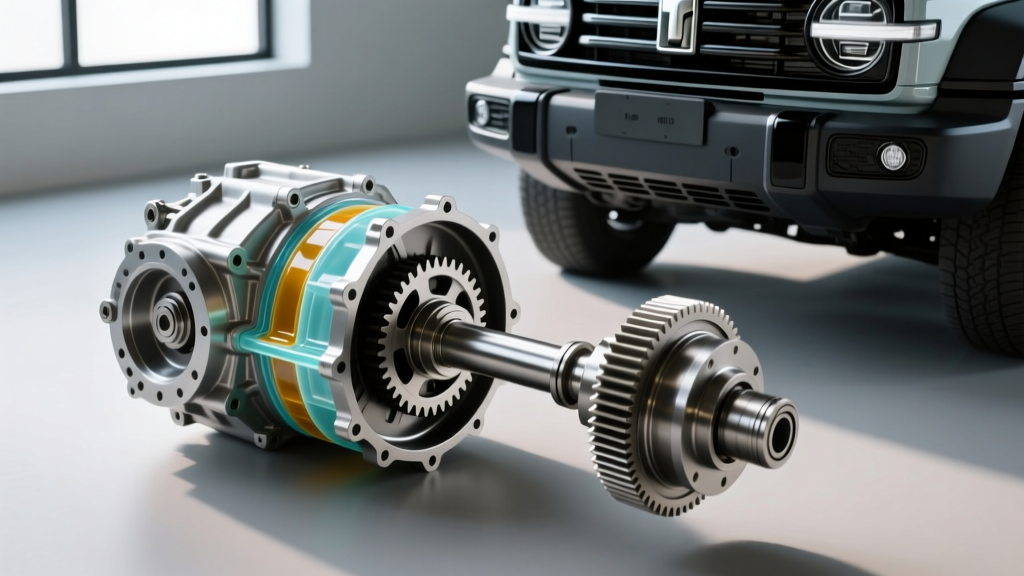
Before purchasing gear oil, you must understand the physical architecture of your specific Silverado axle, as GM utilizes vastly different designs across the 1500 and HD lineups. This distinction dictates how you service, clean, and inspect the differential.
The 8.6-Inch and 9.5-Inch Drop-Out Axles (1500 Series)
The standard Silverado 1500 utilizes a GM 8.6-inch ring gear, while models equipped with the Max Trailering Package or AT4 off-road trims feature the larger, more robust GM 9.5-inch ring gear (often referred to as the MTZ axle). Crucially, both of these axles feature a drop-out carrier design. Unlike older trucks with a stamped steel rear cover, the T1 1500 axles have a solid rear housing. The differential carrier drops out from the front of the axle housing (pinion side) after removing the driveshaft and axle shafts. For a standard fluid drain and fill, you only need to remove the fill plug. However, if you are performing a complete flush or inspecting the ring and pinion for metal shavings, there is no rear cover to pop off; you must pull the entire carrier assembly.
The AAM 10.5-Inch and 11.5-Inch Bolt-On Axles (2500HD/3500HD)
Silverado 2500HD and 3500HD trucks rely on American Axle & Manufacturing (AAM) designs. The 2500HD typically uses the AAM 10.5-inch semi-floating or full-floating axle, while the 3500HD Dual Rear Wheel (DRW) utilizes the massive AAM 11.5-inch full-floating axle. These HD axles retain the traditional removable rear differential cover, making deep cleaning, magnetic plug inspection, and complete fluid evacuation significantly easier for DIY mechanics.
Fluid Viscosity: When to Step Up from 75W-90 to 75W-140
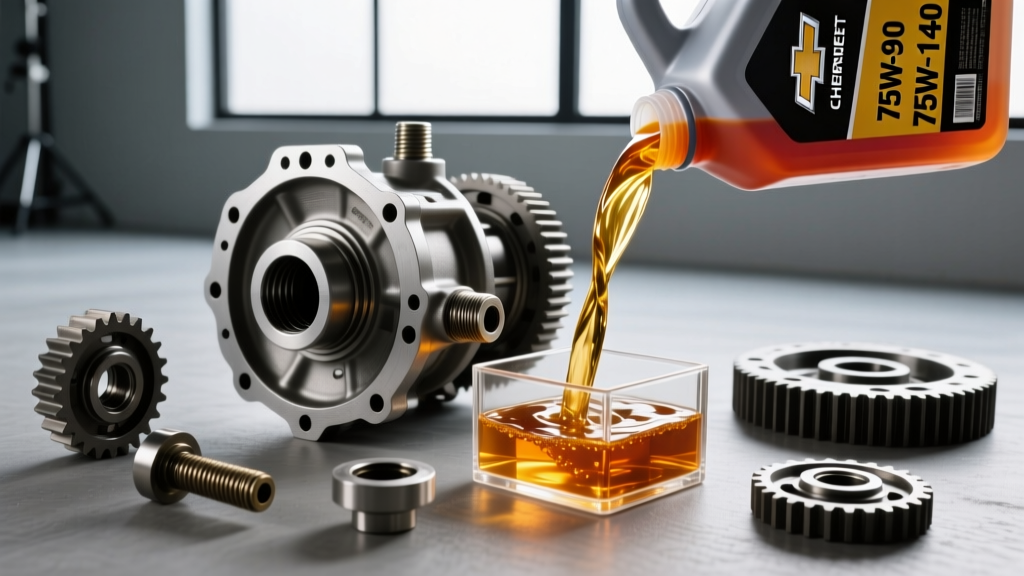
GM's factory specification for most Silverado axles is ACDelco Dexron 75W-90 Synthetic Gear Oil (Part # 88862624). This fluid provides excellent cold-weather flow and adequate protection for daily driving. However, if your Silverado is equipped with 35-inch aftermarket tires, a lift kit, or is frequently subjected to towing loads exceeding 8,000 lbs, upgrading to a 75W-110 or 75W-140 full synthetic is a mandatory performance modification.
Heavier viscosities like Amsoil Severe Gear 75W-140 or Red Line 75W-140 maintain a thicker hydrodynamic film between the hypoid gear teeth under extreme shear loads. The trade-off is a marginal decrease in fuel efficiency (typically less than 1%) and slightly stiffer cold-weather engagement until the fluid reaches operating temperature. For dedicated tow rigs and off-road builds, this trade-off is universally accepted by drivetrain engineers.
Silverado Axle Capacities and Torque Specifications
Accuracy during a differential service is paramount. Overfilling can cause fluid aeration and seal blowouts, while underfilling leads to immediate starvation of the pinion bearing. Below is the definitive specification table for modern Silverado axles.
| Axle Type | Application | Fluid Capacity | Fill Plug Torque | Cover Bolt Torque (If Equipped) |
|---|---|---|---|---|
| GM 8.6" Semi-Floating | 1500 Standard | 2.1 Quarts (1.98 L) | 24 lb-ft (33 Nm) | N/A (Drop-Out Design) |
| GM 9.5" Semi-Floating | 1500 Max Trailering / AT4 | 2.75 Quarts (2.6 L) | 24 lb-ft (33 Nm) | N/A (Drop-Out Design) |
| AAM 10.5" Full-Floating | 2500HD (Allison/10-Speed) | 3.5 Quarts (3.3 L) | 24 lb-ft (33 Nm) | 27 lb-ft (37 Nm) |
| AAM 11.5" Full-Floating | 3500HD DRW | 4.0 Quarts (3.78 L) | 24 lb-ft (33 Nm) | 27 lb-ft (37 Nm) |
The Eaton G80 Gov-Lock: Friction Modifier Warnings
One of the most common and catastrophic mistakes made by novice mechanics servicing a Chevy Silverado rear differential is the improper use of friction modifiers. Many Silverado trims feature the Eaton G80 Gov-Lock, an automatic mechanical locking differential. Unlike traditional clutch-type limited-slip differentials (LSDs) found in Ford or Dodge trucks, the G80 utilizes a flyweight governor mechanism that physically locks the side gears together when wheel speed differentiation exceeds 100 RPM.
Critical Warning: Do NOT add limited-slip friction modifier (Posi-Traction additive) to a Silverado equipped with the G80 locker. The G80 requires standard gear oil. Introducing friction modifiers will coat the locking mechanism, causing the Gov-Lock to slip, fail to engage during off-road crawling, and eventually destroy the internal governor weights. Always verify your RPO codes (look for G80 in the glovebox sticker) before selecting your fluid additive package.
Performance Upgrade Procedure: AAM HD Service
For this procedure, we will focus on the AAM 10.5-inch and 11.5-inch HD axles, as they are the most common candidates for severe-duty fluid upgrades due to their towing applications.
Tools and Materials Required
- 4-5 Quarts of 75W-140 Full Synthetic Gear Oil
- 1/2-inch Drive Torque Wrench
- Socket Set (including 15mm or 13mm for cover bolts, depending on year)
- Gasket Scraper and Brake Parts Cleaner
- ACDelco RTV Silicone Sealant (Part # 10-903 / GM 12378521) or a high-quality pre-cut cork/rubber gasket
- Fluid Transfer Pump
Step-by-Step Execution
1. Preparation and Drain: Drive the truck for 15 minutes to warm the differential fluid, which suspends metal particulates and allows for a more complete drain. Safely support the rear axle on jack stands. Remove the fill plug first using a 3/8-inch or 1/2-inch square drive. If the fill plug is seized and breaks, you will be unable to refill the axle, turning a simple maintenance task into a towing disaster.
2. Cover Removal and Cleaning: Place a drain pan beneath the axle. Loosen the cover bolts in a crisscross pattern. Pry the cover off gently from the bottom edge. Allow the fluid to drain completely. Inspect the fluid for large metal chunks; fine metallic paste on the magnet is normal for the first 50,000 miles, but chunky debris indicates bearing or gear failure.
3. RTV Application: Scrape all old gasket material from the housing and cover. Clean both surfaces with brake cleaner until completely oil-free. Apply a continuous 3mm bead of ACDelco RTV silicone to the cover. Ensure you circle the inside of every bolt hole to prevent oil weeping.
4. Reassembly and Fill: Reinstall the cover and hand-tighten the bolts. Torque the cover bolts to 27 lb-ft in a star pattern. Wait 45 minutes for the RTV to skin over before adding fluid. Pump the 75W-140 gear oil into the fill hole until it reaches the exact bottom edge of the fill plug threads. Reinstall the fill plug and torque to 24 lb-ft.
Cost vs. Longevity: Is the Upgrade Worth It?
Upgrading your Chevy Silverado rear differential fluid to a premium 75W-140 synthetic typically costs between $90 and $130 for DIY materials, compared to $250-$350 at a dealership using standard factory fluids. For trucks subjected to heavy towing, the thermal stability of a high-end 75W-140 fluid can extend the life of the pinion bearings and ring gear by over 40%. Considering an AAM 10.5-inch axle rebuild or replacement costs upwards of $3,500 in 2026, the $50 premium for severe-duty gear oil is one of the highest-ROI preventative maintenance modifications you can perform on your Silverado.