The Core Question: What Happens If Rear Differential Goes Out While Driving?
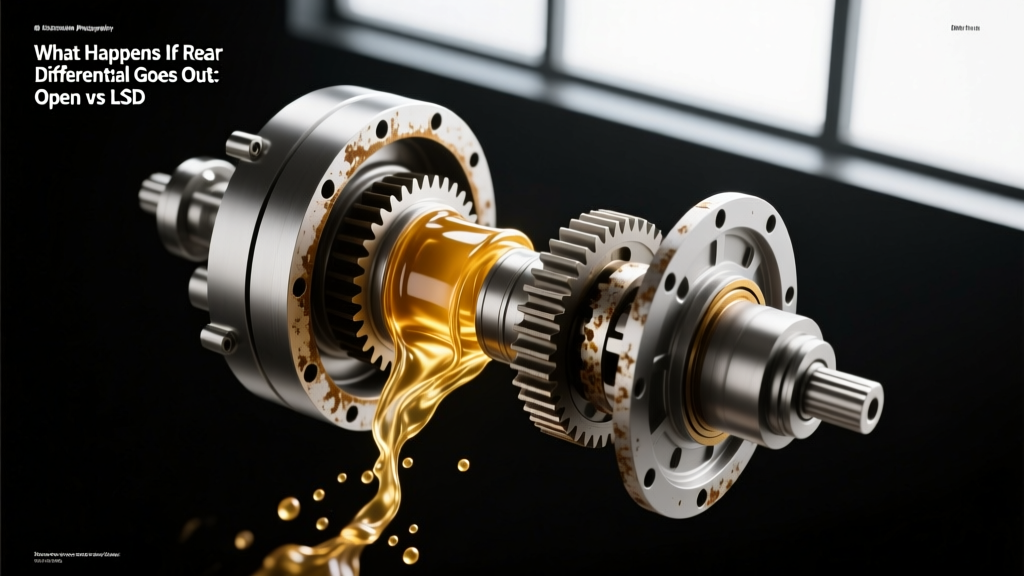
Understanding the catastrophic mechanics of a drivetrain failure requires examining the specific carrier type installed in your axle housing. When enthusiasts and daily drivers ask what happens if rear differential goes out while driving, the answer depends entirely on whether the vehicle is equipped with an open differential or a limited slip differential (LSD). A failure at 65 MPH on the interstate yields vastly different dynamic consequences based on the internal architecture of the carrier, the state of the gear oil, and the presence of friction modifiers.
In an open differential, a catastrophic failure—such as a sheared cross-pin or shattered spider gear—typically results in an immediate loss of power to both rear wheels. The driveshaft will spin freely, but the vehicle will coast to a halt. However, if the broken metal fragments wedge between the ring gear and the differential case, the rear axle can instantly lock up, inducing a high-speed spin. Conversely, a clutch-type LSD failure often begins with fluid degradation, leading to chatter, clutch pack disintegration, and eventual lock-up or a default to open-diff behavior. This guide breaks down the mechanical differences, fluid requirements, and 2026 buyer’s recommendations for upgrading your rear end.
Open vs. Limited Slip: Mechanical Architecture & Failure Points
Open Differential: The Path of Least Resistance
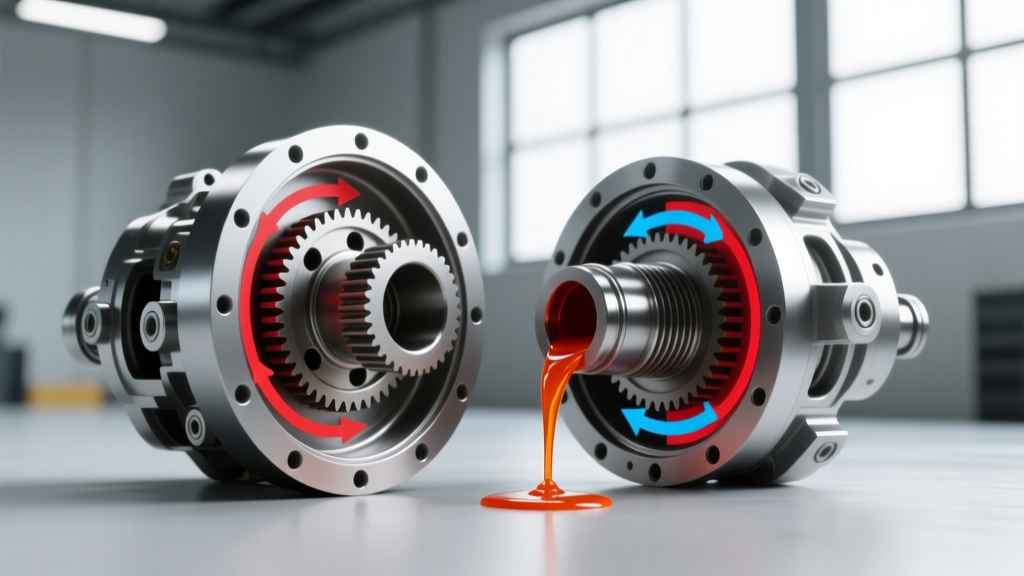
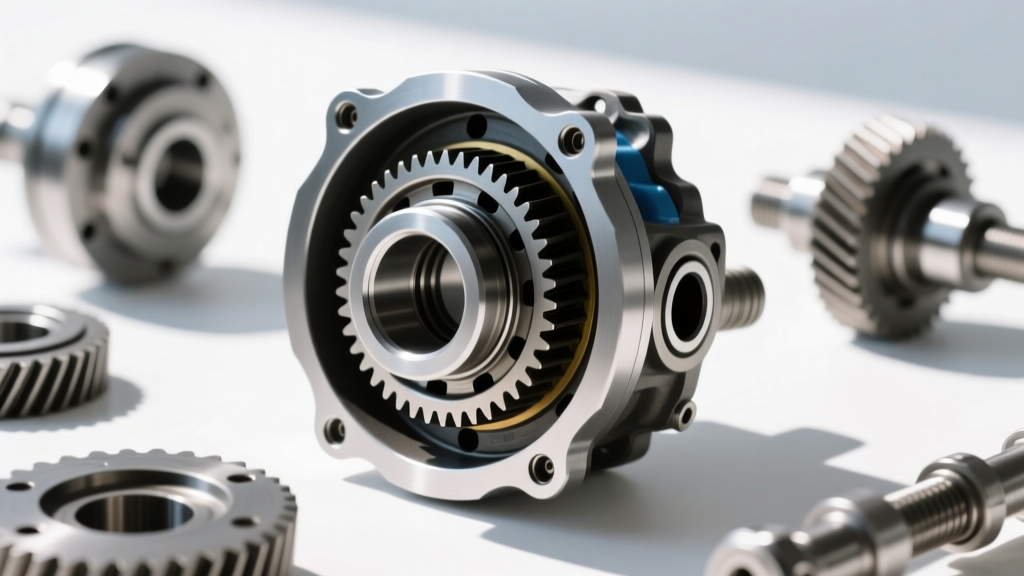
The open differential is the baseline for most factory trucks and passenger cars. It utilizes a set of spider gears mounted on a cross-pin, which mesh with two side gears attached to the axle shafts. Its primary function is to allow the outside wheel to rotate faster than the inside wheel during cornering.
Failure Mode: Open diffs are highly reliable but vulnerable to shock loads. If a driver aggressively drops the clutch on sticky tires, the spider gears can strip, or the cross-pin can shear. Without the cross-pin, the spider gears fall into the ring gear path, causing immediate and violent housing destruction.
Limited Slip Differential (LSD): Torque Biasing & Clutch Packs
Clutch-type LSDs (like the Auburn Pro-Series or GM Eaton Posi) use a series of friction discs and preload springs to couple the side gears to the carrier case. When one wheel loses traction, the clutch packs resist the speed differential, transferring torque to the wheel with grip. Helical LSDs (like the Eaton Truetrac) use planetary gear sets to multiply torque without friction clutches.
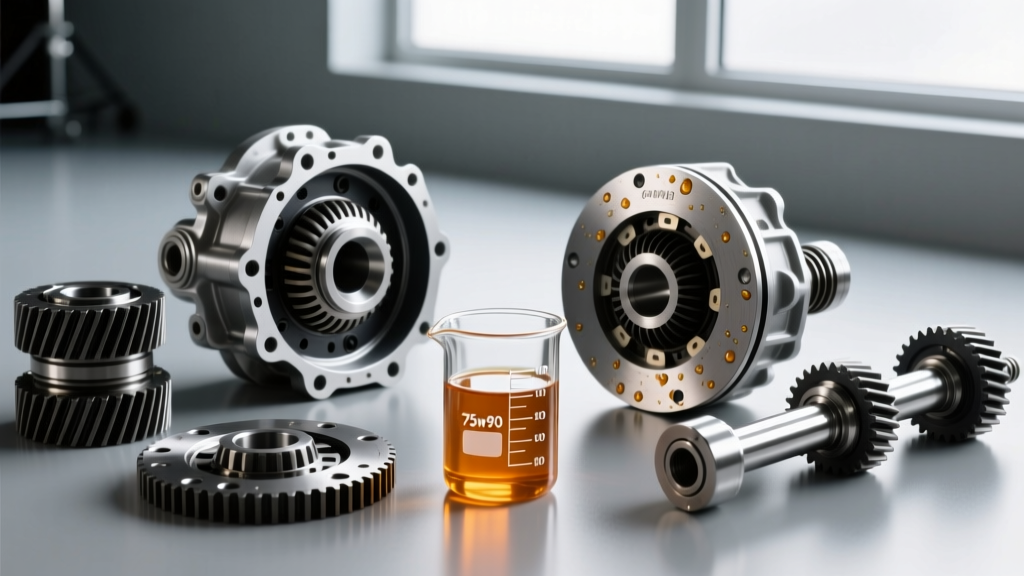
Failure Mode: Clutch-type LSDs are highly sensitive to fluid chemistry. If the gear oil lacks the necessary friction modifiers, the clutch packs will experience "stick-slip" vibration (chatter). Over time, this shreds the friction material, contaminating the 75W-90 fluid with metallic and composite debris, ultimately leading to total lock-up or a complete loss of limited-slip functionality.
Failure Modes & Maintenance Comparison Chart
| Feature | Open Differential | Clutch-Type LSD | Helical LSD (Truetrac) |
|---|---|---|---|
| Traction | Single-wheel (path of least resistance) | Dual-wheel (preloaded clutch packs) | Dual-wheel (torque-biasing gears) |
| Primary Failure Cause | Shock loading, cross-pin shear | Fluid breakdown, lack of modifier | Extreme shock loads, low fluid |
| Highway Failure Result | Loss of drive or axle lock-up | Chatter, default to open, or lock-up | Gear tooth shearing, axle lock-up |
| Fluid Requirement | Standard API GL-5 75W-90 | GL-5 + Friction Modifier | Standard API GL-5 75W-90 |
| Average Replacement Cost | $150 - $300 (Carrier) | $500 - $800 (Carrier + Modifiers) | $650 - $950 (Carrier) |
Fluid Dynamics: GL-5 Gear Oil & Friction Modifiers
The lifeblood of any rear differential is its gear oil. According to AMSOIL's synthetic gear lube specifications, hypoid gear sets (ring and pinion) require API GL-5 rated oil due to the extreme sliding friction and high-pressure contact points between the gear teeth. Standard 75W-90 or 80W-90 GL-5 fluids contain sulfur-phosphorus additives designed to prevent micro-welding under heavy loads.
However, if you are running a clutch-type LSD, GL-5 alone is insufficient. The friction modifiers are mandatory to ensure the clutch packs engage smoothly rather than grabbing abruptly.
- GM EOS (Limited Slip Additive): Part # 1052358. Required for all GM Eaton Posi units.
- Ford XL-3: Part # XL-3. Specifically formulated for the Ford 8.8-inch and 9.75-inch Traction-Lok differentials.
- Mopar Limited Slip Additive: Part # 4318060AB. Essential for Chrysler 8.25" and 9.25" axles.
Expert Diagnostic Tip: If you are experiencing rear-end chatter during low-speed parking lot turns, do not immediately assume the LSD is destroyed. Drain the fluid, inspect for excessive metallic glitter (which indicates bearing or gear failure), and refill with fresh 75W-90 synthetic and 4 ounces of the correct OEM friction modifier. Drive in tight figure-eights for 10 minutes to work the additive into the clutch pores. This resolves 80% of clutch-type chatter issues.
Buyer’s Guide: Upgrading Your Carrier in 2026
If your factory open differential has failed, or if you are tired of one-wheel peels, replacing the carrier is a straightforward upgrade. Based on current market availability and performance data from Motive Gear Performance, here is how to choose your replacement.
When to Stick with Open (or Upgrade to Helical)
If you are building a dedicated drag car with a spool, or a highway cruiser that never sees snow or dirt, a standard open carrier is fine. However, for 90% of truck and SUV owners, upgrading to a helical LSD like the Eaton Truetrac is the ultimate choice. The Truetrac (e.g., Part # 913A495 for the GM 8.5" 10-bolt) requires zero friction modifiers, operates silently, and provides up to 3.5x torque biasing. It is virtually maintenance-free aside from standard fluid changes.
When to Choose a Clutch-Type LSD
Clutch-type LSDs like the Auburn Gear Pro-Series (Part # 541082 for Ford 8.8") are ideal for vehicles that require immediate, aggressive lock-up for drifting, off-road rock crawling, or heavy towing on uneven surfaces. They feature higher preload springs than factory units, but they demand strict adherence to fluid change intervals (every 30,000 miles) to prevent the friction discs from glazing.
Installation & Torque Specifications (Real-World Data)
Whether you are installing an open carrier or a high-end LSD, precision is non-negotiable. Improper torque specs will lead to ring gear deflection, backlash loss, and catastrophic failure at highway speeds. Below are the baseline specifications for the ubiquitous Ford 8.8-inch rear axle:
- Ring Gear to Case Bolts: 85 lb-ft. (Must be coated with Loctite 242 Blue and torqued in a star pattern).
- Bearing Cap Bolts: 85 lb-ft. (Never reuse stretched factory bolts; upgrade to ARP studs if running over 400 lb-ft of wheel torque).
- Target Backlash: 0.008" to 0.012" (Measured via dial indicator at three points on the ring gear).
- Fluid Capacity: 2.5 Pints (1.2 Quarts) of 75W-140 Synthetic GL-5 for heavy-duty/towing applications, plus 4 oz Friction Modifier if using a Traction-Lok carrier.
For deeper technical schematics and carrier fitment guides across Dana, GM, and Ford axles, consult the Eaton Automotive Differentials catalog. Understanding the mechanical limits and fluid dependencies of your specific carrier is the only way to prevent the disastrous consequences of a highway differential failure.