The Drivetrain Chain of Command: Understanding 4WD Power Flow
For beginners diving into the world of off-road vehicles and heavy-duty trucks, the drivetrain can seem like a confusing maze of gears, chains, and fluids. However, understanding the mechanical relationship between your transmission, transfer case, and axles is crucial for both vehicle longevity and off-road capability. At the heart of this system is a critical partnership: the transfer case and the front end differential. While the rear differential often gets the lion's share of attention in drag racing and towing circles, the front end differential operates in a much more hostile and complex environment, directly dictated by the commands of the transfer case.
To grasp this relationship, we must first look at the power flow. In a traditional rear-wheel-drive-based 4WD system (like those found in the Chevrolet Silverado, Ford F-150, or Jeep Wrangler), engine torque passes through the transmission (such as a ZF 8HP or GM 10L80) and enters the transfer case. The transfer case acts as the central distribution hub. From there, power is split: one output shaft sends torque to the rear driveshaft, while the front output shaft routes torque forward to the front end differential, which finally splits the power left and right to the front wheels.
Transfer Case Mechanics: The Central Dispatcher
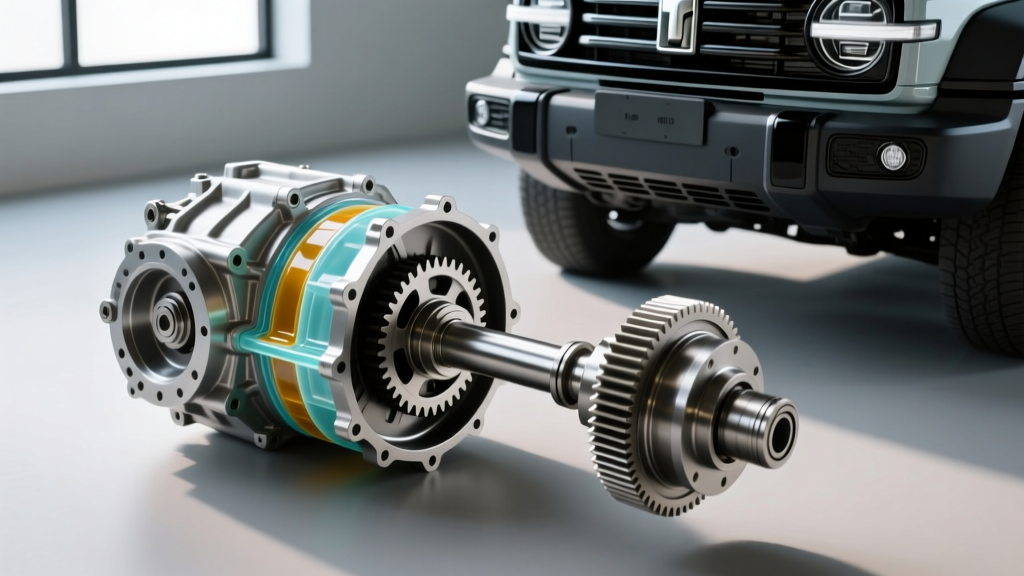
The transfer case is essentially a secondary transmission whose sole job is torque distribution and gear reduction. Modern transfer cases generally fall into two categories: chain-driven and gear-driven.
- Chain-Driven Cases (e.g., BorgWarner 4406, GM NV246): Common in independent front suspension (IFS) trucks and SUVs. They use a heavy-duty Morse chain to link the front and rear output shafts. They are lightweight, quiet, and capable of handling immense torque, but they are susceptible to chain stretch if the drivetrain experiences severe binding.
- Gear-Driven Cases (e.g., NP205, NP241OR): Found in heavy-duty applications and dedicated off-roaders like the Jeep Rubicon. They use cut steel gears to link the outputs. They are virtually bulletproof regarding stretch but are heavier and noisier.
Furthermore, transfer cases dictate whether the front and rear driveshafts are 'locked' together (Part-Time 4WD) or allowed to spin at different speeds (Full-Time 4WD/AWD via a center differential or viscous coupler). This operational mode is where the relationship with the front end differential becomes a matter of mechanical survival.
The Front End Differential: Navigating Steering and Suspension
Unlike the solidly mounted rear differential, the front end differential must accommodate steering angles, suspension articulation, and in the case of IFS vehicles, complex half-shaft CV joints. Whether you are running a solid Dana 44 axle or a GM 9.25-inch IFS differential, the front diff's primary job is to take the rotational force from the front driveshaft and turn it 90 degrees to spin the front wheels, while allowing the left and right wheels to rotate at different speeds during a turn.
According to Dana Spicer's engineering guidelines, the front differential ring and pinion gears endure unique shock loads because the front wheels are the first to strike obstacles, sending impact energy backward through the axle tubes, into the differential, and up the driveshaft.
The Crucial Relationship and the Danger of 'Drivetrain Wind-Up'
The most important concept for a beginner to understand regarding the transfer case and front end differential relationship is drivetrain wind-up (also known as axle binding). This phenomenon occurs when a Part-Time 4WD system is engaged on a high-traction surface like dry pavement.
When you shift a part-time transfer case into 4-High or 4-Low, a mechanical collar locks the front and rear output shafts together. They are now forced to spin at the exact same RPM. However, when a vehicle turns, the front wheels travel a wider arc than the rear wheels. The front driveshaft inherently 'wants' to spin faster than the rear driveshaft. Because the transfer case has locked them together, the rotational energy has nowhere to go. It stores itself as torsional stress (wind-up) in the drivetrain components.
Pro-Tip: Never drive a Part-Time 4WD vehicle on dry pavement in 4WD. The resulting drivetrain wind-up will seek the weakest mechanical link to release the stored energy, leading to catastrophic and expensive failures.
The Failure Cascade: What Breaks First?
When wind-up occurs, the stored energy will eventually violently release. Depending on your specific vehicle configuration, the failure will usually occur in one of three places:
- Transfer Case Chain Stretch or Case Rupture: In chain-driven cases like the NV261, the Morse chain will stretch, causing it to skip teeth on the drive sprockets. In extreme cases, the chain can snap and punctuate the aluminum transfer case housing. A replacement heavy-duty chain costs between $180 and $250, but labor and case replacement can push the bill past $1,500.
- Front U-Joint or CV Joint Explosion: The front driveshaft U-joints (often 1310 or 1350 series) or the IFS CV axle joints will physically shatter under the torsional twist. Replacing a front CV axle assembly typically costs $200 to $450 in parts.
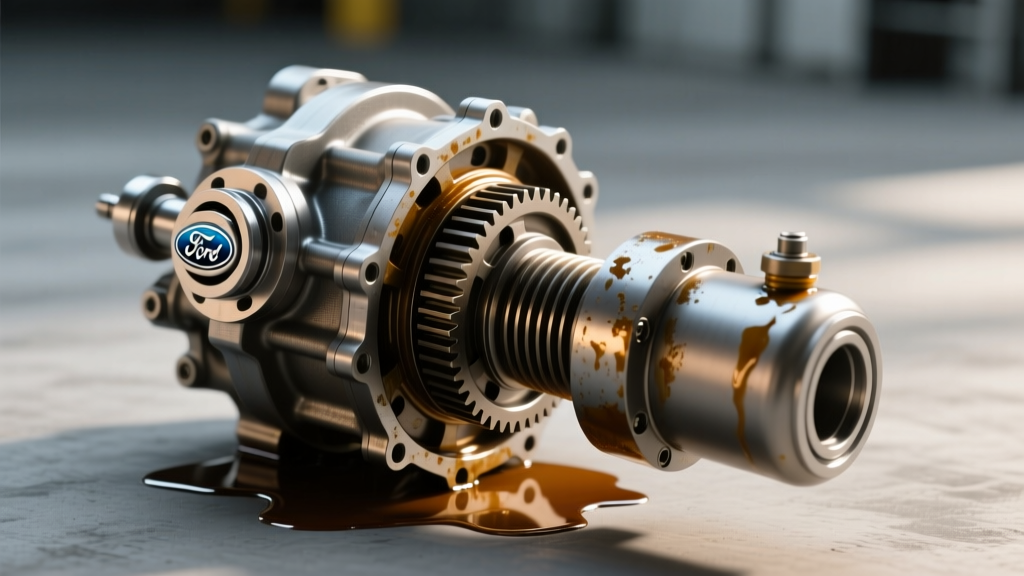
- Front End Differential Ring Gear Shearing: If the U-joints hold, the shock load transfers directly into the front end differential. The ring gear teeth can shear off, or the pinion bearing cage can collapse, requiring a complete differential rebuild costing $1,200 to $2,000.
Fluid Maintenance Matrix: Keeping the Partnership Healthy
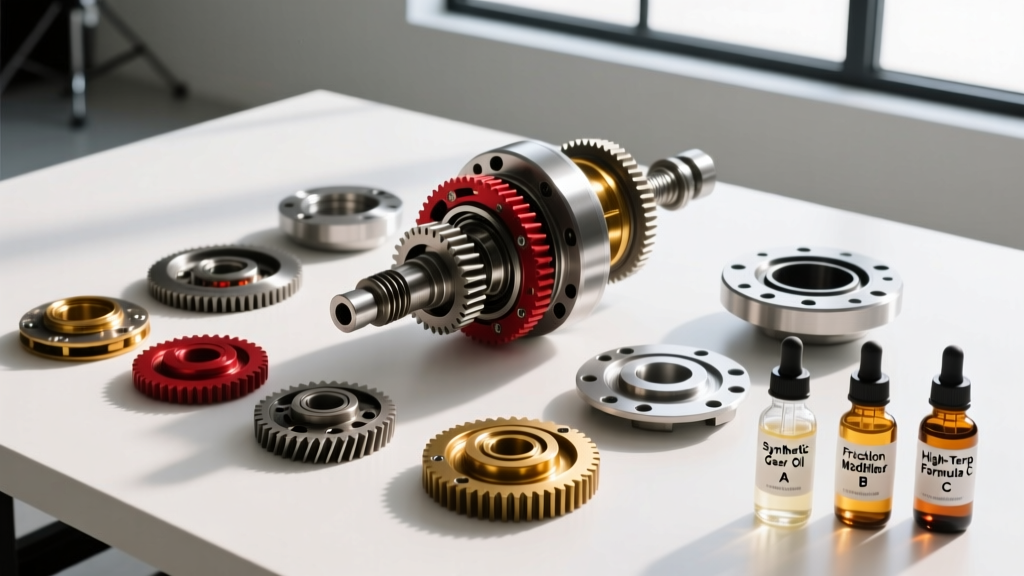
Because the transfer case and front end differential operate under vastly different thermal and mechanical stresses, they require entirely different lubrication strategies. The transfer case relies on fluid for hydraulic actuation (in active systems) and chain cooling, while the front differential requires extreme pressure (EP) additives to protect the sliding friction of hypoid gears.
| Component | Typical Fluid Specification | Average Capacity | Drain/Fill Plug Torque | Service Interval |
|---|---|---|---|---|
| Transfer Case (e.g., GM NV246) | GM AutoTrak II (P/N 88900401) | 2.0 Quarts | 15 lb-ft | 50,000 Miles |
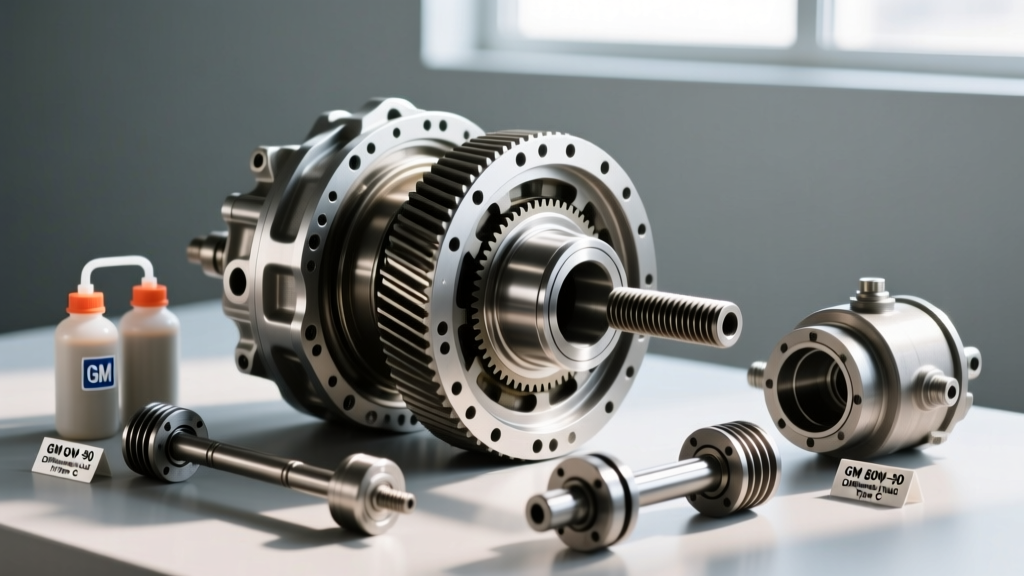
| Front End Diff (GM 9.25 IFS) | 75W-90 Synthetic GL-5 | 2.5 Pints | 24 lb-ft | 30,000 Miles |
| Front Diff (Dana 44 Solid) | 80W-90 GL-5 + Friction Modifier | 3.5 Pints | 25 lb-ft (Cover Bolts) | 30,000 Miles |
| Transfer Case (e.g., Jeep NV241) | ATF+4 or Dexron VI | 2.7 Quarts | 15-20 lb-ft | 60,000 Miles |
As highlighted by AMSOIL's technical lubrication guides, using standard GL-5 gear oil inside a chain-driven transfer case will destroy the friction clutches in the encoder motor system and fail to cool the chain adequately. Conversely, using ATF inside a hypoid front end differential will result in rapid gear wear due to a lack of extreme-pressure sulfur-phosphorus additives.
Real-World Troubleshooting: Diagnosing Relationship Failures
How do you know if the relationship between your transfer case and front end differential is failing? Listen to your vehicle and observe its behavior.
Symptom 1: Grinding or 'Crunching' in 4WD
If you shift into 4WD and hear a loud crunch, followed by a vibration that increases with speed, your transfer case shift collar may not be fully engaging, or the front differential actuator (CAD - Center Axle Disconnect) is failing to lock the passenger side axle shaft. The transfer case is sending power to a front driveshaft that isn't fully connected to the front end differential, causing the internal splines to grind.
Symptom 2: Chirping Tires and Steering Wheel Feedback
If you are driving on wet pavement or snow in 4WD and feel the steering wheel jerk violently while the front tires 'chirp' or hop during a turn, you are experiencing minor drivetrain wind-up. While snow provides enough slip to relieve the ultimate breaking point of the components, doing this frequently will accelerate wear on the front differential spider gears and stretch the transfer case chain.
Symptom 3: Whining Under Load (Coast vs. Drive)
A whining noise from the front of the truck that changes pitch when you let off the throttle indicates worn pinion bearings inside the front end differential. Because the front driveshaft is constantly spinning the pinion gear (even in 2WD on many modern trucks with auto-locking hubs), the front diff bearings endure continuous wear. If the transfer case U-joint is also worn, it will introduce a harmonic vibration that mimics a bad differential bearing, making accurate diagnosis vital before tearing into the axle.
Summary: Respecting the Mechanical Chain
The transfer case and the front end differential are not isolated components; they are two halves of a torque-multiplying equation. The transfer case dictates the rules of engagement, and the front end differential executes those rules while battling steering geometry and suspension travel. By understanding the physics of drivetrain wind-up, utilizing the correct application-specific fluids, and adhering to precise torque specifications during maintenance, you ensure that your 4WD system remains reliable, whether you are crawling over boulders or navigating a snowy mountain pass.