The Thermal Bottleneck in Modern Silverado Axles
As we navigate the 2026 landscape of heavy-duty towing and high-output powertrains, the thermal limits of factory drivetrain components are frequently exposed. Modern platforms, particularly those equipped with the L5P Duramax diesel or the L8T 6.6L naturally aspirated V8, generate immense low-end torque. This torque is ultimately multiplied and transferred through the hypoid ring and pinion gear set in the rear axle. The sliding friction inherent to hypoid gear geometry generates extreme localized heat, often pushing differential fluid temperatures past 250°F (121°C) during sustained grades or heavy towing. At these thresholds, conventional and even some synthetic gear oils experience rapid viscosity shear, leading to boundary lubrication failure and accelerated gear wear.
The primary culprit in this thermal mismanagement is the factory differential cover. General Motors utilizes stamped steel or smooth-cast aluminum covers on many Silverado 1500 and 2500HD models to meet strict NVH (Noise, Vibration, and Harshness) standards and cost targets. While adequate for unladen highway driving, these covers act as thermal insulators, trapping heat inside the axle housing. Upgrading this component is not merely an aesthetic choice; it is a critical mechanical intervention for any truck subjected to high gross combined weight ratings (GCWR).
Why Upgrade During a Chevy Silverado Differential Fluid Change?
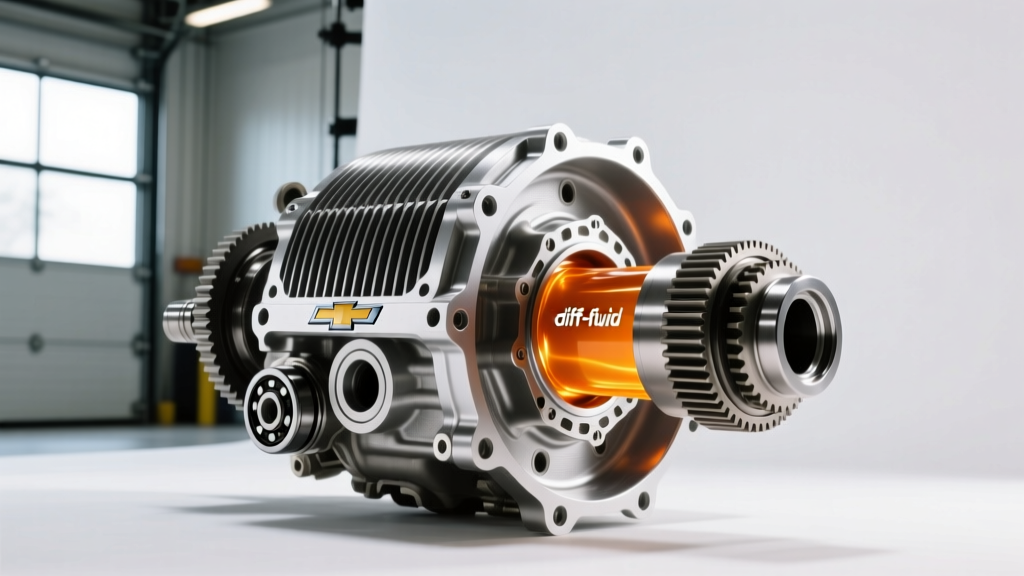
Executing a comprehensive Chevy Silverado differential fluid change provides the perfect mechanical catalyst for addressing this thermal bottleneck. Since the factory cover must be removed to drain the degraded gear oil and clean out metallic particulates, substituting it with a high-capacity, finned cast aluminum cover adds negligible labor time while exponentially increasing the axle's thermal dissipation capabilities. Furthermore, aftermarket covers typically increase the sump depth, allowing for a larger volume of gear oil. This increased fluid mass acts as a larger thermal buffer, delaying the onset of peak operating temperatures.
Thermodynamics of Stamped Steel vs. Cast Aluminum
To understand the engineering advantage, we must look at thermal conductivity metrics. Stamped steel has a thermal conductivity of approximately 50 W/m·K. In contrast, aerospace-grade cast aluminum (commonly A356-T6 alloy used in premium aftermarket covers) boasts a thermal conductivity of roughly 150 to 205 W/m·K. This means aluminum transfers heat away from the fluid and into the ambient air up to four times faster than steel. When you introduce external cooling fins, you are dramatically increasing the surface area exposed to chassis airflow, creating a passive heat exchanger effect.
| Axle Platform | Stock Cover Material | Stock Fluid Capacity | Aftermarket Finned Capacity | Surface Area Gain |
|---|---|---|---|---|
| GM 9.76" (1500 Series) | Stamped Steel | ~2.1 Quarts | ~2.8 Quarts | +45% to +60% |
| AAM 11.5" (2500HD/3500HD) | Smooth Cast / Stamped | ~3.4 Quarts | ~4.2 Quarts | +55% to +70% |
Axle-Specific Cooling Profiles and Part Data
Chevrolet Silverados utilize different axle architectures depending on the payload rating. Selecting the correct cover and understanding its specific cooling profile is vital for optimal fitment and performance.
Silverado 1500: GM 9.76" 10-Bolt Architecture
The light-duty Silverado 1500 typically employs the GM 9.76-inch (often referred to as the 10-bolt) rear axle. The factory stamped steel cover is notoriously thin and prone to warping if over-torqued, leading to persistent seepage. Upgrading to a finned aluminum cover, such as the PPE (Pacific Performance Engineering) Cast Aluminum Cover (Part # 321041000) or offerings from AFE Power, not only increases fluid capacity by nearly 0.75 quarts but also incorporates internal cooling fins. These internal fins disrupt fluid stagnation, ensuring that the oil splashing off the ring gear makes direct contact with the thermally conductive aluminum walls.
Silverado 2500HD/3500HD: AAM 11.5" 14-Bolt Architecture
Heavy-duty Silverados rely on the massive American Axle & Manufacturing (AAM) 11.5-inch 14-bolt rear end. While robust, the sheer mass of the hypoid gear set generates immense thermal inertia. For the AAM 11.5", the Mag-Hytec GM 11.5 AAM Cover or the AFE Power Cover (Part # 46-70152) are industry benchmarks. These covers feature deep sump designs and external fins oriented longitudinally. Longitudinal fin orientation is critical on the rear axle; as the truck moves forward, air is channeled directly down the length of the fins, maximizing convective heat transfer. Transverse fins, by contrast, can create turbulent boundary layers that actually reduce cooling efficiency at highway speeds.
Installation Protocol: Torque Specs and Sealing Methodologies
A failed seal will negate any thermal benefits, making the installation protocol just as important as the hardware itself. The debate between RTV silicone and pre-cut gaskets or O-rings is a common point of contention among drivetrain technicians.
Expert Technician Note: While Mag-Hytec utilizes a precision-machined O-ring groove that eliminates the need for chemical sealants, covers relying on RTV require meticulous surface preparation. Any residual oil on the axle housing mating surface will cause the RTV to fail under high sump pressures. Always clean both surfaces with brake parts cleaner and verify the O-ring or RTV bead does not protrude into the sump, where it could be ingested by the gear set and block the oil pickup or damage the pinion bearing.
Fastener Specifications and Torque Sequences
Over-torquing differential cover bolts is the leading cause of stripped threads in aluminum housings and warped flanges on steel housings. Always use a calibrated inch-pound or low-range foot-pound torque wrench.
- GM 9.76" (10-Bolt): Uses M8 bolts. Factory torque specification is 25 lb-ft (34 Nm). Utilize a star-pattern crisscross sequence to ensure even clamping force and prevent flange distortion.
- AAM 11.5" (14-Bolt): Uses M8x1.25 bolts. Factory torque specification is 22 lb-ft (30 Nm). Note: Some early AAM models utilized 3/8" hardware; verify thread pitch before applying final torque. If using RTV, allow a minimum of 4 hours of cure time before filling with fluid to prevent hydraulic blowout.
For RTV applications, Permatex Ultra Black (Part # 81878) or Loctite 598 are the specified sealants for high-oil, high-thermal environments. Avoid standard black silicones that lack the necessary oil resistance and structural rigidity required for deep-sump differential covers.
Fluid Selection for High-Thermal Environments
Upgrading the cover must be paired with the correct fluid chemistry. When performing your Chevy Silverado differential fluid change, the choice between 75W-90 and 75W-140 depends entirely on your GCWR and ambient operating environment.
For standard towing and daily driving, a high-quality 75W-90 synthetic, such as AMSOIL Severe Gear 75W-90, provides optimal fluid shear stability and minimizes parasitic drag, yielding slight fuel economy benefits. However, if your Silverado 2500HD is frequently towing fifth-wheel trailers exceeding 15,000 lbs in high-ambient summer temperatures, stepping up to a 75W-140 synthetic is mandatory. The thicker high-temperature film strength of a 140-weight oil prevents metal-on-metal contact at the hypoid sliding interface, though it requires the increased cooling capacity of an aftermarket finned cover to prevent the fluid from overheating due to internal viscous friction.
Authoritative References & Engineering Data
- AMSOIL Drivetrain & Gear Oil Engineering Specifications - Data on hypoid gear shear stability and thermal breakdown thresholds.
- Mag-Hytec Differential Cover Engineering - Technical diagrams on O-ring sealing tolerances and AAM 11.5" sump capacities.
- Pacific Performance Engineering (PPE) - Cast aluminum metallurgy and thermal conductivity metrics for GM 9.76" applications.