The Physics of Heavy-Duty Driveline Harmonics
When you are pushing 1,850 lb-ft of torque through a Class 8 powertrain, the drivetrain is subjected to immense torsional stress. Clutch chatter and violent cab vibrations during engagement are not just annoyances; they are symptomatic of harmonic resonance tearing through your driveline. Whether you are running a Cummins X15 or a Detroit DD15, the low-frequency, high-amplitude power pulses generated by heavy-duty diesel engines must be absorbed before they reach the transmission input shaft.
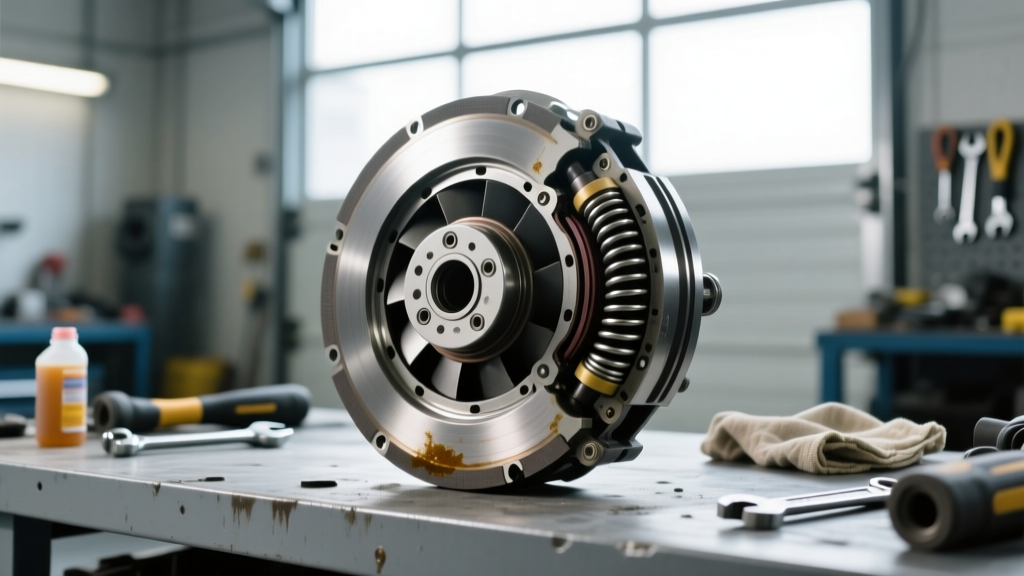
For owner-operators and fleet technicians focused on performance and longevity, understanding the root cause of this chatter is critical. Chatter occurs when the coefficient of friction between the clutch disc and the flywheel fluctuates rapidly during the engagement phase. This stick-slip phenomenon transfers torsional shock directly into the transmission gears, the driveshaft, and ultimately the cab mounts. When Eaton and other heavy-duty manufacturers design clutch systems, they rely on complex dampener springs to mitigate these forces. However, when performance upgrades are introduced—or when routine maintenance is neglected—those harmonics escape containment.
Performance Friction Materials and Chatter Propensity
Upgrading your clutch to handle higher torque loads often means changing the friction material. While organic faces provide smooth, forgiving engagement, they slip and burn under the extreme thermal loads of heavy hauling or high-horsepower performance builds. Consequently, many operators upgrade to ceramic or sintered iron materials. While these materials offer superior heat tolerance and torque capacity, they are inherently more aggressive, drastically increasing the propensity for clutch chatter if the rest of the driveline is not perfectly prepped.
| Material Type | Friction Coefficient | Heat Tolerance | Chatter Propensity | Best Application |
|---|---|---|---|---|
| Organic (Full Face) | 0.30 - 0.35 | Up to 500°F | Low | Standard OTR Highway Fleet |
| Ceramic (Puck/Button) | 0.45 - 0.55 | Up to 900°F | High | Heavy Haul, High-Torque Performance |
| Kevlar / Carbon | 0.35 - 0.40 | Up to 750°F | Medium | Stop-and-Go Vocational, Autocross |
| Sintered Iron | 0.55+ | 1000°F+ | Extreme | Truck Pulling, Drag Racing |
Step-by-Step Diagnosis: Isolating the Vibration Source
Before you start turning wrenches or pulling the transmission, you must isolate the variable causing the stick-slip vibration. Chatter is rarely caused by the friction disc alone; it is usually a symptom of a secondary mechanical failure altering the engagement geometry.
Flywheel Runout and Resurfacing Limits
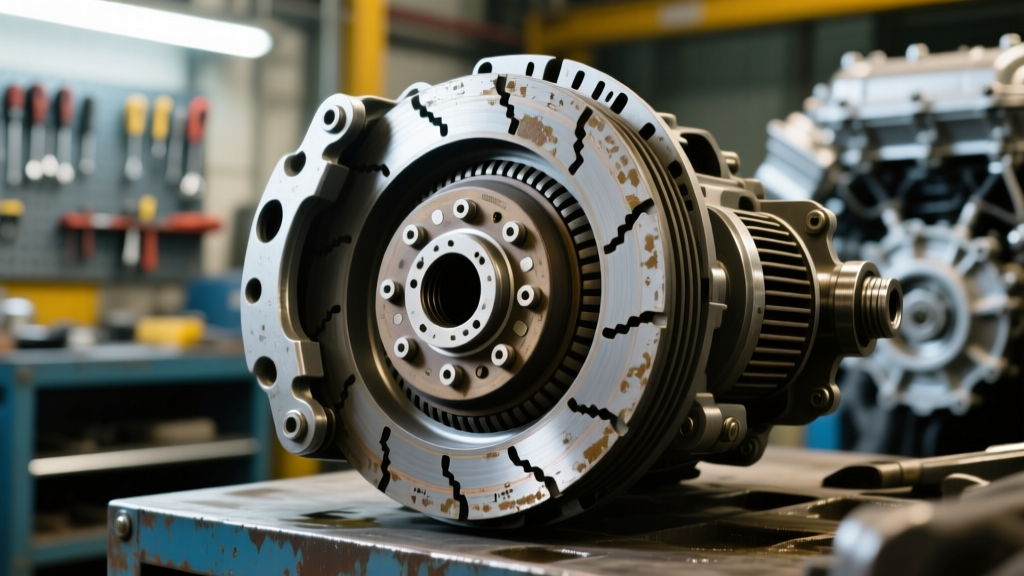
A warped flywheel is the number one culprit for severe clutch chatter in heavy-duty applications. When upgrading to a high-performance ceramic disc, the tolerance for flywheel imperfection drops to near zero. You must mount a dial indicator on the engine block and measure the flywheel face runout. For Class 8 applications, the maximum allowable runout is typically 0.005 inches. If the runout exceeds this, the clutch disc will engage unevenly, grabbing and releasing in rapid succession. Furthermore, ensure the flywheel is not worn past its minimum thickness specification (often stamped on the housing, usually around 0.030 inches of maximum removable material). If you are running a dual-mass flywheel (DMF) on a lighter vocational truck, check for internal spring collapse, which manifests as a distinct rattle at idle and violent shudder upon engagement.
Driveline Angles and U-Joint Phasing
Clutch chatter can be amplified or even mimicked by improper driveline angles. The working angles of the universal joints must be parallel and within 1 degree of each other to cancel out velocity fluctuations. If your engine mounts are collapsed, the engine sits lower, altering the transmission output angle relative to the rear differential. Use a digital angle finder on the transmission output shaft and the driveshaft. If the angles are out of phase, the resulting vibration will feel exactly like clutch chatter during low-speed, high-torque engagement.
Engine and Transmission Mount Deflection
Diesel engines produce massive torque roll. When you apply throttle and release the clutch, the engine physically twists in the chassis. If the engine or transmission mounts are degraded, this torque roll shifts the entire powertrain, momentarily misaligning the clutch disc on the input shaft. Inspect the mounts for hydraulic fluid leaks or cracked rubber. Torque all mount-to-block and mount-to-frame bolts to OEM specifications (typically 150-200 lb-ft for heavy-duty chassis hardware).
Adjusting Clutch on Semi Truck: Free Play and Brake Specs
When it comes to adjusting clutch on semi truck configurations, precision is non-negotiable. The most common heavy-duty setup in North America is the Eaton Fuller Solo Advantage series (e.g., the 15.5-inch twin-plate models). Incorrect adjustment not only causes premature release bearing failure but also induces chatter by preventing the clutch brake from functioning correctly, leading to gear clash and harsh engagements.
Expert Tech Note: Never adjust the clutch linkage to compensate for a worn clutch brake or a failing release fork. The Solo clutch wear indicator tab must be monitored. When the tab drops into the inspection window slot, the clutch is worn out and requires replacement, regardless of how much pedal free play you can artificially dial in.
To properly adjust an Eaton Solo clutch and eliminate engagement shudder, follow these exact parameters:
- Pedal Free Play: You must maintain exactly 1.5 inches (38mm) of free play at the top of the clutch pedal. This ensures the release bearing completely disengages from the clutch brake when driving, preventing drag and harmonic vibrations at highway speeds.
- Clutch Brake Squeeze: When the pedal is fully depressed to the floor, the gap between the release bearing and the clutch brake should be between 1/2 inch and 9/16 inch (12.7mm - 14.3mm). This 'squeeze' stops the transmission input shaft instantly, allowing for smooth, chatter-free gear engagement from a dead stop.
- Linkage Adjustment: Adjust the external turnbuckle on the clutch linkage to achieve the 1.5-inch free play. Do not adjust the internal clutch cover bolts unless performing a complete rebuild.
Performance Upgrades: Dual-Disc and Polyurethane Dampeners
If you have verified the flywheel runout, corrected the driveline angles, and confirmed the pedal free play is within spec, but chatter persists, it is time to evaluate your clutch assembly's torsional dampening capabilities. Upgrading to a high-torque, multi-plate setup requires matching the dampener springs to the engine's specific firing harmonics.
For high-horsepower builds pushing beyond 2,050 lb-ft, standard steel coil springs in the clutch disc can suffer from coil bind or fatigue. The performance upgrade path involves utilizing clutch discs equipped with polyurethane-encapsulated dampeners or multi-stage torsional springs. These advanced dampeners absorb the initial low-frequency diesel pulses progressively, softening the engagement and virtually eliminating the stick-slip chatter associated with aggressive ceramic friction materials.
Additionally, consider upgrading your release fork and cross-shaft assembly. Heavy-duty performance clutches require significantly higher pedal effort and clamp load. Factory stamped-steel forks can flex under the 2,500+ lbs of clamp load generated by high-performance pressure plates. This flex alters the engagement geometry dynamically, causing the disc to engage at a slight angle. Upgrading to a forged steel or billet aluminum release fork ensures rigid, linear actuation, providing the smooth, predictable engagement required for heavy-haul performance applications.
By combining meticulous diagnostic procedures with targeted performance upgrades, you can transform a violent, chatter-prone drivetrain into a smooth, reliable torque-transfer system capable of handling the most extreme Class 8 demands.