The Physics of the Scat Pack Rear Differential Ratio
When enthusiasts discuss the 6.4L HEMI V8’s 485 horsepower and 475 lb-ft of torque, the conversation rarely shifts to the unsung hero managing that rotational force: the rear axle. Specifically, the scat pack rear differential ratio dictates not only your vehicle's acceleration profile but also the sheer mechanical and thermal stress placed upon the Limited Slip Differential (LSD). As of the 2026 model year, Stellantis continues to utilize the robust ZF-sourced 226mm rear axle assembly across the Challenger and Charger Scat Pack lineups, but the internal gearing varies significantly based on your transmission and body package.
Understanding your specific ratio is the first step in understanding your differential's maintenance needs. The standard Scat Pack equipped with the ZF 8HP70 8-speed automatic transmission typically ships with a 3.09:1 final drive ratio. Conversely, the Tremec TR-6060 6-speed manual models, as well as the Widebody variants equipped with the Super Track Pak, are frequently optioned with a much more aggressive 3.73:1 ratio.
Why does this matter for differential fluid and LSD maintenance? Torque multiplication. The engine's 475 lb-ft of torque is multiplied by the transmission's first gear ratio (roughly 4.71:1 in the ZF 8HP) and then multiplied again by the rear differential ratio. In a 3.73-equipped Scat Pack, the ring gear and pinion are subjected to over 7,800 lb-ft of theoretical torque at the point of maximum launch traction. This immense load generates severe shear forces and thermal spikes within the differential housing, directly accelerating the degradation of your gear oil and the wear of your LSD clutch packs.
Inside the 226mm Axle: Clutch-Pack LSD Operation
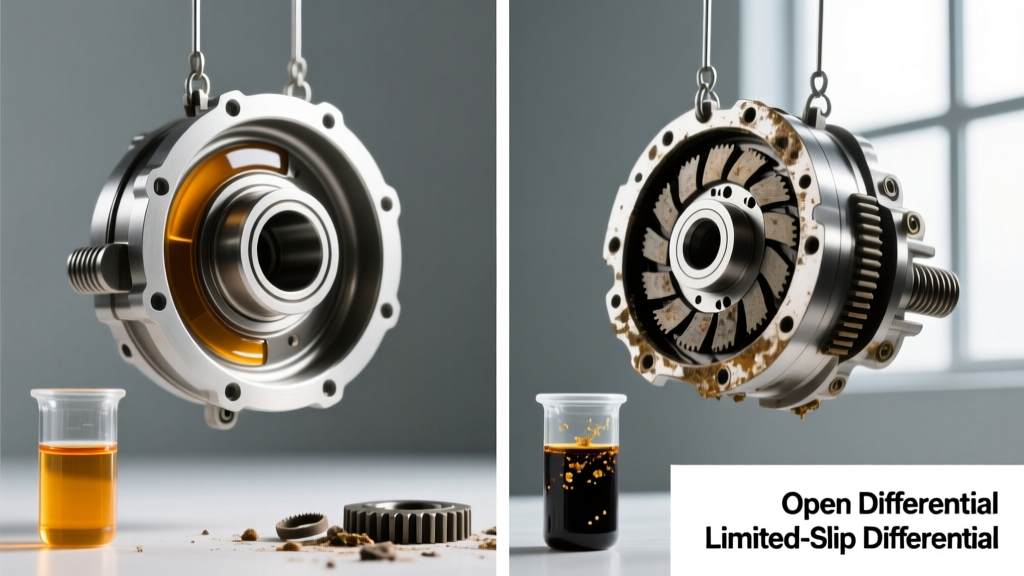
To properly maintain the system, you must understand how the factory Scat Pack LSD operates. Unlike the helical (Torsen-style) gear-driven differentials found in some specialized SRT applications or aftermarket upgrades, the standard OEM Scat Pack 226mm axle utilizes a mechanical clutch-type limited slip differential.
Inside the differential carrier, a series of alternating friction discs (clutches) and steel reaction plates are stacked behind the side gears. These packs are preloaded by S-shaped or V-shaped wave springs. When driving in a straight line, both axles turn at the same speed, and the clutch packs remain relatively static. However, when one wheel loses traction and begins to spin faster than the other, the internal side gears rotate relative to the carrier. This relative motion forces the side gear thrust blocks to wedge against the clutch packs, compressing them and locking the axles together to transfer torque to the wheel with grip.
Expert Insight: The clamping force of a clutch-type LSD is directly proportional to the input torque. The harder you accelerate, the tighter the clutch packs clamp. This is why high-torque launches on a 3.73 ratio setup generate immense friction and heat inside the clutch packs, making specialized fluid chemistry an absolute necessity.
Fluid Specifications and the Friction Modifier Debate
The most common mistake owners make during a rear differential service is ignoring the chemical requirements of the clutch-type LSD. Standard GL-5 gear oil is formulated with extreme pressure (EP) additives—typically sulfur-phosphorus compounds—designed to protect the hypoid ring and pinion gears from wiping under high sliding pressures. However, these EP additives do nothing to manage the friction coefficient of the clutch packs.
According to AMSOIL's technical documentation on differential lubrication, without a specialized friction modifier, the clutch packs will experience 'stick-slip' engagement. This manifests as a violent shuddering or chatter during low-speed, tight-radius turns (like pulling into a driveway), which will rapidly glaze and destroy the friction discs.
The OEM Fluid Prescription
- Base Gear Oil: Mopar 75W-85 API GL-5 Gear & Axle Lubricant (Part # 68218655AA) or an equivalent high-quality synthetic 75W-90 GL-5. While 75W-90 is thicker and offers slightly better thermal protection for track use, the factory 75W-85 is optimized for cold-weather flow and factory fuel economy standards.
- Friction Modifier: Mopar Limited Slip Additive Friction Modifier (Part # 4318060AD). You must add exactly 4 fluid ounces (118 ml) of this modifier to the axle during the fluid fill.
- Total Capacity: The 226mm rear axle holds approximately 1.15 Liters (2.4 pints) of total fluid volume.
The 2026 Maintenance Protocol: Step-by-Step Exchange
Unlike older solid-axle designs with a bolt-on differential cover, the modern ZF 226mm axle is a clamshell/cartridge design featuring dedicated drain and fill plugs on the rear-facing side of the differential housing. This makes the service cleaner but requires specific tools and adherence to torque specifications.
Required Tools and Materials
- 3/8-inch drive hex socket (for fill and drain plugs)
- Calibrated inch-pound torque wrench
- Manual fluid transfer pump
- 2 quarts of 75W-85 or 75W-90 GL-5 Synthetic Gear Oil
- 1 bottle of Mopar LSD Friction Modifier (Part # 4318060AD)
- Brass wire brush and brake cleaner
Service Procedure
- Preparation: Drive the vehicle for 10-15 minutes to bring the differential fluid up to operating temperature. Warm fluid drains faster and carries more suspended metallic particulates out of the housing. Park on a level surface and safely support the rear axle on jack stands. Never perform this service with the vehicle hanging by the rear control arms, as the axle rotation will alter the fill level.
- Remove the Fill Plug FIRST: Using your 3/8-inch hex socket, remove the upper fill plug. This is a critical rule of differential maintenance; if you drain the fluid and subsequently find the fill plug seized or stripped, the vehicle is immobilized.
- Drain the Fluid: Place a catch pan beneath the lower drain plug and remove it. Allow the fluid to drain completely. Inspect the magnetic tip of the drain plug. A fine, dark metallic paste is normal wear. Large shards or chunks of metal indicate catastrophic ring gear or bearing failure.
- Install Drain Plug: Clean the plug threads and magnetic tip. Reinstall the drain plug and torque it to 33 Nm (24 lb-ft).
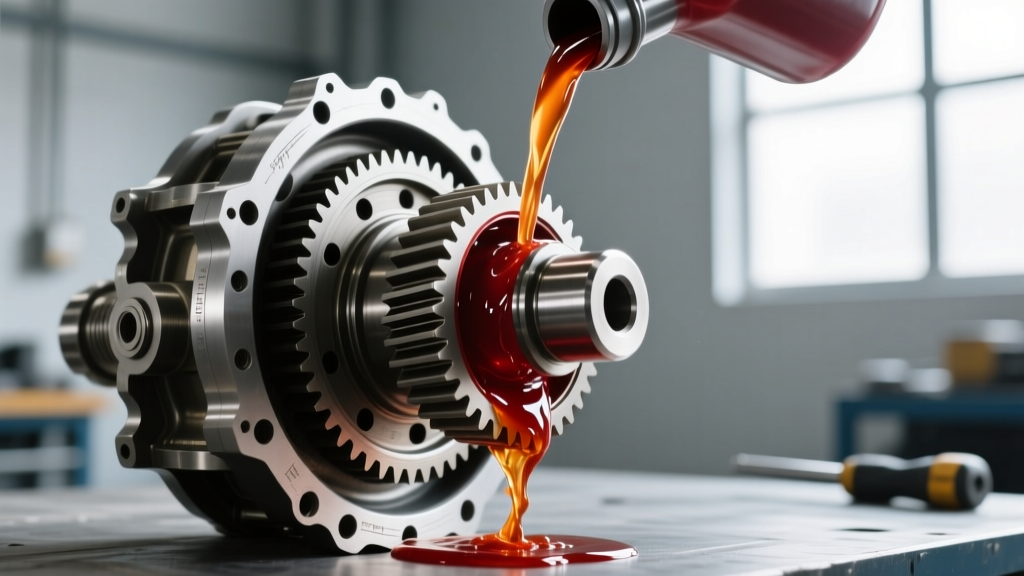
- Add Friction Modifier: Pour the 4 oz bottle of Mopar Friction Modifier directly into the fill hole using a funnel or small tube.
- Fill with Gear Oil: Use your manual pump to transfer the GL-5 gear oil into the fill hole. The axle is full when the fluid reaches the exact bottom lip of the fill hole threads and begins to weep out. Expect to use roughly 1.15 Liters.
- Install Fill Plug: Reinstall the upper fill plug and torque to 33 Nm (24 lb-ft).
Ratio, Torque, and Service Interval Matrix
Not all Scat Packs live the same life. Your maintenance interval should be dictated by your specific scat pack rear differential ratio and your driving habits. Higher numerical ratios multiply torque more aggressively, increasing thermal breakdown of the fluid.
| Application Profile | Differential Ratio | Peak Ring Gear Torque | Recommended Service Interval |
|---|---|---|---|
| Highway / Daily Commuter | 3.09:1 (Auto) | ~6,100 lb-ft | Every 30,000 miles or 3 years |
| Aggressive Street / Canyon | 3.73:1 (Manual/Widebody) | ~7,800 lb-ft | Every 15,000 miles or 1.5 years |
| Track Days / Drag Strip | 3.73:1 or 3.92:1 | ~7,800+ lb-ft | Every 3-5 track events or 3,000 miles |
Diagnosing LSD Chatter and Wear
If you have completed the fluid exchange using the correct GL-5 oil and the precise 4 oz of friction modifier, but still experience binding, hopping, or chattering from the rear axle during low-speed turns, further diagnosis is required. According to Mopar's official drivetrain service guidelines, persistent chatter after a proper fluid service indicates that the friction discs have become glazed or the wave springs have fatigued, losing their preload.
The Figure-8 Diagnostic Test
Find an empty, safe parking lot. Roll the windows down and turn the steering wheel to full lock. Drive the vehicle in a continuous figure-8 pattern at 3 to 5 mph. Listen to the rear axle. A smooth, quiet rotation indicates healthy clutch packs. A rhythmic 'thump-thump-thump' or violent shudder means the clutch packs are failing to slip smoothly. At this stage, no amount of friction modifier will save the differential; the carrier must be removed, and the clutch packs (and potentially the side gears) must be replaced or rebuilt by a drivetrain specialist.
By respecting the immense forces generated by your specific Scat Pack rear differential ratio and adhering to strict fluid chemistry protocols, you ensure that the 226mm axle continues to put the 6.4L HEMI's power to the pavement reliably for years to come.