The Thermal Reality of the Ridgeline's Rear Differential
When enthusiasts transition from traditional body-on-frame trucks to Honda’s unibody platform, they quickly realize that the independent rear suspension (IRS) requires a completely different maintenance mindset. Performing a Honda Ridgeline rear differential fluid change is not just about swapping out old gear oil; it is a critical thermal management procedure for one of the most complex all-wheel-drive systems on the market: the VTM-4 (Variable Torque Management) and its successor, the i-VTM4.
Unlike a solid-axle Dana 44 or Ford 8.8 where the differential acts as a massive, oil-bathed heat sink, the Ridgeline’s rear differential is a compact, aluminum-housed unit mounted directly to the rear subframe. Because it relies on electromagnetic or hydraulic clutch packs to vector torque to the rear wheels, heat generation is exponential during wheel slip, heavy towing, or low-speed off-road crawling. Understanding how the differential housing manages this heat—and why the fluid itself is the primary cooling medium—is essential for drivetrain longevity in 2026 and beyond.
Anatomy of the VTM-4 and i-VTM4 Housing: Why There is No 'Drop Cover'
A frequent question on the Ridgeline Owners Club Technical Archives involves the search for an upgraded, finned differential cover to improve cooling. Coming from the Jeep or Chevy truck world, owners expect to unbolt a 10-bolt or 12-bolt stamped steel cover, clean out the pumpkin, and install an aftermarket deep-pan cover with cooling fins.
Cast Aluminum vs. Stamped Steel: The Sealed Clamshell Design
The Honda Ridgeline does not have a serviceable differential cover. The rear differential housing is a two-piece cast aluminum (typically A356-T6 alloy) clamshell. The 'cover' is actually a structural half of the differential casing, machined to exact tolerances and sealed at the factory using Honda Bond (a specialized liquid RTV gasket maker).
Expert Warning: Attempting to pry apart the Ridgeline’s rear differential housing to clean the interior or install an aftermarket cover will destroy the factory seal, misalign the ring and pinion gear mesh, and lead to catastrophic bearing failure. There is no bolt-on finned cover upgrade for this platform.
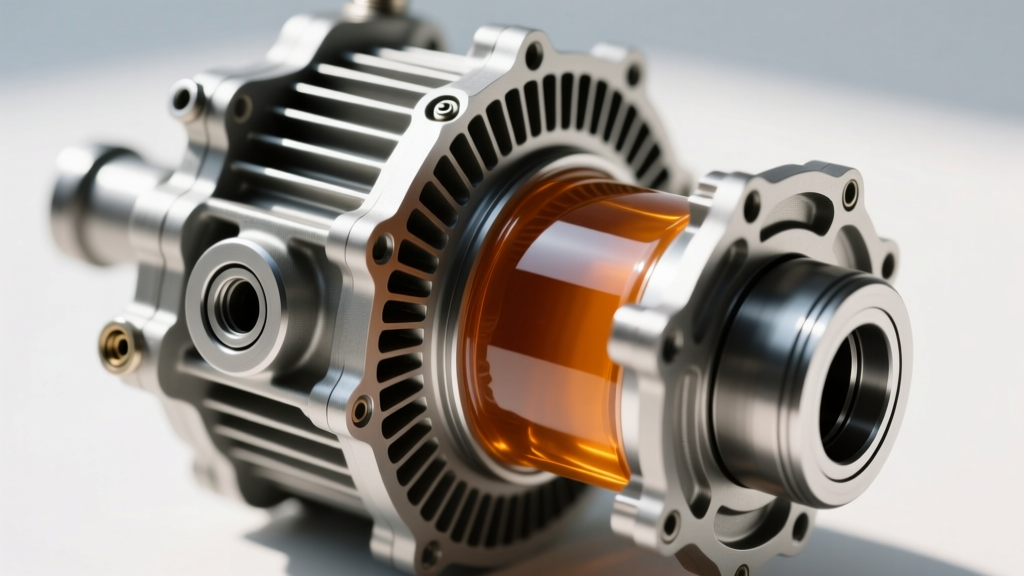
Because the housing is permanently sealed, internal cleaning and thermal management must be accomplished entirely through fluid evacuation and replenishment. The exterior of the housing features cast-in cooling ribs designed to interact with the aerodynamic underbody airflow, but the true cooling work is done by the proprietary fluid acting as a hydraulic and thermal transfer medium.
Thermal Management and Clutch Pack Survival
The genius—and the vulnerability—of the Ridgeline’s AWD system lies in its clutch packs. In the Gen 1 VTM-4 system, electromagnetic coils engage the clutches. In the Gen 2 i-VTM4 (standard through the 2026 model year), an internal hydraulic pump and intelligent valve body manage clutch engagement, allowing for true torque vectoring across the rear axle.
When these clutches slip to transfer torque, they generate immense friction. The differential fluid must absorb this heat and carry it to the aluminum housing fins. If the fluid temperature exceeds 240°F (115°C), the specialized friction modifiers in the fluid begin to break down. This degradation leads to the infamous 'figure-8 groan'—a shuddering, binding noise heard during tight, low-speed turns, indicating that the clutches are no longer engaging and disengaging smoothly due to compromised fluid dynamics.
| Operating Condition | Estimated Diff Fluid Temp | Fluid Shear Stability | Cooling Mechanism Reliance |
|---|---|---|---|
| Highway Cruising (AWD Standby) | 120°F - 140°F | Optimal (100%) | Passive Housing Fins |
| Towing Max Load (5,000 lbs) | 180°F - 210°F | High (85%) | Housing Fins + Fluid Thermal Mass |
| Low-Speed Off-Road / Wheel Slip | 220°F - 260°F+ | Severe Degradation Risk | Fluid Convection (Requires Immediate Change) |
Step-by-Step Honda Ridgeline Rear Differential Fluid Change
Because you cannot drop a cover to inspect the gears, the drain plug serves as your only window into the differential’s mechanical health. Adhering to the Honda Owners Official Maintenance Portal guidelines is critical, but severe-duty towing requires cutting the factory 30,000-mile interval down to 15,000 miles.
Required Tools and OEM Part Numbers
- Gen 1 (2006-2014) VTM-4 Fluid: Honda P/N 08200-9003 (Requires ~3.0 Quarts)
- Gen 2 (2017-2026) i-VTM4 Fluid: Honda P/N 08200-9010 (Requires ~2.6 Quarts)
- Crush Washers: Honda P/N 90471-PX4-000 (Qty: 2 - Mandatory for both drain and fill plugs)
- Tools: 17mm socket, 3/8-inch drive ratchet (for fill plug), fluid transfer pump, torque wrench.
The Drain, Inspect, and Fill Protocol
- Level the Vehicle: The Ridgeline must be perfectly level on jack stands or a lift. The i-VTM4 internal hydraulic pump and fluid galleries will not drain correctly if the vehicle is tilted.
- Remove the FILL Plug First: Located on the passenger side of the housing. Use a 3/8-inch drive ratchet or a 17mm socket depending on the exact year. Never remove the drain plug before confirming the fill plug is free.
- Remove the DRAIN Plug: Located at the lowest point of the housing. Use a 17mm socket.
- Magnetic Plug Analysis: The drain plug features a magnetic tip. A fine, metallic gray paste is normal gear wear. However, if you find distinct metal flakes, chunks, or bronze-colored shavings, the internal thrust bearings or clutch baskets are failing, and a teardown is required.
- Install Drain Plug: Wipe the magnet clean, install a new crush washer, and torque to 29 lb-ft (39 Nm).
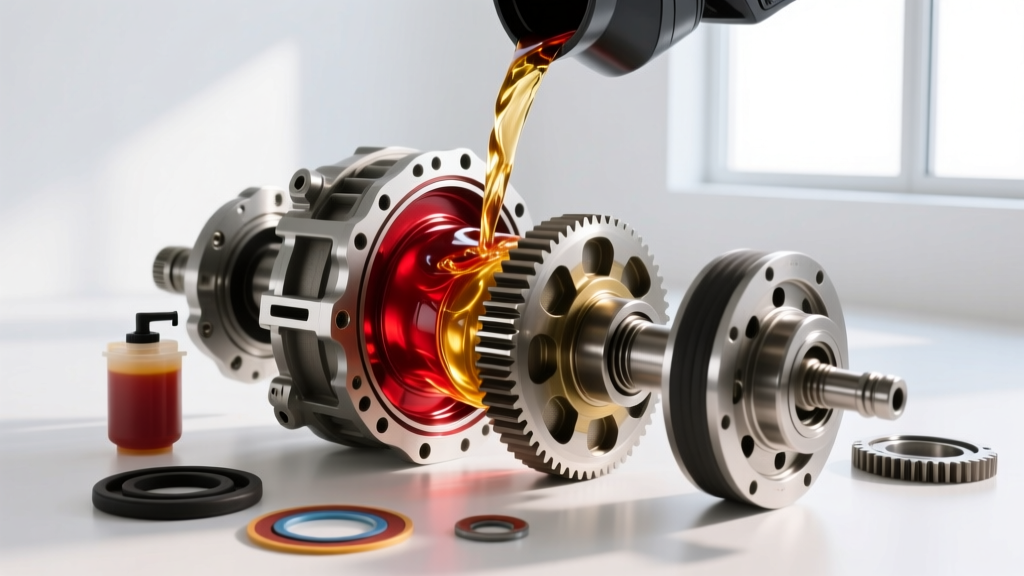
- Pump in Fresh OEM Fluid: Use a transfer pump to push the fluid into the fill hole. Continue pumping until the fluid begins to weep out of the bottom edge of the fill hole.
- Install Fill Plug: Wipe the threads, install the second new crush washer, and torque to 29 lb-ft (39 Nm).
Differential Cooling Upgrades: Do You Need an External Cooler?
Given the impossibility of swapping the differential cover for a finned aftermarket unit, owners who routinely tow near the Ridgeline’s 5,000-pound limit in mountainous terrain often ask about external cooling solutions.
In the heavy-duty truck segment, external differential coolers (which utilize a small 12V pump to draw fluid from the axle, push it through a finned heat exchanger, and return it) are common. However, adapting these to the Ridgeline’s sealed VTM-4/i-VTM4 housing is highly discouraged. Drilling and tapping the aluminum clamshell to install AN fittings compromises the structural integrity of the housing and introduces a high risk of contaminating the sensitive electromagnetic/hydraulic valves with metal shavings.
Instead of hardware modifications, the ultimate 'cooling upgrade' for the Ridgeline is strict adherence to fluid chemistry. Using generic 75W-90 synthetic gear oil will destroy the system. The OEM Honda VTM-4 and i-VTM4 fluids contain proprietary friction modifiers and anti-foaming agents specifically calibrated to the thermal expansion rates of the Honda clutch packs. The fluid's high specific heat capacity is the engineered solution to the housing's cooling limitations.
Expert Verdict: Maintenance Intervals for Towing and Off-Road
The Honda Ridgeline rear differential is an engineering marvel that prioritizes packaging efficiency and on-road dynamics over the brute-force thermal mass of a solid axle. Because the 'cover' is a permanent structural component, your only defense against thermal degradation is proactive fluid maintenance.
If your 2026 Ridgeline is equipped with the factory tow package and you regularly pull a camper or boat, treat the rear differential fluid as a severe-wear item. Drop the fluid every 15,000 miles, always use fresh OEM crush washers, and never deviate from Honda’s proprietary fluid formulations. By respecting the thermal limits of the VTM-4 and i-VTM4 systems, you will ensure the rear axle remains whisper-quiet and fully capable of vectoring torque exactly when you need it most.