Decoding the P90X CVT: Why the Stock Setup Falls Short
When Polaris introduced the 2019 RZR XP 1000, it brought a significant revision to the drivetrain: the P90X primary clutch. Designed to manage the aggressive torque curve of the 999cc ProStar twin-cylinder engine, the P90X features a one-piece forged spider and a revised roller geometry compared to the older EBS systems. However, as enthusiasts push the platform with 30-inch to 35-inch paddles, heavy dune setups, and big-turbo kits, the factory calibration quickly reaches its limits. Belt slip, excessive heat, and sluggish backshifting become prevalent.
While traditional manual transmissions rely on a literal clutch disc and pressure plate, the Continuously Variable Transmission (CVT) in the RZR utilizes sheave faces and a drive belt as the functional equivalents. Upgrading your 2019 rzr xp 1000 clutch kit is not just about swapping springs; it is about recalibrating the entire friction and mass system to match your specific vehicle weight, tire diameter, and operating elevation.
CVT Friction Surfaces: The Functional Equivalent of Clutch Discs
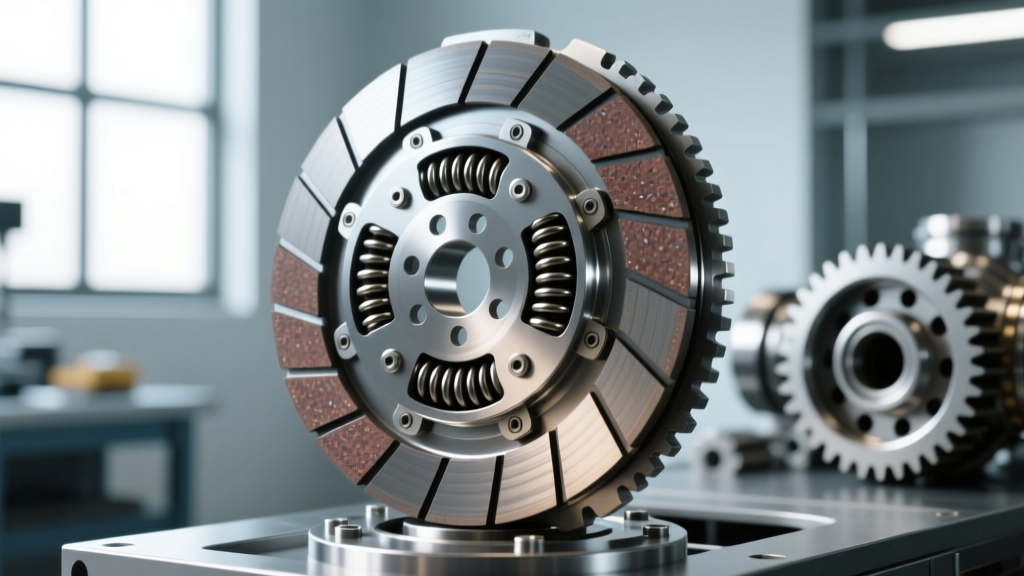
In the context of the "Clutch Disc, Plate & Components" category, it is vital to understand how a CVT transfers power. The drive belt acts as the flexible clutch disc, while the primary and secondary sheave faces act as the pressure plate and flywheel mating surfaces. If the friction coefficient between the belt and the machined aluminum sheaves drops, you experience the CVT equivalent of a slipping clutch disc.
Sheave Resurfacing and Belt Compounds
By 2026, belt technology has advanced significantly. The stock Gates belt is adequate for trail riding, but severe-duty applications require Aramid (Kevlar) or carbon-cord reinforced belts like the Gates FleetRunner Extreme or EPI Severe Duty lines. These belts feature a higher friction coefficient and resist the tensile stretching that causes catastrophic delamination under high-load WOT (Wide Open Throttle) scenarios.
Expert Insight: Before installing any new clutch kit, measure your sheave faces for runout and wear steps. A wear step deeper than 0.020 inches on the primary sheave face will prevent proper belt seating, mimicking a worn clutch disc that refuses to fully engage. Resurfacing or replacing the sheaves is mandatory for high-horsepower builds.
Anatomy of a High-Performance Clutch Kit Calibration
A comprehensive upgrade requires balancing three distinct variables: primary mass (weights/rollers), primary/secondary spring rates, and the secondary helix angle. Below is a baseline tuning matrix for the 2019 RZR XP 1000 P90X system, based on data synthesized from EPI Engineering and real-world dyno testing.
| Application / Tire Size | Primary Spring (Rate lb/in) | Secondary Spring (Rate lb/in) | Secondary Helix | Weight Profile (Dalton P90X-T) |
|---|---|---|---|---|
| Stock / 29" Trail | 140 / 220 (OEM) | 200 / 300 (OEM) | 50 / 37 | Base Profile (Stock) |
| 30" - 31" All-Terrain | 165 / 240 | 220 / 330 | 52 / 40 | Mid-Range Curve (+2g tip) |
| 32" - 33" Mud / Dune | 180 / 260 | 240 / 360 | 54 / 42 | Aggressive Tip (+4g tip) |
| 34"+ Paddle / Big Turbo | 200 / 280 | 260 / 400 | 56 / 44 | Max Mass / Custom Cut |
Understanding the P90X Weight Geometry
Unlike older systems that used simple cylindrical rollers, the P90X utilizes a pivoting weight shoe. Upgrading to a tunable weight system, such as the Dalton P90X-T, allows you to add or remove mass at specific radial points. Adding mass to the tip of the weight increases the centrifugal force at lower RPMs, forcing the primary sheave to close faster and overcoming the rotational mass of larger tires. Conversely, removing tip weight keeps the RPMs higher for dune or desert racing where top-end belt ratio is critical.
Installation: Torque Specs, Pullers, and Tooling
Improper installation of CVT components is a leading cause of catastrophic drivetrain failure. The crankshaft and jackshaft threads on the 999cc ProStar engine are highly susceptible to cross-threading and stripping if the correct pullers and torque sequences are not used. Always reference the latest service bulletins on RZR Forums for community-verified tooling updates.
Required Tooling
- Primary Clutch Puller: M12 x 1.0 thread pitch. (Do not use the older EBS puller; the P90X spider requires a specific contact depth to avoid damaging the internal threads).
- Secondary Clutch Puller: M10 x 1.25 thread pitch.
- Clutch Compression Tool: Essential for safely compressing the primary spring to remove the spider and access the weights without the spring explosively separating.
- Torque Wrench: Capable of measuring up to 100 ft-lbs with a fresh calibration.
Critical Torque Specifications
When reinstalling your upgraded 2019 RZR XP 1000 clutch kit components, adherence to factory torque specs is non-negotiable. The rotational inertia generated at 8,500 RPM will easily back out an under-torqued bolt, leading to a destroyed crankshaft.
- Primary Clutch to Crankshaft: 70 ft-lbs (95 Nm). Apply a medium-strength threadlocker (Loctite 243) to the bolt threads. Ensure the crankshaft taper is completely free of oil and debris before seating the clutch.
- Secondary Clutch to Jackshaft: 60 ft-lbs (81 Nm). Apply Loctite 243. Verify that the secondary slides smoothly on the jackshaft splines without binding before final tightening.
- Primary Spider (if removed for weight adjustment): 120 ft-lbs. This requires a specialized spider holding tool to prevent twisting the one-piece forged housing.
Top Aftermarket Kits Evaluated for 2026
The market is saturated with "universal" CVT kits, but the P90X demands platform-specific engineering. Here is how the top contenders stack up for the 2019+ XP 1000 platform:
1. Dalton Industries P90X Tunable Kit
Dalton remains the gold standard for weight geometry. Their P90X-T kit includes adjustable weight shoes that allow for micro-tuning without buying entirely new weights. The metallurgy of their pivot pins resists the galling commonly seen in cheaper cast alternatives. Ideal for riders who frequently swap between 29-inch trail tires and 32-inch mud tires.
2. STM (Storm) Primary and Secondary Assemblies
For extreme horsepower applications (180+ HP turbo builds), replacing the entire primary with an STM billet unit is often necessary. STM eliminates the internal friction of the OEM spider and utilizes a completely different roller/weight profile that manages belt heat far more effectively. The cost is substantial (often exceeding $1,200 for a full primary), but the reduction in belt wear under high-boost conditions justifies the investment.
3. EPI (Elastic Polymer Industries) Spring & Helix Combo
If your weights are dialed in but you are experiencing belt slip on steep inclines or deep mud, EPI's secondary spring and helix combinations offer the most precise backshifting control. Their 240/360 spring paired with a 54/42 helix provides aggressive engine braking (EBS) while maintaining enough clamping force on the secondary sheave to prevent the belt from ratcheting under sudden load spikes.
Final Diagnostics and Belt Break-In
After installing your new clutch kit, the break-in procedure is critical. The new belt must mate to the microscopic machine marks on your sheave faces. For the first 50 miles, avoid sustained WOT runs and limit heavy towing or deep mud bogging. Allow the belt cords to heat-cycle and seat properly. Monitor your belt temperature using an infrared thermometer after hard runs; surface temperatures consistently exceeding 350°F (176°C) indicate that your primary spring rate is too soft, causing the clutch to under-shift and slip. By treating your CVT friction surfaces with the same respect as a traditional clutch disc and pressure plate, you will maximize both performance and component longevity.