The Fallacy of Performance Clutch Plate Repair
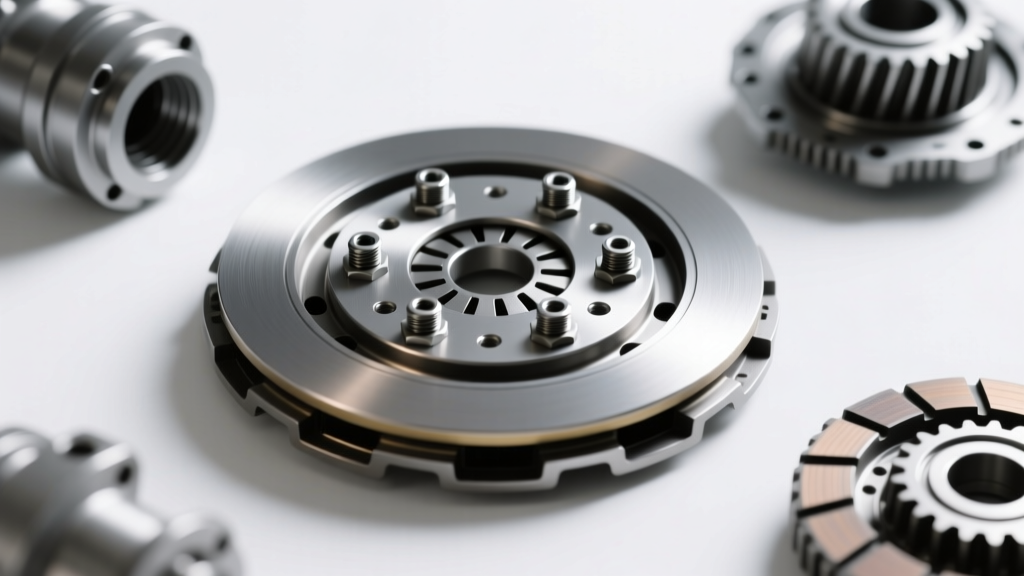
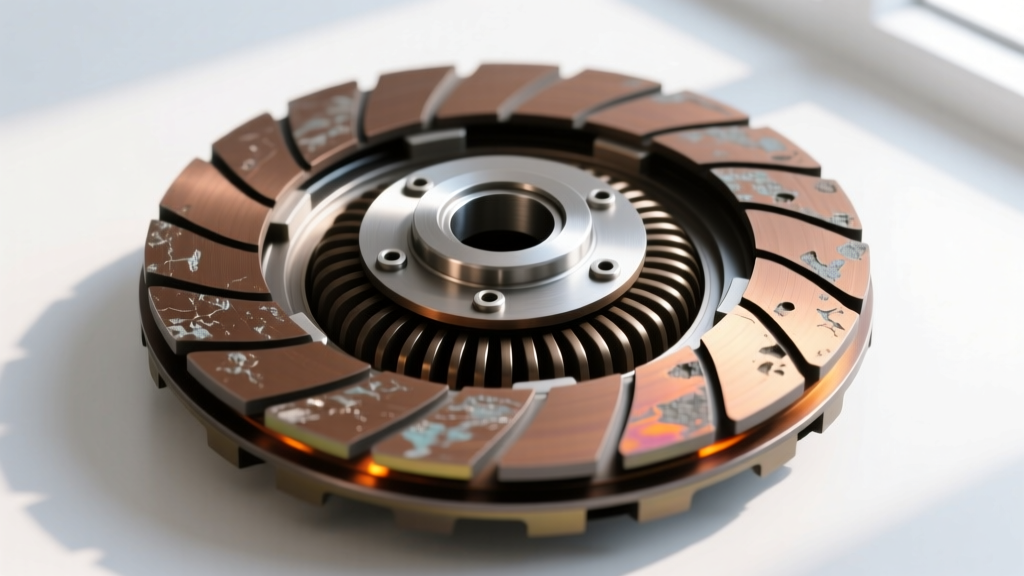
When a daily-driven commuter car experiences slipping, the common internet search is for clutch plate repair. In the realm of standard organic friction materials, some might mistakenly believe a worn disc can be resurfaced, patched, or mechanically 'repaired.' However, as we evaluate high-performance drivetrains in 2026—where 800+ wheel-horsepower LS, LT, and Coyote swaps are the norm—the concept of repairing a performance clutch plate is an engineering fallacy. Performance friction materials like sintered iron, ceramic puck, and carbon-Kevlar composites do not degrade gracefully; they shatter, melt, or glaze under extreme thermal loads. Therefore, 'repair' in a performance context strictly means complete component replacement and systematic upgrading of the entire clutch kit.
Upgrading your drivetrain requires a granular understanding of every component inside the bellhousing. A mismatched pressure plate or an incorrect flywheel step height will destroy a transmission input shaft or cause catastrophic clutch failure. This guide dissects the anatomy of performance clutch kits, providing the exact specifications, torque values, and material science required for high-horsepower applications.
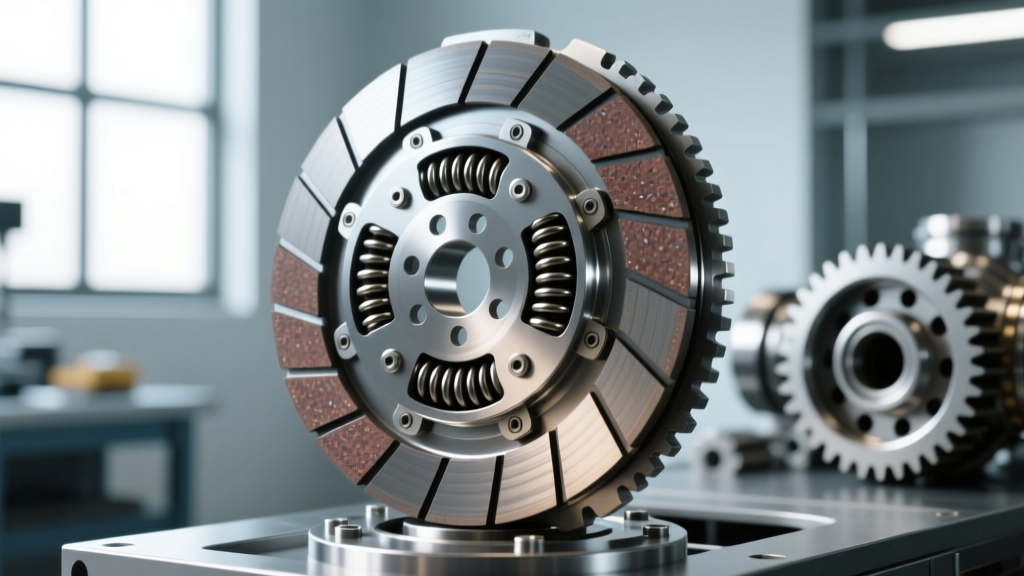
Anatomy of a Performance Clutch Kit
A true performance clutch kit is a calibrated system. Swapping just the friction disc while retaining a fatigued OEM pressure plate is a recipe for immediate slip under boost. Below is the technical breakdown of the core components.
1. The Friction Disc: Hub Architecture and Friction Materials
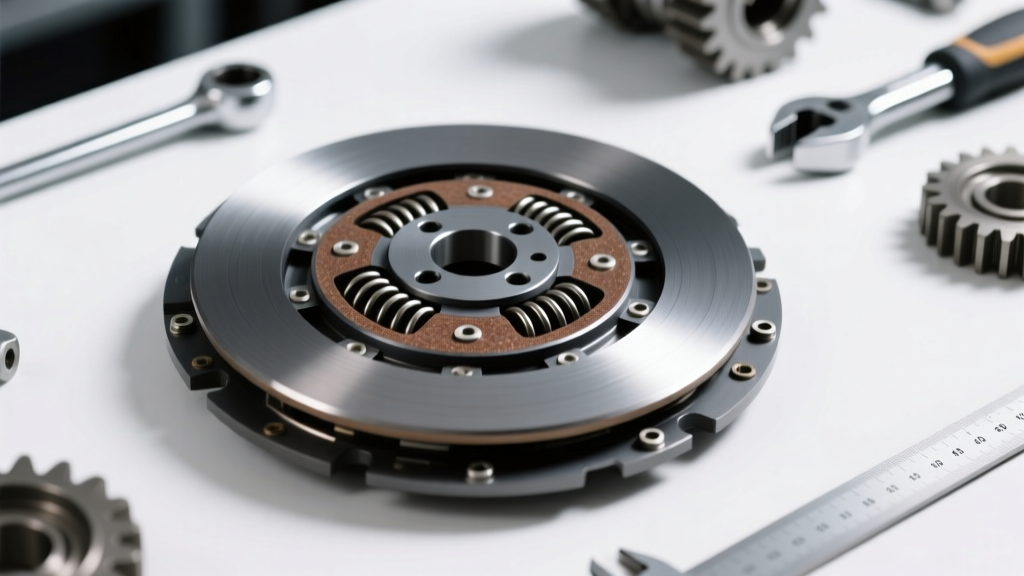
The friction disc is the sacrificial interface between the engine and the transmission. In performance applications, the focus shifts from basic friction to torsional dampening and thermal capacity.
- Sprung vs. Unsprung Hubs: Street and track cars require a sprung hub (using marcel springs and polyurethane dampeners) to absorb the harmonic vibrations of the crankshaft. An unsprung (solid) hub offers instantaneous engagement and is lighter, but it transfers every driveline shock directly into the transmission gears, leading to premature synchro wear in boxes like the Tremec T-56 Magnum.
- Ceramic Puck (Sintered Iron): Offers extreme heat resistance and high coefficient of friction (0.45 to 0.55 mu). Ideal for drag racing and aggressive track use, but notoriously harsh for street driving due to aggressive engagement.
- Carbon-Kevlar Blends: The premium choice for 2026 street/track builds. Carbon provides the high-heat threshold, while Kevlar adds structural integrity and smoother engagement. Brands like ACT (Advanced Clutch Technology) utilize proprietary carbon-ceramic matrices that handle up to 600°F without fading.
2. The Pressure Plate: Clamping Load and Diaphragm Design
The pressure plate provides the clamping force necessary to lock the friction disc to the flywheel. Performance kits utilize heavy-duty diaphragm springs rather than the multi-finger Borg & Beck styles of the past.
Clamping load is measured in pounds (lbs). A stock GM LS1 pressure plate generates roughly 2,100 lbs of clamping force. A performance upgrade, such as the ACT Heavy Duty (HD) pressure plate, increases this to approximately 2,800 lbs to 3,200 lbs—a 30% to 50% increase. This additional clamping load prevents slip under high torque but requires significantly higher pedal effort. To mitigate this, premium manufacturers use precision CNC-machined diaphragm fingers and heat-treated spring steel to maintain a progressive pedal feel despite the higher clamp load.
3. The Flywheel: Inertia and Step Height
The flywheel serves as the mounting surface for the clutch and the rotational mass for engine inertia. Performance flywheels are typically forged from 4140 chromoly steel or 6061-T6 billet aluminum.
- Chromoly Steel (15-18 lbs): Retains enough rotational mass for street drivability and idle stability while shedding 10-15 lbs of parasitic weight compared to cast iron. It also features a replaceable friction surface.
- Billet Aluminum (10-12 lbs): Used in dedicated drag or road race cars. It allows the engine to rev and drop instantly, but requires aggressive throttle blipping to pull away from a stop without stalling.
Critical Spec - Flywheel Step Height: The 'step' is the distance between the flywheel friction surface and the pressure plate mounting pad. Pull-type clutches typically require a positive step, while push-type clutches often require a negative step or zero step. Machining a flywheel without verifying the exact step height for your specific pressure plate will result in improper clamping or physical binding.
4. Release Bearing and Pilot Bearing
High-RPM shifts demand a release (throwout) bearing capable of sustained contact without melting its internal polymers. Performance kits utilize CNC-machined collars and heavy-duty angular contact bearings. Furthermore, the pilot bearing (which supports the transmission input shaft in the crankshaft) must be a sealed, high-temperature needle roller bearing. Bronze bushing-style pilot bearings are obsolete for modern 7,000+ RPM applications as they tend to gall and seize, locking the input shaft to the engine.
Performance Application Selection Matrix
Selecting the right combination of components depends entirely on the vehicle's power output and intended use case. Refer to the matrix below for 2026 platform recommendations.
| Application Profile | Target Power (WHP) | Friction Material | Pressure Plate Style | Flywheel Recommendation | Example Kit Reference |
|---|---|---|---|---|---|
| Aggressive Street / Autocross | 350 - 500 | Full-Face Carbon-Kevlar | HD Diaphragm (Sprung Hub) | Forged Chromoly Steel | ACT HDSS / Exedy Stage 1 |
| Dedicated Track / Time Attack | 500 - 750 | Sintered Iron / Ceramic Puck | XTreme Diaphragm (Sprung Hub) | Lightweight Chromoly | ACT HTR6 / McLeod RST |
| Drag Racing / Roll Racing | 800 - 1200+ | Multi-Disc Sintered Iron | Twin-Disc Billet Aluminum | Billet Aluminum (Unsprung) | McLeod RXT / Tilton 3-Plate |
Precision Installation: Torque Specs and Clearances
The most expensive clutch kit will fail prematurely if installed without adhering to strict tolerances. According to Tremec's official installation guidelines for the T-56 Magnum and TR-6060 transmissions, bellhousing alignment and fastener torque are non-negotiable.
Bellhousing Concentricity and Runout
Before installing the clutch, you must measure the bellhousing bore concentricity relative to the crankshaft centerline using a dial indicator. Maximum allowable Total Indicator Runout (TIR) is 0.005 inches. If the runout exceeds this, the transmission input shaft will bind in the pilot bearing, causing premature wear and difficult shifting. Offset dowel pins (available in 0.007", 0.014", and 0.021" offsets) must be used to correct the bellhousing alignment.
Flywheel face runout must also be measured. The maximum permissible runout at the friction surface is 0.003 inches. Excessive runout causes the clutch disc to wobble, leading to incomplete disengagement and gear crunching.
Fastener Torque Specifications
Always use new, high-grade fasteners and thread locker where specified. Below are standard torque specifications for common performance platforms (always verify with your specific OEM or aftermarket manual):
- GM LS/LT Flywheel Bolts (M10x1.5): 74 lb-ft + 90 degrees of rotation (Torque-to-Yield). Use red Loctite if reusing non-TTY bolts, though new TTY is highly recommended.
- Ford Coyote 5.0 Flywheel Bolts (M12x1.0): 88 lb-ft + 90 degrees.
- Pressure Plate to Flywheel Bolts (typically 8mm or 5/16"): 25 to 35 lb-ft, tightened in a crisscross star pattern in three progressive steps to ensure even diaphragm loading.
- Bellhousing to Engine Block Bolts: 35 to 50 lb-ft depending on thread size (M10 vs M12).
2026 Market Pricing and Upgrade Economics
Understanding the financial investment is crucial for planning a drivetrain build. As of 2026, supply chain stabilization has normalized pricing, but premium materials still command a premium.
- Entry-Level Performance (Stage 1/OEM+): $450 - $700. (e.g., Exedy OEM Replacement or ACT Street Kits). Ideal for bolt-on turbo cars making 400 WHP.
- Mid-Tier Track (Twin-Disc / Heavy Duty): $900 - $1,500. (e.g., McLeod Street Twin or ACT Twin-Disc). Required for 600-900 WHP applications where a single disc would require unbearable pedal pressure.
- Pro-Level Racing (Multi-Plate Carbon): $2,500 - $4,500+. (e.g., Tilton or AP Racing carbon-carbon multi-plate). Used in dedicated motorsport applications requiring minimal rotational inertia and maximum thermal capacity.
For more advanced troubleshooting and installation techniques, referencing the McLeod Racing Tech Support archives provides excellent visual guides on measuring clutch pack clearance and setting up hydraulic release bearings.
Final Expert Verdict
Searching for a simple 'clutch plate repair' is a mindset suited for low-horsepower economy cars. In the performance sector, the clutch is a calibrated, high-stress coupling system. Success relies on matching the friction material to the torque curve, selecting the correct flywheel inertia for the driving style, and executing a flawless, measurement-driven installation. Treat your clutch kit as an integrated system, respect the torque specs, and your drivetrain will reliably hook through every gear.