The Anatomy of Rear-Wheel Drive System Operation
When automotive enthusiasts debate vehicle dynamics, the traditional rear-wheel drive (RWD) system operation is often heralded as the gold standard for balance and steering purity. However, from a cost analysis and manufacturing perspective, the mechanical complexity of RWD presents significant financial implications for long-term ownership. To understand these costs, we must first dissect how a traditional longitudinal RWD layout operates compared to modern transverse front-wheel drive (FWD) performance platforms.
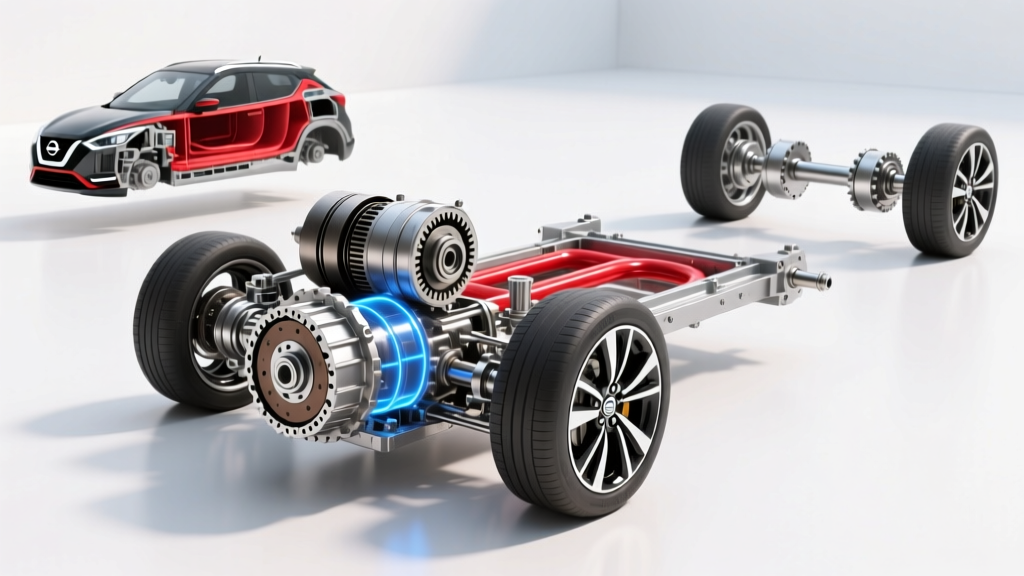
In a conventional RWD system, the engine and transmission are mounted longitudinally. Power flows from the transmission's output shaft into a slip yoke or fixed flange, which connects to a multi-piece steel or aluminum driveshaft. This driveshaft utilizes universal joints (U-joints)—commonly the Spicer 1310 or 1350 series—to accommodate suspension articulation and pinion angle changes. The rotational force is then transferred to the rear differential, where a hypoid ring and pinion gear set turns the power 90 degrees to the rear axles. This 90-degree directional change generates immense friction and heat, necessitating robust lubrication and heavy-duty bearings.
While RWD offers superior weight distribution and steering feel, the mechanical penalty is a heavier drivetrain with more parasitic loss and significantly more wear points than a transverse FWD layout.
RWD Maintenance and Repair Cost Breakdown
The operational reality of a rear-wheel drive system means more components are subject to wear, tear, and eventual failure. Below is a 2026 cost analysis for standard RWD drivetrain maintenance and common failure points, based on industry-standard labor rates averaging $150 per hour.
| Component / Service | Part Cost (2026) | Labor Cost | Total Estimate |
|---|---|---|---|
| Rear Differential Fluid Service (75W-90 GL-5) | $45 - $70 | $75 - $110 | $120 - $180 |
| Driveshaft Center Support Bearing Replacement | $120 - $250 | $300 - $450 | $420 - $700 |
| Pinion Seal Replacement (Fluid Leak) | $35 - $60 | $250 - $400 | $285 - $460 |
| U-Joint Replacement (Per Joint) | $40 - $85 | $150 - $225 | $190 - $310 |
| Complete Rear Differential Rebuild (LSD) | $800 - $1,400 | $600 - $900 | $1,400 - $2,300 |
As the data illustrates, the requirement to maintain a driveshaft, multiple U-joints, and a heavy-duty rear differential creates a cumulative financial burden. A single worn pinion seal, a part costing less than $50, requires dropping the driveshaft and draining the differential, resulting in a labor-heavy repair bill.
The Elantra N Drivetrain: A FWD Cost Alternative
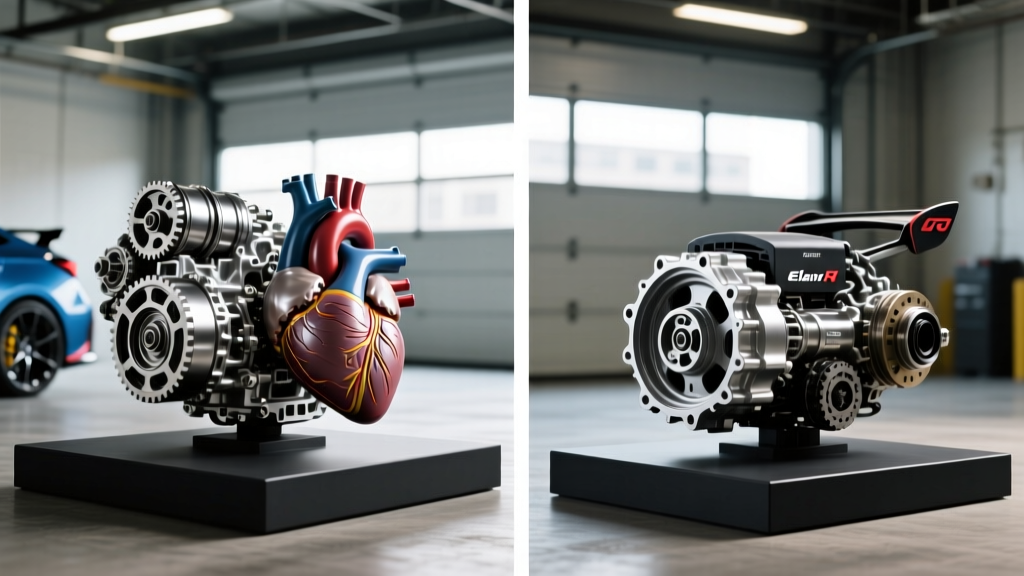
This brings us to a masterclass in modern packaging and cost-efficiency: the Elantra N drivetrain. Hyundai N engineers bypassed the traditional RWD layout entirely, opting instead for a highly sophisticated transverse FWD architecture. By eliminating the longitudinal power transfer, the Elantra N drivetrain completely removes the need for a driveshaft, center support bearings, U-joints, and a rear differential.
According to technical briefings from the Hyundai Motor Group Newsroom, the heart of this system is the N Corner Carve Differential (an electronically controlled Limited Slip Differential, or e-LSD) paired with an 8-speed Wet Dual-Clutch Transmission (N DCT). Because the power does not need to be turned 90 degrees via a hypoid gear set, parasitic drivetrain loss is minimized, and the mechanical footprint is drastically reduced.
N Corner Carve Differential vs. Traditional RWD LSD
In a traditional RWD setup, a mechanical clutch-type LSD (like a Tremec T56 Magnum or Ford Torsen setup) relies on physical clutch packs that wear out over time, often requiring a $1,500+ rebuild. The Elantra N's e-LSD utilizes an electro-hydraulic multi-plate clutch pack integrated directly into the front transaxle. While the mechatronic unit is expensive to replace if it fails out of warranty, routine maintenance is vastly cheaper and less labor-intensive than servicing a standalone rear differential.
Fluid Specifications and Torque Requirements
Proper maintenance is critical for both layouts, but the specifications highlight the engineering divergence. Below are the exact fluid capacities and torque specs for a traditional RWD sports car (e.g., Toyota GR86/Subaru BRZ platform) versus the Elantra N drivetrain.
- Traditional RWD Rear Differential:
- Fluid: 75W-85 or 75W-90 GL-5 Hypoid Gear Oil
- Capacity: 1.2 to 1.5 Quarts
- Drain/Fill Plug Torque: 28 - 32 lb-ft
- Elantra N Drivetrain (N DCT & e-LSD):
- Transmission Fluid: Hyundai Genuine N DCT Fluid (Part # 04300-NLA0)
- Capacity: ~5.2 Liters (Dry Fill), ~4.5 Liters (Service Fill)
- e-LSD Gear Oil: API GL-4 75W-85
- Drain Plug Torque: 25 - 28 lb-ft (Transaxle case)
Note: Using standard GL-5 fluid in the Elantra N's e-LSD housing can degrade the yellow metals in the synchronizers and damage the electro-hydraulic clutch packs. Always adhere to OEM GL-4 specifications for the transaxle.
5-Year/60,000-Mile Ownership Cost Projection
To contextualize the financial impact of rear-wheel drive system operation versus the Elantra N drivetrain, we project the out-of-pocket drivetrain maintenance costs over a 5-year, 60,000-mile ownership cycle. Data is synthesized from Car and Driver's long-term testing and standard independent shop labor rates.
| Maintenance Category | Traditional RWD Sports Car | Elantra N (FWD / e-LSD) |
|---|---|---|
| Drivetrain Fluid Services (3x) | $450 (Trans + Rear Diff) | $650 (N DCT + e-LSD) |
| Driveshaft / U-Joint Service | $350 (Preventative U-joints) | $0 (Not Applicable) |
| Seal & Bearing Repairs | $400 (Pinion seal / Axle seals) | $150 (Half-shaft seals) |
| Clutch / LSD Wear Components | $0 (Assuming no slip) | $0 (Wet DCT / e-LSD) |
| Total Estimated Drivetrain Cost | $1,200 | $800 |
The Elantra N drivetrain saves the owner approximately $400 over 60,000 miles, primarily by eliminating the rear differential and driveshaft maintenance. However, it is vital to note that if the N DCT mechatronic unit or the wet clutch packs require replacement outside of the powertrain warranty, the repair bill can easily exceed $4,500, whereas a traditional RWD manual transmission and mechanical LSD are generally cheaper to rebuild catastrophically.
Expert Verdict: Which Layout Wins on Value?
From a pure cost analysis perspective, the Elantra N drivetrain is a triumph of modern engineering. By consolidating the transmission, differential, and e-LSD into a single transverse transaxle, Hyundai has eliminated the most labor-intensive wear points of traditional rear-wheel drive system operation. There are no driveshaft vibrations to chase, no pinion seals to leak, and no rear wheel bearings subjected to extreme torque loads.
However, the RWD layout remains relevant for those who prioritize mechanical simplicity and aftermarket serviceability. A leaking rear pinion seal on an RWD car is a straightforward fix for any local driveline shop. Conversely, diagnosing an electro-hydraulic fault in the Elantra N's e-LSD requires proprietary Hyundai GDS diagnostic software and specialized dealership training. Ultimately, if your priority is minimizing routine maintenance costs and maximizing packaging efficiency, the transverse FWD layout of the Elantra N is the undisputed financial winner in the 2026 hot hatch segment.