The Anatomy of the '3.8 Special' FWD Layout
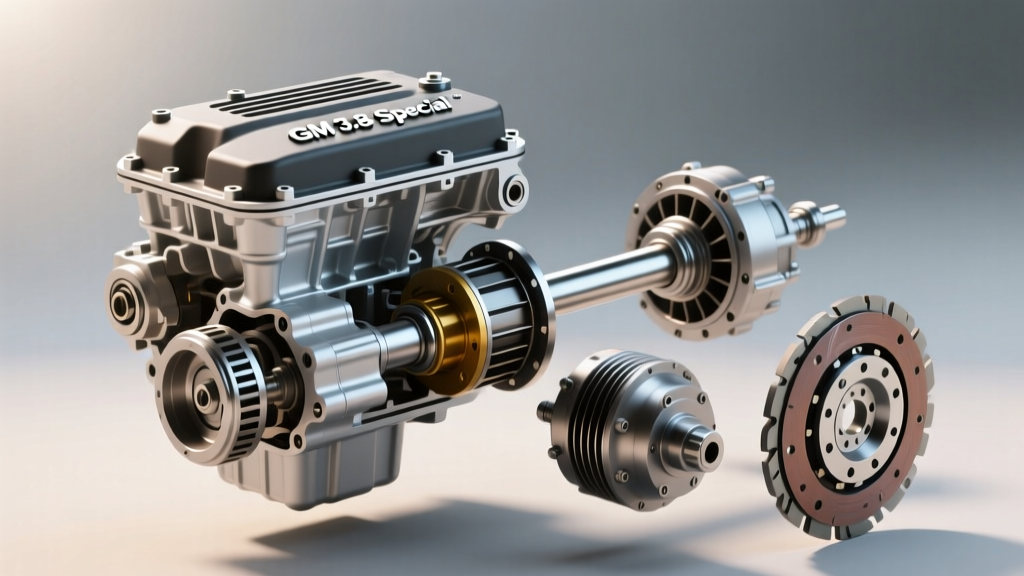
In the automotive enthusiast and salvage community, the pairing of General Motors' legendary 3800 Series II and III (3.8L V6) engine with the heavy-duty 4T65-E transaxle is colloquially dubbed the '3.8 Special' or 'Drivetrain 38 Special'. This front-wheel drive (FWD) powertrain combination propelled millions of W-body and H-body vehicles, including the Pontiac Grand Prix, Buick Regal, and Chevrolet Impala. While renowned for bulletproof engine longevity, the FWD system operation and drivetrain components require precise diagnostic knowledge as these platforms age.
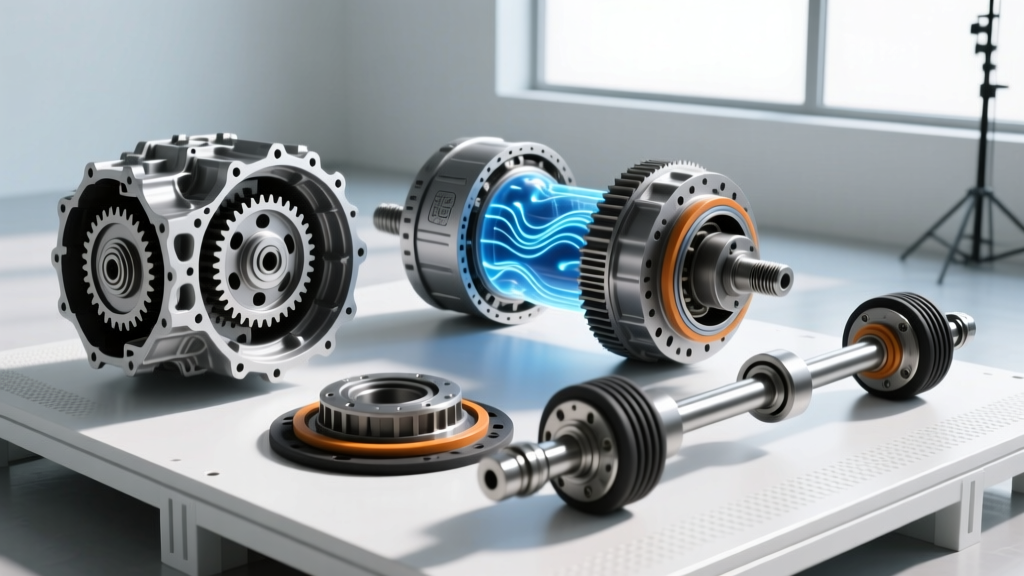
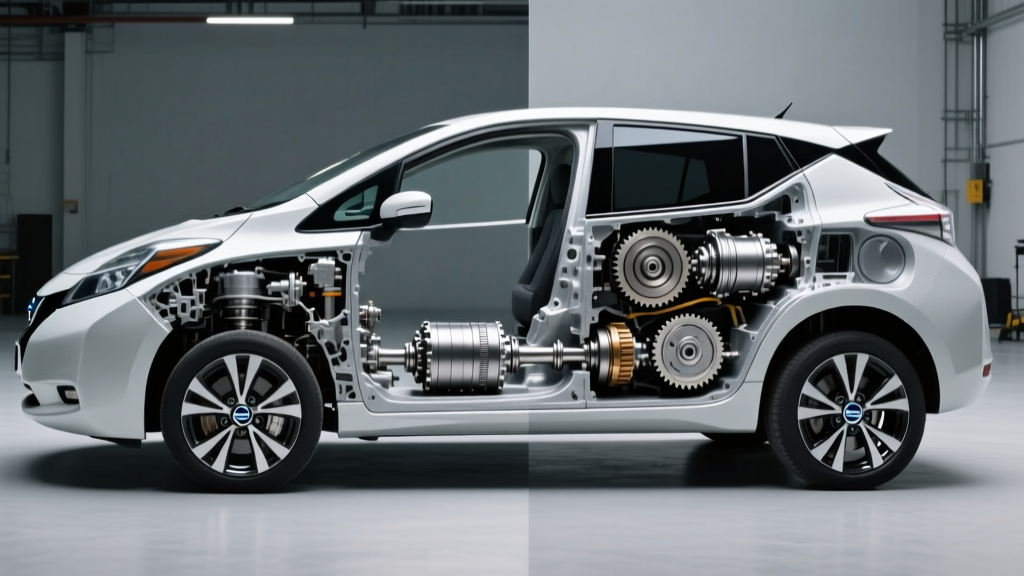
Unlike rear-wheel drive layouts that utilize a longitudinal transmission and a dedicated driveshaft, the 3.8 Special FWD layout integrates the transmission, differential, and final drive into a single transverse transaxle housing. Power flows from the engine's flexplate to the torque converter, through the planetary gearsets, and finally to the chain-driven transfer gear that routes torque to the differential. From the differential, torque is split to the left and right front wheels via half-shafts. Understanding this specific power flow is critical for isolating Noise, Vibration, and Harshness (NVH) complaints in 2026, as these vehicles are now well into their second or third decade of service.
Operational Dynamics: Mitigating Torque Steer
A defining characteristic of the 3.8 Special FWD drivetrain is its approach to torque steer mitigation. High-torque FWD applications suffer from torque steer when the half-shafts are of unequal length, causing differing torsional wind-up rates under heavy acceleration. To combat this, GM engineers utilized an equal-length half-shaft design. The passenger-side (right) axle does not plug directly into the transaxle. Instead, it connects to an intermediate shaft that is supported by a carrier bearing bolted to the engine block. This intermediate shaft effectively equalizes the distance from the differential to both front wheel hubs, ensuring that torsional twist is symmetrical.
However, this operational design introduces a specific failure point: the intermediate shaft bearing. When diagnosing drivetrain vibrations, technicians must look beyond standard wheel balance and CV joint wear, focusing heavily on this unique FWD component.
Symptom Diagnosis Matrix: Vibrations, Clunks, and Pulling
Diagnosing a failing FWD drivetrain requires a systematic approach to separate tire, suspension, and driveline faults. Below is a structured diagnostic matrix tailored specifically to the 4T65-E and 3800 V6 FWD architecture.
| Symptom | Operating Condition | Primary Drivetrain Suspect | Diagnostic Verification Method |
|---|---|---|---|
| Low-frequency hum or growl | 45-65 MPH, coasting or under load | Intermediate Shaft Bearing (ISB) | Use a chassis ear or stethoscope on the ISB bracket while on a lift running at 50 MPH. |
| Sharp clunk on forward engagement | Shifting from Park/Reverse to Drive | Differential Pinion Gear Spalling or Torque Strut Mount | Inspect transaxle fluid for glitter; check engine torque axis mount for torn elastomer. |
| Rhythmic clicking | Full-lock steering turns at low speed | Outer CV Joint Cage/Spalling | Visual inspection of CV boot; rotate axle by hand while feeling for binding in the joint. |
| Severe vibration under hard acceleration | Wide Open Throttle (WOT) from a stop | Inner CV Joint Tripod Wear or Engine Mount Sag | Check inner tripod housing for pitting; verify engine cradle alignment. |
The Infamous Intermediate Shaft Bearing (ISB) Failure
The most common drivetrain-specific failure on the 3.8 Special layout is the passenger-side intermediate shaft bearing. Over time, the rubber isolator degrades, and the bearing itself loses its grease seal, leading to catastrophic pitting. Symptoms mimic a bad wheel bearing, but the noise will not change pitch when swerving left or right (which unloads/loads the wheel bearings).
The Fix: Replacement requires dropping the passenger-side CV axle and unbolting the bearing bracket from the engine block. The OEM bearing is often superseded, but aftermarket solutions like the Dorman 934-002 or equivalent kits are widely available. According to current pricing data from RockAuto, expect to pay between $45 and $85 for a premium replacement kit. The factory torque specification for the intermediate shaft bracket-to-engine block bolts is 37 lb-ft (50 Nm). Failure to torque these correctly can result in bracket resonance and premature bearing failure.
Differential and Chain Drive Wear
Inside the 4T65-E transaxle, the transfer drive chain connects the output shaft to the differential assembly. Under high-mileage or high-torque conditions (such as supercharged L67 applications), this chain can stretch, and the differential pinion gears can suffer from spalling. If a customer reports a harsh 'clunk' when shifting into gear, and the engine torque strut mount is verified to be intact, the next step is fluid analysis. Dropping the transaxle pan and inspecting the magnets is crucial. While fine metallic paste is normal for a 200,000-mile FWD unit, chunky ferrous debris or brass-colored glitter indicates differential or chain sprocket failure, necessitating a transaxle teardown or replacement.
Precision Torque Specifications and Fluid Data
Proper reassembly of FWD drivetrain components is non-negotiable. Over-torquing axle nuts can destroy the wheel hub bearing assembly, while under-torquing can lead to spline stripping. Below are the critical specifications for the 3.8 Special FWD layout.
| Component / Fastener | Specification | Notes & Best Practices |
|---|---|---|
| Front Axle Spindle Nut | 118 lb-ft (160 Nm) | Always use a new prevailing-torque nut. Never use an impact wrench for final tightening. |
| Intermediate Shaft Bracket Bolts | 37 lb-ft (50 Nm) | Apply medium-strength threadlocker (blue) to prevent backing out due to engine vibration. |
| Transaxle-to-Engine Bellhousing | 55 lb-ft (75 Nm) | Ensure the torque converter is fully seated into the transaxle oil pump before mating. |
| 4T65-E Transaxle Fluid (Service Fill) | 7.4 Quarts (7.0 Liters) | Use only Dexron VI (e.g., ACDelco 10-9395). Do not use older Dexron III formulations. |
For comprehensive fastener and torque-to-yield guidelines, technicians should refer to archived factory service manuals or technical bulletins available through resources like the GM Heritage Center, which maintains historical documentation for these iconic powertrains.
2026 Diagnostic Workflow: Scan Tools and Physical Inspection
While the 3.8 Special FWD drivetrain is predominantly mechanical, modern diagnosis requires blending physical inspection with electronic data. If the vehicle is equipped with an advanced traction control system, a failing CV joint or intermediate shaft bearing can cause erratic wheel speed sensor readings, triggering ABS or Traction Control codes.
- Lift and Run Test: Safely secure the vehicle on a lift. Run the vehicle up to 55 MPH in gear. Use a mechanic's stethoscope to probe the intermediate shaft bearing bracket, the transaxle differential housing, and the inner CV joint housings. A failing ISB will emit a distinct metallic roar that differs from the whine of the planetary gearsets.
- Pry Bar Deflection Test: With the vehicle off and suspended, place a pry bar between the engine block and the torque axis mount. Excessive vertical play indicates collapsed mount elastomer, which alters the operating angle of the half-shafts and accelerates inner tripod joint wear.
- Spline Inspection: When removing a CV axle from the 4T65-E differential, inspect the retaining clip and the splines. The FWD differential side gears are prone to stripping if the axle was previously installed without fully seating the snap ring. If the splines show twisting, replace the axle assembly and inspect the differential side gear for internal damage.
Conclusion: Preserving the FWD Legend
The GM 3.8 Special FWD drivetrain remains a masterclass in transverse packaging and equal-length half-shaft engineering. However, its longevity in 2026 relies entirely on proactive symptom diagnosis and adherence to precise torque specifications. By understanding the unique operational mechanics of the 4T65-E transaxle and the intermediate shaft carrier system, technicians and DIY enthusiasts can accurately isolate NVH faults, avoid unnecessary parts swapping, and keep these legendary front-wheel drive platforms on the road. For further reading on FWD drivetrain NVH mitigation and engineering principles, SAE International offers extensive technical papers detailing the torsional dynamics of transverse powertrains.