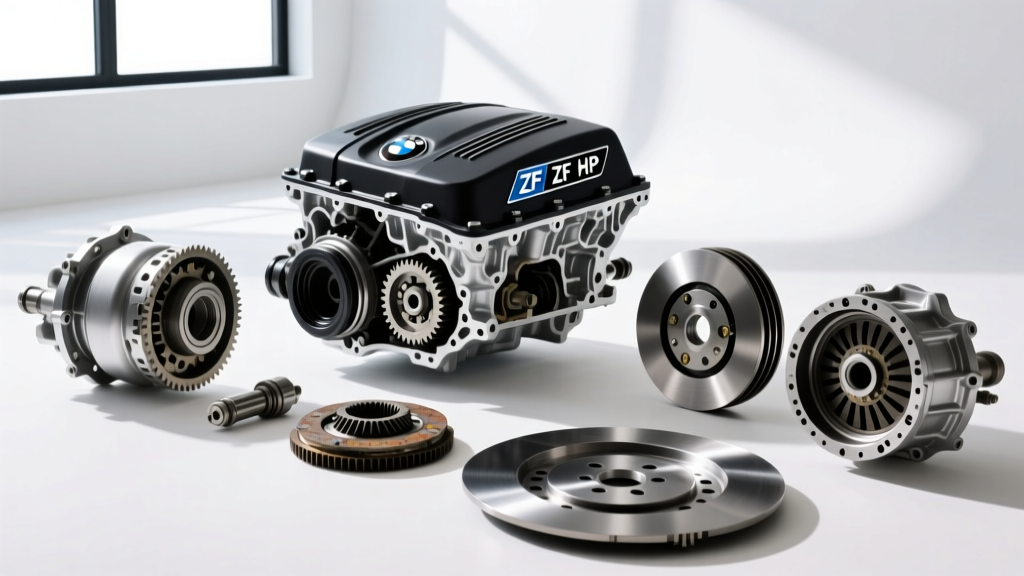
The F30-generation BMW 328i remains one of the most popular platforms in the tuner community. Whether you are running a stock N20 or B48 engine or pushing 350+ wheel horsepower with a big turbo upgrade, the chassis offers a brilliant balance of luxury and performance. However, pushing these limits frequently triggers the infamous iDrive warning: 'Drivetrain Malfunction. Maximum power not available.' When troubleshooting a drivetrain malfunction BMW 328i owners often find themselves staring at a catch-all limp-mode trigger that can stem from anything in the powertrain. From a 2026 perspective, diagnosing this error requires looking past the engine management system and diving deep into the ZF 8HP transmission and driveline components.
Decoding the 'Drivetrain Malfunction' Alert
Unlike a traditional Check Engine Light (CEL), the Drivetrain Malfunction warning is a proprietary BMW iDrive message triggered when the Digital Motor Electronics (DME) and the Electronic Transmission Control (EGS) detect a discrepancy in torque delivery, gear ratio monitoring, or physical component slip. When this alert fires, the ECU immediately pulls timing, limits boost pressure, and restricts RPM to protect the driveline.
For the performance enthusiast, this is incredibly frustrating. You might be mid-pull on a canyon road or at the drag strip when the car suddenly goes into limp mode. While engine-side issues like failing ignition coils or high-pressure fuel pump (HPFP) starvation can trigger this code, a massive percentage of F30 328i drivetrain faults originate in the ZF 8HP45 (N20 models) or 8HP50 (B48 models) transmission and the physical coupling between the engine and the rear differential.
The Usual Suspects: ZF 8HP & N20/B48 Weak Points
To effectively diagnose and upgrade the system, we must identify the mechanical bottlenecks. The ZF 8-speed is widely regarded as one of the best automatic transmissions ever engineered, but it is not immune to the stresses of modified BMWs.
- The Flex Plate (Torque Converter Clutch): The thin steel flex plate mating the engine crankshaft to the torque converter is notorious for cracking on tuned N20 engines. The harmonic vibrations from increased cylinder pressure and aggressive exhaust notes cause metal fatigue, leading to catastrophic failure and immediate drivetrain limp mode.
- Mechatronic Adapter Sleeve Leaks: The plastic Mechatronic sealing sleeve degrades over time and heat cycles. Transmission fluid wicks up into the EGS electrical connector, causing short circuits, erratic shift solenoids, and gear ratio monitoring faults.
- Driveshaft Guibo (Flex Disc): The rubber guibo absorbs rotational shock between the transmission output shaft and the driveshaft. Under hard launches or increased torque, the factory rubber disintegrates, causing severe driveline lash, vibrations, and secondary damage to the transmission output seal.
Diagnostic Matrix: Pinpointing the Failure
Before throwing parts at the car, you must pull codes using an advanced OBD2 scanner capable of reading BMW-specific EGS and DME modules (such as ISTA+, BM3, or MHD). Below is a diagnostic matrix mapping common symptoms to their root causes and the corresponding performance upgrade path.
| Symptom | OBD2 / ISTA Code | Root Cause | Performance Upgrade Path |
|---|---|---|---|
| Harsh 2-3 shifts, sudden limp mode, fluid on EGS plug | 4F1A, 5117, 51AB | Mechatronic sleeve leak / Shift solenoid failure | ZF Reman Mechatronic + xHP Stage 2 TCU Tune |
| Metallic rattle at idle, phantom misfires, DTC 2FB4 | 2FB4, 101F01 (Misfire) | Cracked Flex Plate / TCC shudder | Billet Flex Plate + Upgraded TCC Friction Clutches |
| Clunk on 1-2 shift, severe vibration under load | N/A (Physical Inspection) | Disintegrated Driveshaft Guibo | Polyurethane / Billet Aluminum Guibo Insert |
| Slipping in 4th/5th gear under high boost | 4F0A, 4F11 | Clutch pack wear due to low line pressure | xHP Stage 3 (Increased Line Pressure) + Trans Cooler |
Performance Upgrades to Bulletproof the 328i Drivetrain
If you are building a 328i for track duty, rolling racing, or simply want a reliable daily driver that handles 300+ WHP, addressing the factory weak points is mandatory. Here is how the top performance shops in 2026 are reinforcing the F30 drivetrain.
1. TCU Tuning via xHP Flashtool
The factory ZF 8HP tuning prioritizes fuel economy and smooth, imperceptible shifts. This means clutch line pressure is kept relatively low, allowing the clutches to slip slightly during shifts to preserve comfort. When you add engine torque, this slip turns into destructive heat. Using xHP Flashtool Documentation and software, you can flash a Stage 2 or Stage 3 TCU map. This increases the clutch line pressure by up to 30%, resulting in lightning-fast, lockup-style shifts that eliminate clutch slip and drastically lower transmission fluid temperatures. Furthermore, xHP allows you to raise the torque limiters in the EGS, preventing the TCU from artificially choking engine output when it detects 'excessive' torque.
2. Upgraded Flex Plate & Torque Converter
If your N20 or B48 is tuned, the factory flex plate is a ticking time bomb. Upgrading to a reinforced billet flex plate or a complete upgraded torque converter assembly from specialists like Pure Drivetrain Solutions or ZF Aftermarket is critical. According to the FCP Euro BMW Drivetrain Catalog, replacing the OEM flex plate (Part # 26187596223) before it cracks saves you from having to replace the entire transmission bell housing due to shrapnel damage. When upgrading, always pair it with a high-stall or reinforced torque converter if you are running a big turbo setup to manage the increased torque multiplication.
3. Driveshaft Reinforcement
The factory rubber guibo (Part # 26117511454) is designed for comfort, not performance. For a track-focused 328i, replacing the rubber flex disc with a polyurethane or billet aluminum guibo insert eliminates driveline lash. This ensures that 100% of the torque is transferred instantly to the rear differential without the 'wind-up' effect that causes the car to feel sluggish off the line. Note that moving to a solid or poly guibo will increase NVH (Noise, Vibration, and Harshness) in the cabin, a necessary compromise for performance.
Critical Torque Specs & Reassembly Data
When performing drivetrain work on the F30 328i, precision is non-negotiable. The aluminum block of the N20/B48 and the magnesium-aluminum casing of the ZF 8HP require exact torque sequences to prevent warping and fluid leaks. Always use new OEM stretch bolts for critical rotating assemblies.
- Flex Plate to Crankshaft (N20/B48): M10x1.25 stretch bolts. Torque to 56 Nm, then tighten an additional 90 degrees. (Must use a crankshaft locking pin tool to prevent engine rotation).
- Torque Converter to Flex Plate: M10 bolts. Torque to 45 Nm. Ensure the torque converter is fully seated into the transmission oil pump before mating to the engine (measure the gap between the bell housing and engine block; it should be flush).
- Transmission to Engine Block: M12x1.5 bolts. Torque to 100 Nm.
- Driveshaft Guibo to Transmission Flange: M10 bolts. Torque to 65 Nm.
- Driveshaft Center Support Bearing: M10 bolts. Torque to 65 Nm. (Ensure the bearing is preloaded correctly to prevent high-speed driveline whine).
Preventative Maintenance for High-Horsepower Builds
BMW notoriously labels the ZF 8HP transmission fluid as 'Lifetime.' In the performance world, 'Lifetime' simply means the lifetime of the warranty. For a tuned 328i, transmission fluid degradation is the number one killer of the mechatronic unit and clutch packs. The ZF Promedia Technical Bulletins explicitly state that under 'severe driving conditions'—which includes track use, heavy towing, and modified high-torque applications—the fluid must be changed.
For the ZF 8HP45 and 8HP50, you must use ZF LifeguardFluid 8 (Part # S671.090.255). Do not use generic multi-vehicle ATF, as the friction modifiers in ZF fluid are specifically calibrated for the 8HP's overlapping clutch packs. A standard pan-drop and filter replacement (the filter is integrated into the plastic ZF oil pan) requires approximately 5.5 Liters of fluid. The total dry capacity is 8.5 Liters. Perform this service every 40,000 miles on a tuned street car, and every 15,000 miles on a dedicated track build.
Pro-Tip for Fluid Level Verification: The ZF 8HP has no traditional dipstick. Fluid level must be checked via the fill plug on the side of the transmission pan while the fluid temperature is exactly between 30°C and 50°C (86°F - 122°F), verified via an OBD2 scanner reading the EGS temperature sensor. The engine must be idling, and the vehicle must be perfectly level.
By understanding the root causes of the drivetrain malfunction BMW 328i owners face, and by implementing targeted hardware and software upgrades, you can transform the F30 from a fragile luxury sedan into a reliable, high-horsepower performance machine. Address the flex plate, tune the TCU, and maintain the ZF 8HP properly, and your drivetrain will handle whatever power you throw at it.