Understanding Rear-Wheel Drive System Operation
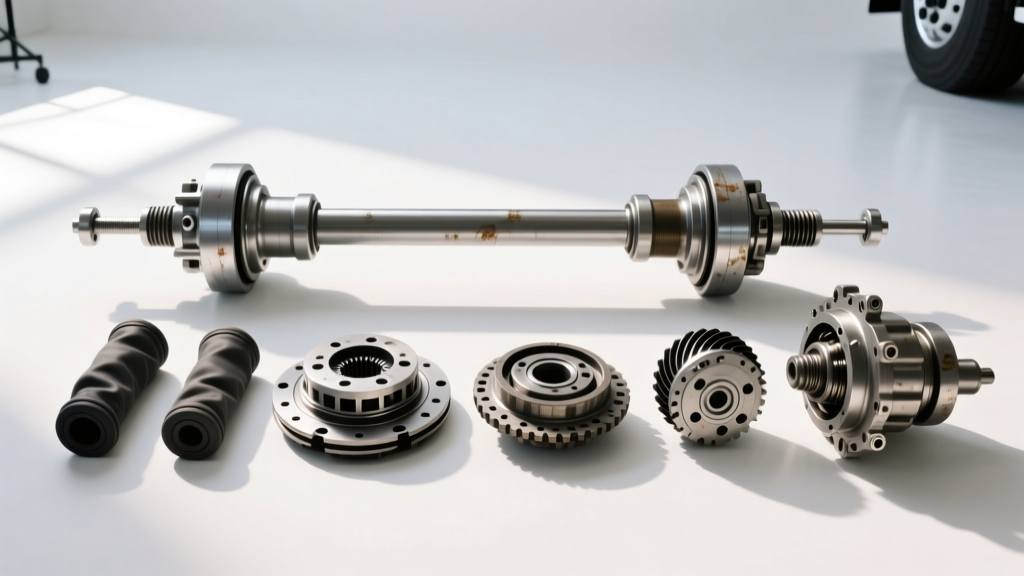
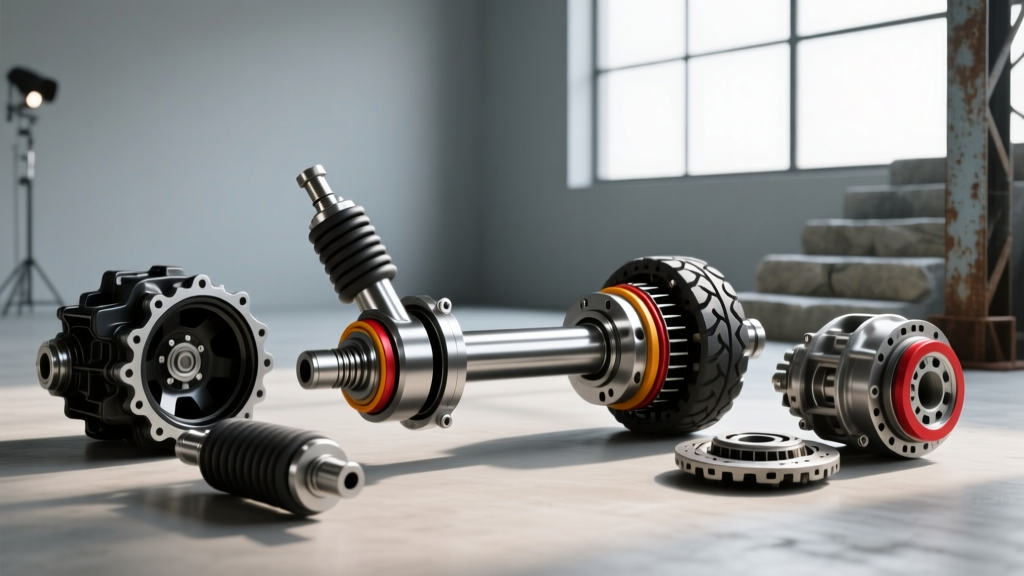
The fundamental architecture of a rear-wheel drive (RWD) system relies on a longitudinal power flow that has defined performance and heavy-duty towing platforms for decades. In a traditional RWD layout, the engine is mounted longitudinally, sending torque through a torque converter or dual-clutch assembly into the transmission. From the transmission's output shaft, rotational force is transferred via a multi-piece aluminum or carbon-fiber driveshaft, utilizing universal joints (U-joints) or a flexible guibo, directly into the rear differential. The differential's ring and pinion gear set redirects this torque 90 degrees to the rear halfshafts, ultimately turning the wheels.
While the mechanical components—such as the ZF 8HP70 or the GM 10L80 transmission—are marvels of metallurgical engineering, the actual operational efficiency, shift firmness, and traction management are entirely dictated by electronics. As of 2026, the mechanical linkage between the gear selector and the transmission valve body is completely obsolete in modern RWD vehicles. Instead, a sophisticated network of sensors and the central drivetrain control module manage every aspect of power delivery, torque converter clutch (TCC) lockup, and adaptive shift mapping.
The Brain of the RWD Layout: The Drivetrain Control Module
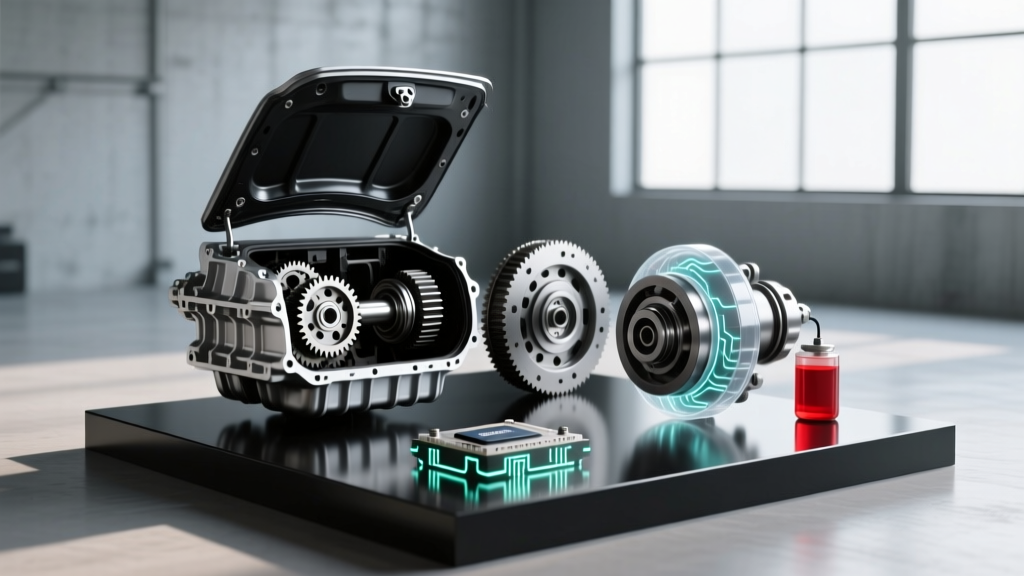
In modern automotive terminology, the 'drivetrain control module' (DCM) is rarely a single, standalone computer. Rather, it refers to the critical processing unit responsible for transmission and driveline management. In General Motors RWD applications (like the Camaro or Silverado), this is the Transmission Control Module (TCM), such as the T87A. In European RWD platforms like BMW or Audi, the module is often integrated directly into the transmission's mechatronic unit (e.g., the ZF EGS - Elektronische Getriebesteuerung) or heavily integrated with the DME (Digital Motor Electronics).
The drivetrain control module calculates shift points based on a matrix of inputs: throttle position sensor (TPS) voltage, lateral and longitudinal G-forces, steering angle, and transmission fluid temperature. When this module fails, the RWD system defaults to 'limp mode,' typically locking the transmission in third or fourth gear, disabling the torque converter clutch, and illuminating the dreaded 'Drivetrain Malfunction' or 'Check Engine' warning on the dashboard.
Comprehensive Cost Breakdown: Drivetrain Control Module Replacement
Diagnosing and replacing a drivetrain control module in an RWD vehicle is not a simple plug-and-play affair. The costs vary wildly depending on whether the module is externally mounted on the transmission case or submerged in transmission fluid inside the mechatronic unit. Below is a detailed 2026 cost matrix for common RWD platforms.
| Cost Category | GM RWD (External T87 TCM) | BMW/Audi RWD (ZF Mechatronic EGS) | Mercedes RWD (Conductor Plate VGS) |
|---|---|---|---|
| OEM Part Cost | $450 - $650 | $1,400 - $2,200 | $800 - $1,100 |
| Labor (Removal/Install) | $150 - $250 (1.5 hrs) | $400 - $600 (3.5 hrs) | $350 - $500 (3.0 hrs) |
| Fluid & Filter Kit | $0 (External Mount) | $150 - $220 (ZF 8-Speed Kit) | $120 - $180 (7G/9G Tronic Kit) |
| Programming & Coding | $150 - $200 | $250 - $350 (ISTA Coding) | $200 - $300 (XENTRY SCN) |
| Estimated Total | $750 - $1,100 | $2,200 - $3,370 | $1,470 - $2,080 |
Real-World RWD Platform Case Studies
Scenario 1: GM Alpha Platform (Camaro / CTS) with 8L90 Transmission
GM's 8-speed (8L90) and 10-speed (10L80) RWD transmissions utilize the T87 and T87A TCMs. A widespread issue documented by technicians and enthusiasts involves the TCM suffering from internal solder joint fatigue or micro-cracking due to the extreme heat cycling of the transmission case. When the T87 fails, owners often experience harsh 1-2 shifts, complete loss of reverse, or a sudden neutral state while cruising.
Because the T87 is mounted externally on the side of the transmission case, the physical replacement is straightforward. The technician simply disconnects the battery, unbolts the two 10mm mounting bolts, and unplugs the main harness connector. However, the drivetrain control module must be flashed with the latest calibration files via GM's SPS (Service Programming System). Attempting to install a used T87 from a junkyard without performing a 'Security Learn' and VIN flashing will result in the vehicle refusing to start due to the immobilizer handshake failure.
Scenario 2: BMW F/G Chassis with ZF 8HP Mechatronic Integration
In contrast, BMW's RWD architecture integrates the drivetrain control module (EGS) directly into the ZF 8HP transmission's plastic oil pan and mechatronic valve body assembly. If the EGS fails, or if the internal speed sensors (which are hardwired into the mechatronic board) degrade, the entire mechatronic unit must be replaced.
This requires lifting the vehicle, draining the ZF LifeguardFluid 8 (which alone costs roughly $25 per liter, and the system holds 8.5 liters for a dry fill), and dropping the transmission pan. The mechatronic unit is held in place by four Torx bolts that must be torqued to exactly 10 Nm during reassembly. Over-torquing these bolts will crack the plastic valve body housing, leading to catastrophic internal pressure leaks. Following installation, the module requires coding via BMW's ISTA software, and the transmission adaptation values must be reset to allow the new module to 'learn' the clutch pack clearances.
Hidden Costs: Flashing, Coding, and Adaptation Resets
Many vehicle owners focus solely on the price of the hardware when budgeting for a drivetrain control module replacement, ignoring the mandatory software integration costs. In 2026, independent repair shops must pay for expensive J2534 pass-thru subscriptions to access OEM servers for module flashing.
- Anti-Theft Pairing: Modern drivetrain modules are married to the vehicle's Body Domain Controller (BDC) or ECU. If not properly paired via OEM security gateways, the module will disable the starter relay.
- Adaptation Resets: A new module has zero clutch wear data. If adaptation resets and a rigorous relearn drive cycle are not performed, the RWD vehicle may experience flaring shifts or premature clutch pack burnout.
- Driveshaft and Flange Torque Specs: While replacing internal mechatronic units, technicians often must remove the rear driveshaft to lock the output flange. Reinstalling the ZF 8HP output flange nut requires a massive 250 Nm of torque, while GM 10L80 driveshaft flange bolts typically require 80 Nm plus an additional 90 degrees of rotation. Improper torque here leads to severe driveline vibration.
Strategic Sourcing: OEM vs. Remanufactured Modules
To mitigate the high costs of ZF 8-Speed Automatic Transmission components, many RWD owners turn to the aftermarket. Companies like Sonnax and Valve Body Pro offer remanufactured mechatronic units and upgraded TCMs. A remanufactured ZF mechatronic unit typically costs between $900 and $1,200, saving thousands compared to the dealer parts counter.
However, when sourcing remanufactured drivetrain control modules, it is critical to verify that the unit includes the latest hardware revision. For instance, early GM T87 modules lacked adequate thermal potting compound over the circuit board, leading to fluid intrusion failures. Remanufactured units from reputable suppliers now feature upgraded conformal coatings to prevent this exact failure mode. Always cross-reference your specific transmission serial number, as ZF produced over a dozen variations of the 8HP mechatronic unit, differing by solenoid resistance and valve body casting.
Summary: Protecting Your RWD Investment
The rear-wheel drive layout remains the gold standard for performance and heavy-duty towing, but its reliance on complex electronics means that a simple sensor failure can mimic a catastrophic mechanical breakdown. Whether you are dealing with a GM T87 TCM throwing a P0700 code or a BMW ZF mechatronic unit triggering a drivetrain malfunction, understanding the true cost of the drivetrain control module—including the hidden labor, fluid, and programming fees—is essential for accurate budgeting. For further technical service bulletins and recall information regarding transmission control modules, owners should regularly consult the National Highway Traffic Safety Administration (NHTSA) database or enthusiast repositories like GM Authority to stay ahead of known electronic failure patterns.