Phase 1: Triage - Decoding the 'Maximum Drivetrain Output Not Available' Warning
For BMW enthusiasts and performance builders, few dashboard warnings induce as much immediate dread as the Maximum Drivetrain Output Not Available message. In the BMW iDrive ecosystem, this is not merely a suggestion; it is a hard-triggered limp-home mode that severely limits engine torque and disables the xDrive all-wheel-drive system's active torque vectoring. While this error can plague any modern AWD platform experiencing severe driveline bind or sensor failure, it is notoriously sensitive in BMW F-series and G-series chassis (such as the F30 340i, F80 M3, and G80 M3) when pushed beyond factory power thresholds.
From a performance and upgrade perspective, this error usually indicates that the Dynamic Stability Control (DSC) module and the VTG (Verteilergetriebe) transfer case control unit have detected an irreconcilable discrepancy between front and rear axle speeds, or a physical binding within the transfer case clutch pack. When tuning a BMW via bootmod3 or MHD to push 550+ wheel-horsepower, the sudden spike in torque can cause the factory xDrive clutch pack to slip momentarily. The ECU interprets this slip as a mechanical failure, triggering the warning to protect the transfer case from catastrophic thermal degradation.
Phase 2: Component-Level Diagnostics & OEM Specifications
Before throwing aftermarket hardware at the car, you must establish a baseline of mechanical integrity. The drivetrain is only as strong as its weakest sensor signal or fluid film.
The VTG Transfer Case & Actuator Motor
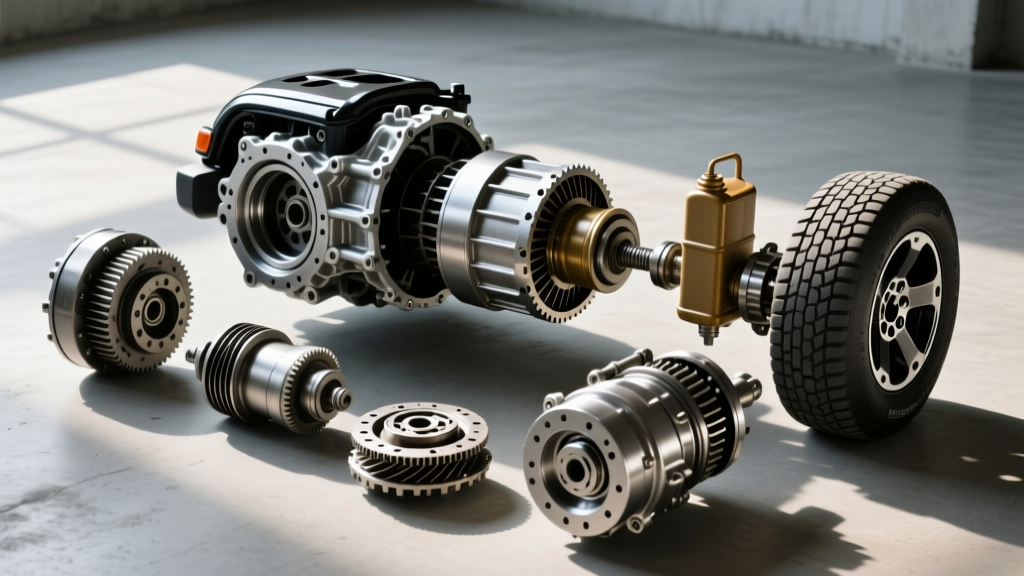
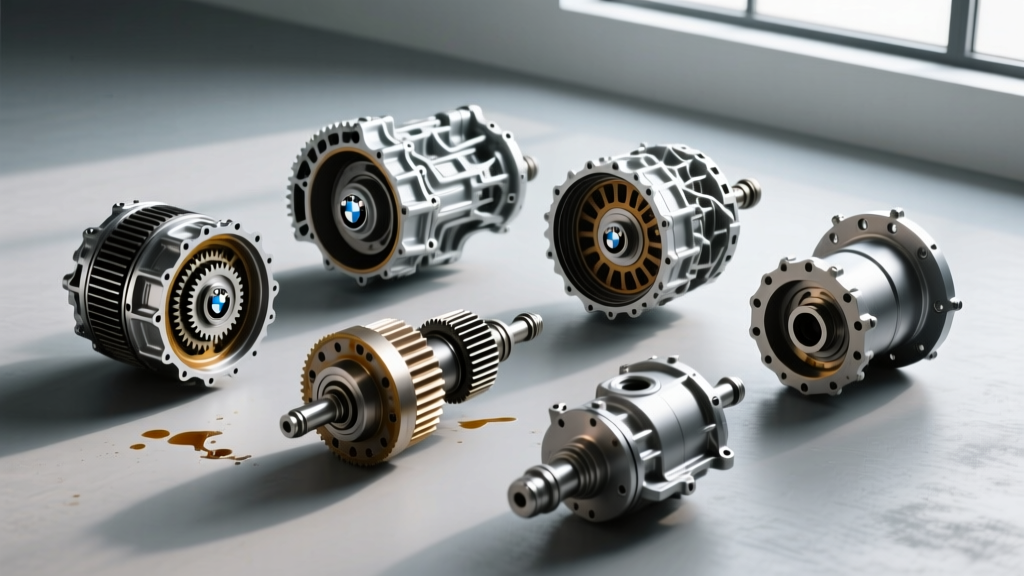
The heart of the xDrive system is the transfer case (commonly the ATC45L or ATC53L units built by ZF/BMW). The actuator motor responsible for engaging the internal clutch pack relies on a small internal gear. In high-mileage or high-torque applications, the OEM plastic gear strips, preventing the actuator from fully clamping the friction discs. This results in micro-slip, which the ECU flags as a drivetrain malfunction.
- OEM Actuator Motor (Part # 27107599805): Costs roughly $450-$600. Replacing the entire motor is the dealer-standard fix.
- Billet Gear Upgrade: Performance shops often machine or source billet aluminum replacement gears for the actuator, costing around $80-$120, completely eliminating the plastic failure point.
- Fluid Degradation: The xDrive system requires specialized friction-modified fluid. Using generic ATF will cause immediate clutch chatter and DTC errors. You must use BMW Shell TF0870 (Part # 83222446621). Capacity is typically 0.4 to 0.6 liters. Drain and fill plug torque spec: 20 Nm.
Wheel Speed Sensor Signal Dropout
Modern BMWs utilize active, magneto-resistive wheel speed sensors rather than older passive inductive pickups. These sensors output a digital square wave signal to the DSC module. If a sensor is contaminated with metallic debris from the wheel bearing, or if the wiring harness suffers from micro-fractures near the strut tower, the DSC will register a momentary 0-mph reading at one corner. The xDrive module will immediately decouple the drivetrain to prevent the transfer case from binding.
Testing these requires a Picoscope or advanced oscilloscope. You are looking for a clean 0-12V square wave. According to the Pico Automotive ABS Sensor Testing Guide, a distorted waveform or missing teeth pattern on the encoder ring will instantly trigger the maximum output warning. OEM ATE sensors (e.g., Part # 24.0711-0284.3) are highly recommended over budget alternatives, which often suffer from poor potting and moisture ingress.
Diagnostic Reference Matrix: DTCs & Measurements
When scanning the vehicle with ISTA+ or a high-end bidirectional scanner like Autel or Foxwell, look for these specific codes to guide your upgrade path:
| DTC Code | Module | Description | Performance Implication & Fix |
|---|---|---|---|
| 800C20 | DSC / xDrive | Tire circumference adaptation limit exceeded | Front/Rear rolling diameter delta > 1%. Re-shoe with matched Michelin PS4S or adjust xDrive calibration via ISTA+. |
| 482D44 | VTG | Transfer case internal wear / Clutch slip | Clutch pack friction material degraded. Requires transfer case teardown, billet hub upgrade, and TF0870 fluid flush. |
| 482DAE | VTG | Actuator motor position sensor fault | Stripped internal actuator gear or Hall sensor failure. Upgrade to billet gear and recalibrate end-stops. |
| D36E | DSC | Wheel speed sensor signal implausible | Check magnetic encoder ring on CV joint hub. Replace ABS sensor and clear adaptations. |
Phase 3: Performance Upgrades for High-Horsepower xDrive Builds
If you are building a 600+ whp F80 M3 or a heavily modified G30 M5, the factory drivetrain tolerances are insufficient. The 'Maximum Drivetrain Output Not Available' error will become a recurring nightmare under hard launch conditions unless you address the mechanical weak points.
Billet Transfer Case Internals & Fluid Dynamics
The factory ATC53L transfer case utilizes a wet clutch pack that is prone to glazing under repeated high-torque launches. Performance drivetrain specialists now offer upgraded clutch packs featuring high-friction sintered iron or advanced carbon-kevlar friction materials. These packs increase the clamping force threshold before slip occurs. When paired with fresh OEM BMW TF0870 fluid, the transfer case can reliably handle the instantaneous torque spikes of a Stage 2+ turbo build without confusing the ECU into limp mode.
Driveshaft & Flex Disc (Guibo) Reinforcement
A failing Guibo (flex disc) introduces harmonic vibrations into the driveline. The xDrive module monitors driveline shock via the transmission output shaft speed sensor. If the Guibo is torn, the resulting driveline lash mimics a slipping transfer case clutch.
Upgrade Protocol:
Replace the OEM rubber Guibo (Part # 26117527475) with a high-durometer polyurethane or reinforced OEM Lemforder unit.
Critical Torque Spec: The M10 Guibo bolts must be torqued to 56 Nm + 90 degrees of rotation. Failure to use new torque-to-yield bolts or hitting the correct angle will result in immediate driveline vibration and subsequent DSC intervention.
Aftermarket LSD Integration & Torque Vectoring
Factory xDrive relies heavily on brake-based torque vectoring (ADB-X) to manage slip across the front and rear axles. When you install an aftermarket Limited Slip Differential (such as a Wavetrac or OS Giken 1.5-way LSD) in the rear differential, you mechanically lock the rear axle under load. This reduces the reliance on the DSC module to brake the inside rear wheel, significantly lowering the thermal load on the xDrive transfer case and preventing the ECU from detecting the slip variances that trigger the maximum output warning.
Final Calibration: The ISTA+ Imperative
The most common mistake performance shops make after replacing a transfer case, actuator motor, or even swapping to a new set of non-OEM-spec tires is skipping the software calibration. The xDrive module adapts its clutch engagement pressure based on the wear characteristics of the internal friction discs.
Whenever the transfer case fluid is flushed, or hardware is replaced, you must use BMW ISTA+ to perform the 'VTG Calibration' and reset the clutch wear adaptations. Furthermore, if you change tire brands or models, you must measure the exact rolling circumference. BMW xDrive requires a front-to-rear rolling diameter variance of less than 1%. If your aftermarket wheel and tire setup exceeds this 1% delta, the DSC module will perpetually flag the 800C20 code, locking you out of full drivetrain output regardless of your mechanical upgrades.